

Executive Overview
A profound paradigm shift is sweeping across American retail. Driven by a confluence of rising environmental consciousness, shifting generational values, and an unprecedented appetite for economic and stylistic individuality, consumers of all ages are increasingly turning away from traditional fast fashion and embracing the pre-owned market. From older shoppers seeking timeless quality to Gen Z college students examining the ecological toll of their closets, secondhand shopping has officially graduated from a niche alternative to a dominant mainstream economic force.
Recent industry metrics underscore this dramatic cultural pivot. According to the 2025 Resale Report published by ThredUp, the U.S. secondhand apparel market is expanding at an impressive average rate of approximately 9 percent annually. This trajectory vastly outpaces the growth of the broader traditional retail sector, signaling that pre-owned goods are no longer viewed merely as a budget-conscious compromise, but rather as a premier choice for sustainable, ethical, and discerning consumption.
Behind this staggering market growth lies a sobering reality. The modern fashion industry operates on a linear, highly wasteful model that poses severe ecological threats. The Council for Textile Recycling estimates that the average American discards upwards of 70 pounds of clothing and textile waste annually. Globally, the crisis is even more pronounced: the United Nations Environment Programme (UNEP) reports that the environmental equivalent of an entire garbage truck filled with textiles is sent to landfills or burned every single second.
In response to this ecological emergency, a vibrant ecosystem of professional secondhand stylists, academic leaders, and everyday consumers is redefining what it means to dress responsibly. By prioritizing circular fashion, reimagining existing wardrobes, and championing the "thrill of the hunt," these changemakers are proving that style and sustainability are not mutually exclusive—they are inextricably linked.
Detailed Chronology of the Secondhand Surge
To understand how the pre-owned market reached its current zenith, it is necessary to examine the evolutionary steps that transformed thrift culture from a marginalized practice into a celebrated lifestyle choice.
Phase One: The Stigma and the Scarcity (Late 20th Century to Early 2010s)
For decades, shopping at thrift stores, consignment shops, and flea markets was largely driven by strict financial necessity. While vintage collectors and antique enthusiasts always appreciated the unique character of past decades, the broader public often associated second-hand goods with scarcity, outdated styles, or lack of hygiene. Traditional retail dominated the cultural landscape, encouraging a relentless cycle of trend-chasing and disposable apparel. Consumers bought new items frequently, discarded them easily, and gave little thought to the ultimate destination of their garments.
Phase Two: The Digital Disruption and Resale Platforms (Mid-2010s to 2020)
The mid-2010s marked the birth of the digital resale boom. The advent and rapid scaling of peer-to-peer digital marketplaces—such as Depop, Poshmark, ThredUp, and Mercari—democratized access to used clothing. Consumers no longer had to spend hours physically digging through cluttered racks in dimly lit basements; instead, they could browse curated wardrobes from the comfort of their smartphones. This technological shift destigmatized secondhand shopping, particularly among younger demographics who valued digital convenience, unique aesthetic expression, and anti-corporate consumerism.
Phase Three: The Pandemic Wake-Up Call and Supply Chain Realities (2020–2023)
The COVID-19 pandemic served as a massive catalyst for introspection regarding consumption habits. Lockdowns gave millions of people the time to audit their homes, leading to widespread closet cleanouts and a surge in online selling. Simultaneously, global supply chain disruptions exposed the fragility of the fast-fashion manufacturing model. Consumers began questioning the origins of their goods, how they were made, and where they ultimately ended up. Environmental awareness merged with economic uncertainty, accelerating the adoption of alternative shopping behaviors across older demographics as well.
Phase Four: Mainstream Integration and Professionalization (2024 to Present)
Today, the secondhand movement has entered its most sophisticated phase yet. It is no longer just about buying cheap clothes online; it is a fully professionalized industry supported by data analytics, academic curricula, and specialized service providers. Secondhand styling has emerged as a legitimate and thriving profession. Consumers who want to live sustainably but lack the time or inclination to sort through vast inventories now hire experts to build entire, eco-friendly wardrobes for them. Educational institutions have integrated sustainable fashion into their core degree programs, ensuring that the next generation of designers and industry leaders view circularity as a baseline requirement rather than an optional afterthought.
Supporting Context & Metrics: The Scale of the Textile Crisis
To fully appreciate the urgency driving the resale boom, one must examine the staggering statistics that define the modern textile economy.
The Global Waste Crisis
The fashion industry is notoriously one of the most resource-intensive and polluting sectors in the global economy. According to data compiled by the United Nations Environment Programme (UNEP):
- Per Second Destruction: The equivalent of one garbage truck of textiles is dumped into landfills or incinerated every single second of every day. This translates to millions of tons of waste annually—much of it composed of synthetic fibers like polyester, nylon, and acrylic that can take hundreds of years to decompose.
- Microplastic Pollution: Synthetic textiles account for a significant percentage of primary microplastics released into the world’s oceans. Every time a synthetic garment is washed, thousands of microscopic plastic fibers shed into the water supply, ultimately entering the marine food chain and human bodies.
- Carbon Footprint: The fashion industry is responsible for approximately 8% to 10% of global carbon emissions—more than all international flights and maritime shipping combined. Furthermore, it is the second-largest consumer of water globally, requiring thousands of liters of water to produce just a single pair of cotton jeans.
The American Footprint
Domestically, the numbers are equally sobering. The Council for Textile Recycling reports that the average American throws away more than 70 pounds of clothing and textiles every year.
- The Diversion Challenge: While municipal recycling programs have successfully integrated paper, glass, and aluminum into standard waste management routines, textile recycling infrastructure remains critically underdeveloped. A vast majority of discarded clothing bypasses donation centers and goes straight to municipal solid waste streams.
- The Export Dilemma: A significant portion of donated clothing that is not purchased locally is bundled and exported to developing nations in the Global South. As documented by environmental watchdogs and highlighted by modern sustainable stylists, massive quantities of unsellable, low-quality fast-fashion garments ultimately wash up on beaches or form toxic open-air landfills in countries across the ocean, devastating local economies and ecosystems.
The Resale Market Rebound
Amidst this grim environmental backdrop, the economic indicators for secondhand retail offer a powerful ray of hope. ThredUp’s 2025 Resale Report highlights that the U.S. secondhand apparel market is growing at an average of roughly 9 percent annually. This consistent expansion demonstrates that consumer demand for pre-owned goods is structural rather than cyclical. Shoppers are actively voting with their wallets, choosing circular models that extend product lifecycles, conserve natural resources, and reduce the demand for virgin textile production.
Official Statements and Expert Perspectives
The movement toward sustainable consumption is being championed by frontline professionals who witness both the ecological damage of traditional retail and the transformative power of circular fashion.
Stephanie Hernandez: The Secondhand Stylist
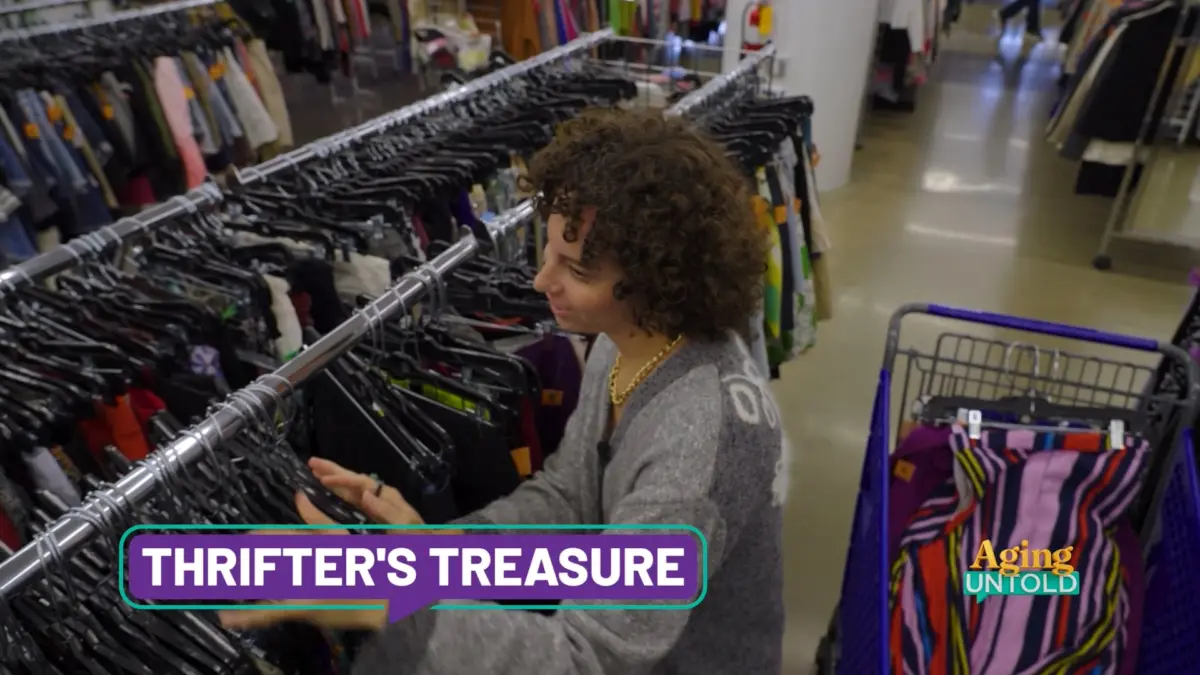
For Stephanie Hernandez, a professional secondhand stylist based in Washington, D.C., thrift shopping is far more than a career—it is an ethical imperative. Hernandez bridges the gap between consumer desire for sustainability and the practical barriers of time and curation.
Many clients seek her out because they want to align their purchasing habits with their ethical values, yet find themselves overwhelmed by the modern pace of life. As Hernandez explains:
"They want to be more sustainable, and they are kind of thinking about it more, but they don’t really have the time to go out to a thrift store and hunt for those amazing pieces."
Hernandez’s dedication to her craft is rooted in a profound concern for the planet’s ecological health. The motivation behind her business is deeply personal and driven by visual evidence of global textile pollution:
"I just feel like there’s already so much out there in the world, and buying new just creates more and more waste. I’d see videos of clothes washing up on beaches in countries across the ocean and it breaks my heart. That’s kind of why I started the business, to educate people about that and show them that there are other options."
Mikki Taylor: The Academic Voice
In higher education, the message of sustainability is moving from extracurricular clubs to core lecture halls. Mikki Taylor, a respected fashion design professor at Howard University’s Chadwick A. Boseman College of Fine Arts, teaches specialized coursework dedicated to sustainable fashion. Taylor emphasizes that true transformation begins with personal accountability and consumer awareness.
In her classroom, students are required to critically evaluate their own closets, purchasing choices, and daily consumption patterns. By breaking down the intricate supply chain of everyday apparel, Taylor ensures her students understand the hidden costs of convenience:
"I let them know all the chemicals that are involved in just one item, one T-shirt, a pair of jeans. It is incredibly important to teach them that because our environment is definitely being affected."
Taylor advocates for an accessible, grounded approach for individuals looking to transition away from fast fashion. Rather than demanding an immediate, complete overhaul of one’s lifestyle, she encourages a thoughtful, incremental entry point:
"I would say just dive in. I mean really, just look at how much you have, what is it that you can remake or reinvent, and then what I always advise is to get a solid staple piece, and then build around it."
Future Outlook: The Next Era of Conscious Consumption
As the retail landscape continues to evolve through 2026 and beyond, industry analysts and sustainability experts project that the secondhand movement will transition from an alternative trend into the foundational standard of global commerce.
Integration of Technology and Authentication
The future of resale will rely heavily on technological innovation. Advanced authentication tools, AI-driven sizing algorithms, and blockchain-verified item histories are expected to reduce friction in the secondhand marketplace. Major traditional fashion brands are already taking notice, launching their own in-house resale and trade-in programs to capture market share and meet corporate sustainability targets. This convergence of primary and secondary retail markets will further legitimize pre-owned goods, making secondhand shopping as seamless as buying brand new.
Circular Wardrobes as a Cultural Norm
Practices that were once considered unconventional—such as closet audits, garment repair workshops, wardrobe rentals, and professional secondhand styling—are poised to become standard consumer behaviors. As demonstrated by stylists like Stephanie Hernandez, the journey of sustainable fashion always begins at home. Hernandez’s foundational philosophy—that every client must start by shopping their existing wardrobe—serves as a blueprint for the future:
"We literally go through everything in their closet. And we put outfits together with things that they already own — so kinda showing them you can breathe new life into things you already have!"
The Role of Education and Policy
Looking ahead, the long-term viability of the sustainable fashion movement will depend heavily on regulatory frameworks and educational reform. Governments around the world are beginning to draft extended producer responsibility (EPR) laws that hold fashion brands financially accountable for the end-of-life disposal of their garments. Simultaneously, educational pioneers like Professor Mikki Taylor are cultivating a generation of designers, consumers, and policymakers who view environmental stewardship as an absolute non-negotiable.
Ultimately, the surge in American secondhand shopping represents a profound cultural reclaiming of value. By recognizing that the most sustainable garment is the one already in existence, consumers, stylists, and educators are forging a path toward a cleaner, more creative, and ethically sound future for fashion.

0 Comments