

Executive Overview
In the volatile and unpredictable theater of the North Atlantic, a desperate search-and-rescue operation is currently unfolding. The United States Coast Guard, acting in close coordination with the Federal Aviation Administration (FAA) and international maritime and aviation partners, has launched an intensive multi-agency deployment to locate a missing Gulfstream G100 business jet. The aircraft, operating as a medical transfer flight carrying six individuals, vanished from radar screens late Monday evening as it approached the northeastern seaboard of the United States.
According to preliminary reports released by the U.S. Coast Guard Northeast sector and local investigative journalism from WFXT, the flight originated in the tropical territory of Bermuda and was charting a direct course toward Boston, Massachusetts. Contact with the aircraft was abruptly lost miles off the coast of Nantucket, a notoriously challenging maritime environment characterized by unpredictable weather patterns, heavy commercial shipping lanes, and frigid Atlantic waters.
The gravity of the situation is compounded by the nature of the flight itself. Unlike routine commercial or private transport, this Gulfstream G100 was configured and deployed as a medical transfer aircraft—a specialized mission implying that patients, medical personnel, or specialized care teams were onboard when communication ceased. As rescue coordinators race against the clock, deployment zones have been saturated with specialized surface vessels and long-range aviation assets to sweep the turbulent ocean surface.
This developing crisis has once again cast a spotlight on the inherent vulnerabilities of regional medical aviation, the rigorous demands placed upon transatlantic transit corridors, and the relentless pressure faced by search-and-rescue (SAR) personnel who must brave treacherous oceanic elements to locate missing souls. This report compiles the known facts, chronologically maps the unfolding incident, examines the operational metrics of the aircraft and the search zone, and explores the broader implications for aviation safety and emergency medical transport.
Detailed Chronology of the Disappearance
Piecing together the final moments of a missing aircraft requires a meticulous forensic examination of radar telemetry, air traffic control (ATC) communications, and automated transponder pings. While a complete investigative timeline will take months to assemble by the National Transportation Safety Board (NTSB) and its global counterparts, aviation authorities have released a preliminary sequence of events detailing the vanishing of Gulfstream G100, tail number CGRJP.
Pre-Departure and Takeoff from Bermuda
The journey began at L.F. Wade International Airport in Hamilton, Bermuda. The aircraft, a twin-engine Gulfstream G100, had undergone standard pre-flight preparations for an international medical transfer flight. Flight plans filed with aviation authorities indicated a direct routing toward Boston Logan International Airport (BOS). Onboard were six souls, a complement that typically includes a flight crew of two (pilot and first officer) alongside medical professionals and a patient, though exact identities and role breakdowns have not yet been publicly confirmed by authorities pending family notifications.
The takeoff from Bermuda occurred under conditions that were initially monitored closely by regional meteorologists, though transatlantic flights frequently encounter rapid atmospheric shifts as they transition from subtropical maritime zones into colder northern air masses.
En Route Telemetry and the Final Radar Contact
The flight proceeded northward without issuing any distress calls or reporting mechanical anomalies during the initial stages of the journey. Cruise altitude and speed remained within normal parameters for a Gulfstream G100 as the aircraft traversed international airspace off the U.S. East Coast.
The critical juncture occurred as the aircraft approached the airspace governed by Boston Air Route Traffic Control Center (ZBW). According to the FAA, radar contact was abruptly lost as the jet neared the vicinity of Nantucket, Massachusetts. Transponder signals ceased entirely, and radio hails from air traffic controllers went unanswered. The sudden disappearance suggested an instantaneous catastrophic event or a rapid, disabling emergency that prevented the flight crew from transmitting a Mayday call on emergency frequencies (121.5 MHz or 243.0 MHz).
The Immediate Emergency Response
Upon the expiration of overdue timeframes and the loss of secondary radar returns, automated alert protocols were immediately triggered within the air traffic control network. The FAA notified the U.S. Coast Guard command center, initiating an urgent mobilization.
Within minutes of notification, the U.S. Coast Guard Northeast sector officially acknowledged the unfolding emergency via public channels, notably utilizing social media platforms like X to broadcast the critical details: a Gulfstream G100, tail number CGRJP, missing en route from Bermuda to Boston with six people onboard. The operational focus shifted immediately from air traffic monitoring to active search-and-rescue protocols, concentrating assets in the designated sector south and east of Nantucket.
Supporting Context & Metrics
To fully grasp the magnitude of the ongoing rescue operation, it is essential to examine the technical specifications of the aircraft involved, the geographical and environmental realities of the search zone, and the distinct operational pressures associated with medical transfer flights.
Aircraft Profile: Gulfstream G100
The Gulfstream G100—originally developed as the Astra SPX by Israel Aerospace Industries (IAI) before being acquired and marketed by Gulfstream Aerospace—is a high-performance, twin-engine business jet renowned for its speed, range, and operational versatility. Key metrics of the aircraft type include:
- Powerplant: Two Honeywell TFE731-40R turbofan engines, each delivering approximately 4,250 pounds of thrust.
- Range: Capable of flying roughly 2,985 nautical miles, making routes such as Bermuda to Boston well within its standard operational envelope.
- Speed: High-speed cruise capabilities approaching Mach 0.75 to 0.80, allowing for rapid transit times which are critically prioritized during medical emergencies.
- Capacity: Typically configured to seat up to 9 passengers in a standard executive layout, though medical configurations significantly reduce seating capacity to accommodate stretchers, medical gas cylinders, and specialized life-support equipment.
The adaptability of the G100 makes it a frequent choice for private charter and specialized air ambulance missions. However, the conversion of such aircraft for medical transport introduces unique weight, balance, and electrical load considerations, which investigators will inevitably scrutinize as part of the eventual safety probe.
The Search Environment: The Nantucket Sector
The ocean waters surrounding Nantucket represent one of the most challenging search-and-rescue environments in the western Atlantic. The area is heavily influenced by dynamic oceanographic factors:
- Water Temperatures: Depending on the exact season and depth, Atlantic waters off Cape Cod and Nantucket can remain perilously cold, severely limiting human survival times in the event of an open-water ditching.
- Weather and Visibility: The convergence of warm Gulf Stream currents with colder northern waters frequently generates dense fog banks, high winds, and rapid squalls, drastically reducing visibility for both aerial spotters and surface vessels.
- Maritime Traffic: The waters approaching Boston are among the busiest commercial shipping lanes on the Eastern Seaboard, requiring search coordinators to manage active maritime traffic alongside rescue vessels.
The Stakes of Medical Transfer Aviation
Medical flights occupy a specialized niche in the aviation sector. Operating under intense time constraints, flight crews and medical personnel are frequently tasked with executing missions in adverse weather conditions that might otherwise ground non-essential private aircraft. The psychological and operational pressure to deliver a patient to definitive medical care can create a complex risk-management environment. While there is no current indication that weather or operational pressure contributed to the disappearance of CGRJP, aviation safety analysts uniformly emphasize that air ambulance operations demand rigorous oversight, redundant safety systems, and unwavering adherence to decision-making protocols.
Official Statements and Inter-Agency Coordination
The response to the disappearance of the medical transfer jet has mobilized a vast network of federal, state, and local emergency management resources. Authoritative insights have been communicated through official channels to keep the public and maritime communities informed while managing the delicate flow of information to the families of those onboard.
U.S. Coast Guard Operations
The U.S. Coast Guard Northeast command has assumed the primary coordinating role for the active search effort. In statements released to regional media outlets, including Boston’s WFXT, Coast Guard spokespersons outlined the dual-pronged deployment strategy currently underway:
- Aviation Assets: Long-range search aircraft equipped with advanced radar, thermal imaging, and night-vision capabilities have been dispatched to comb grid patterns over the designated search zone. These aircraft can sweep vast expanses of open ocean in a fraction of the time required by surface vessels.
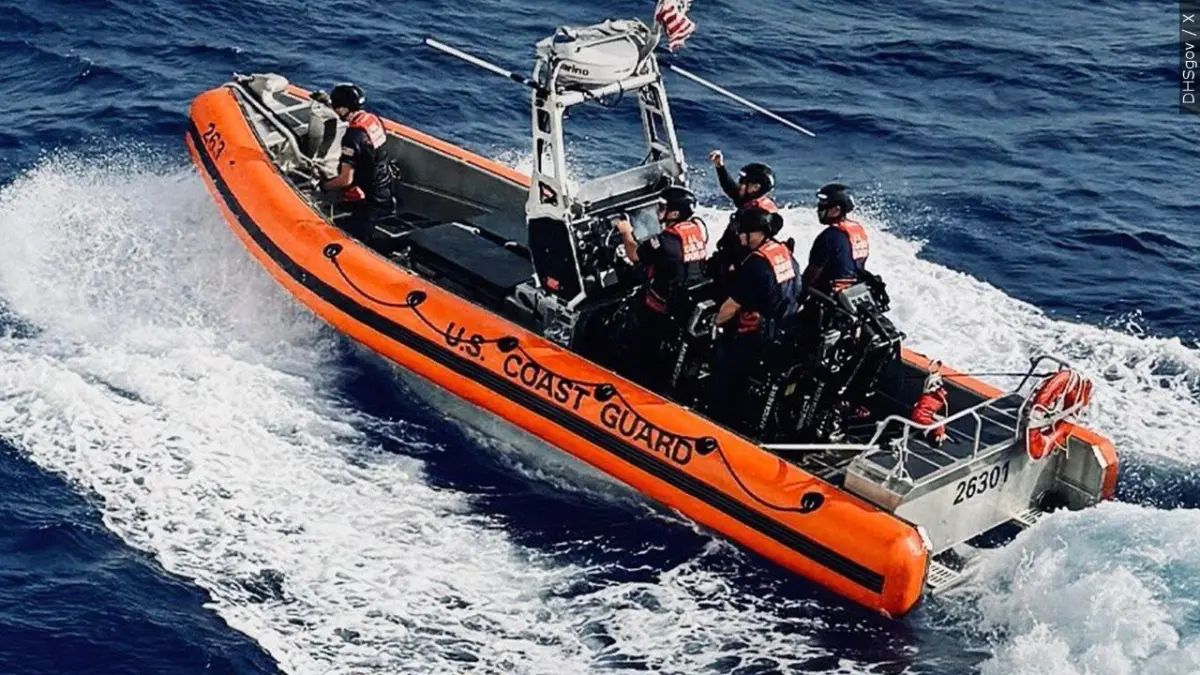
- Surface Assets: Coast Guard cutters and specialized rescue boats have been dispatched to brave the open water, tasked with conducting physical sweeps, scanning for debris fields, and executing immediate recovery operations should survivors or wreckage be located.
In an official statement distributed via digital communications, the Coast Guard noted:
"The U.S. Coast Guard has launched an active search and rescue operation following reports from the Federal Aviation Administration regarding a missing aircraft. The Gulfstream G100, tail number CGRJP, was transiting from Bermuda to Boston with six individuals onboard when radar contact was lost. Air and surface crews are aggressively sweeping the waters surrounding Nantucket. Our primary focus remains the location and recovery of the aircraft and its passengers."
FAA and Air Traffic Control Involvement
The Federal Aviation Administration is cooperating fully with search coordinators and has initiated its own internal review of air traffic control data. FAA specialists are examining voice recordings from Boston Center, radar handoff logs, and transponder telemetry to pinpoint the exact spatial coordinates where radar returns ceased. This data is continuously fed to Coast Guard search planners to refine the drift models that dictate the evolving search grid.
Local and International Liaison
Given that the flight originated in British overseas territory, international aviation authorities and consular officials in Bermuda are maintaining open lines of communication with U.S. counterparts. Meanwhile, local emergency response networks in Massachusetts, including harbor masters and municipal police departments along Cape Cod and the islands, remain on high alert to assist with any shore-based discoveries or coastal debris washes.
Future Outlook & Investigative Trajectory
As the search-and-rescue mission enters its critical phases, the collective focus of the aviation community shifts toward not only finding the missing jet, but also understanding the underlying causes of this tragic event.
The Transition from Rescue to Recovery
In search-and-rescue operations, time is the most precious commodity. As hours stretch into days, the operational probability of survival in open ocean waters diminishes, forcing rescue coordinators to continuously evaluate whether the mission remains a search for survivors or transitions into a recovery and salvage operation. The Coast Guard has indicated that all available assets remain fully committed to the search grid, with crews working in punishing shifts to maximize coverage.
The NTSB Investigation
Once wreckage is located and secured, jurisdiction over the incident will officially transfer to the National Transportation Safety Board (NTSB), supported by the FAA and technical representatives from Gulfstream Aerospace and engine manufacturer Honeywell.
The investigative roadmap will likely focus on several core pillars:
- Wreckage Recovery and Sonar Mapping: Deploying side-scan sonar and remotely operated vehicles (ROVs) to map the ocean floor, locate structural components, and recover the aircraft’s flight data recorder (FDR) and cockpit voice recorder (CVR)—the indispensable "black boxes."
- Mechanical and Maintenance Audit: Reviewing the complete maintenance logs, inspection histories, and repair records of the Gulfstream G100 to rule out or identify catastrophic mechanical failure, structural fatigue, or engine anomalies.
- Environmental and Meteorological Analysis: Reconstructing the exact weather conditions, turbulence reports, icing risks, and visibility parameters present along the flight path at the time radar contact was lost.
- Human Factors and Medical Operations: Examining the flight crew’s training records, rest schedules, and dispatch procedures, alongside the operational protocols governing the medical transfer mission.
A Community Awaiting Answers
For the families, friends, and colleagues of the six individuals onboard flight CGRJP, the coming days will be marked by agonizing uncertainty. As searchlights sweep the dark waters off Nantucket and maritime cutters brave the Atlantic swells, the entire aviation and medical transport community stands in solidarity, watching anxiously for breakthroughs in what has rapidly become one of the most significant regional aviation incidents in recent memory.
Further updates will be provided by the U.S. Coast Guard and relevant authorities as new verified information becomes available.

0 Comments