

TALLAHASSEE, Fla. — Florida is on the precipice of establishing a stark new benchmark in the annals of American capital punishment. Following a swift succession of executive actions by Governor Ron DeSantis, the state is positioned to shatter its modern-era record for the highest number of state-sanctioned executions carried out in a single calendar year.
With the most recent signing of a death warrant for 64-year-old death row inmate Jesse Guardado, Florida has set the stage for an unprecedented wave of capital executions. This latest development follows closely on the heels of another warrant signed just days prior, underscoring an aggressive acceleration in the state’s enforcement of capital sentences. Should the scheduled timeline proceed without judicial intervention, 2025’s modern-era benchmark of 19 executions will be unequivocally surpassed, culminating in the 20th execution of the year—a volume unseen in Florida since the United States Supreme Court reinstated the death penalty in 1976.
Executive Overview
The rapid acceleration of Florida’s execution pipeline reflects an unyielding commitment by the state’s executive branch to carry out capital sentences handed down by the judiciary. Governor DeSantis, utilizing his constitutional authority, has systematically reviewed and advanced pending death warrants, signaling a sharp departure from the slower cadences historically observed in Florida and other death penalty states across the nation.
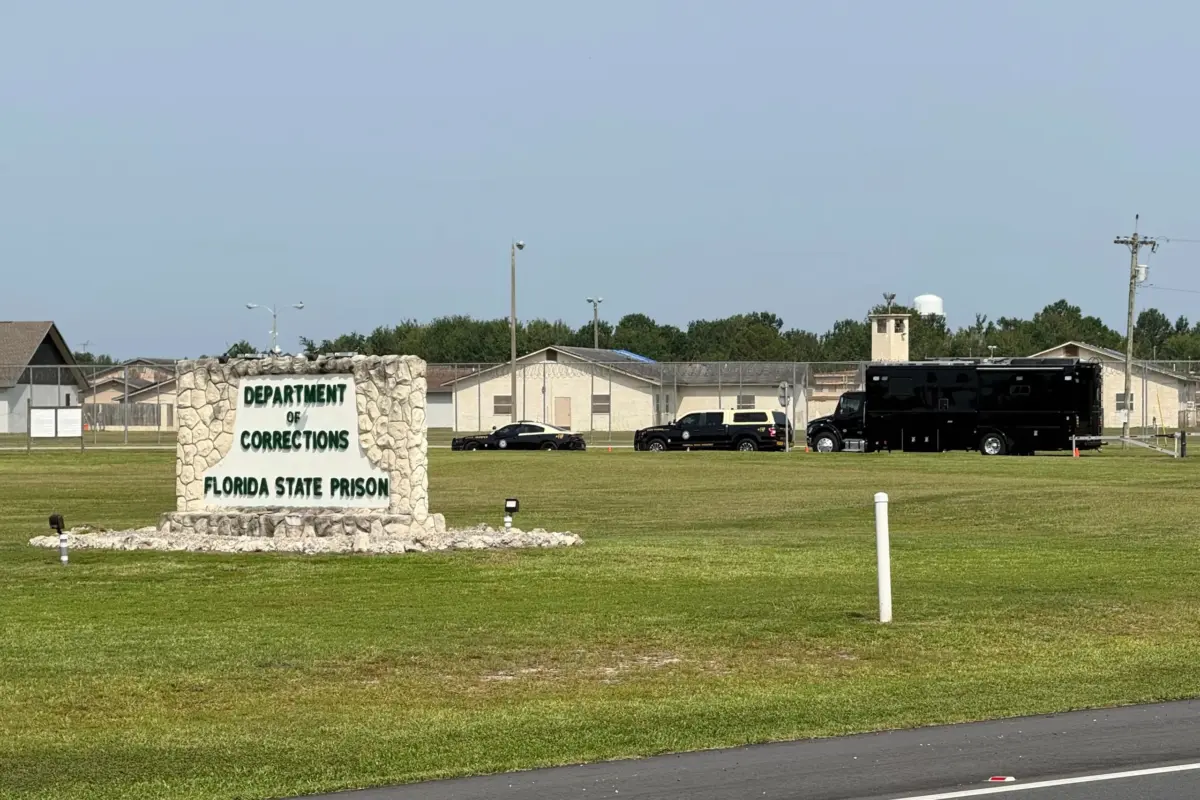
At the center of this historic surge is the upcoming execution of Jesse Guardado, whose warrant sets a lethal injection date of November 5 at Florida State Prison in Starke. Guardado’s case, alongside three other active warrants scheduled over a tightly compressed multi-week window, highlights a meticulously coordinated effort by the state Department of Corrections to process a backlog of condemned inmates whose appeals have been exhausted through decades of state and federal litigation.
Legal analysts, human rights advocates, and victims’ rights organizations are closely monitoring this unprecedented trajectory. While supporters of the state’s actions argue that these measures deliver long-delayed closure and definitive justice to grieving families, opponents and defense attorneys point to the dizzying pace as a systemic rush that risks procedural errors and overlooks critical constitutional protections.
Detailed Chronology of Upcoming Executions
The roadmap to Florida’s record-breaking execution total is densely populated, featuring four distinct cases slated over a compressed timeframe. Each case carries a complex history of heinous crime, prolonged judicial appeals, and ultimate rejection of executive clemency.
1. William Lee Thompson (Execution Scheduled: October 13)
The oldest of the condemned men currently scheduled for lethal injection, 74-year-old William Lee Thompson, faces execution for a crime committed half a century ago. Thompson was convicted of the harrowing murder, kidnapping, and sexual battery of Sally Ivester in North Miami Beach during the 1970s. For decades, Thompson’s case wound its way through various appellate courts, but with the denial of his final stays, the state is prepared to close a 50-year chapter of legal history.
2. James Robertson (Execution Scheduled: October 13)
Sharing the same execution date as Thompson is 63-year-old James Robertson. Unlike many death row inmates whose crimes occurred on the outside, Robertson was convicted of a capital offense committed from within the confines of the correctional system itself. In 2008, while incarcerated at the Charlotte Correctional Institution, Robertson brutally murdered his cellmate, Frank Hart. Governor DeSantis signed Robertson’s death warrant on a Thursday, cutting short decades of incarceration and moving him swiftly to the execution chamber.
3. William Reaves (Execution Scheduled: October 20)
Rounding out the mid-October trio is 77-year-old William Reaves, whose scheduled execution on October 20 stems from the 1986 murder of Indian River County Sheriff’s Deputy Richard Raczkowski. The killing of a law enforcement officer remains one of the most heavily weighted aggravating factors in Florida capital sentencing law, historically insulating such sentences from commutation or long-term judicial reprieve.
4. Jesse Guardado (Execution Scheduled: November 5)
The anchor of this historic surge is Jesse Guardado, whose warrant for the November 5 execution was officially penned by Governor DeSantis on a Monday. Guardado, 64, was convicted for the 2004 brutal slaying of 75-year-old Jackie Malone in Walton County.
According to exhaustive court records, Malone had demonstrated profound acts of kindness toward Guardado, assisting him in securing both housing and employment following a previous stint in prison. Despite this support, Guardado—embarked on a crack cocaine binge—went to Malone’s home under the pretext of needing to use the telephone on the night of September 13, 2004.
Once inside, Guardado attacked Malone with a breaker bar, struck her in the head, stabbed her in the chest, and ultimately slit her throat. He subsequently fled the scene with her purse, jewelry box, briefcase, and cellular phone. Guardado entered a guilty plea to the murder charges and was formally sentenced to death in October 2005. The Florida Supreme Court affirmed his conviction and sentence in 2007.
Supporting Context & Metrics: The Modern Era of Capital Punishment
To fully grasp the significance of Florida’s current trajectory, it is necessary to examine the historical metrics of capital punishment in the Sunshine State.
Following the landmark 1972 Supreme Court ruling in Furman v. Georgia, which temporarily invalidated capital punishment across the United States, states scrambled to rewrite their statutes to comply with constitutional safeguards. In 1976, the high court’s decision in Gregg v. Georgia effectively revived the death penalty, allowing states to resume executions under revised guidelines.
For decades, Florida maintained a steady, albeit intermittent, rhythm of executions, often bottlenecked by complex federal habeas corpus petitions, changes in lethal injection protocols, and judicial rulings regarding jury unanimity. The previous modern-era high-water mark for Florida was established just last year in 2025, when the state carried out 19 executions—a figure that previously stood as an anomaly in modern correctional history.
By pushing past the 19-execution threshold to reach 20 (and potentially more depending on subsequent warrants), Florida is not only outpacing its own historical benchmarks but is also positioning itself as the most active capital punishment state in the United States, eclipsing jurisdictions historically known for high execution volumes, such as Texas and Oklahoma.
Official Statements and Executive Stance
As mandated by Florida law, every death warrant signed by the governor must explicitly address the question of executive clemency—the discretionary power to commute a death sentence to life imprisonment or grant a reprieve.
In the warrant issued for Jesse Guardado, as well as in those preceding it for Robertson, Thompson, and Reaves, Governor DeSantis included standardized yet definitive language regarding this constitutional prerogative. The governor stated that executive clemency was thoroughly reviewed and considered, but ultimately, "it has been determined that executive clemency is not appropriate."
This unwavering stance reflects a broader punitive philosophy held by Florida’s executive leadership, which maintains that capital punishment is a necessary and indispensable instrument of justice for the state’s most heinous offenders. Proponents within the Attorney General’s office and various victims’ advocacy groups have consistently praised the administration’s resolve, arguing that protracted legal delays erode public confidence in the judicial system and deny closure to the families of murder victims.
Conversely, capital defense attorneys and legal scholars have voiced profound concerns over the velocity of these actions. Critics argue that compressing multiple executions into a tight, weeks-long window places an unsustainable burden on the defense bar, limits meaningful judicial review, and heightens the risk of irreversible error in a system where human life is at stake.
Legal Battles and Ineffective Assistance Claims
The path to the execution chamber is rarely straightforward, and Guardado’s case exemplifies the complex legal labyrinth that defines modern death penalty litigation.
Following his 2005 sentencing and the 2007 affirmation by the state supreme court, Guardado’s defense team pursued numerous avenues of post-conviction relief. Among his primary contentions was the argument that his trial counsel provided "ineffective assistance" during the critical penalty phase of his trial—the phase wherein juries and judges weigh aggravating and mitigating factors to decide between life imprisonment and death.
Specifically, Guardado’s appellate attorneys argued that his original defense counsel failed to adequately investigate, develop, and present vital mitigating evidence regarding his background, psychological history, and struggle with substance abuse—evidence that, if presented, might have persuaded the jury to recommend a life sentence. Furthermore, the defense challenged the seating of specific jurors during the penalty phase, alleging procedural missteps.
These arguments were systematically litigated through both state and federal courts over nearly two decades. The legal battle culminated in a decisive ruling in 2024, when a three-judge panel of the 11th U.S. Circuit Court of Appeals formally rejected Guardado’s ineffective assistance claims. With federal appellate avenues exhausted and the U.S. Supreme Court declining to intervene with extraordinary stays, the legal roadblocks to his execution were effectively cleared.
Future Outlook: What Lies Ahead for Florida’s Death Row
As the calendar turns toward the final quarter of the year, all eyes remain fixed on Florida State Prison in Starke. The unprecedented concentration of executions scheduled for October and November will serve as a definitive stress test for the state’s Department of Corrections, the judicial system, and the legal teams representing the condemned.
Legal observers anticipate a flurry of eleventh-hour appeals, focusing on emerging Eighth Amendment challenges regarding the protocols of lethal injection, potential intellectual disability claims under evolving psychological standards, or last-minute clemency petitions. However, given the resolute posture of Governor DeSantis’s administration and the definitive rulings thus far issued by federal appellate courts, the likelihood of systemic stays appears increasingly narrow.
Should these executions proceed as scheduled, 2026 will permanently rewrite the statistical history of Florida’s criminal justice system. It will stand as a watershed moment—marking an era where the state executed its capital laws with a swiftness and volume unparalleled in the modern history of American jurisprudence. Whether this surge signals a permanent new normal for Florida or remains a unique historical peak will depend heavily on future executive administrations, legislative adjustments to capital statutes, and the evolving national consensus surrounding the ultimate punishment.

0 Comments