

Executive Overview
For millions of Americans, the autumn ritual of college football Saturdays—complete with marching bands, roaring stadiums, and tailgates—embodies the pinnacle of campus spirit. Yet, behind the pageantry lies a startling financial reality that rarely makes the scoreboard: the vast majority of collegiate athletic departments in the United States operate at a profound structural loss, subsidized heavily by the very students who sit in the general admission stands, text-books in hand, trying to earn a degree.
In this deep-dive episode of Following Leads: The Podcast, InvestigateTV national reporter Chris Nakamoto joins the program to unpack a sweeping, nationwide investigative report. The findings reveal a sobering truth about modern higher education: out of 109 public Football Bowl Subdivision (FBS) universities analyzed in the investigation, a staggering 99 operate in the red. Only 10 institutions generate enough organic revenue through ticket sales, television contracts, merchandise, and donations to cover their own athletic operational costs.
To bridge this multi-billion-dollar chasm, universities across the country have increasingly turned to internal funding mechanisms. The investigation uncovered that the remaining institutions pulled in over $2.1 billion combined in mandatory student fees and direct allocations from university general funds. For the average student—many of whom are already juggling tuition hikes, housing shortages, and burdensome student loan debt—this means a portion of their hard-earned tuition and institutional fees is quietly being funneled into athletic department deficits. These are deficits driven by skyrocketing coaches’ salaries, lavish facility upgrades, and the shifting landscape of Name, Image, and Likeness (NIL) compensation.
This comprehensive report examines the mechanics of this financial dependency, the systemic factors fueling the collegiate sports arms race, the personal toll on non-athlete students, and the potential federal legislative interventions currently moving through Congress.
Detailed Chronology: The Evolution of the Collegiate Financial Arms Race
To understand how higher education arrived at a juncture where academic institutions are subsidizing multi-million-dollar entertainment enterprises, one must examine the historical trajectory of collegiate athletics. What began as regional, student-run club competitions in the late 19th century has metastasized into a multi-billion-dollar global industry, accelerated by several critical milestones over the past few decades.
The Rise of the Television Multi-Contract Era (1980s–2000s)
The modern commercialization of college sports traces its roots back to the landmark 1984 Supreme Court ruling in NCAA v. Board of Regents of the University of Oklahoma. Prior to this decision, the NCAA held a tight monopoly over television broadcast rights for college football games, strictly limiting how often schools could appear on television.
When the Supreme Court ruled that the NCAA’s television plan violated federal antitrust laws, the floodgates opened. Individual conferences and universities suddenly gained the freedom to negotiate their own broadcast agreements. Throughout the 1990s and 2000s, cable networks realized that college sports programming offered highly loyal, captive audiences. The launch of dedicated conference networks—such as the Big Ten Network, SEC Network, and later digital streaming packages—transformed athletic departments from campus extracurricular units into formidable media properties.
The Facilities Arms Race (2010s)
As television revenues climbed into the tens of millions per school, athletic directors faced a new pressure point: the recruitment arms race. To attract elite high school athletes and appease demanding alumni boosters, athletic departments began pouring hundreds of millions of dollars into capital improvement projects.
Campus footprints transformed. Traditional weight rooms were replaced by multi-million-dollar athletic performance centers featuring state-of-the-art hydrotherapy pools, luxury player lounges, nutrition bars, and indoor practice facilities that rivaled professional NFL franchises. To finance these capital expenditures, universities frequently took on massive, long-term debt obligations, relying on optimistic projections of future revenue growth that, in many cases, never materialized.
The Post-Pandemic Shock and the NIL Revolution (2020s–Present)
The financial vulnerabilities of the collegiate model were laid bare during the COVID-19 pandemic, when empty stadiums eliminated gate receipts and exposed how heavily reliant even major programs were on immediate cash flows. However, rather than prompting fiscal restraint, the post-pandemic era accelerated spending to unprecedented heights.
The introduction of Name, Image, and Likeness (NIL) rights in 2021, coupled with the widespread adoption of the NCAA transfer portal, created a hyper-competitive free market. High school athletes routinely command six- or seven-figure NIL packages, and coaching salaries have broken historical ceilings. The pressure to remain competitive forced athletic departments to continually seek new revenue streams—leading administrators to rely more heavily than ever on institutional subsidies, student fees, and general fund transfers.
Supporting Context & Metrics: The Numbers Behind the Deficits
The InvestigateTV analysis of 109 public FBS universities provides a stark statistical portrait of an unsustainable economic model. While the public imagination is captured by powerhouse programs in the SEC and Big Ten pulling in nine-figure revenues, the reality for the vast majority of Division I institutions is one of chronic financial distress.
+-----------------------------------------------------------------+
|          PUBLIC FBS UNIVERSITY FINANCIAL BREAKDOWN             |
+-----------------------------------------------------------------+
| Total Universities Analyzed: ............................ 109   |
| Financially Self-Sustaining Programs: ...................  10   |
| Programs Requiring Subsidies: ...........................  99   |
| Combined Student Fees & General Fund Support: ......... $2.1B+  |
+-----------------------------------------------------------------+
The Elite Few vs. The Struggling Majority
Only a tiny fraction of athletic departments—typically numbering around 10 in any given fiscal year—generate true self-sustaining revenue. These elite institutions benefit from decades of brand equity, massive alumni bases, lucrative multi-media rights deals, and high-capacity stadiums that sell out week after week.
For the remaining 99 public FBS programs, the math simply does not close. According to data analyzed by InvestigateTV, these institutions collectively absorbed more than $2.1 billion in mandatory student fees and university general funds to balance their books.
The Burden on the Non-Athlete Student
The mechanism by which these subsidies are collected often flies under the radar of incoming students and their parents. When reviewing a university tuition bill, students frequently encounter line items designated as "athletic fees," "recreation fees," or general student activity fees. These mandatory charges are assessed regardless of whether a student ever attends a football game, steps foot in the campus stadium, or derives any professional benefit from the athletic department’s success.
For a student working part-time to pay for tuition or taking out federal student loans, these mandatory fees can add hundreds—and in some cases, over a thousand—dollars per academic year to their cost of attendance. Because student loans accrue interest over time, a student graduating with debt may unknowingly be paying off the operational deficits of their university’s athletic department for decades after they have earned their diploma.
Astronomical Buyouts and Coaching Salaries
Driving these chronic deficits is an escalating compensation structure for coaching staff and athletic administrators. Guaranteed contracts have become the industry standard. When a university decides to fire a coach before their contract expires, the resulting buyout figures are staggering.
As highlighted on Following Leads: The Podcast, high-profile examples such as Brian Kelly’s $54 million buyout package illustrate the immense financial liability schools assume. When these financial commitments go awry, the cost is rarely absorbed by athletic boosters alone; rather, it cascades downward, resulting in institutional budget crunches that can impact academic departments, library funding, faculty retention, and general student services.
Official Statements and Industry Perspectives
The structural imbalance of college athletics has ignited a fierce debate among higher education administrators, financial watchdogs, student advocates, and federal lawmakers.
The Athletic Director’s Dilemma
Defenders of high athletic spending argue that sports programs serve as the "front porch" of the university. Proponents maintain that a successful football or basketball team drives national brand recognition, increases undergraduate applications, boosts alumni engagement, and stimulates overall fundraising for academic endowments.
From the perspective of athletic directors, remaining competitive in the modern landscape requires aggressive investment. In an interview context typical of the current climate, athletic administrators often argue that scaling back spending would result in falling behind conference peers, leading to a downward spiral in institutional visibility and enrollment metrics.
The Watchdog and Student Perspective
Conversely, higher education economists and student advocacy groups view the reliance on student fees as an egregious misalignment of institutional mission. Critics argue that public universities—which are fundamentally educational and research institutions—have lost their way by prioritizing entertainment and athletic entertainment over academic rigor and student affordability.
"When you have non-athlete students taking on tens of thousands of dollars in debt, and a portion of those funds is being siphoned off to cover multi-million-dollar athletic department shortfalls or coaching buyouts, a fundamental ethical breach occurs," notes investigative reporting from the project. Watchdog organizations argue that transparency is severely lacking, with many students remaining entirely unaware that their tuition dollars are subsidizing athletic programs until they scrutinize their detailed semester billing statements.
Future Outlook: Legislative Action and the Road Ahead
As the financial pressures on universities mount, the conversation has officially shifted from campus boardrooms to the halls of the United States Congress. The unsustainable nature of the current model, exacerbated by NIL legal battles, ongoing antitrust lawsuits against the NCAA, and escalating student debt crises, has made federal oversight an increasingly prominent topic.
Congressional Scrutiny and Proposed Legislation
Lawmakers on both sides of the aisle have begun examining the commercialization of college sports. Legislation pending in Congress aims to introduce federal standards for NIL compensation, clarify the employment status of student-athletes, and mandate greater financial transparency from athletic departments that receive public subsidies or tax-exempt status.
Proponents of federal intervention argue that a patchwork of state-by-state laws has created chaos for athletic compliance departments and deepened competitive inequities. Furthermore, federal lawmakers are increasingly zeroing in on the taxpayer and student subsidization of athletic departments, questioning whether public universities should be permitted to use mandatory student fees to fund athletic enterprises that operate like professional sports franchises.
Potential Trajectories for Higher Education
Looking forward, experts suggest that universities will soon be forced to confront hard economic choices. Several potential pathways are emerging:
- Decoupling and Restructuring: Some institutions may explore separating their major athletic programs into independent corporate entities, legally shielding the academic university from athletic liabilities and forcing sports departments to operate strictly within their own means.
- Caps on Spending: Industry-wide cost-containment measures, including strict caps on coaching salaries, facility expenditures, and administrative bloat, may become necessary to restore financial equilibrium.
- Reevaluation of Division Classifications: Smaller public universities currently competing in the FBS at a severe financial loss may ultimately choose to reclassify to lower divisions (such as the FCS or Division II/III) where travel costs and operational overhead align more closely with institutional resources.
Conclusion
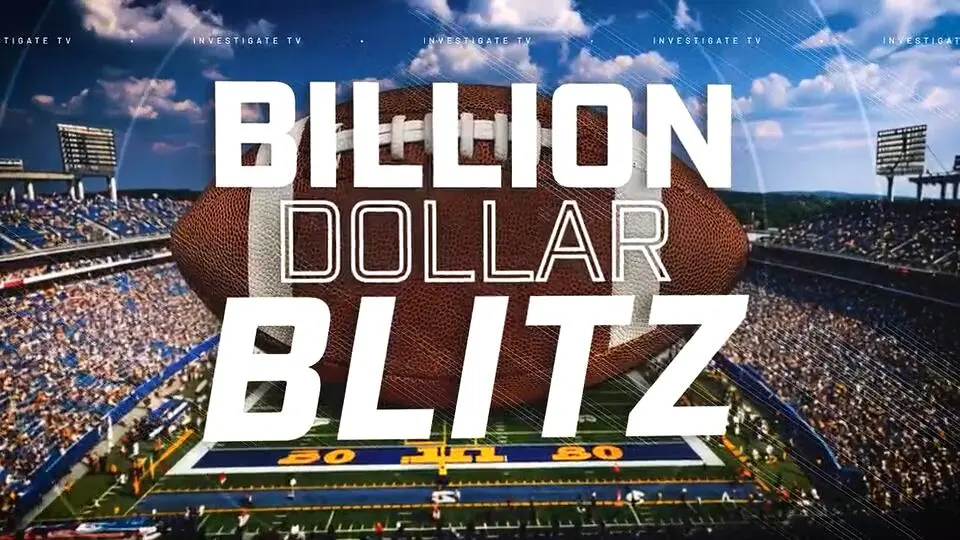
The investigative findings presented by Chris Nakamoto on Following Leads: The Podcast expose a critical fault line in American higher education. As the "billion-dollar blitz" of college sports continues unabated, the fundamental question remains: Can universities justify forcing non-athlete students to bankroll an elite, high-stakes entertainment business? Until comprehensive structural reforms or federal regulations take hold, the financial burden will continue to rest heavily on the shoulders of students seeking nothing more than a college degree.
For more in-depth reporting and to watch or listen to the full discussion, catch this episode of Following Leads: The Podcast, a production of The Following Leads Podcast Network and Gray Media. Episodes are available across all Gray Media station websites, streaming applications, and major podcast platforms.

0 Comments