

Executive Overview
In the high-stress, fast-paced environment of a modern medical facility, moments of tranquility are rare and deeply cherished. Hospitals are traditionally characterized by the sterile hum of fluorescent lighting, the rhythmic beep of vital sign monitors, and the anxious hushed tones of families awaiting news. However, at McLeod Seacoast Hospital in Myrtle Beach, South Carolina, Thursdays take on an entirely different atmosphere. On the hospital’s busiest day for same-day surgeries, the usual tension in the waiting room is gently diffused by the ethereal, resonant plucks of a harp.
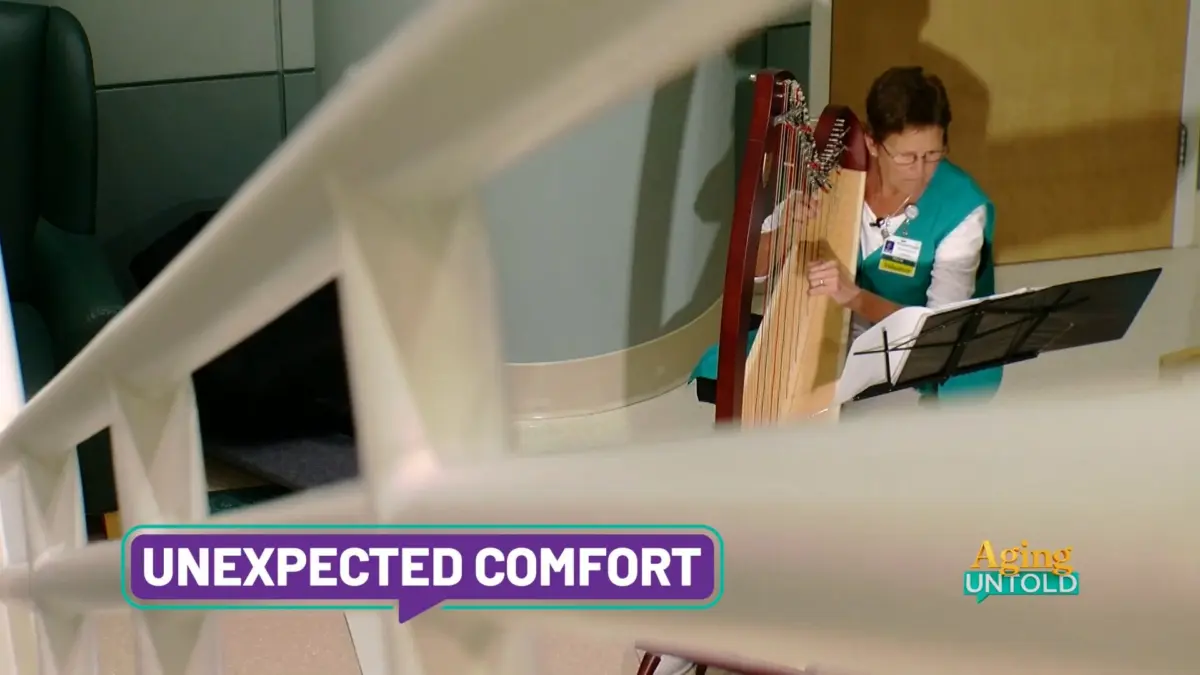
For more than a year, volunteer Peg Mann has dedicated her Thursdays to transforming the clinical environment of McLeod Seacoast through music. Operating under the umbrella of the hospital’s volunteer and student services program, Mann does far more than simply play an instrument; she acts as a stabilizing emotional anchor for patients facing daunting procedures and for families consumed by worry. Her work highlights a growing, evidence-based movement within modern healthcare: the integration of expressive arts and music therapy into patient care environments to lower anxiety, reduce perceived pain, and humanize the clinical experience.
What began as an unconventional proposal by volunteer management has blossomed into an indispensable institutional asset. Mann’s contributions extend well beyond her musical performances. Her day at the hospital begins at the crack of dawn—long before she touches the strings of her harp—involving patient escort duties and managing the hospital’s comfort cart. Through her multifaceted service, Mann has transcended the traditional definition of a volunteer, embedding herself deeply into the cultural fabric of the McLeod Seacoast community. This comprehensive report explores the origins of Mann’s residency, the profound psychological impact of her music on patients and families, the structural integration of volunteer arts programs in healthcare, and the enduring human connections forged in the hospital’s waiting rooms.
Detailed Chronology: A Day in the Life of a Hospital Harpist
To truly understand the impact of Peg Mann’s presence at McLeod Seacoast Hospital, one must examine the arc of her demanding Thursday shifts. Her routine is designed to meet the hospital’s operational peak head-on, providing continuous support from the pre-dawn hours through the height of the surgical schedule.
The 5:30 A.M. Arrival
Mann’s day begins long before the sun rises over the Myrtle Beach coastline. At 5:30 a.m., while much of the city is still asleep, Mann reports for duty at McLeod Seacoast. Unlike traditional musicians who arrive strictly for a performance slot, Mann is deeply integrated into the hospital’s logistical support network. Her shift kicks off with fundamental patient-facing responsibilities: escorting arriving patients to their respective departments and pushing the hospital’s comfort cart through various corridors and waiting areas.
During these early morning rounds, Mann interacts directly with individuals who may be experiencing high levels of pre-surgical anxiety. Pushing the comfort cart—which typically supplies items to ease the physical and emotional discomfort of patients and visitors—allows Mann to engage in brief, meaningful conversations. These early interactions establish a rapport that pays dividends later in the day when patients or their family members recognize her familiar face in the waiting areas.
Transitioning to the Strings
As the morning progresses and the surgical wing reaches peak capacity with same-day procedures, Mann transitions from logistical support to her musical role. Positioning herself strategically within the waiting room—where tension among families typically reaches its zenith—she unpacks her instrument.
Unlike the piano or organ, which have been mainstays of her musical journey for decades, the harp demands a delicate physical setup and tuning process. Once ready, Mann begins her performance. Her repertoire is intentionally curated to soothe the nervous system. Eschewing complex, demanding pieces that might draw analytical attention, she focuses on relaxing melodies, calming classical pieces, and comforting religious hymns. Among her favorites is a piece titled “Angel’s Hymn,” a selection that resonates deeply with the spiritual and emotional needs of listeners navigating uncertain medical outcomes.
Mid-Day Engagements and Personal Connections
Mann’s performance is not a stationary, aloof concert. Throughout her shift, she consciously balances her time between playing the harp and actively engaging with waiting families. When she spots a family visibly distressed by a lengthy procedure, she takes the initiative to step away from her instrument, approach them, and offer a listening ear, a comforting word, or a physical embrace.
"Either they come up and visit, or I take the time to go and visit with them too," Mann notes, describing an exchange characterized by genuine human warmth. "I get lots of hugs and kisses."
This cyclical routine—shifting seamlessly between the ethereal background music of the harp and the grounded, tactile comfort of personal interaction—defines the unique rhythm of her Thursday shifts. By the time her day concludes, Mann has served as a logistics assistant, a musical artist, and an emotional counselor.
Supporting Context & Metrics: The Intersection of Music and Healing
The integration of live music into hospital settings is not merely a pleasant aesthetic choice; it is grounded in a growing body of medical and psychological research regarding the therapeutic benefits of the arts in healthcare environments.
The Neurobiology of Musical Comfort
Clinical studies consistently demonstrate that live, acoustic music can significantly alter physiological markers of stress in clinical settings. When patients and their families listen to soothing, melodic sounds—such as those produced by a harp—their bodies often exhibit reductions in cortisol levels, heart rate, and blood pressure. The frequencies and gentle decay of harp strings are particularly well-suited for this purpose; they avoid sudden transients or aggressive percussion that might startle individuals who are already in an elevated state of hyper-vigilance.
In a hospital waiting room, where the uncertainty of a loved one’s surgery creates a collective atmosphere of tension, ambient live music serves as a cognitive anchor. It disrupts ruminative cycles of anxiety, offering the human brain a safe, predictable pattern to focus on. For patients waiting to be called back for same-day procedures, hearing gentle music can reduce the need for pre-operative anxiolytics (anti-anxiety medications), smoothing the induction process for anesthesia and contributing to a more stable clinical baseline.
The Evolution of Hospital Volunteer Programs
Volunteer services departments play a vital role in modern healthcare institutions, serving as the bridge between clinical efficiency and human compassion. At McLeod Seacoast, the volunteer and student services program is designed to identify unique talents within the community and channel them into areas of highest need.
However, introducing a harpist into a surgical waiting area required a leap of faith on the part of hospital administration. Volunteer manager Peggy Skudera admits that her initial reaction to the proposal was met with cautious skepticism.
"I wasn’t sure a harp was the best place to be in a hospital because my thought was, next stop is heaven," Skudera recalls, reflecting on the common cultural association between the harp and celestial transition.
This initial hesitation underscores the delicate balance healthcare administrators must maintain. While innovation in patient comfort is encouraged, every new program must be rigorously evaluated for its psychological appropriateness in environments where life-and-death situations frequently occur. Ultimately, Skudera’s willingness to pilot the program transformed an initial apprehension into a resounding institutional success, proving that the resonant warmth of a harp can ground individuals in the present moment rather than projecting their fears toward the future.
Official Statements & Perspectives
The success of Peg Mann’s residency at McLeod Seacoast Hospital is best understood through the perspectives of those who manage the volunteer program and the artist herself. Their reflections provide deep insight into the ethos of community-driven healthcare.
Administrative Vision: Overcoming Skepticism
Reflecting on the evolution of the program over the past year, Peggy Skudera highlights the transformative power of observation. What began as a doubtful administrative consideration quickly turned into total admiration as Skudera observed Mann’s interaction with her instrument and her audience.
"When you see her play it, you can see she is so in tune and so married to that harp," Skudera remarks. "It’s absolutely amazing that she doesn’t know what’s going on around her. She doesn’t know all the people are listening. All the people that are looking at her."
This deep absorption in her craft allows Mann to project an aura of serene focus. Rather than performing for validation or applause, her immersion creates a safe, non-intrusive sonic bubble that waiting families can step into or ignore as their personal comfort dictates. Today, Skudera considers Mann an indispensable member of the extended McLeod family, noting emphatically: "We could not be happier to have her here."
The Artist’s Philosophy: Background over Spotlight
For Mann, the decision to volunteer in such an emotionally charged environment is rooted in personal values that prioritize humility and service over personal recognition. With a rich musical background that includes playing the piano and organ for decades, Mann added the harp to her repertoire in 2005. She maintains a rigorous personal commitment to the instrument, taking lessons three times a month and performing regularly at weddings and church services. Despite her proficiency, she actively shuns the spotlight.
"And I like it because you’re just the background," Mann explains. "You’re not the center of attention. That’s not my cup of tea."
This philosophy makes her uniquely suited for a hospital environment. Patients and family members do not feel pressured to applaud, critique, or engage unless they choose to do so. The music exists simply as an offering, available to absorb whatever emotional weight the listener needs to shed.
Furthermore, Mann emphasizes that the exchange is entirely mutual. While she pours emotional and physical energy into her lengthy Thursday shifts, she walks away enriched by the human connections she builds.
"I feel like I have new friends every day when I go home," Mann reflects. "This is what I like to do."
Future Outlook: The Expanding Role of the Arts in Healthcare
As healthcare systems across the United States increasingly recognize the limits of strictly pharmacological interventions in managing patient and family stress, programs like the one at McLeod Seacoast Hospital are poised to serve as models for future development.
Scaling Expressive Arts Initiatives
The success of Peg Mann’s harp residency demonstrates that community volunteers with specialized artistic skills can deliver high-impact emotional support at a fraction of the cost of formal, institutionalized therapy programs. Moving forward, hospital networks are likely to formalize pathways for musicians, visual artists, and creative writers to integrate into volunteer services. By structuring these programs with clear guidelines—focusing on unobtrusive presence, trauma-informed interaction, and consistent scheduling—hospitals can replicate the calming environment established at McLeod Seacoast.
Enhancing Patient Experience Metrics
In an era where hospital reimbursement and public standing are increasingly tied to patient experience scores (such as HCAHPS surveys), the emotional climate of waiting rooms and surgical centers is of paramount importance. High levels of pre-operative anxiety not only diminish the patient experience but can also complicate post-operative recovery, increase the consumption of pain medications, and prolong hospital stays. By deploying ambient, comforting elements like live harp music, hospitals can tangibly improve the psychological well-being of their visitors, directly influencing overall satisfaction metrics.
Building Sustainable Community Partnerships
The story of Peg Mann and McLeod Seacoast Hospital also illustrates the untapped potential of local talent pools. In retirement communities and culturally active regions like Myrtle Beach, there is a vast population of skilled musicians, artists, and retirees looking for meaningful ways to contribute to society. Cultivating these relationships requires visionary leadership from volunteer managers willing to take calculated risks on unconventional ideas—much like Peggy Skudera did when she decided to give a hospital harpist a chance.
As medical technology continues to advance, the human element of healthcare remains irreplaceable. The gentle pluck of a harp string on a busy Thursday morning serves as a powerful reminder that healing is as much an art as it is a science. Through dedication, empathy, and the timeless language of music, volunteers like Peg Mann ensure that even the most clinical environments retain a profound, enduring sense of humanity.

0 Comments