

GAINESVILLE, Fla. — In the high-stakes, hyper-competitive landscape of modern collegiate athletics, the margin between victory and defeat is often measured in fractions of a second, pounds of force, and ounces of mental resilience. As the University of Florida Gators navigate a crucial transitional era under the leadership of head coach Jon Sumrall, the program’s internal engine has been handed to a man uniquely qualified to forge elite physical specimens: Director of Football Performance Rusty Whitt.
Now entrenched in his inaugural season in Gainesville, Whitt arrives not merely as a veteran strength and conditioning coach, but as a battle-tested leader whose philosophy has been shaped by more than three decades in the trenches of collegiate athletics and a distinguished tenure in the United States military. For a Florida program hungry to reestablish its physical dominance in the ferocious Southeastern Conference (SEC), Whitt’s appointment represents a fundamental shift in how the Gators build, condition, and protect their athletes.
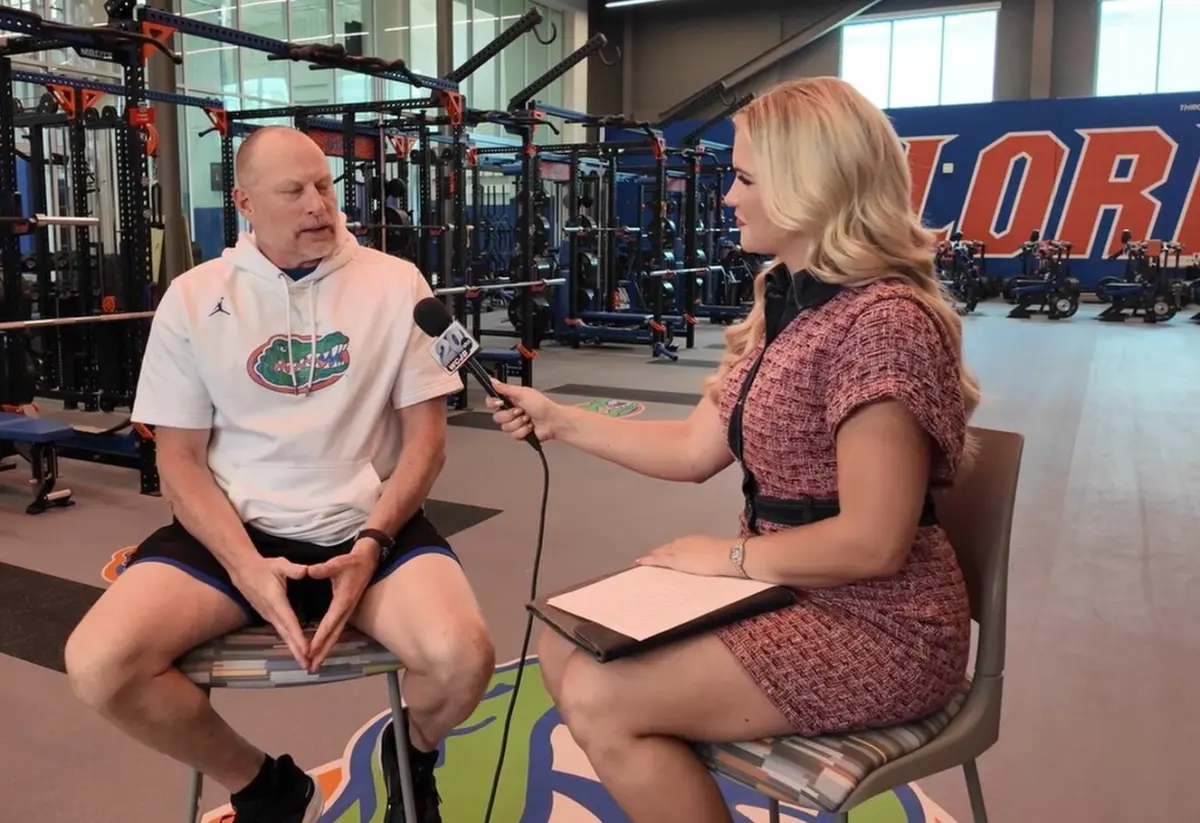
In an exclusive, wide-ranging sit-down interview with TV20’s Olivia Eisenhauer, Whitt pulled back the curtain on his unique methodology, discussing the intersection of military discipline and elite athletic training, his long-standing professional and personal relationship with Coach Sumrall, and the unyielding cultural standards required to survive and thrive in the Swamp.
Executive Overview: The Convergence of Gridiron Glory and Tactical Rigor
The hiring of Rusty Whitt was not merely an administrative checkbox for the Gators’ coaching staff; it was a philosophical statement. In an era where sports science, biometric tracking, and nutritional optimization dominate headlines, Whitt brings an old-school ethos fused with modern tactical application.
With a career spanning over 30 years in collegiate strength and conditioning, Whitt has witnessed the evolution of the sport firsthand. However, what sets him apart from many of his peers in the Football Bowl Subdivision (FBS) is his time spent serving in the United States military. This dual background has endowed him with a rare leadership perspective—one that views a college football roster not just as a collection of athletic talents, but as a cohesive tactical unit that must operate with absolute synchronization, accountability, and mental toughness.
"When you look at what it takes to win in this conference, talent is only the baseline," noted a program insider close to the Florida athletic department. "What Rusty brings is an ability to manufacture grit. He doesn’t just build bigger muscles; he builds unshakeable nervous systems and psychological resilience. That’s what separates a good team from a championship team."
As Whitt settles into his role in Gainesville, his primary mandate is clear: overhaul the physical profile of the Florida roster to withstand the grueling, attrition-heavy 12-game SEC regular season and beyond. Through a meticulous blend of high-intensity functional movements, injury-mitigation protocols, and relentless psychological conditioning, Whitt is working to ensure that when the fourth quarter arrives, the Gators are the stronger, faster, and more mentally resolute team on the field.
Detailed Chronology: From the Armed Forces to the SEC Trenches
To truly understand Rusty Whitt’s impact on the University of Florida football program, one must examine the winding, purposeful trajectory that brought him to Gainesville. His career is defined by adaptability, a relentless pursuit of excellence, and a willingness to step away from the traditional collegiate ladder to serve a higher calling.
The Foundation Years: Early Lessons in Human Performance
Whitt’s journey in strength and conditioning began decades ago, during an era when weight rooms were stark, iron-heavy dungeons and sports science was still in its infancy. Long before GPS vests, force plates, and hyper-personalized nutrition plans became standard operating procedure, Whitt was studying the mechanics of human movement, force production, and structural integrity.
Working through various stops in the collegiate ranks, he quickly developed a reputation for demanding absolute perfection from his athletes. He understood that the weight room was the ultimate laboratory for character development. Wins on Saturdays are forged long before kickoff, in the suffocating heat of winter workouts and the grueling solitude of summer conditioning sessions.
The Military Interlude: Service and Sacrifice
What truly separates Whitt’s resume from almost any other performance director in major college football is his time spent in military service. Operating within elite tactical environments exposed Whitt to human performance optimization under conditions of extreme stress, sleep deprivation, and physical danger.
In the military, physical training is not designed merely to improve aesthetics or even athletic output; it is designed for survivability, mission accomplishment, and collective trust. A soldier relies on the person to their left and right; failure is not an option. Whitt imported these exact tenets back into the athletic arena. He realized that the pressure of a packed SEC stadium pales in comparison to operational stress, yet the psychological tools required to manage high-stakes environments remain identical: emotional control, situational awareness, focus under duress, and an unyielding commitment to the unit.
Return to Elite Collegiate Athletics
Following his military service, Whitt seamlessly transitioned back into the high-octane ecosystem of major college football, holding high-profile strength and conditioning roles at premier institutions. At each stop, his fingerprints were immediately visible on the field. Teams under his direct physical supervision consistently displayed a noticeable fourth-quarter advantage, demonstrating superior stamina, reduced soft-tissue injury rates, and a distinct physical brand of football.
When Jon Sumrall took the helm in Gainesville, securing Whitt as his director of football performance was a top priority. The two men shared a mutual understanding of what it takes to build a sustainable, winning culture. Their professional history laid the groundwork for an instant alignment of vision, ensuring that the strength staff and the coaching staff operate as a single, unified front.
Supporting Context & Metrics: The Science of Gator Toughness
In modern college football, physical preparation is an exact science. Gone are the days of arbitrary weightlifting regimens and one-size-fits-all conditioning tests. Under Whitt’s direction, the Florida football performance program utilizes a data-driven, holistic approach designed to maximize output while safeguarding player health.
Biometric Monitoring and Workload Management
Whitt’s methodology bridges the gap between old-school toughness and cutting-edge sports science. The modern Gator athlete is continuously monitored through advanced tracking systems that measure:
- Player Load: Quantifying total mechanical work and acceleration forces during practices and games.
- Neuromuscular Readiness: Assessing central nervous system fatigue via jump mats and force plates prior to every training session.
- Heart Rate Variability (HRV): Tracking autonomic nervous system recovery to individualize training loads and prevent overtraining syndrome.
By leveraging these metrics, Whitt and his sports science staff can proactively identify athletes at high risk for soft-tissue injuries, adjusting workloads dynamically before minor fatigue cascades into major trauma.
Nutritional Integration and Body Composition
Physical transformation in the SEC requires an aggressive, multi-pronged approach to nutrition. Whitt works hand-in-hand with Florida’s sports dietitians to engineer individual caloric and macronutrient profiles for every player on the roster. Whether an offensive lineman needs to shed excess body fat while maintaining functional mass or a freshman defensive back needs to pack on lean muscle without sacrificing lateral quickness, the nutritional plan is as meticulously calibrated as the weight room prescription.
"You cannot out-train a bad diet, and you cannot build an SEC-ready frame without premium fuel," Whitt has often emphasized. The dining hall and supplement station have thus become extensions of the weight room, ensuring that recovery begins the moment a training session concludes.
Official Statements & Insights: Inside the Interview with TV20
During his exclusive sit-down interview with TV20’s Olivia Eisenhauer, Rusty Whitt offered rare transparency into his coaching philosophy, his dynamic with Head Coach Jon Sumrall, and the psychological framework that governs his daily interactions with Florida players.
When asked about the transition from military environments to the high-pressure world of SEC football, Whitt emphasized that the core tenets of human leadership remain unchanged.
"At the end of the day, whether you’re dealing with soldiers in a tactical setting or 18-to-22-year-old student-athletes chasing their dreams in Gainesville, it’s about trust, accountability, and standards," Whitt told Eisenhauer. "People crave structure. They want to know what the standard is, they want leadership that holds them to it, and they want to discover that they are capable of doing much more than they ever thought possible."
Whitt also elaborated on his relationship with Jon Sumrall, highlighting a shared competitive obsession and mutual respect that dates back years. Their partnership forms the bedrock of the Gators’ cultural rebuild. Sumrall sets the tactical and strategic tone for the football team, while Whitt ensures the physical and mental vessel is forged to execute that vision without breaking.
"Jon and I see the game through the same lens," Whitt explained. "We believe in toughness, we believe in discipline, and we believe that games are won in the trenches long before kickoff on Saturday. My job is to deliver him a football team that is physically imposing, mentally resilient, and conditioned to break the will of the opponent over four quarters."
Eisenhauer’s interview also touched upon the broader landscape of Gator sports, as fans look toward an ambitious upcoming season across all athletic programs. With daily sports coverage anchored by Jake Rongholt, Olivia Eisenhauer, and Julianna Reichenbach during TV20’s 6 o’clock and 11 o’clock nightly newscasts, Gator Nation continues to receive unprecedented, behind-the-scenes access to the inner workings of the athletic department.
Future Outlook: Building a Sustainable SEC Contender
As the University of Florida football program charges headfirst into the future, the true test of Rusty Whitt’s physical blueprint will unfold under the bright lights of Ben Hill Griffin Stadium and the unforgiving battlefields of the SEC schedule.
Building an elite college football program is not an overnight endeavor. It requires daily deposits of sweat, sacrifice, and relentless adherence to a standard. Under Whitt’s watchful eye, the Florida weight room has been transformed into a crucible—a place where comfort is abandoned, weakness is systematically eradicated, and character is forged.
The long-term indicators are undeniably positive. Players speak of a renewed sense of purpose, a tighter brotherhood, and an unprecedented level of physical confidence. As the roster continues to mature under Sumrall’s coaching staff and Whitt’s physical development program, the identity of Florida football is returning to its roots: fast, physical, relentless, and unbreakable.
For Gator Nation, the message is clear. The road back to the summit of college football is steep and unforgiving, but with a battle-hardened tactician like Rusty Whitt directing the physical transformation, Florida has armed itself with the ultimate foundation for sustainable, championship-level success.

0 Comments