

Executive Overview
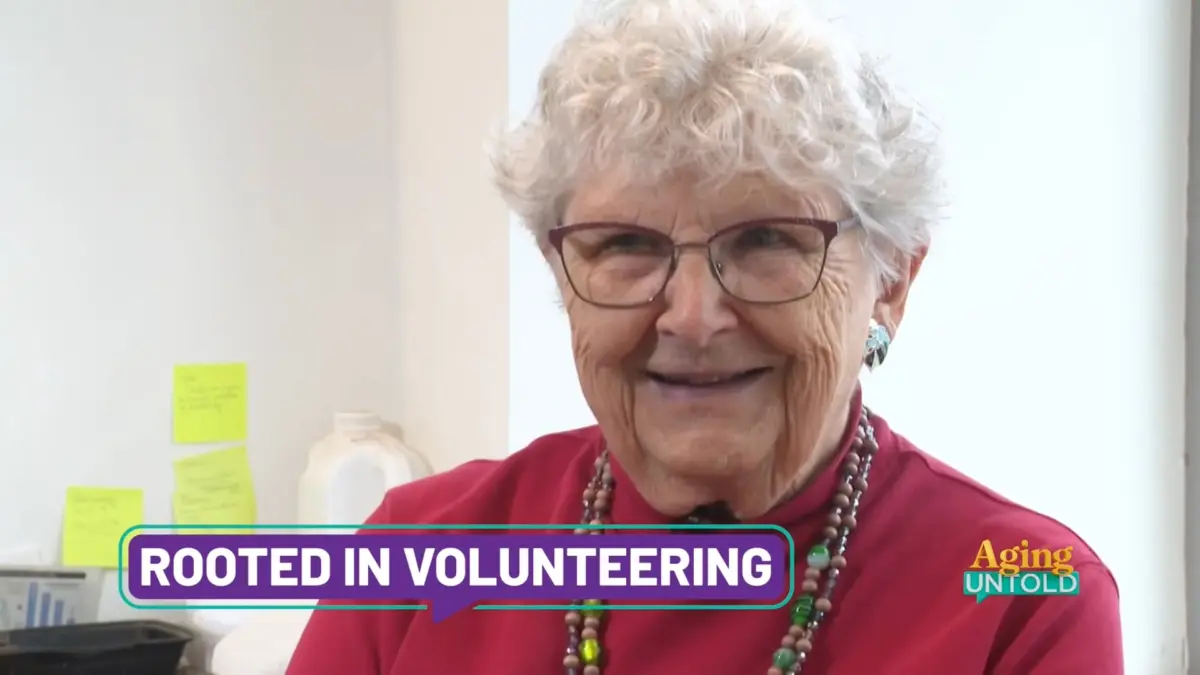
BURLINGTON, Vt. — In the quiet, methodical halls of the University of Vermont’s (UVM) Pringle Herbarium, time appears to slow down, measured not by seconds or minutes, but by centuries of botanical history. For nearly three decades, this sanctuary of pressed flora has been the professional home of Hilda White. At 95 years old, White performs a meticulous, exacting craft that few outside the scientific community even know exists: she mounts plants.
For 28 years, White has volunteered her time to preserve more than 50,000 plant specimens, anchoring delicate leaves, stems, and roots to archival paper. Her painstaking work ensures that these botanical snapshots remain viable for scientific study, environmental monitoring, and historical reference for generations to come. Describing her work not as a chore, but as a deeply personal pursuit, White often remarks, "I can’t draw, but this is my artistic outlet."
That decades-long labor of love recently came full circle in a manner that transcends ordinary workplace recognition. In celebration of her 95th birthday, the herbarium bestowed upon White a gift as rare as it is permanent: a newly discovered species of Christmas fern, unearthed in the dense forests of Colombia, was officially named in her honor. Polystichum hildae now stands as a living testament to her enduring legacy.
This rare taxonomic tribute bridges the gap between field discovery and archival preservation, underscoring the vital, often unsung contributions of museum volunteers. Yet, White’s story is about far more than a single honor; it is a narrative defined by resilience, survival against literal fire, and an unwavering commitment to the natural world. As she approaches a century of life, White remains a fixture at the herbarium, proving that true passion knows no expiration date.
Detailed Chronology: A Lifetime of Preservation
The Quiet Beginnings (1998)
Long before the digital age revolutionized how scientists share data, physical herbaria served as the irreplaceable physical libraries of the plant kingdom. In 1998, Hilda White walked into the Pringle Herbarium at the University of Vermont looking for a way to channel her appreciation for the natural world. She stepped into a role that requires the steady hands of a surgeon and the aesthetic eye of a curator: the mounting of botanical specimens.
When a field botanist collects a plant, it is typically pressed and dried flat. However, a dried plant cannot simply be tossed into a drawer; it must be carefully arranged on acid-free, heavy-weight archival paper. Securing stems with delicate linen thread, applying precise dabs of adhesive, and cataloging specimen data require immense patience. From her very first day, White demonstrated an innate aptitude for the craft. Over the next 28 years, she would repeat this meditative, precise process more than 50,000 times.
The Trial by Fire (2017)
The fragility of botanical collections was starkly highlighted nearly a decade ago, threatening the very records White spent her life preserving. In 2017, a catastrophic fire broke out at Torrey Hall, the historic brick building that historically housed the university’s irreplaceable natural history collections.
At the time of the blaze, Wes Testo—who would later become the director of the Pringle Herbarium—was thousands of miles away in South America conducting field research.
"All I could see from an email in Colombia [was] the roof on fire," Testo recalled, recounting the heart-stopping moment he feared his life’s work was evaporating. "I thought my whole Ph.D. was going up in flames along with the rest of the collection here."
Concurrently, White was commuting to her routine volunteer shift when news of the disaster reached her. The fire, smoke, and subsequent water damage threatened decades of irreplaceable biodiversity data. Rather than retreating, the herbarium community mobilized. Staff, faculty, and dedicated volunteers like White rolled up their sleeves to spearhead a heroic salvage and restoration effort. They carefully rehabilitated smoke-damaged specimens, cleaned water-logged paper, and meticulously remounted compromised plants, saving an invaluable scientific resource from total destruction.
The Colombian Discovery and Birthday Tribute (2023–2025)
While White was busy preserving historical collections in Vermont, the frontiers of botany were expanding across the globe. In 2023, during an expedition through the rugged, biodiverse cloud forests of South America, Wes Testo encountered a botanical marvel.
"I was walking through the forest there, and I saw this just spectacular fern," Testo said. "I knew immediately it was something I hadn’t seen before."
Subsequent morphological and genetic analyses confirmed Testo’s suspicions: he had discovered a previously unknown species of Christmas fern (Polystichum). As the research team prepared to formally publish the discovery, they faced the joyous task of nomenclature. Deciding to honor the foundational labor that keeps herbaria functioning, Testo and his colleagues resolved to name the plant after the woman who had quietly mounted tens of thousands of specimens.
When the honor was unveiled for her 95th birthday, White was overcome with emotion.
"Oh, I was absolutely blown away," she said. "You can’t imagine, I cried all afternoon."
Supporting Context & Metrics: The Anatomy of a Herbarium
To fully appreciate Hilda White’s contribution, one must understand the fundamental architecture of a modern herbarium. Far from being mere storehouses of dead leaves, herbaria are dynamic research institutions that underpin modern plant science, conservation biology, and taxonomy.
What is a Herbarium?
A herbarium functions as a botanical library. Each specimen—historically referred to as a voucher specimen—acts as a verifiable, physical data point of plant life at a specific geographic location and calendar date. Researchers utilize these collections to:
- Track the impacts of global climate change on flowering times.
- Monitor the spread of invasive species over centuries.
- Rediscover supposedly extinct populations.
- Map global biodiversity hotspots to guide conservation policy.
The Art and Science of Plant Mounting
The process of mounting, which White has mastered over nearly three decades, is far more complex than simple scrapbooking. It requires adherence to strict international archival standards:
- Archival Integrity: Papers, glues, and labels must be acid-free and lignin-free to prevent yellowing, degradation, and chemical breakdown over hundreds of years.
- Anatomical Representation: A mounted specimen must display both the upper and lower surfaces of leaves, reproductive structures (flowers, spores, or cones), and root systems when possible.
- Durability: The mounting must withstand decades of handling by visiting researchers without losing vital plant parts.
"If I mount the plants, the plants will be around for hundreds of years, barring any unforeseen accidents or anything," White notes, accurately highlighting the generational impact of her daily work.
| Metric / Milestone | Detail |
|---|---|
| Years of Service | 28 Years (1998–Present) |
| Specimens Mounted | Over 50,000 individual plants |
| Age | 95 years old |
| The Honored Species | Polystichum hildae (a newly discovered Colombian Christmas fern) |
| Discovery Year | 2023 (Published/Announced 2025) |
Official Statements and Perspectives
The synergy between field discovery and indoor curation is rarely highlighted as clearly as it is in the partnership between Wes Testo and Hilda White. Modern academic science often prioritizes high-tech genetic sequencing and flashy field expeditions, yet leaders in the field are quick to ground their work in the humbler traditions of museum curation.
"I was walking through the forest there, and I saw this just spectacular fern. I knew immediately it was something I hadn’t seen before."
— Wes Testo, Director of the Pringle Herbarium
Testo’s field acumen brought Polystichum hildae out of the Colombian wilderness, but he is quick to acknowledge that the overarching edifice of botanical science rests on the shoulders of individuals who process collections behind the scenes. Without people like White meticulously stabilizing, labeling, and filing specimens, new discoveries lack context, baseline comparisons, and long-term security.
Reflecting on her own legacy, White views her longevity not through the lens of institutional awards, but through the tactile satisfaction of a job done well.
"I can’t draw, but this is my artistic outlet."
— Hilda White, Herbarium Volunteer
Her emotional response to having Polystichum hildae named in her honor revealed the deep personal bond she shares with the scientific community at UVM. For a woman who has spent 28 years ensuring that plants are remembered for centuries, achieving a permanent place in botanical nomenclature is a poetic and fitting tribute.
Future Outlook: A Legacy Set in Stone and Fern
As the scientific community looks toward the future, herbaria face both unprecedented challenges and modernizations. Digitization efforts are currently underway across the globe to photograph historical specimens, allowing researchers in Tokyo or London to examine a UVM specimen on their computer screens without handling the physical paper. Yet, digital scans cannot replace physical vouchers, which hold microscopic DNA, chemical compounds, and structural data yet to be discovered by future analytical tools.
For the Pringle Herbarium, the recovery from the 2017 Torrey Hall fire and the subsequent integration of world-class discoveries like Polystichum hildae mark a new era of resilience and vitality. The collection continues to serve as an invaluable teaching and research asset for students, faculty, and international scholars alike.
And what about Hilda White? Despite navigating nearly a century of life and contributing a lifetime of labor to the university, she shows no signs of slowing down. When asked about her retirement plans, her response is characteristically swift and resolute.
"Oh no!" White says with a smile. "I’ll be here as long as I can."
In an era defined by rapid technological turnover and fleeting trends, Hilda White’s enduring presence at the Pringle Herbarium—now permanently intertwined with the genus Polystichum—reminds us of the profound value found in quiet, daily dedication to the natural world.

0 Comments