

Executive Overview
BURLINGTON, Vt. — For nearly three decades, the sterile, methodical halls of the University of Vermont’s (UVM) Pringle Herbarium have played host to an extraordinary ritual of quiet devotion. Here, among aisles of steel cabinetry storing hundreds of thousands of dried, pressed botanical specimens—a veritable library of the natural world—Hilda White has spent her golden years doing a job few outside the scientific community even know exists: mounting plants.
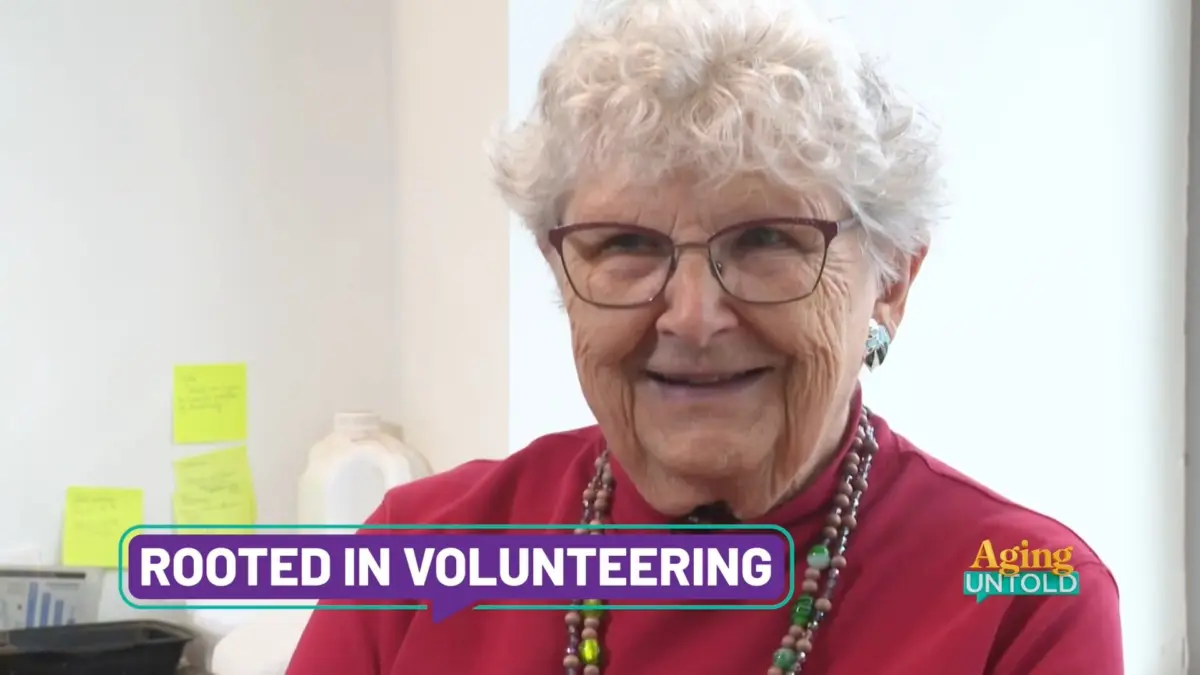
At 95 years old, White is far more than a volunteer; she is a foundational pillar of modern botanical research in New England. Over a span of 28 years, she has meticulously preserved more than 50,000 plant specimens, affixing fragile flora to archival-grade paper with surgical precision so they can be studied, referenced, and cataloged by generations of scientists yet unborn.
In December, the university and its scientific community turned the tables on the woman who has spent decades preserving their history. To mark her 95th birthday, the Pringle Herbarium bestowed upon White a gift of rare, immortal distinction: a newly discovered species of Christmas fern, unearthed in the dense, misty forests of Colombia in 2023, was officially named in her honor—Polystichum hildae.
This comprehensive report explores White’s remarkable journey as a master botanical mounter, the dramatic discovery of the fern that bears her name, the harrowing near-loss of the university’s priceless botanical archives in a devastating 2017 fire, and the indomitable spirit of a Vermont nonagenarian who has absolutely no intention of putting down her archival glue and tweezers anytime soon.
Detailed Chronology: A Life Bound to Botany
The Genesis of a 28-Year Labor of Love
Hilda White’s journey into the intricate world of plant preservation did not begin in a laboratory, nor was it the predictable trajectory of a lifelong professional botanist. Instead, it stemmed from a personal passion for aesthetics, texture, and structure. When White first walked through the doors of the Pringle Herbarium 28 years ago, she brought with her a deep appreciation for the natural world and a steady pair of hands.
"I can’t draw, but this is my artistic outlet," White reflects, gazing over a fresh specimen waiting for preparation.
While artists use canvas and oils, White utilizes archival cotton paper, specialized glue, linen tape, and weighted objects. Her canvas is the biological diversity of the planet. Every specimen that crosses her desk must be carefully rehydrated if necessary, delicately arranged to display its diagnostic features (roots, leaves, veins, and sori), and secured in a way that will withstand centuries of handling by researchers.
"If I mount the plants, the plants will be around for hundreds of years, barring any unforeseen accidents or anything," White notes matter-of-factly. Her work ensures that fleeting botanical moments captured in the wild are transformed into permanent scientific records, safeguarding historical plant distributions for future ecological studies.
The Colombian Discovery and the Birth of Polystichum hildae
The narrative took an international and historic turn in 2023 during a botanical expedition to South America. Dr. Wes Testo, the director of the Pringle Herbarium collection, was conducting fieldwork in the biodiverse, rain-drenched forests of Colombia when he encountered a botanical marvel.
"I was walking through the forest there, and I saw this just spectacular fern," Testo recalled. "I knew immediately it was something I hadn’t seen before."
Fern taxonomy is notoriously complex, requiring deep phylogenetic analysis and minute morphological inspections. Back in the laboratory, Testo and his colleagues confirmed that the specimen was indeed a species entirely new to science—a member of the genus Polystichum, commonly known as Christmas ferns.
As discussions began regarding what to name the newly discovered organism, Testo and the research team agreed that the nomenclature should reflect someone whose life’s work embodies the very essence of herbarium science. They bypassed traditional Latin naming conventions based solely on geography or morphology and chose instead to honor the woman who has quietly processed tens of thousands of specimens for the institution.
Thus, Polystichum hildae was born.
When the surprise was revealed to White on her 95th birthday, the stoic volunteer was utterly overwhelmed.
"Oh, I was absolutely blown away," White said, her voice carrying the emotional weight of the moment. "You can’t imagine, I cried all afternoon."
Supporting Context & Metrics: The Anatomy of a Herbarium
To fully grasp the magnitude of Hilda White’s contributions, one must understand the vital role that herbaria play in global biodiversity research. Often described as natural history museums for plants, herbaria are physical archives containing dried, pressed, and properly labeled plant specimens accompanied by crucial metadata: where the plant was collected, when, by whom, and under what ecological conditions.
The Pringle Herbarium: A Regional Treasure
Founded in the late 19th century and named after legendary Vermont botanical collector Cyrus Guernsey Pringle, the Pringle Herbarium at the University of Vermont houses a massive collection of vascular plants, bryophytes, and lichens. It serves as a vital resource for:
- Taxonomic Research: Helping scientists describe new species, revise plant families, and understand evolutionary relationships.
- Conservation Biology: Tracking historical plant ranges, identifying endangered species habitats, and monitoring the impact of invasive species over centuries.
- Climate Change Studies: Providing baseline historical data on when plants flowered or leafed out decades or centuries ago, allowing researchers to measure shifts driven by global warming.
Quantifying White’s Impact
Numbers alone cannot capture the patience required to mount a plant, but the statistics of White’s career are staggering:
- 28 Years of Service: Nearly three decades of consistent, weekly volunteering.
- 50,000+ Specimens: More than 50,000 individual plants prepared, labeled, and archived.
- 1 New Species Name: Immortalized globally in botanical literature via Polystichum hildae.
The Fire of 2017: A Trial by Fire
The survival of the Pringle Herbarium—and of White’s life’s work—is not a tale of unbroken administrative ease. It is marked by crisis and miraculous recovery.
In 2017, disaster struck the university campus when a catastrophic fire broke out at Torrey Hall, the historic building that housed the herbarium collection at the time. At that exact moment, Dr. Wes Testo was thousands of miles away in South America conducting field research.
"All I could see from an email in Colombia—the roof on fire," Testo remembered, the memory still raw. "I thought my whole Ph.D. was going up in flames along with the rest of the collection here."
The threat was existential. Historic irreplaceable specimens dating back to the 1800s, irreplaceable type specimens, and decades of scholarly work teetered on the brink of total annihilation.
Simultaneously, Hilda White was on her commute to work when news of the disaster reached the university community. Rather than retreating, the institution’s tight-knit network of staff, researchers, and dedicated volunteers mobilized. Working under extreme duress, the team—with White playing an integral role—labored tirelessly to salvage, dry, restore, and remount water-damaged and soot-stained specimens. Thanks to heroic intervention, the vast majority of the collection was saved, proving that the bond between the botanists and their volunteers was as resilient as the plants they studied.
Official Statements & Perspectives
The symbiotic relationship between the academic leadership at UVM and its community volunteers highlights a model of inclusive, community-integrated science.
Dr. Wes Testo emphasized that White’s meticulous labor has directly facilitated cutting-edge botanical discoveries. "Hilda’s contributions have been essential to the research conducted in the collection," Testo noted. "When you process over 50,000 specimens, you are literally building the physical framework upon which modern plant science in this institution rests. Naming Polystichum hildae after her was our way of acknowledging that science does not happen in a vacuum—it relies on the quiet, dedicated hands of people like Hilda."
From White’s perspective, her work has never felt like an obligation. It is a sanctuary of focus and purpose.
"If I mount the plants, the plants will be around for hundreds of years," White reiterates, finding deep existential satisfaction in creating objects that outlast human lifespans. Her journey exemplifies how elder engagement can inject profound stability and wisdom into academic institutions.
Future Outlook: No Plans to Stop
As Hilda White steps into her 95th year, her name permanently etched into the annals of botanical nomenclature alongside a lush Colombian fern, observers might wonder if she is contemplating retirement.
Her response is immediate, emphatic, and laced with characteristic Vermont grit.
"Oh no! I’ll be here as long as I can," she declared.
For the researchers at the Pringle Herbarium, White’s dedication is a source of daily inspiration. As global climate change accelerates and biodiversity loss threatens ecosystems worldwide, institutions like the Pringle Herbarium are more critical than ever. And within those walls, protected by archival paper and mounted with surgical care, the physical history of the plant kingdom continues to grow—supervised, shaped, and secured by a nonagenarian legend whose own name is now woven forever into the fabric of the green earth.

0 Comments