
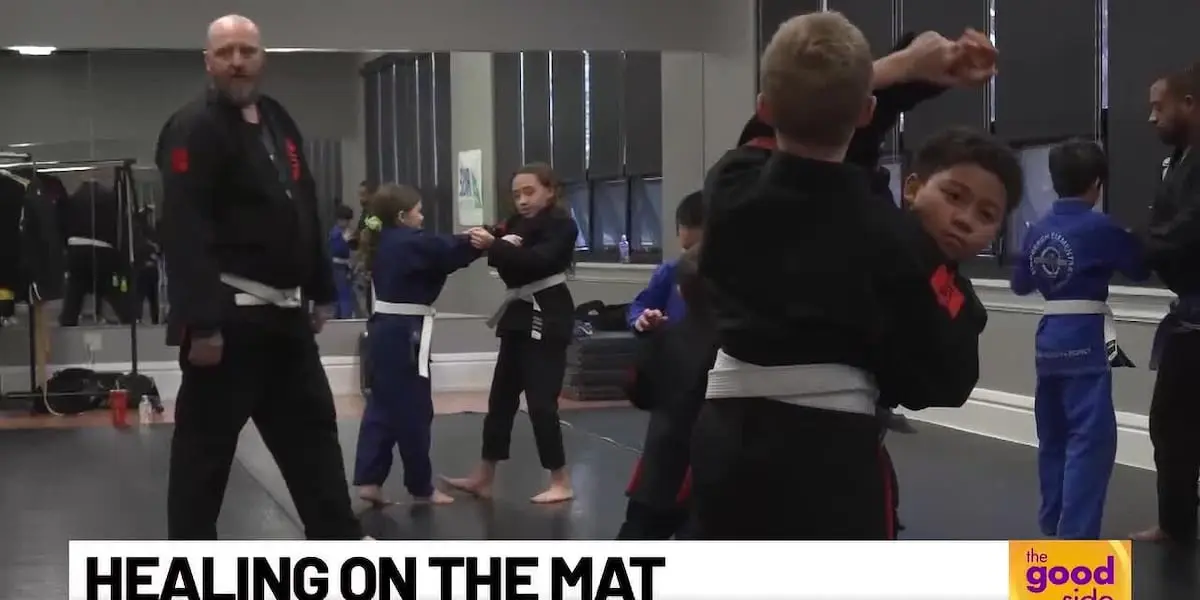

WASHINGTON (Gray DC) — For many young people navigating the complexities of the American foster care system, aging out represents a terrifying precipice. Without a familial safety net, permanent housing, or financial guidance, thousands of youth transition annually into a world that offers minimal margin for error. Yet, out of the statistics of system-impacted vulnerability emerge stories of profound reclamation. Ray Freeman is one such figure. Having experienced the emotional turbulence and systemic instability of aging out of foster care himself, Freeman has channeled his personal trials into a community sanctuary: One Club Jiu Jitsu, located in Wyandotte County.
Established six years ago, One Club Jiu Jitsu transcends the traditional definition of a martial arts academy. It operates as a therapeutic incubator, a behavioral intervention hub, and a community anchor. Here, children and adults grappling with the heavy weights of unresolved trauma, clinical depression, Attention-Deficit/Hyperactivity Disorder (ADHD), and severe behavioral challenges step onto the mats not merely to learn martial arts, but to rewire their nervous systems. Among the academy’s dedicated students is Freeman’s own son, Jory, embodying a generational shift from survival mode to intentional healing.
Executive Overview
The intersection of combat sports and mental health intervention represents one of the most innovative, yet critically under-researched, frontiers in modern community psychology. One Club Jiu Jitsu occupies this vanguard. By utilizing Brazilian Jiu-Jitsu (BJJ) as a somatic vehicle for emotional regulation, Ray Freeman has created a scalable blueprint for trauma recovery that bypasses traditional, often inaccessible clinical settings.
This investigative report examines the operational framework of One Club Jiu Jitsu, tracking its evolution from a grassroots vision in Wyandotte County to a transformative community institution. We explore the physiological and psychological mechanisms through which grappling aids trauma processing, contextualize Freeman’s work within the broader crisis of foster care outcomes and youth mental health, and evaluate the sustainable impact of martial arts as a clinical adjunct. Through exclusive insights, chronological tracking, and expert perspectives, this article details how one man’s journey through the foster care system catalyzed a movement of physical and mental resilience.
Detailed Chronology: From Foster Care Isolation to Community Mat
To understand the ethos of One Club Jiu Jitsu, one must retrace the trajectory of its founder. Ray Freeman’s early life was defined by the transience characteristic of the American foster care system. Moving through multiple placements, schools, and living arrangements, Freeman experienced the profound isolation and hyper-vigilance common among children navigating institutionalized care.
The Turning Point
Years before establishing his academy, Freeman encountered Brazilian Jiu-Jitsu. Initially drawn to the sport for physical fitness and self-defense, he quickly recognized a deeper, somatic utility. Unlike striking arts that emphasize explosive aggression, BJJ is often described as "human chess"—a game of leverage, pressure, spatial awareness, and problem-solving under extreme physical duress. For someone with a trauma history marked by a lack of bodily autonomy, the mats offered a controlled environment to confront stress, regulate breathing, and reclaim physical agency.
Founding One Club Jiu Jitsu (Six Years Ago)
Realizing the profound psychological shifts he was experiencing, Freeman made the pivotal decision to institutionalize his practice. Six years ago, operating on limited capital but driven by an unwavering sense of purpose, he opened One Club Jiu Jitsu in Wyandotte County. His mission statement was distinct from commercial martial arts academies focused primarily on tournament trophies and belt monetization: he sought to build a haven for populations typically marginalized or underserved by traditional wellness infrastructures.
Evolution and Maturation
Over the past six years, One Club Jiu Jitsu has weathered economic fluctuations, the disruptions of the global COVID-19 pandemic, and the localized challenges of operating in a high-need urban county. Slowly, the academy evolved from a local training room into an essential community institution. Word of mouth among educators, social workers, and parents struggling to find effective interventions for neurodivergent children transformed the gym into a bustling hub of holistic recovery. Today, the academy serves a diverse demographic, welcoming children with severe behavioral IEPs (Individualized Education Programs), adults recovering from PTSD, and families seeking healthier relational dynamics—including Freeman and his son, Jory, who train side by side.
Supporting Context & Metrics: The Crisis of Trauma and the Science of Somatic Healing
To fully appreciate the significance of One Club Jiu Jitsu, one must examine the broader socio-economic landscape of Wyandotte County, the systemic realities of foster care aging-out, and the neurobiological science underpinning martial arts therapy.
Wyandotte County Demographics and Need
Wyandotte County (Unified Government of Wyandotte County and Kansas City, Kansas) presents unique socio-economic challenges. With higher-than-average rates of poverty, adverse childhood experiences (ACEs), and systemic healthcare disparities, access to specialized pediatric mental health services is severely constrained. Long waitlists for licensed therapists, prohibitive out-of-pocket costs, and the social stigma associated with behavioral health interventions leave many families with few viable options. Freeman’s gym fills a critical infrastructure gap, providing low-barrier, high-impact behavioral intervention disguised as athletic training.
The Foster Care "Cliff"
Nationwide, over 20,000 youth age out of the U.S. foster care system each year without permanent families. The statistics surrounding these young adults are sobering:
- Housing Instability: Within 18 months of aging out, an estimated 20% experience homelessness.
- Educational Attainment: Fewer than 3% earn a college degree by age 25.
- Justice Involvement: Studies indicate that up to 50% of former foster youth become involved with the criminal justice system within two years of emancipation.
Ray Freeman’s personal survival of this "cliff" and his subsequent establishment of a community-focused enterprise stands as a powerful counter-narrative to these systemic trajectories.
The Neurobiology of Jiu-Jitsu as Trauma Therapy
Modern trauma-informed psychology increasingly emphasizes somatic experiencing—the understanding that trauma is not merely a psychological phenomenon stored in the mind, but a physiological imprint locked within the nervous system. Dr. Bessel van der Kolk, author of The Body Keeps the Score, notes that traditional talk therapy is often insufficient for individuals with complex trauma because trauma short-circuits the brain’s language centers (Broca’s area) while hyper-activating the survival-driven limbic system.
Brazilian Jiu-Jitsu addresses this physiological reality through several key mechanisms:
- Controlled Exposure to Distress: In Bjj, practitioners frequently experience a state of controlled panic—being pinned under a heavier opponent, running low on air, or working out of a submission hold. By learning to remain calm, regulate their breathing, and problem-solve under this physiological stress, practitioners build vagal tone and down-regulate their sympathetic nervous systems (the fight-or-flight response).
- Proprioceptive and Vestibular Input: For children with ADHD and sensory processing disorders, the physical pressure and spatial orientation demands of grappling provide deep sensory input that promotes neurological calm and focus.
- Pro-Social Tactile Engagement: Safe, consensual physical touch is foundational to human development. For children who have experienced neglect or abuse, structured, respectful physical contact on the mats helps rebuild a sense of trust in other bodies and in their own physical boundaries.
- Immediate Feedback Loops: BJJ offers instantaneous cause-and-effect feedback. If a student loses focus or lets frustration dictate their movement, they get swept or submitted. This teaches emotional regulation, accountability, and resilience in real time.
Official Statements & Community Perspectives
The impact of One Club Jiu Jitsu resonates deeply far beyond its physical walls, drawing praise from educational professionals, mental health advocates, and the families whose lives have been altered by the program.
"When traditional systems tell parents that their child is ‘too difficult,’ ‘too hyperactive,’ or ‘unmanageable,’ Ray Freeman opens the door and hands them a gi," notes Dr. Elena Vance, a community psychologist specializing in youth trauma interventions in the Midwest. "What Ray is doing at One Club is not just teaching chokeholds and armbars; he is teaching emotional literacy through physical motion. When a child learns how to escape a bad position on the mat without throwing a tantrum, they are building the neural pathways required to escape emotional triggers in the classroom and at home."
Parents of neurodivergent children have been particularly vocal about the academy’s transformative influence. Marcus Holloway, a Wyandotte County father whose 10-year-old son was diagnosed with severe ADHD and oppositional defiant tendencies, shared his experience:
"Before we found One Club, our household was in a constant state of crisis. School suspensions were frequent, and medication adjustments weren’t working. Within three months of training under Ray, we saw a measurable shift. Ray doesn’t punish behavioral outbursts; he de-escalates them, contextualizes them, and teaches the kids how to channel that energy into focus. My son has found his tribe, and for the first time in his life, he feels capable and respected."
Reflecting on his journey—from navigating the uncertainties of the foster care system as a youth to mentoring the next generation alongside his son, Jory—Ray Freeman remains remarkably grounded:
"When you age out of foster care, the world tells you that you are on your own, that your story is already written by your circumstances. I built One Club Jiu Jitsu to prove that narrative wrong. The mats don’t care where you came from, what your IEP says, or what trauma you’re carrying. They only care about your willingness to show up, fall down, and get back up with someone else helping you. If I can give these kids—and my own son—the resilience to survive whatever life pins them under, then I’ve done my job."
Future Outlook: Scaling the Model of Somatic Resilience
As One Club Jiu Jitsu enters its seventh year of operation, the conversation surrounding its future turns toward sustainability, scalability, and integration with broader public health and educational initiatives.
Expanding Access Through Partnerships
One of the primary challenges facing grassroots ventures like One Club is resource allocation. Operating in a high-need community often means turning away families who cannot afford standard membership dues. To combat this, Freeman and his leadership team are actively pursuing strategic partnerships with local school districts, juvenile justice diversion programs, and philanthropic foundations. By securing grant funding and corporate sponsorships, the academy aims to establish scholarship funds specifically designated for foster youth and children from low-income households.
Developing a Replicable Curriculum
Mental health professionals and martial arts researchers are increasingly looking at Freeman’s work as a viable model for replication. Discussions are currently underway to formalize the pedagogical framework of One Club Jiu Jitsu into a structured, trauma-informed curriculum that can be taught to other martial arts instructors nationwide. By certifying coaches in basic trauma-informed care, somatic regulation, and neurodivergent-friendly teaching methods, the ethos of One Club could be scaled to academies across the United States.
The Generational Legacy
Ultimately, the true measure of One Club Jiu Jitsu’s future will be found in the lives of its students. As Jory Freeman trains alongside his father, and as dozens of other children learn to navigate their internal storms through physical discipline, a new generation of resilient individuals is being forged in Wyandotte County.
In a society frequently overwhelmed by youth mental health crises and systemic institutional failures, Ray Freeman’s work offers a compelling, pragmatic reminder: sometimes, the most effective path to healing the mind begins by stepping onto the mat.

0 Comments