Deep within the Ozark foothills, the Crystal Bridges Museum of American Art in Bentonville, Arkansas, has opened its doors to a cultural phenomenon that bridges the gap between raw geological wonder and high-art craftsmanship. Titled Nature Adorned: The Artistry of Tiffany & Co. and the American Imagination, the exhibition serves as a breathtaking exploration of how the natural world has informed and inspired generations of American artists, master jewelers, and visionary designers.
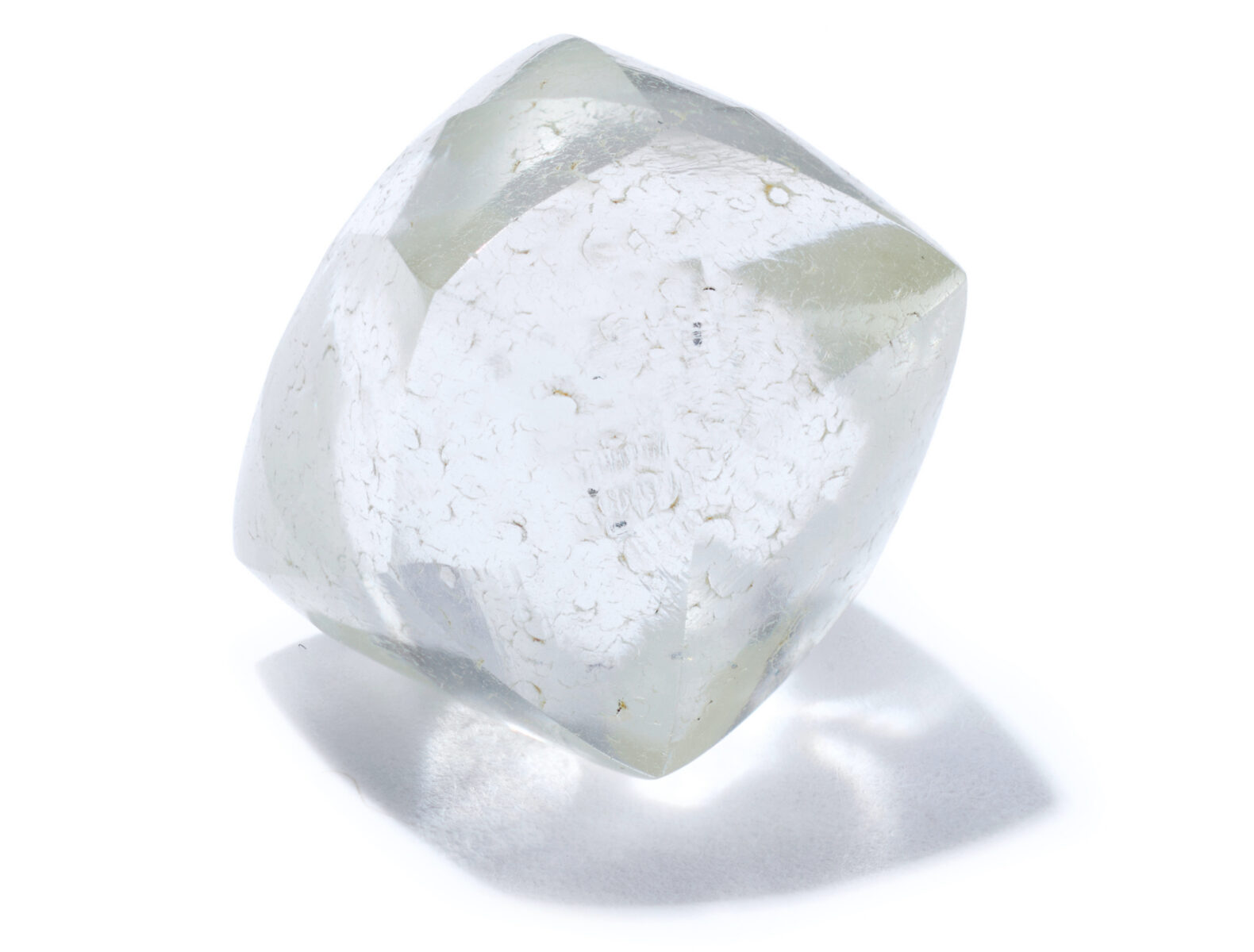
At the center of this nationally significant cultural event is a true prodigy of American gemology: the Arkansas Diamond. Discovered a century ago by an eleven-year-old girl in Searcy, Arkansas, this magnificent 27.21-carat stone stands as one of the largest gem-quality diamonds ever unearthed in the United States. Following its historic discovery, the stone was acquired by the legendary house of Tiffany & Co. and has since remained securely preserved within the Tiffany Archives in New York City.
Now, after decades away from its native soil, the colossal diamond has returned home. Alongside two other notable diamonds discovered in Arkansas, the historic gemstone anchors an expansive exhibition that places priceless Tiffany jewels in direct conversation with American paintings, rare minerals, and historic decorative arts from Crystal Bridges’ permanent collection. Running through March 29, 2027, Nature Adorned challenges visitors to reconsider the boundaries between fine art and wearable sculpture, offering an authoritative, cross-disciplinary study of nature’s enduring influence on human creativity.
Detailed Chronology: From Volcanic Upheaval to Modern Museum Walls
The story of the Arkansas Diamond is deeply intertwined with the volatile prehistoric history of the North American continent. To understand the magnitude of the exhibition, one must look back nearly one hundred million years.
Cretaceous Period (Approx. 100 Million Years Ago): Deep volcanic activity forces diamond-bearing kimberlite magma upward from the Earth’s mantle through the crust, depositing rich diamond deposits in what is now southwest Arkansas.
March 1906: An unsuspecting farmer in Pike County uncovers the first verified diamond in Arkansas, setting off a wave of local excitement and transforming the Natural State into the only known diamond-producing region in the United States.
1926: An eleven-year-old girl walking near Searcy, Arkansas, stumbles upon an extraordinary rough stone. Weighing a staggering 27.21 carats, the crystal is immediately recognized as a masterpiece of American natural history—one of the largest and finest diamonds ever found within U.S. borders.
Mid-20th Century: The prestigious firm Tiffany & Co. acquires the monumental gem, incorporating it into their legendary corporate repository. The stone is transported to New York City, where it becomes a cornerstone of the Tiffany Archives, rarely seen by the general public.
Late 20th Century – Present: Crater of Diamonds State Park in Murfreesboro, Arkansas, remains a globally unique public site—the only place on Earth where amateur prospectors can search for diamonds and legally keep whatever gems they manage to unearth.
October 2026: Crystal Bridges Museum of American Art debuts Nature Adorned. Through a special curation and institutional partnership, the 27.21-carat Arkansas Diamond makes its triumphant return to its home state, headlining an exhibition that pairs it with mid-century abstract paintings, Art Nouveau glasswork, and masterworks of American landscape art.
Supporting Context & Metrics: The Intersection of Gemology and Fine Art
Curated by Jen Padgett, Nature Adorned relies on deliberate, thought-provoking pairings to deconstruct how human beings translate biological and geological forms into lasting cultural artifacts. Rather than separating the decorative arts from "high art," the exhibition deliberately blurs the lines, inviting viewers to examine the shared methodologies of painters, sculptors, and master jewelers.
The Power of Juxtaposition
The exhibition layout features several striking dialogues between physical minerals and artistic masterpieces:
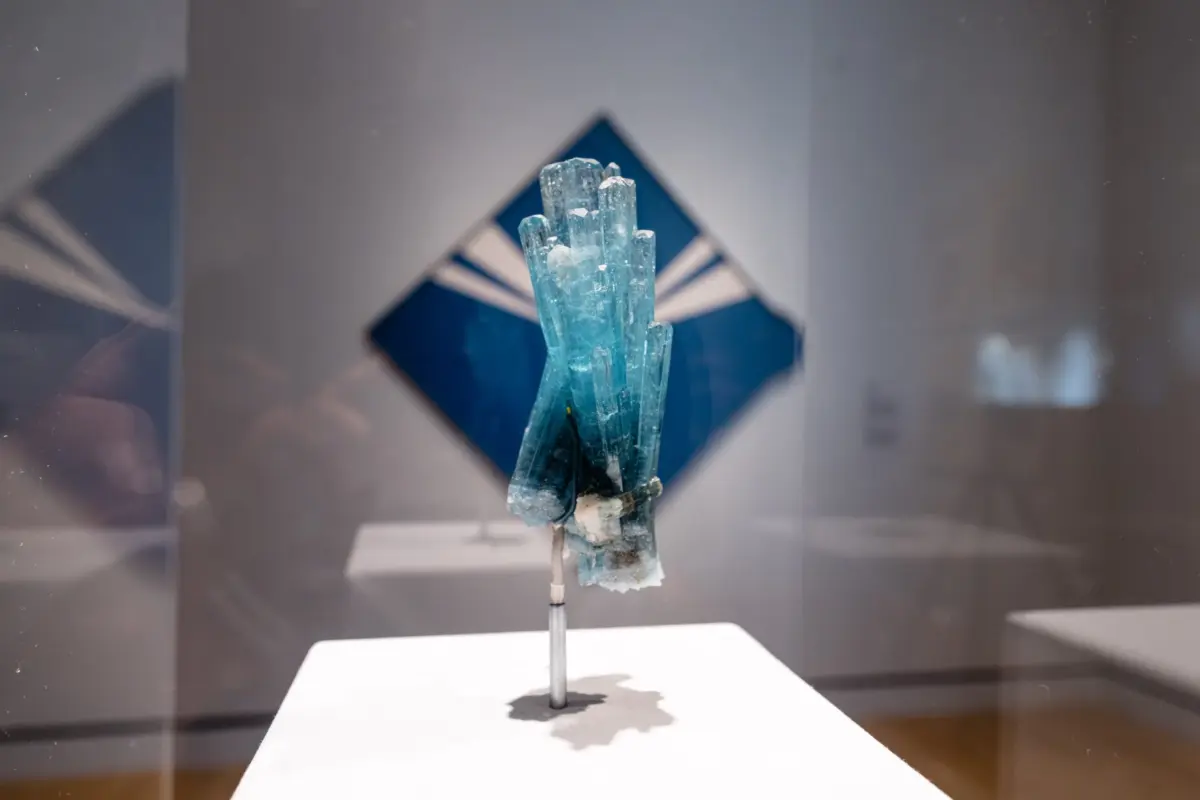
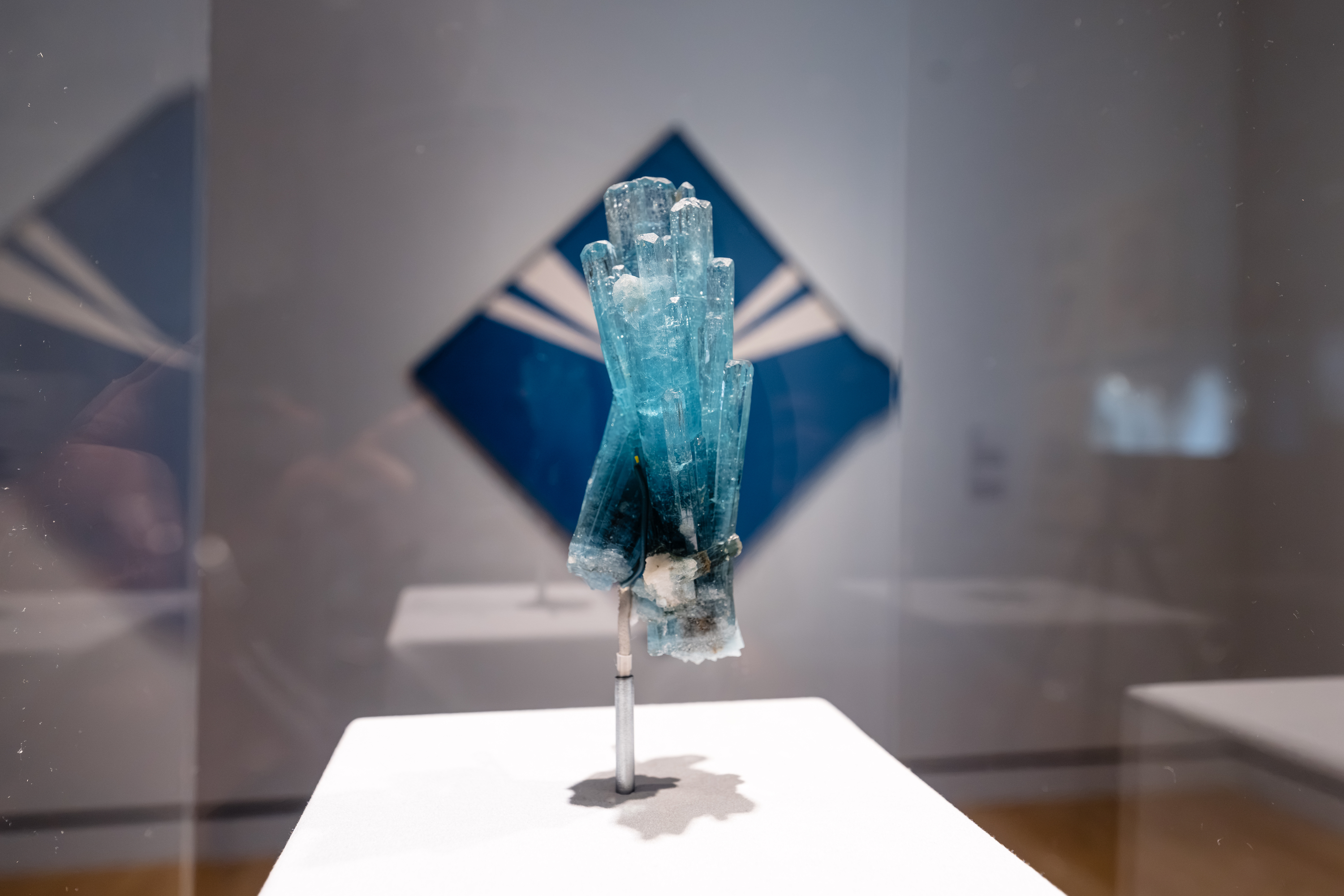
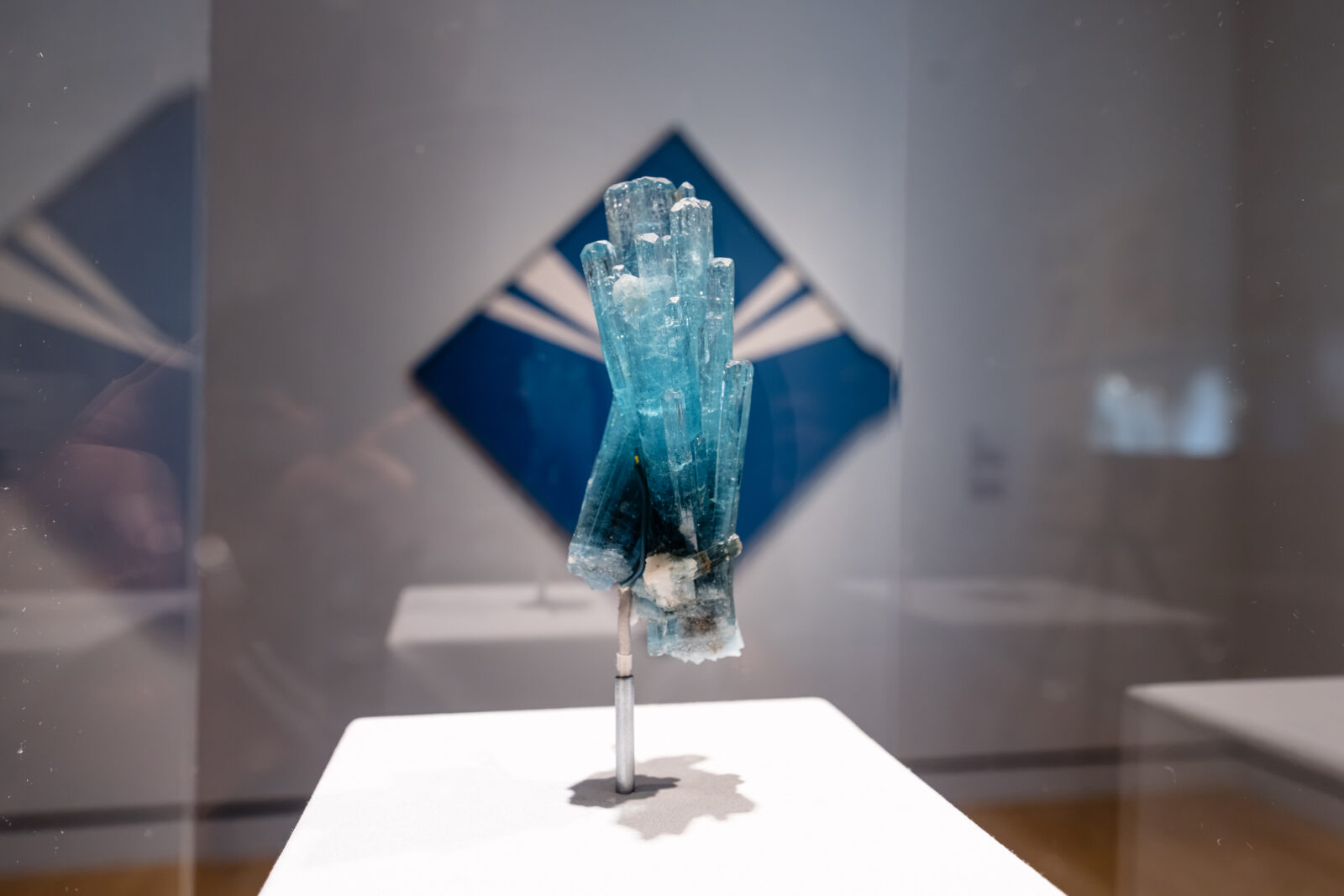
Beryl and Abstract Geometry: A stunning blue beryl crystal is positioned directly in front of Carmen Herrera’s 1965 minimalist canvas, Cerulean. Herrera’s geometric exploration transforms a traditional square into a dynamic diamond shape through razor-sharp cuts in space, echoing the clean, crystalline facets of the mineral resting nearby.
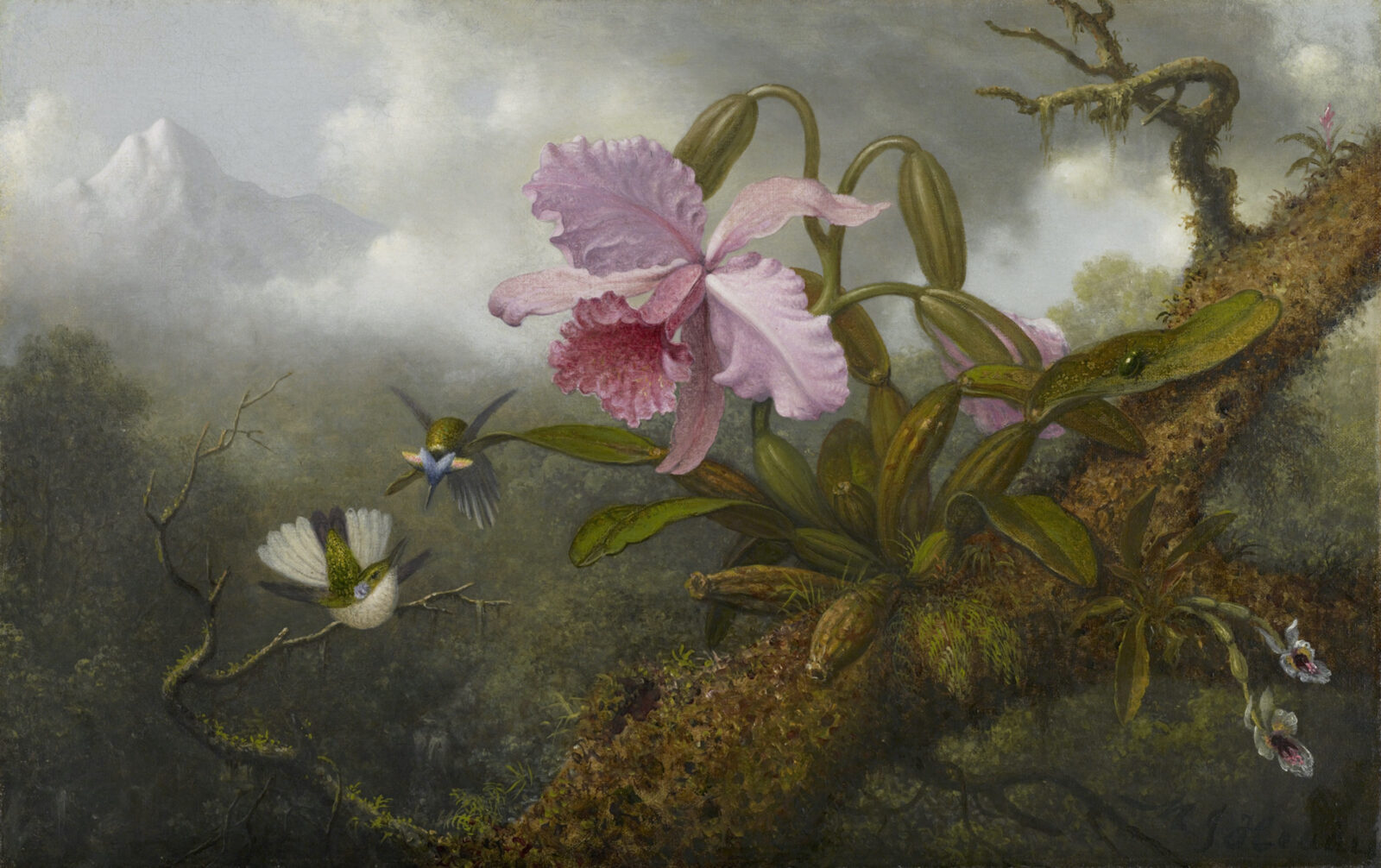
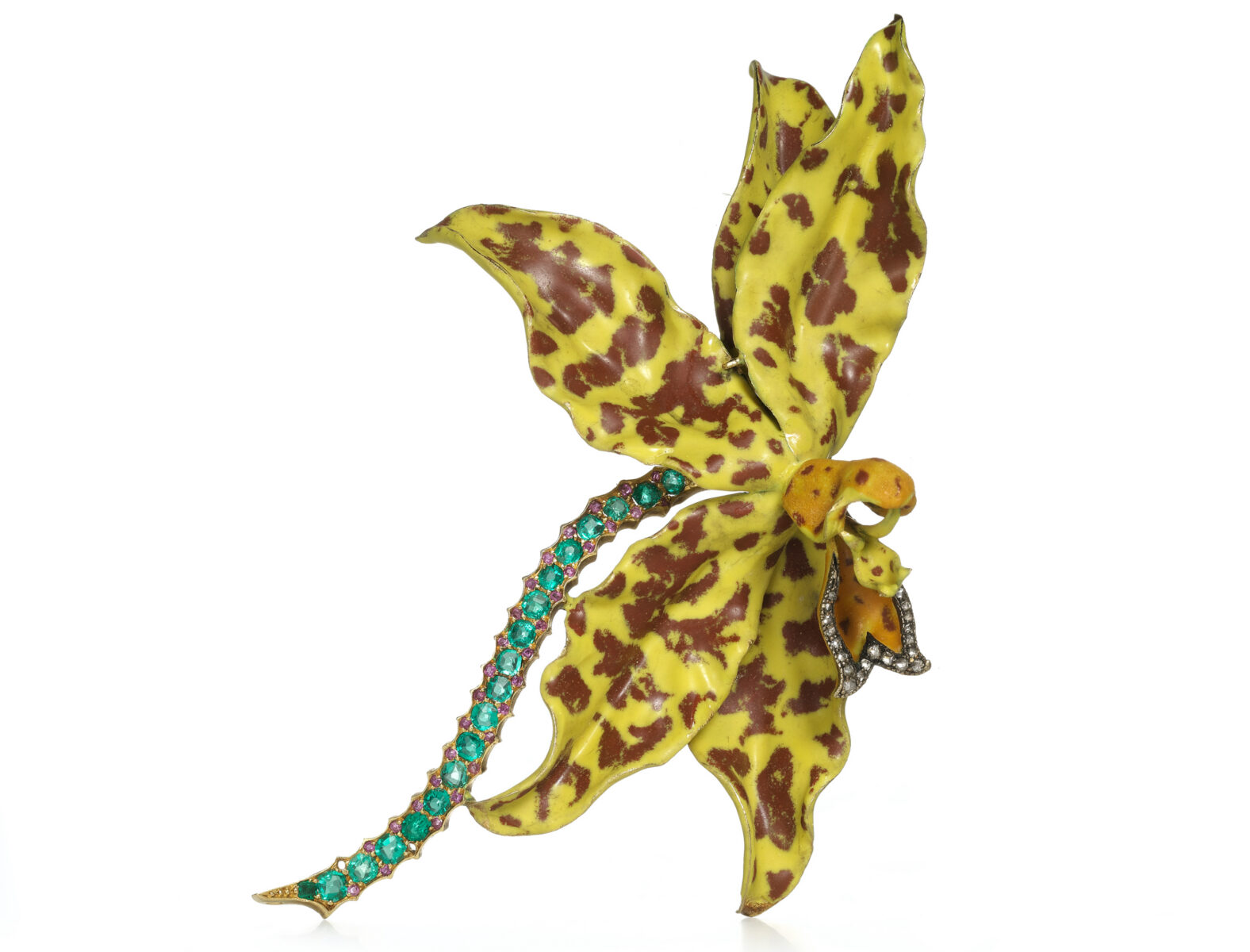
Botanical Precision: George Paulding Farnham’s late-19th-century Tiger Orchid brooch—crafted for Tiffany & Co. using sterling silver, diamonds, emeralds, pink sapphires, and enamel—is displayed in close proximity to Martin Johnson Heade’s romantic botanical painting, Cattleya Orchid, Two Hummingbirds and a Beetle. Both works showcase a Victorian obsession with exotic flora, capturing the delicate symmetry of the natural world through vastly different mediums.
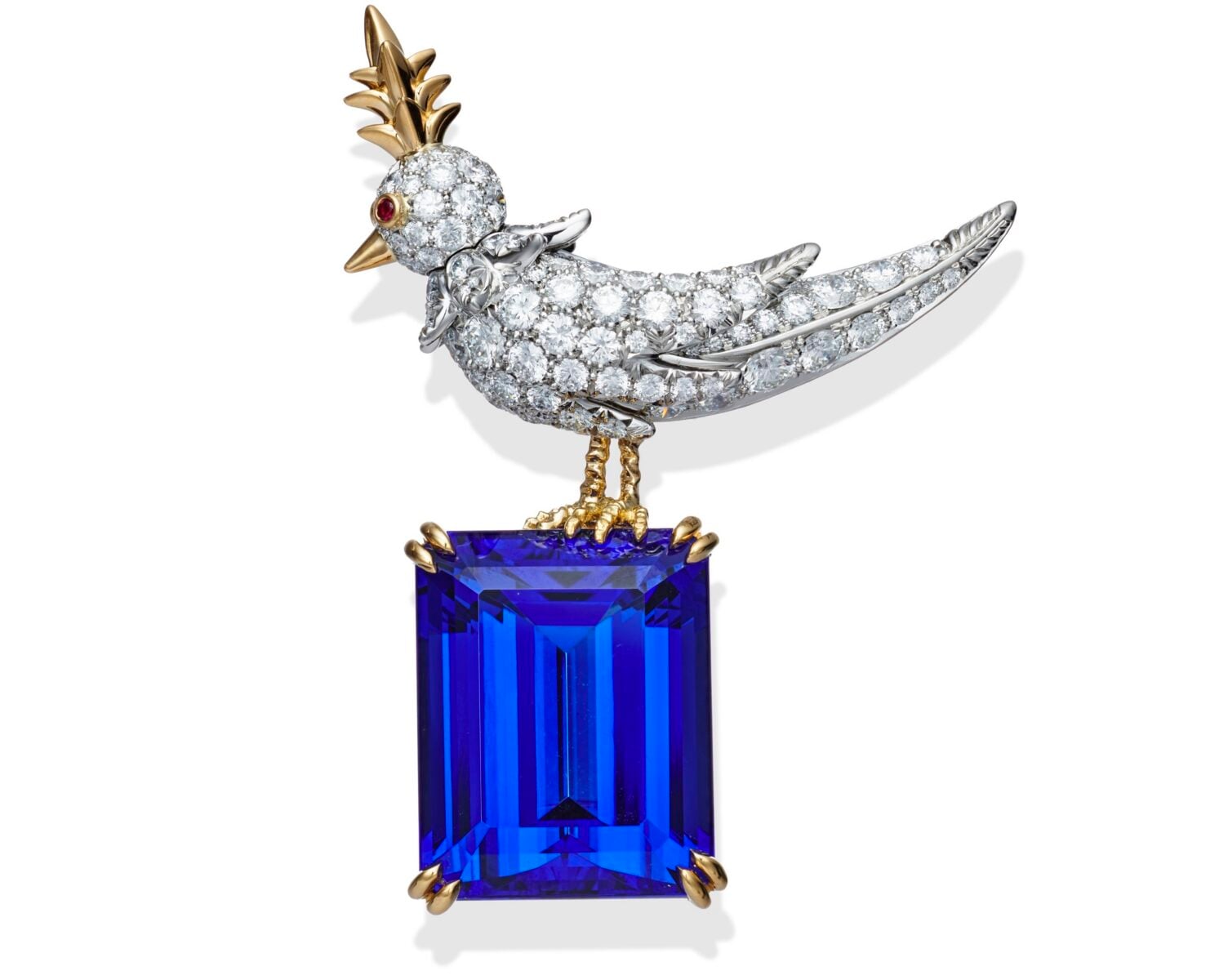
Organic Movement: Jean Schlumberger’s whimsical Bird on a Rock brooch for Tiffany & Co. is paired with Hope Gangloff’s contemporary figurative painting, Queen Jane Approximately. Both pieces demonstrate a playful mastery of organic forms, texture, and color movement.
Luminous Illumination: Clara Driscoll, who led the pioneering "Tiffany Girls" glass-cutting department at Tiffany Studios, is represented by her iconic Wisteria Table Lamp (circa 1905–1906). This masterpiece of Art Nouveau design, which mimics the cascading growth of wisteria vines, is shown alongside George Inness’s 1867 landscape painting, Sunset on a River, initiating a thematic exploration of light, shadow, and organic illumination.
Geological Metrics of Arkansas
100 Million Years: The approximate geological age of the volcanic pipe structures responsible for bringing Arkansas diamonds to the surface.
27.21 Carats: The weight of the historic Arkansas Diamond found in Searcy in 1926, cementing its status as an American gemological treasure.
1 Location: Crater of Diamonds State Park remains the sole active diamond site in the United States accessible to the public, where everyday visitors retain ownership of their discoveries.
Official Statements and Curatorial Vision
The cultural weight of bringing the Arkansas Diamond back to its place of origin has not been lost on the leadership at Crystal Bridges. Museum officials have emphasized that the exhibition is as much about celebrating regional identity as it is about showcasing luxury craftsmanship.
"Having the diamonds here allows us to highlight Arkansas’s natural resources and bring attention to the state’s unique place in the story of American gems," notes Jen Padgett, curator of Nature Adorned.
Padgett stresses that the core intellectual exercise of the exhibition lies in cross-disciplinary comparison. By analyzing how human ingenuity responds to the environment, visitors gain a deeper appreciation for both fine art and master craftsmanship.
"The pairings across the Tiffany Archives and Crystal Bridges help us to see both collections in a new light," Padgett explains. "Comparing how artists draw inspiration from nature—whether depicting an orchid in a painting or transforming its form into a brooch—allows us to appreciate their ingenuity and imagination."
Art historians and critics have echoed these sentiments, noting that exhibitions of this scale successfully challenge historical hierarchies that often relegate jewelry design to the realm of mere ornamentation, elevating it to an equal footing with painting and sculpture.
Future Outlook: A Legacy Carved in Stone and Canvas
As Nature Adorned: The Artistry of Tiffany & Co. and the American Imagination welcomes visitors through the winter months and into the spring of 2027, its broader cultural implications are already coming into focus.
First, the exhibition marks a major milestone in inter-institutional collaboration. By successfully negotiating the temporary repatriation of the 27.21-carat Arkansas Diamond from the Tiffany Archives in New York City to Bentonville, Crystal Bridges has reinforced its status as a world-class cultural institution capable of securing national treasures for regional audiences.
Second, the show establishes a new benchmark for how museums can interpret decorative arts. Rather than displaying jewelry as isolated luxury commodities within sterile glass cases, Nature Adorned embeds precious stones within a rich ecosystem of American painting, mineralogy, and design history. This holistic approach ensures that visitors leave with a renewed appreciation for the physical earth beneath our feet and the imaginative heights to which human artistry can soar.
For those planning to experience the exhibition, Nature Adorned will remain on view at the Crystal Bridges Museum of American Art through March 29, 2027. Whether viewed through the lens of geological history, decorative mastery, or abstract fine art, the journey of the Arkansas Diamond—from a prehistoric volcanic eruption to a Searcy dirt road, to the vaults of Fifth Avenue, and finally back home to the Natural State—stands as one of the most compelling narratives in the history of American culture.




0 Comments