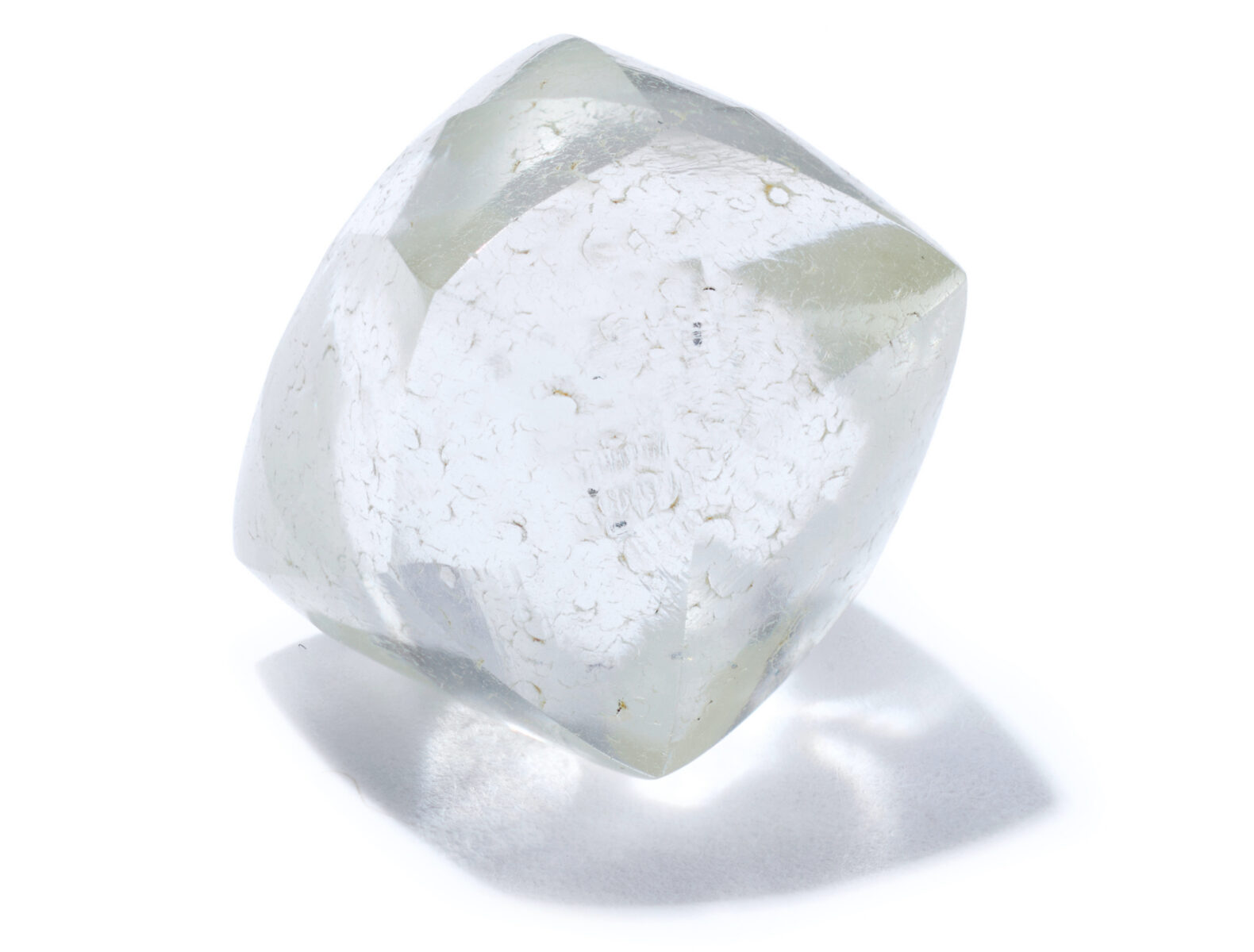
Deep within the vaults of New York City’s prestigious Tiffany Archives, a historical artifact of American gemology has spent nearly a century resting quietly away from the public eye. Discovered in 1926 by an eleven-year-old girl in Searcy, Arkansas, a staggering 27.21-carat diamond—one of the largest gem-quality stones ever unearthed in the United States—has finally made a triumphant return to its home state.
This rare gemstone anchors Nature Adorned: The Artistry of Tiffany & Co. and the American Imagination, a landmark exhibition currently on view at the Crystal Bridges Museum of American Art in Bentonville, Arkansas. Running through March 29, 2027, the exhibition brings together rare Tiffany & Co. heritage jewels, historic American paintings, rare minerals, and regional geological wonders.
By juxtaposing high jewelry against fine art, Nature Adorned explores an enduring artistic dialogue: how the organic world has inspired generations of creators, bridging the gap between raw geological formations and human-crafted masterpieces. Curator Jen Padgett and the team at Crystal Bridges have crafted a multi-sensory environment where visitors can trace the journey of nature from the earth’s volatile core to the refined ateliers of legendary designers.
Detailed Chronology: A Century of Geological and Artistic History
To fully understand the weight of the Nature Adorned exhibition, one must trace the timeline of the jewels and artworks on display—a narrative stretching back millions of years and traversing the evolution of American decorative arts.
Deep Geological Origins (Approx. 100 Million Years Ago)
Long before human history took root in North America, geological forces were at work deep beneath the surface of what is now Arkansas. Approximately 100 million years ago, a violent volcanic pipe—known as a lamproite pipe—pushed molten rock from the mantle to the Earth’s crust in southwestern Arkansas. This geological upheaval carried untold thousands of diamonds from deep within the earth, depositing them in a concentrated volcanic crater that would eventually become a geological anomaly in the American landscape.
The Spark of Discovery (1906)
For millennia, the volcanic crater sat unnoticed. However, in 1906, an unsuspecting farmer working the land in Murfreesboro, Arkansas, noticed an unusual sparkle in the dirt. He uncovered the first verified diamond in the state, sparking a localized diamond rush and placing Arkansas on the map as the only place in North America where diamonds could be found in their original volcanic matrix.
The Discovery of the Arkansas Diamond (1926)
Two decades after the initial discovery, the state’s diamond lore reached new heights. In 1926, an eleven-year-old girl in Searcy, Arkansas, unearthed a colossal gemstone weighing an astonishing 27.21 carats. Instantly recognized as one of the largest and most pristine diamonds ever discovered within the borders of the United States, the stone caught the attention of luxury titan Tiffany & Co. The company swiftly acquired the stone, integrating it into the permanent Tiffany Archives in New York City, where it remained shielded from public view for decades.
The Late 19th Century: The Golden Age of Botanical and Geological Design
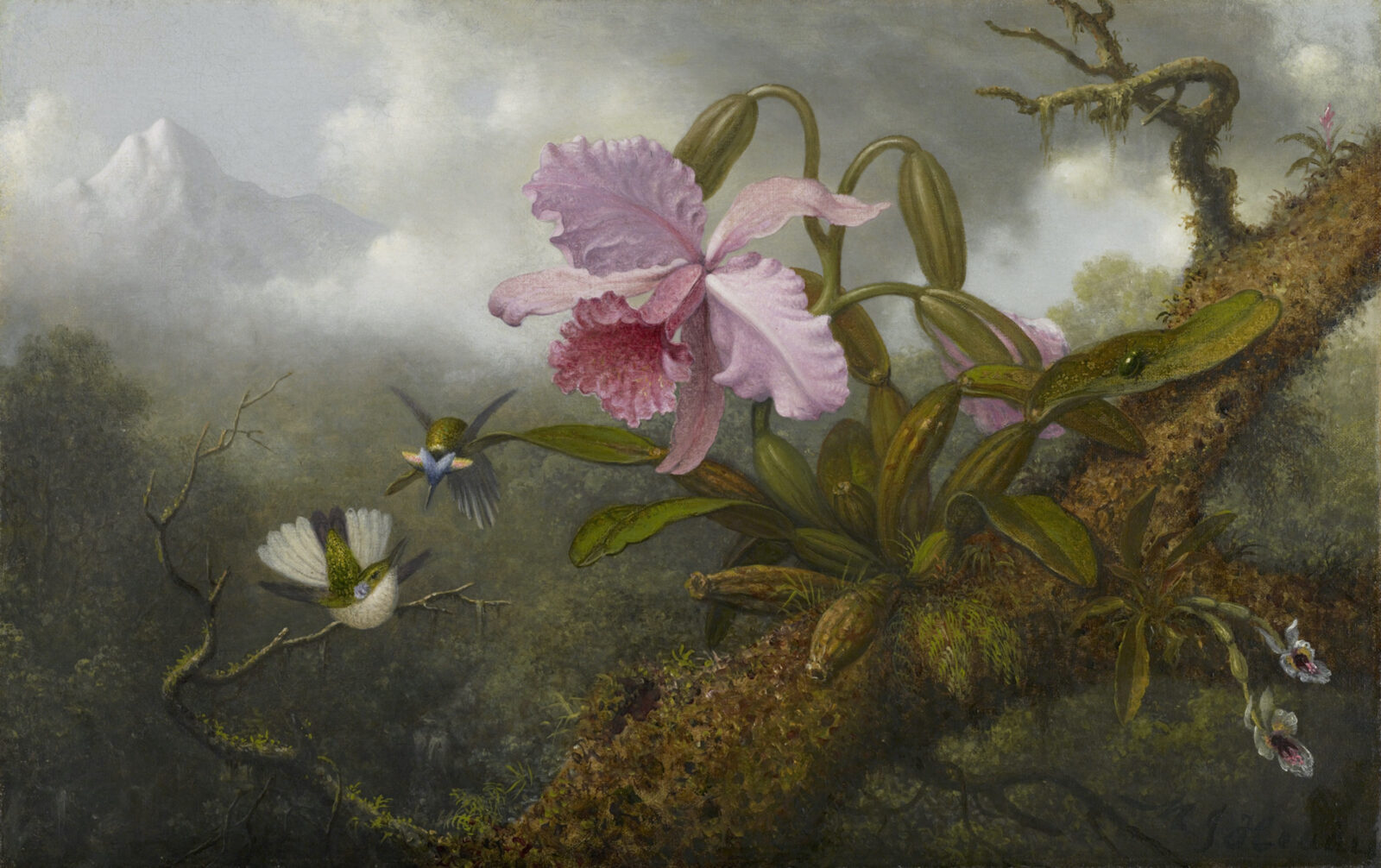
While the Arkansas diamond was resting underground, the late 1800s saw Tiffany & Co. reach unprecedented heights of artistry under visionaries like George Paulding Farnham. During this era, master craftsmen utilized vibrant gemstones—including emeralds, pink sapphires, and diamonds set in sterling silver—to capture the hyper-realistic beauty of flora and fauna. Works like the Tiger Orchid Brooch were created during this period, directly mirroring the scientific and aesthetic fascination with tropical botany seen in contemporary paintings by artists like Martin Johnson Heade.
The Art Nouveau Revolution (1905–1906)
At the dawn of the 20th century, the Art Nouveau movement swept through decorative arts, championing fluid, asymmetrical lines inspired by natural growth. Within the glass-cutting department at Tiffany Studios, Clara Driscoll led the legendary all-female team known as the "Tiffany Girls." It was during this pivotal window (circa 1905–1906) that Driscoll designed the iconic Wisteria Table Lamp, utilizing intricate glasswork to mimic the cascading, botanical architecture of climbing vines.
The Return Home: Crystal Bridges (October 2026 – March 2027)
Fast forward to October 2026, when the cultural landscape of Arkansas shifted with the opening of Nature Adorned. By securing the 27.21-carat Arkansas Diamond on loan from the Tiffany Archives—alongside two other significant diamonds found at Arkansas’s Crater of Diamonds State Park—Crystal Bridges successfully repatriated these geological treasures. The exhibition positions these native stones alongside major paintings, minerals, and sculptural jewelry, marking a historic homecoming for the state’s most famous natural resource.
Supporting Context & Metrics: The Intersection of Fine Art and High Jewelry
The architectural and curatorial framework of Nature Adorned relies on deliberate pairings that force viewers to reconsider the boundaries between "fine art" and "decorative craft."
Key Exhibition Pairings and Artifacts
Artifact / Artwork
Creator / Designer
Medium / Era
Curatorial Context
The Arkansas Diamond
Nature / Tiffany & Co.
27.21-carat rough/cut diamond (1926)
Highlighted alongside two regional diamonds to celebrate Arkansas’s unique geological heritage.
Displayed alongside Martin Johnson Heade’s botanical painting to show botanical realism across mediums.
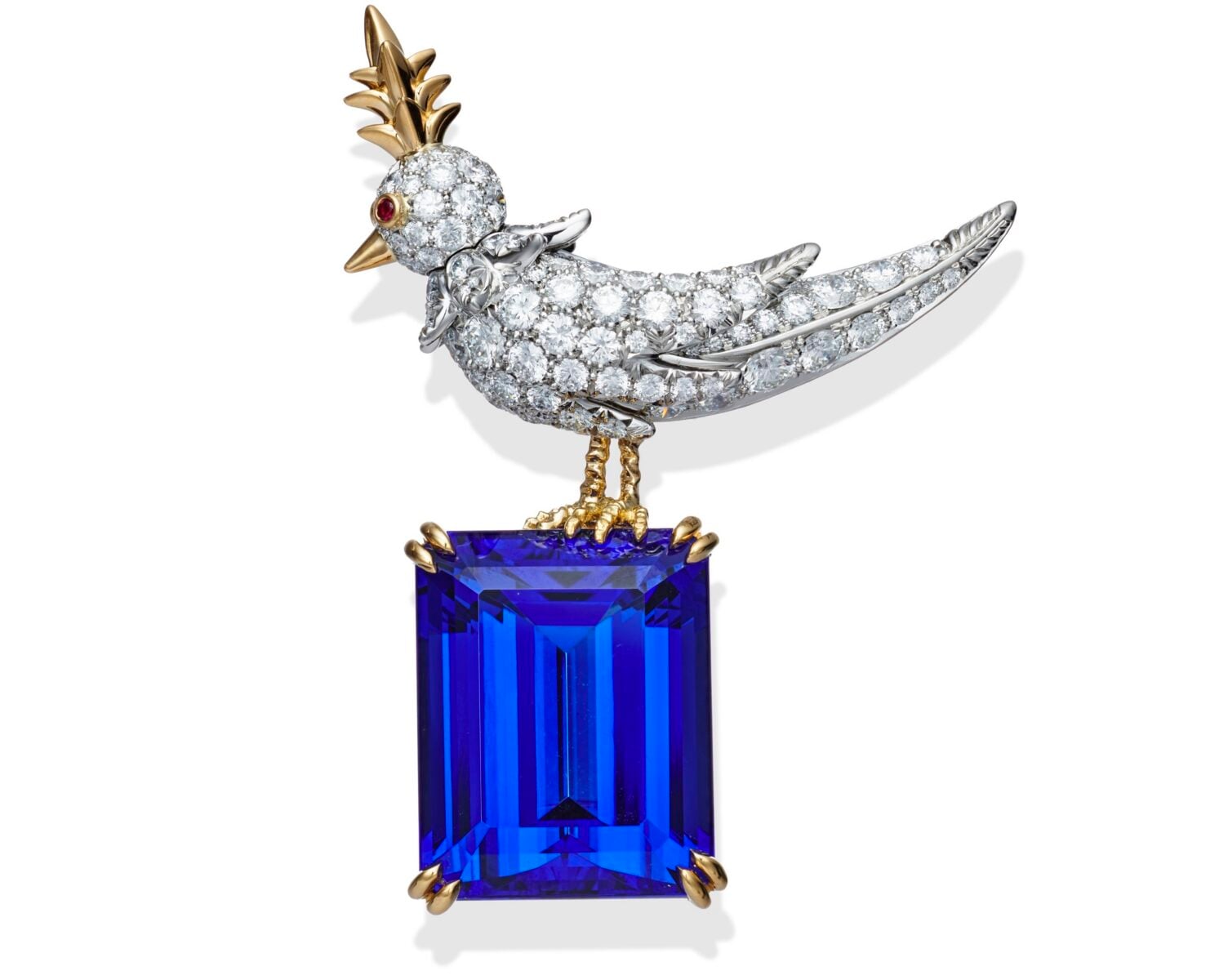
Bird on a Rock
Jean Schlumberger for Tiffany & Co.
Gemstone and precious metal brooch
Paired with Hope Gangloff’s contemporary painting Queen Jane Approximately to explore playful organic forms.
Wisteria Table Lamp
Clara Driscoll (Tiffany Studios)
Leaded glass and bronze (1905–1906)
Displayed in conversation with George Inness’s 1867 landscape Sunset on a River to study the manipulation of light.
Cerulean
Carmen Herrera
Geometric abstract painting (1965)
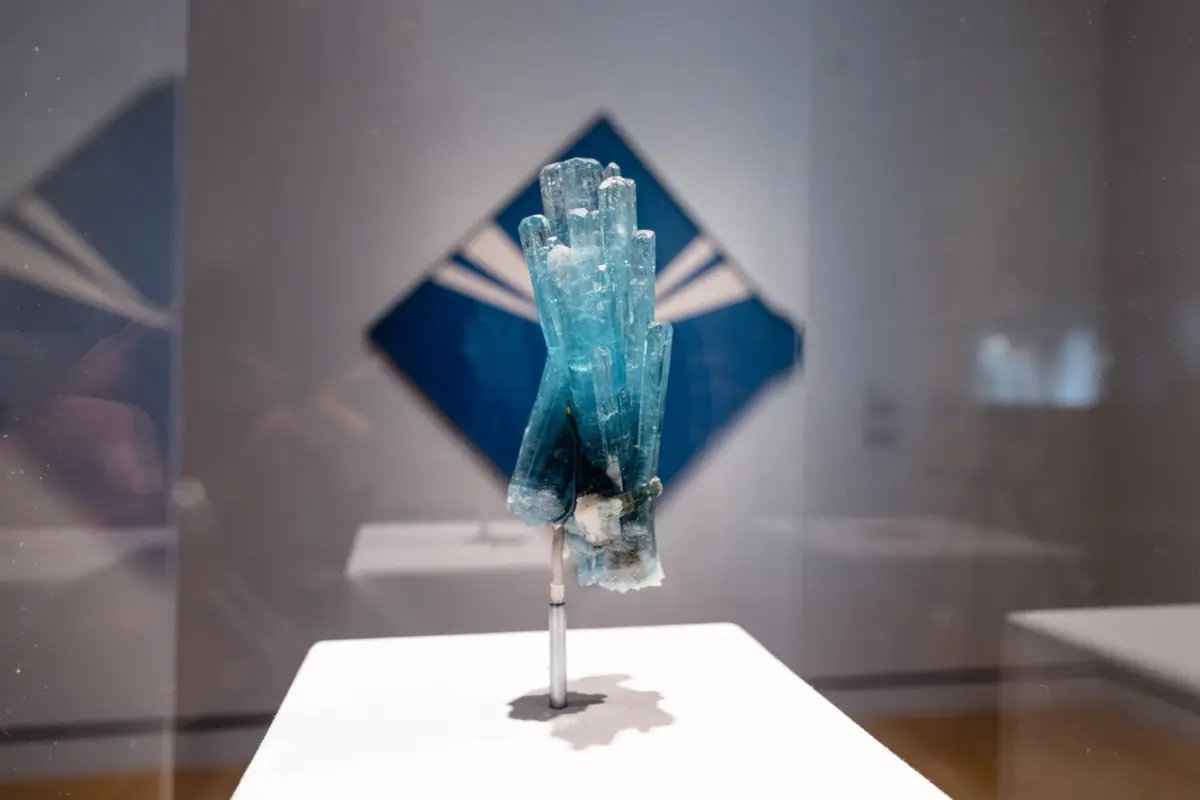
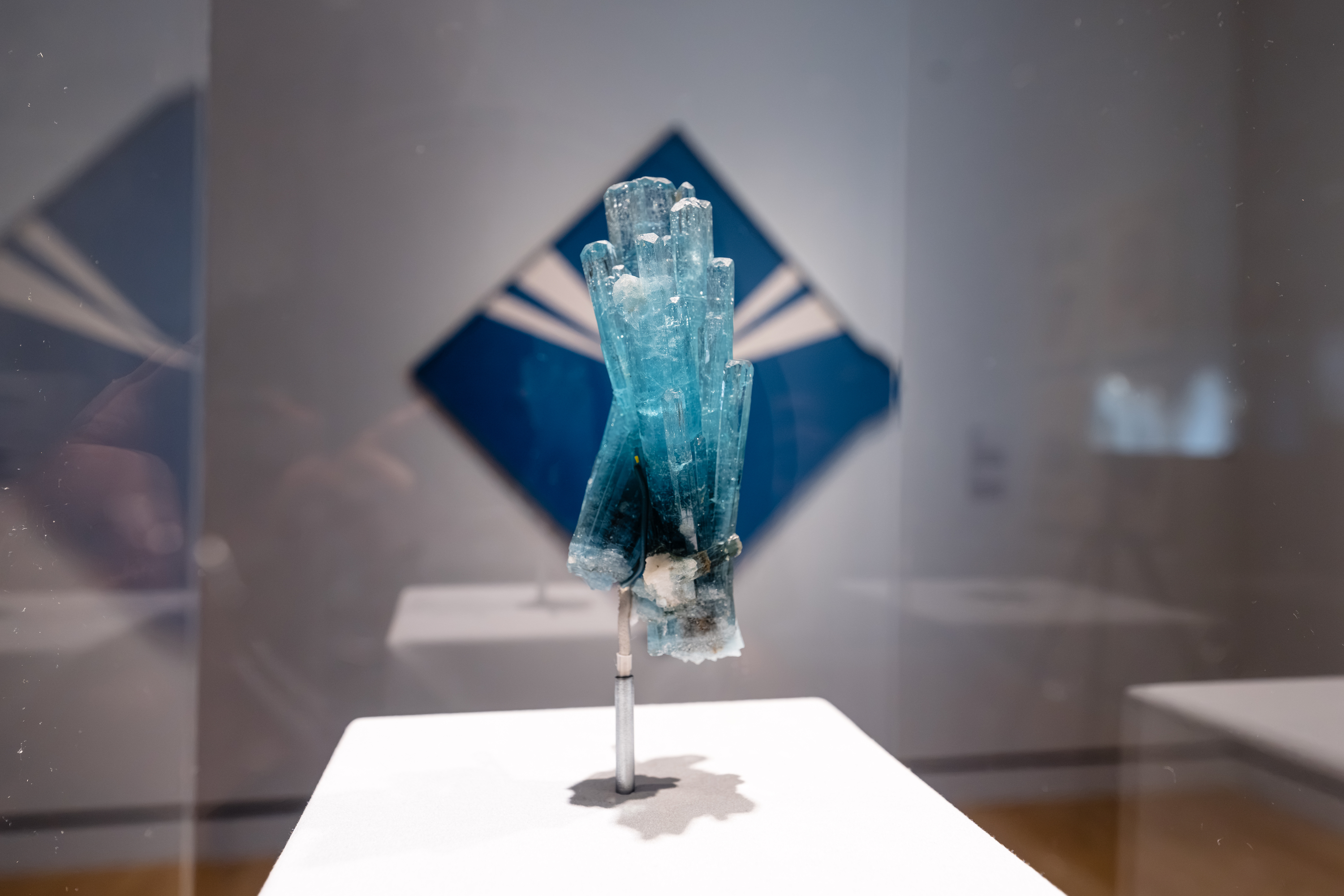
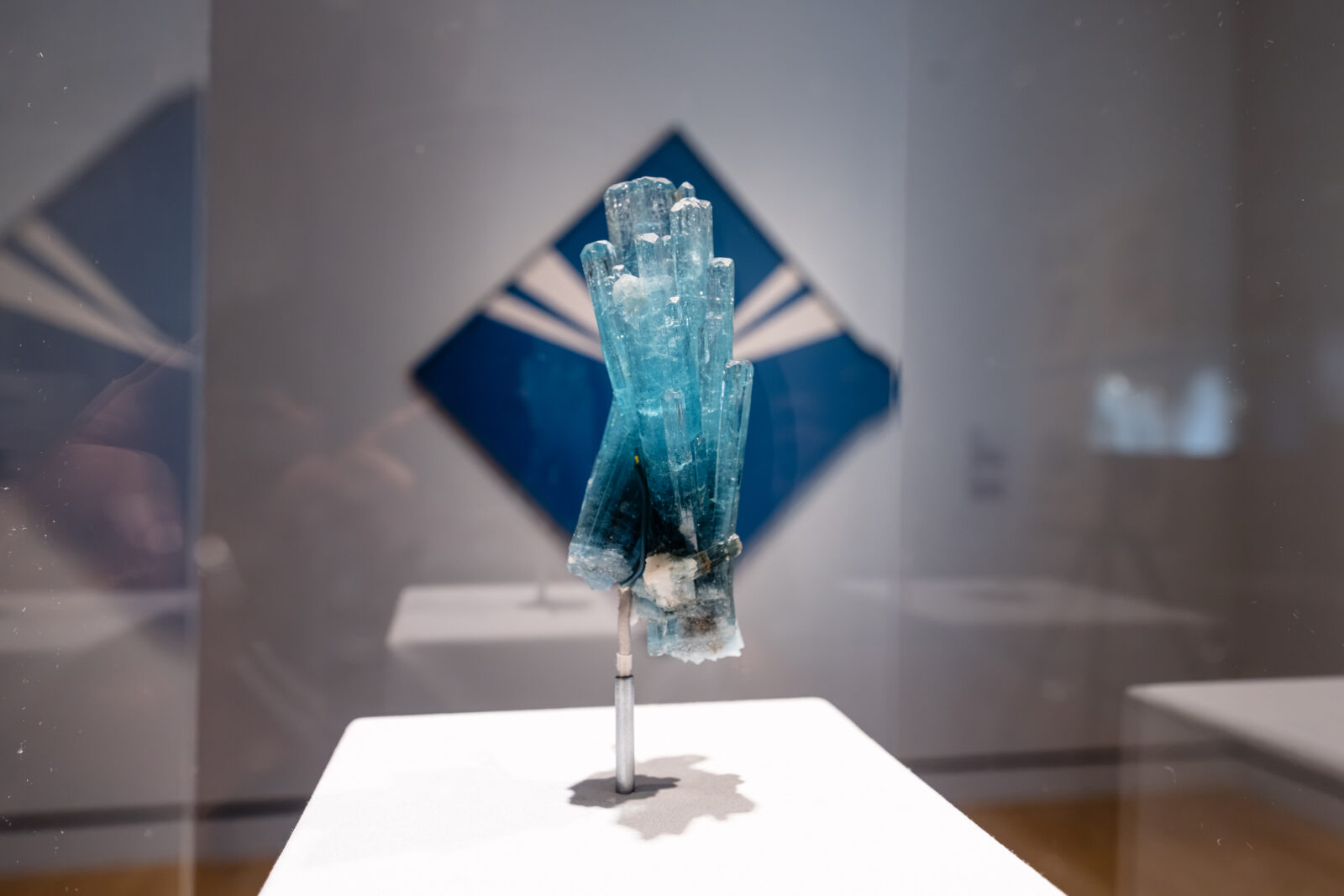
Framed alongside raw quartz crystals and blue beryl to show how geometric abstraction transforms negative space into diamond-like structures.
The Geology and Uniqueness of Crater of Diamonds State Park
Arkansas remains an international destination for geology enthusiasts because of Crater of Diamonds State Park in Murfreesboro. It stands as the only diamond-producing site in the world open to the public where amateur prospectors are legally permitted to keep whatever diamonds they unearth. Over the years, tens of thousands of diamonds have been pulled from the 37.5-acre plowed field—the eroded surface of the ancient volcanic pipe. The inclusion of these locally sourced stones in Nature Adorned bridges the gap between everyday prospectors and high-society luxury.
Official Statements and Curatorial Vision
The intellectual backbone of the exhibition centers on the premise that nature is the ultimate artist, providing a foundational vocabulary utilized by both landscape painters and master jewelers.
Exhibition curator Jen Padgett emphasizes the significance of bringing the Tiffany Archives into dialogue with Crystal Bridges’ permanent American art collection.
"The pairings across the Tiffany Archives and Crystal Bridges help us to see both collections in a new light," notes Padgett. "Comparing how artists draw inspiration from nature—whether depicting an orchid in a painting or transforming its form into a brooch—allows us to appreciate their ingenuity and imagination."
Furthermore, Padgett points out the cultural and regional importance of showcasing the state’s natural history within a world-class art institution:
"Having the diamonds here allows us to highlight Arkansas’s natural resources, and bring attention to the state’s unique place in the story of American gems."
By treating a diamond brooch with the same aesthetic seriousness as an oil painting by George Inness or a geometric abstraction by Carmen Herrera, Crystal Bridges elevates the decorative arts, reminding visitors that craftsmanship and industrial design are deeply intertwined with the fine arts.
Future Outlook and Legacy
As Nature Adorned: The Artistry of Tiffany & Co. and the American Imagination continues its run at Crystal Bridges Museum of American Art through March 29, 2027, its broader cultural impact is already taking shape.
The exhibition sets a new standard for how regional art museums can leverage international institutional partnerships—such as the relationship with the Tiffany Archives—to contextualize local history on a global stage. By placing the 1926 Arkansas Diamond front and center, the museum has successfully reignited public interest in American mineralogy, domestic diamond mining, and the preservation of natural history.
When the exhibition concludes in the spring of 2027 and the stones return to their archival homes in New York, the resonance of this homecoming will linger. Nature Adorned has rewritten the narrative of Arkansas’s natural wealth, proving that the state’s treasures extend far beyond its rolling hills and bubbling springs—reaching deep into the dazzling, eternal intersections of art, earth, and human imagination.




0 Comments