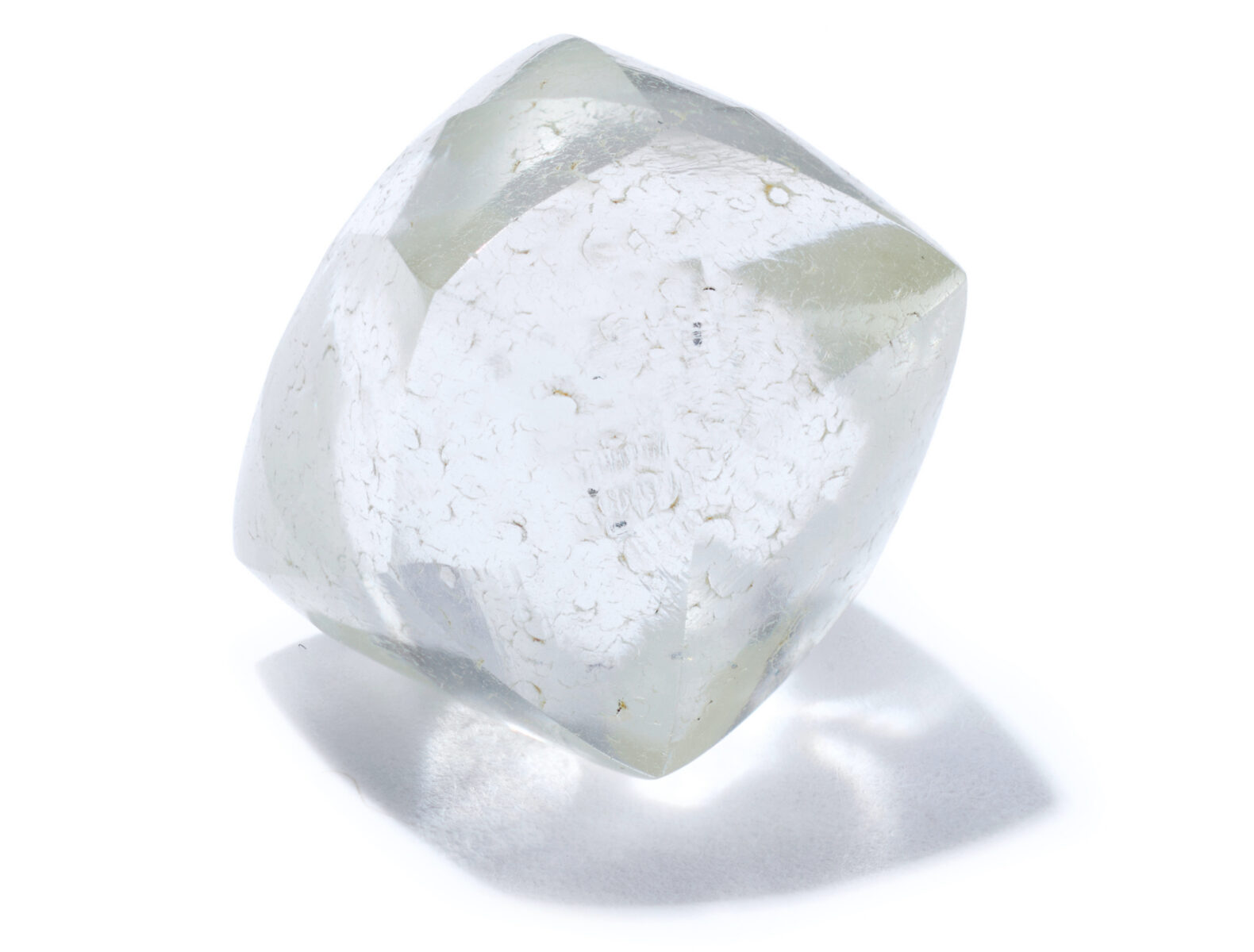
The Crystal Bridges Museum of American Art in Bentonville, Arkansas, has opened its doors to one of the most visually and historically significant exhibitions in the institution’s history. Titled Nature Adorned: The Artistry of Tiffany & Co. and the American Imagination, the exhibition bridges the often-sundered worlds of fine art and high jewelry. At the center of this cultural milestone is the homecoming of the legendary 27.21-carat Arkansas Diamond—a colossal gemstone discovered by an eleven-year-old girl in Searcy, Arkansas, a century ago.
Acquired swiftly by Tiffany & Co. following its 1926 discovery, the massive diamond has spent nearly the entirety of its modern existence secured within the private Tiffany Archives in New York City. Now, joined by two other notable diamonds discovered in Arkansas, the stone has traveled back to its home state. Running through March 29, 2027, the exhibition features these rare mineral specimens in direct conversation with masterworks of American painting, iconic Tiffany lamps, and avant-garde jewelry designs.
By juxtaposing the raw, unpolished creations of earth’s geological forces with the meticulous craftsmanship of human artisans, Nature Adorned asks visitors to reconsider the interconnectedness of natural history, fine art, and decorative design. Curator Jen Padgett and her team have successfully curated a multidisciplinary dialogue, utilizing 19th-century botanical paintings, mid-century abstract geometry, and Art Nouveau masterworks to demonstrate how the natural world has continuously fueled human creativity.
Detailed Chronology: From Volcanic Upheaval to Cultural Homecoming
The story of the Arkansas Diamond and the geological treasures now on display at Crystal Bridges spans hundreds of millions of years, tracing a path from subterranean cataclysms to the pristine galleries of Bentonville.
Deep Geological History
Approximately 100 million years ago, deep within the Cretaceous period, a violent volcanic event unfolded across what is now the American South. Magma surged upward through the Earth’s crust, carrying rare, carbon-based crystalline structures from the deep mantle toward the surface. This volcanic pipe deposited untold thousands of diamonds across a specific region of southwestern Arkansas, laying the foundation for what would eventually become the only active diamond-producing site in the United States accessible to the public.
The 20th Century: Discoveries and Corporate Acquisition
For millions of years, these geological wonders remained hidden beneath the Arkansas topsoil. However, the 20th century marked a rapid awakening of the Natural State’s mineral wealth:
1906: An unsuspecting Arkansas farmer tilling his land uncovered the first authenticated diamond in the state, sparking regional excitement and signaling that the area held commercial-grade diamond deposits.
1926: Exactly two decades after the initial discovery, an eleven-year-old girl walking through Searcy, Arkansas, stumbled upon an extraordinary stone. Weighing a staggering 27.21 carats, it immediately established itself as one of the largest gem-quality diamonds ever unearthed within the borders of the United States. Recognizing its historic scale and purity, legendary luxury merchant Tiffany & Co. acquired the stone. It was promptly whisked away to New York City, where it became a permanent fixture of the elite Tiffany Archives, largely shielded from public view for decades.
The 2026–2027 Homecoming
One hundred years after the discovery of the 27.21-carat marvel, Crystal Bridges Museum of American Art orchestrated its temporary repatriation. Bringing the Arkansas Diamond back to its state of origin anchors the Nature Adorned exhibition in a profound narrative of place and heritage. Alongside two other exceptional diamonds found by amateur prospectors at Arkansas’s Crater of Diamonds State Park, the stone serves as the literal and figurative anchor of the gallery experience, transitioning from a corporate archive item to a celebrated public artifact of Southern history.
Supporting Context & Metrics: The Intersection of Art, Geology, and Craft
To fully appreciate the scope of Nature Adorned, one must examine the distinct media and historical movements brought together within the Bentonville galleries. The exhibition is deliberately structured around thematic pairings, matching gemstones and high jewelry directly with American paintings and decorative arts.
Curated Pairings and Highlighted Works
Organic Forms in Paint and Jewelry:
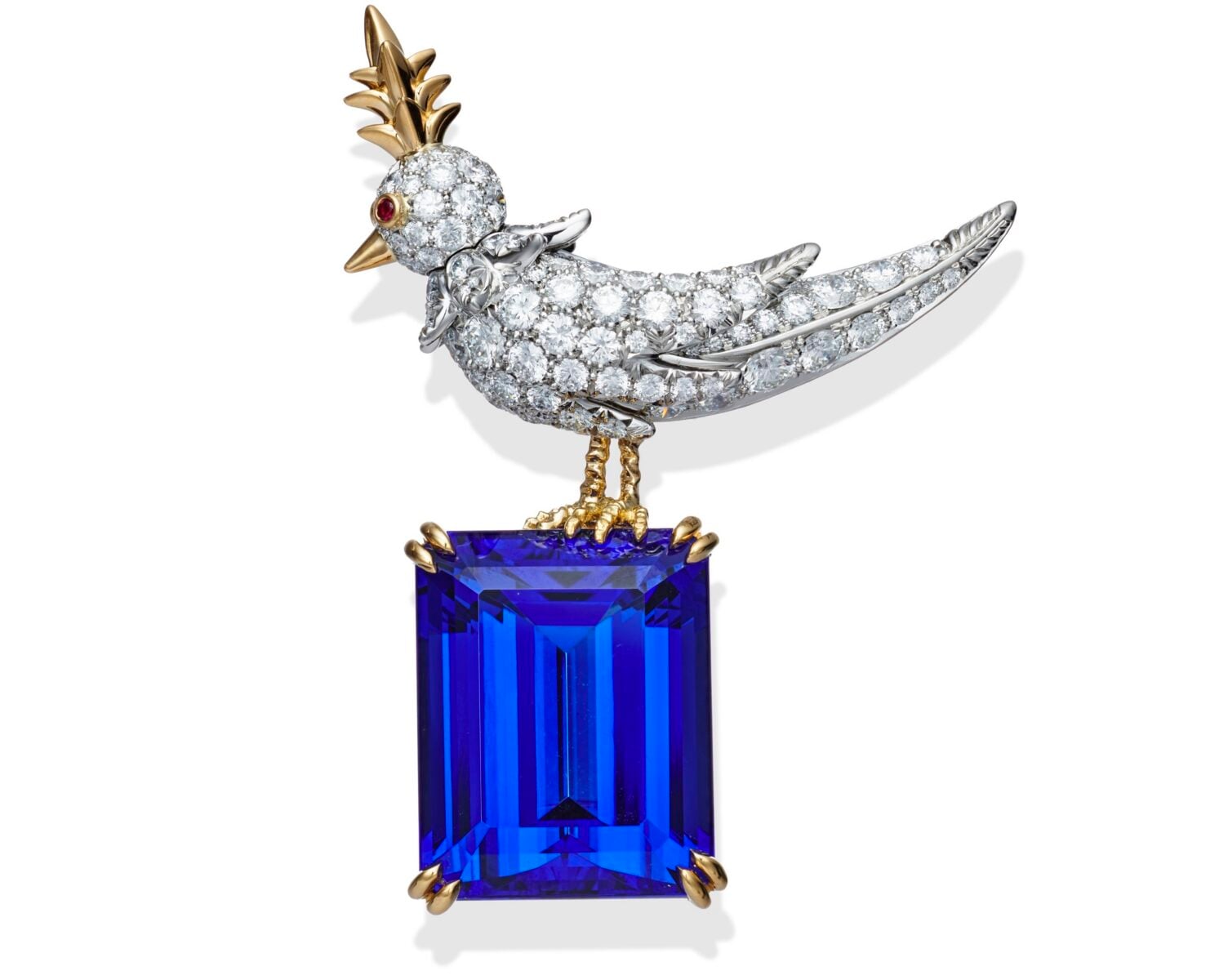
French designer Jean Schlumberger’s whimsical and celebrated Bird on a Rock brooch for Tiffany & Co. is displayed in close proximity to Hope Gangloff’s contemporary painting, Queen Jane Approximately. Both works explore organic curves, dynamic posture, and the translation of living subjects into enduring artistic statements.
Botanical Precision and the Gilded Age:
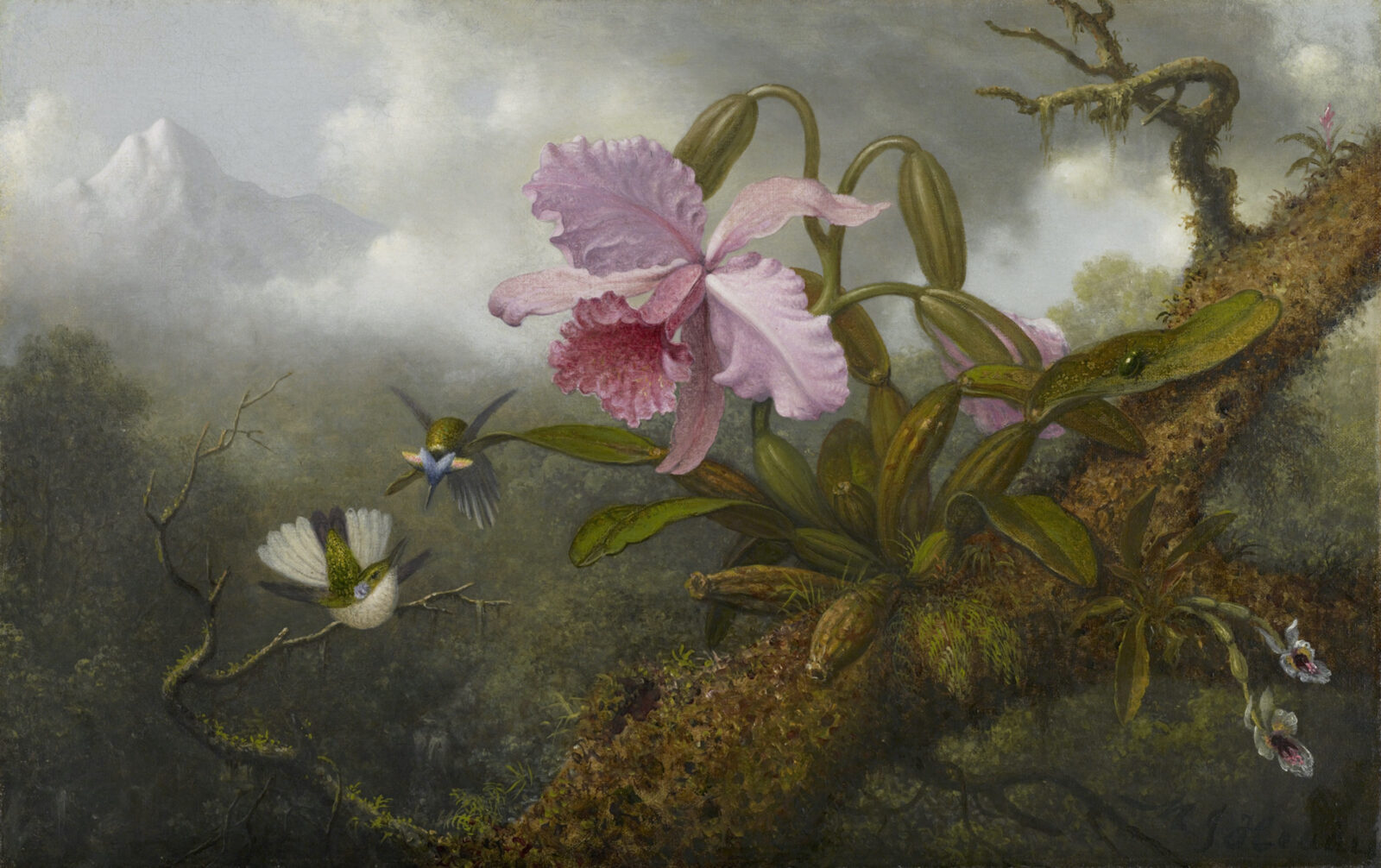
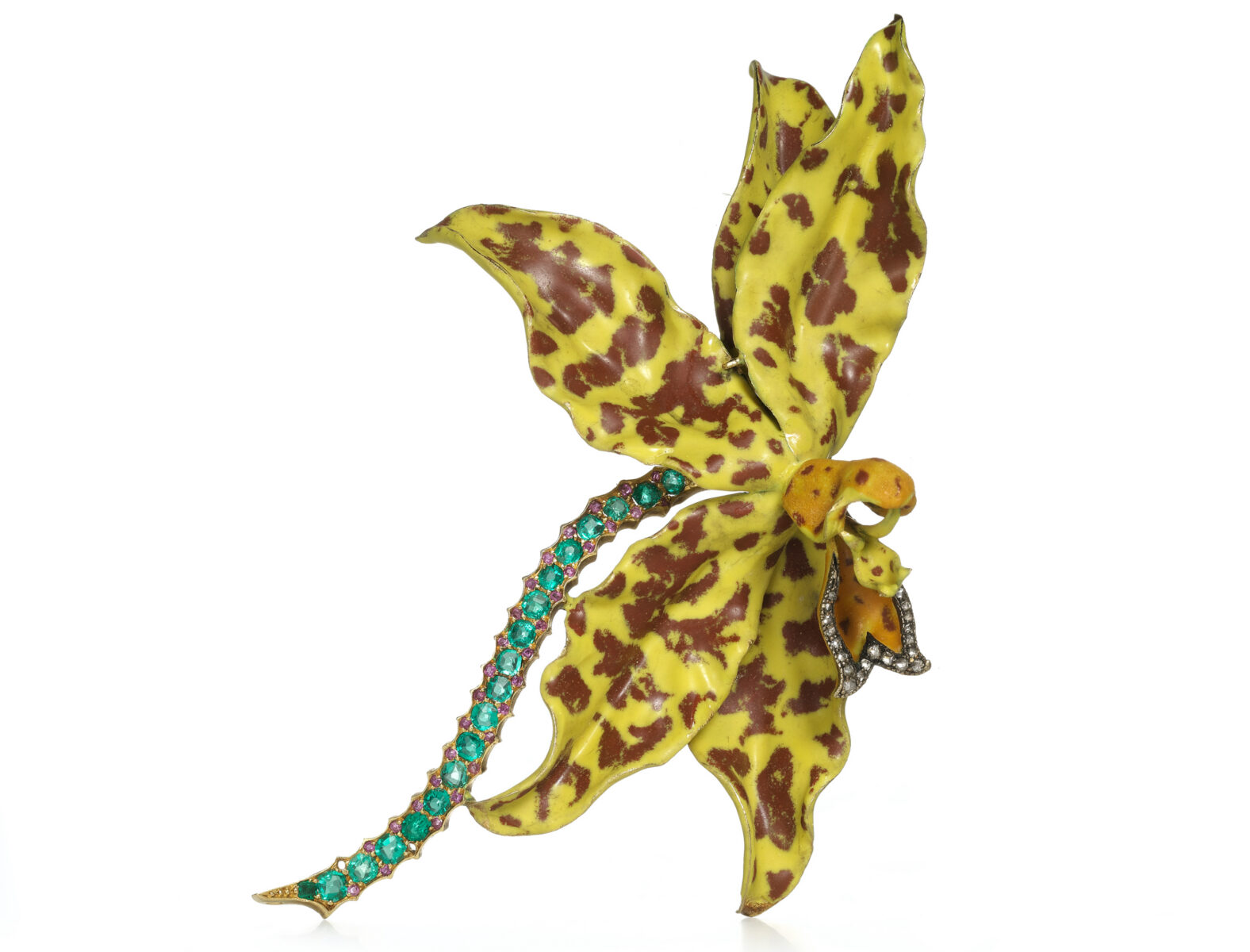
The late-19th-century Tiger Orchid brooch—designed for Tiffany & Co. by George Paulding Farnham using sterling silver, diamonds, emeralds, pink sapphires, and enamel—stands alongside Martin Johnson Heade’s hauntingly detailed botanical oil painting, Cattleya Orchid, Two Hummingbirds and a Beetle (circa late 1800s). This pairing underscores how Gilded Age artisans and painters observed the same flora and fauna through radically different, yet equally obsessive, technical lenses.
The Art Nouveau Legacy of Light:
Representing the pinnacle of the Arts and Crafts and Art Nouveau movements, the iconic Wisteria Table Lamp (circa 1905–1906) commands attention. Designed by Clara Driscoll while leading the pioneering "Tiffany Girls" glass-cutting department at Tiffany Studios, the lamp mimics the drooping, naturalistic architecture of wisteria vines. It is exhibited alongside George Inness’s 1867 landscape painting, Sunset on a River, initiating a rich conceptual study on how light can be rendered through colored glass versus oil paint.
Abstract Geometry and Mineralogy:
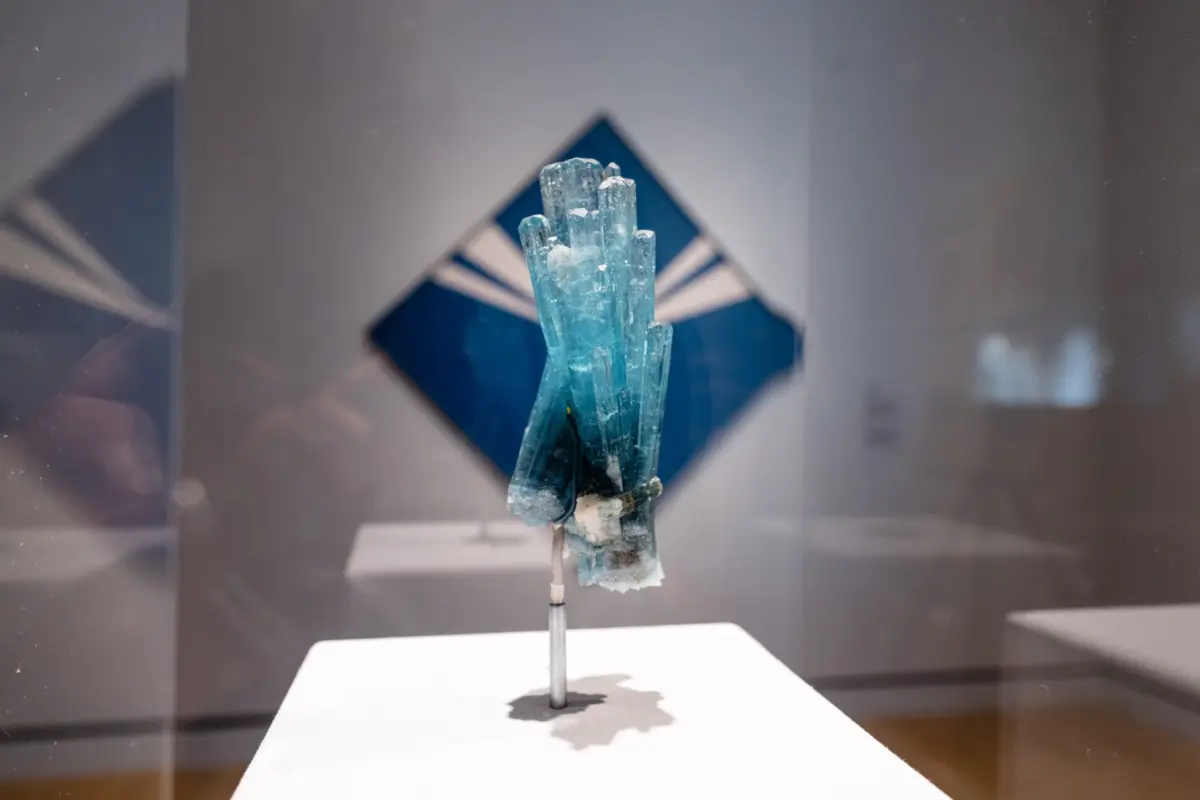
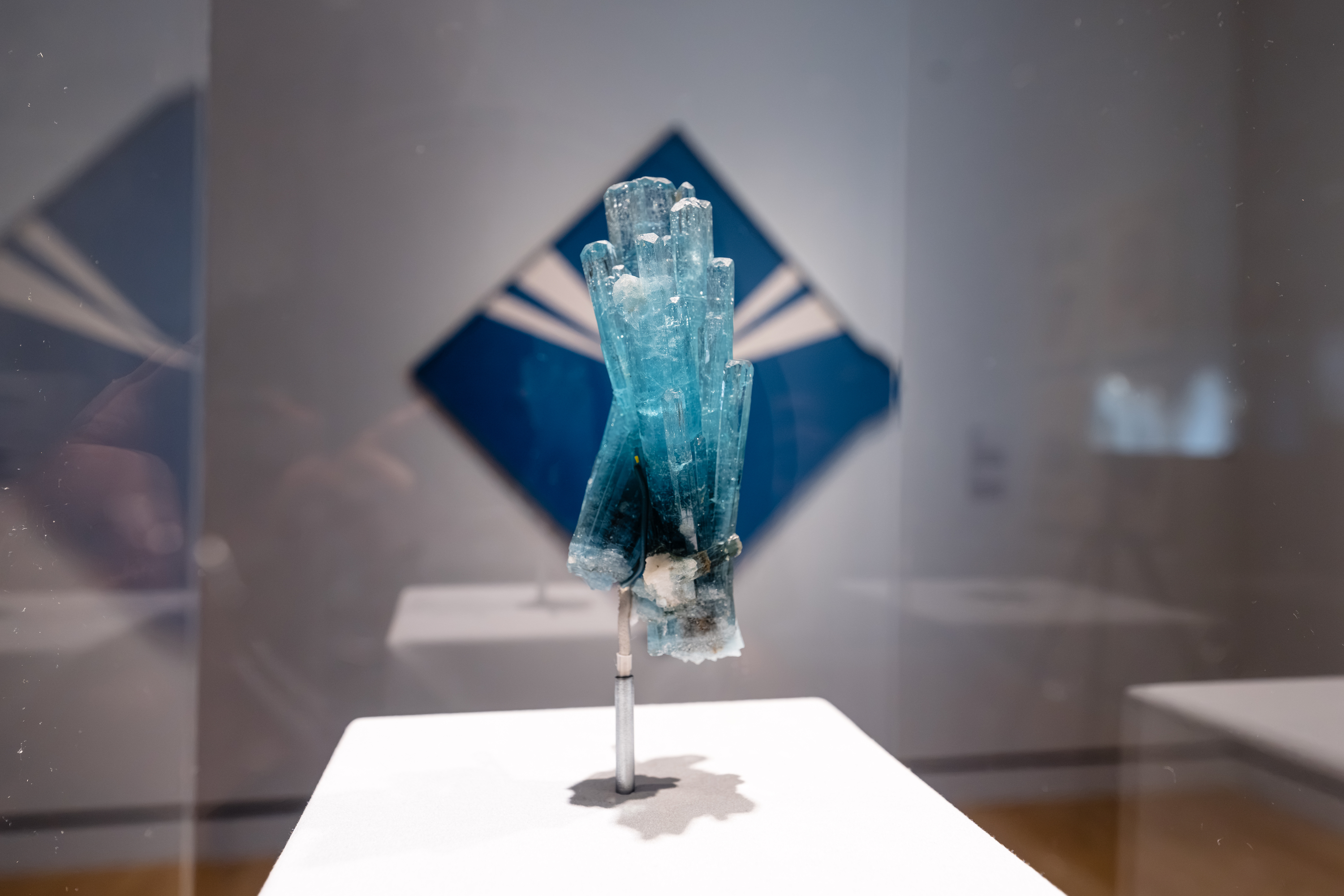
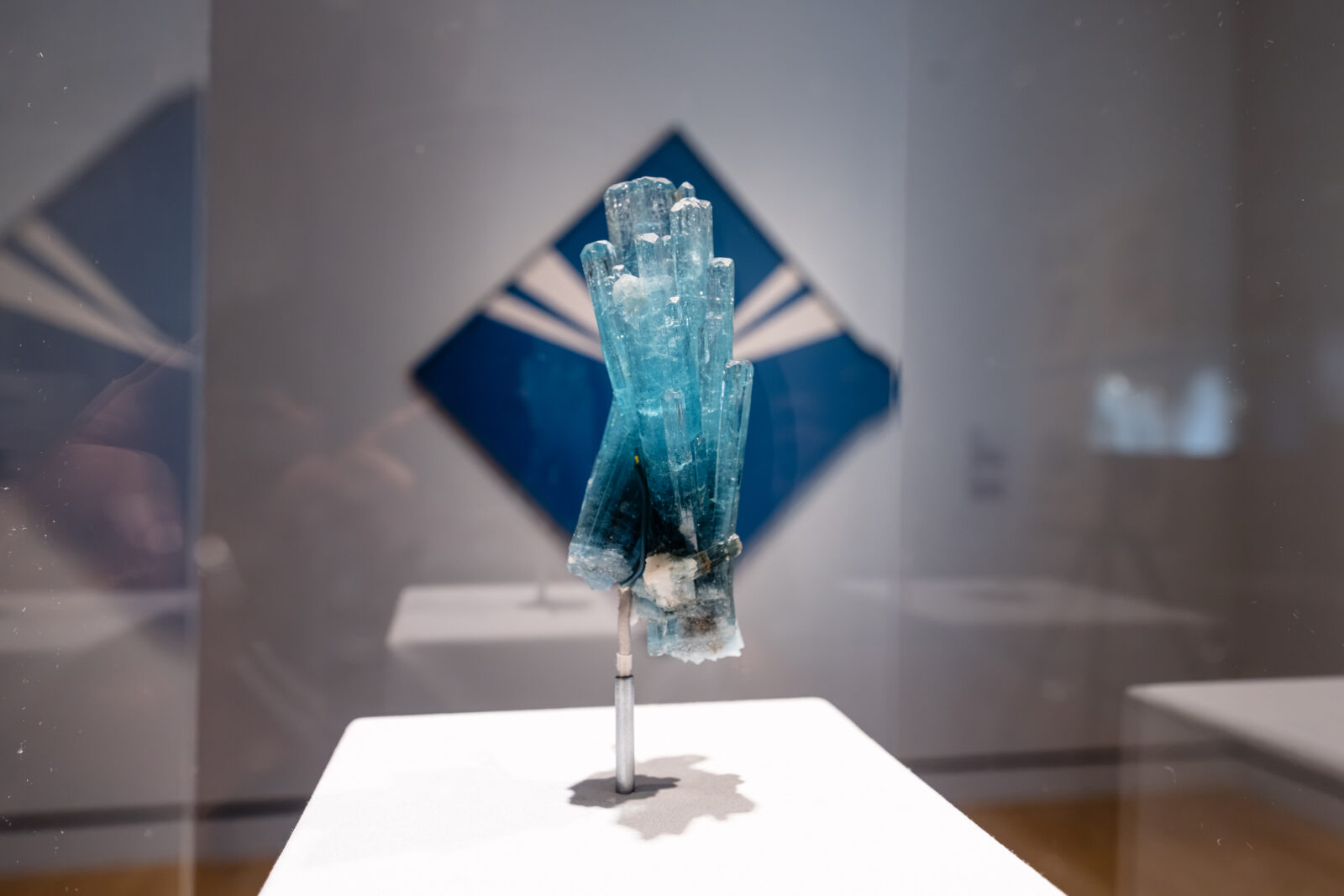
The exhibition also features raw, unworked mineral specimens from Crystal Bridges’ permanent collection, including a striking beryl crystal (whose distinct blue coloration is derived from trace amounts of iron) and a nearly four-inch-tall quartz crystal. These geological objects are placed in direct dialogue with Carmen Herrera’s rigorous 1965 abstract geometric painting, Cerulean. Herrera’s work transforms a familiar canvas square into a diamond-like plane through sharp, calculated cuts in space, merging minimalist modernism with crystalline structure.
Key Exhibition Metrics
Exhibition Run: Opened October 2026, closing March 29, 2027.
Centerpiece Weight: 27.21 carats (The Arkansas Diamond).
Geological Timeline: Volcanic diamond genesis estimated at ~100 million years ago.
Participating Collections: Crystal Bridges Museum of American Art permanent collection and the private Tiffany Archives (New York City).
Official Statements and Curatorial Perspectives
The conceptual weight of the exhibition relies heavily on the bridge it builds between fine art museums and high jewelry archives. According to exhibition curator Jen Padgett, the integration of these disparate collections offers visitors an entirely fresh perspective on standard art-historical narratives.
"The pairings across the Tiffany Archives and Crystal Bridges help us to see both collections in a new light," explains Jen Padgett, curator of Nature Adorned. "Comparing how artists draw inspiration from nature—whether depicting an orchid in a painting or transforming its form into a brooch—allows us to appreciate their ingenuity and imagination."
Furthermore, Padgett emphasizes the distinct cultural importance of highlighting Arkansas’s native geological heritage within a world-class art museum setting:
"Having the diamonds here allows us to highlight Arkansas’s natural resources and bring attention to the state’s unique place in the story of American gems."
This sentiment is echoed by regional historians and museum administrators who note that Arkansas remains entirely unique within the American landscape. It is the only state in the nation where amateur prospectors and everyday visitors can legally search for diamonds at a public site—Crater of Diamonds State Park in Murfreesboro—and keep whatever discoveries they unearth. By placing the massive 27.21-carat archival stone alongside amateur finds from Murfreesboro, the museum explicitly links institutional high luxury with populist, hands-on engagement with the earth.
Future Outlook: Legacy and Cultural Impact of Nature Adorned
As Nature Adorned: The Artistry of Tiffany & Co. and the American Imagination runs its course through the cooler months of late 2026 and early 2027, its long-term impact on the cultural landscape of the American South is already taking shape.
The exhibition signals a broader, ongoing shift in museum curation: the intentional breakdown of traditional hierarchies that once rigidly separated "fine art" (paintings and sculptures) from "decorative arts" (jewelry, glasswork, and mineralogy). By treating a Tiffany brooch or a Clara Driscoll table lamp with the same critical and aesthetic seriousness as a canvas by George Inness or Carmen Herrera, Crystal Bridges validates the intricate craftsmanship and environmental inspiration inherent in applied design.
For Arkansas, the exhibition serves as a powerful reminder of the state’s hidden subterranean wealth—one that extends far beyond agricultural and timber resources into the rare, pressured carbon formations born 100 million years ago. When the 27.21-carat Arkansas Diamond eventually returns to the quiet security of the Tiffany Archives in New York following the exhibition’s March 2027 close, it will carry with it the renewed context of a public homecoming. Until then, visitors to Bentonville have a rare, fleeting opportunity to witness the exact moment where the raw, unbridled forces of the American earth meet the pinnacle of human artistic refinement.




0 Comments