

Executive Overview
ERIE, Pa. — In the wake of one of the deadliest and most harrowing domestic tragedies in recent Pennsylvania history, the tight-knit lakeside community of Erie is grappling with profound grief, shock, and unanswered questions. On Friday afternoon, October 9, 2026, an unimaginably violent rampage unfolded inside a residential neighborhood, leaving eight people dead—including three young children and an unborn baby—before the 45-year-old gunman turned the weapon on himself.
Authorities have revealed that the perpetrator was related to seven of the eight victims, while the eighth was a close friend of one of the deceased women. Among the precious lives lost were a 1-year-old toddler, a 5-year-old boy, a pregnant mother, and her unborn child. The sheer magnitude of the violence has left investigators, local leaders, and community members searching for a rationale behind an act so senseless that it defies human comprehension.
The incident has drawn comparisons to historic Pennsylvania mass casualty events, such as the infamous 1982 Wilkes-Barre massacre, highlighting the rare but devastating phenomenon of domestic familicide. As federal, state, and local law enforcement continue to comb through digital evidence, audio recordings, and witness statements, the community has turned its focus toward mourning, supporting the surviving families, and examining the complex warning signs that often precede such unfathomable bursts of violence.
Detailed Chronology
The Unfolding Horror on Friday Afternoon
The tranquility of the late-autumn Friday afternoon in Erie—located approximately 120 miles north of Pittsburgh—was shattered shortly before 5:00 p.m. According to Erie Police Chief Rick Lorah, the sequence of events began with muffled sounds of gunfire emanating from inside the targeted residence.
Moments later, two visibly distressed women arrived at the property, frantically pounding on the front door. Investigators later recovered video and audio evidence capturing this desperate plea for help. Unbeknownst to the two women, the violent episode inside had already claimed multiple lives.
As the women attempted to seek refuge or sound the alarm, the gunman emerged from the house. Armed and relentless, he opened fire as the women tried to flee for their lives. Both women were struck down just outside the threshold of the home. Following the exterior execution, the gunman retreated back inside the residence.
The Police Response and Gruesome Discovery
Erie Police Department units arrived at the scene swiftly following emergency calls reporting gunfire. Faced with an active, highly dangerous barricade scenario and unsure of the shooter’s exact position or state of mind, tactical commanders deployed advanced resources, including a police drone and a remote-controlled robot, to safely assess the interior environment.
Once tactical clearance was established, officers entered the home to confront a scene of staggering devastation.
- The First Floor: Officers located the lifeless bodies of the 5-year-old boy and the 1-year-old girl.
- The Stairwell: Further search efforts revealed the bodies of two additional women and two young men.
- The Second Floor: The 45-year-old gunman was found dead from a self-inflicted gunshot wound.
Chief Lorah declined to elaborate publicly on the more intimate and gruesome details of the interior crime scene out of respect for the victims and their grieving families. However, he emphasized that the gravity of the encounter has left an indelible mark on the first responders and the community at large.
Supporting Context & Metrics
Profiles of Loss and Community Mourning
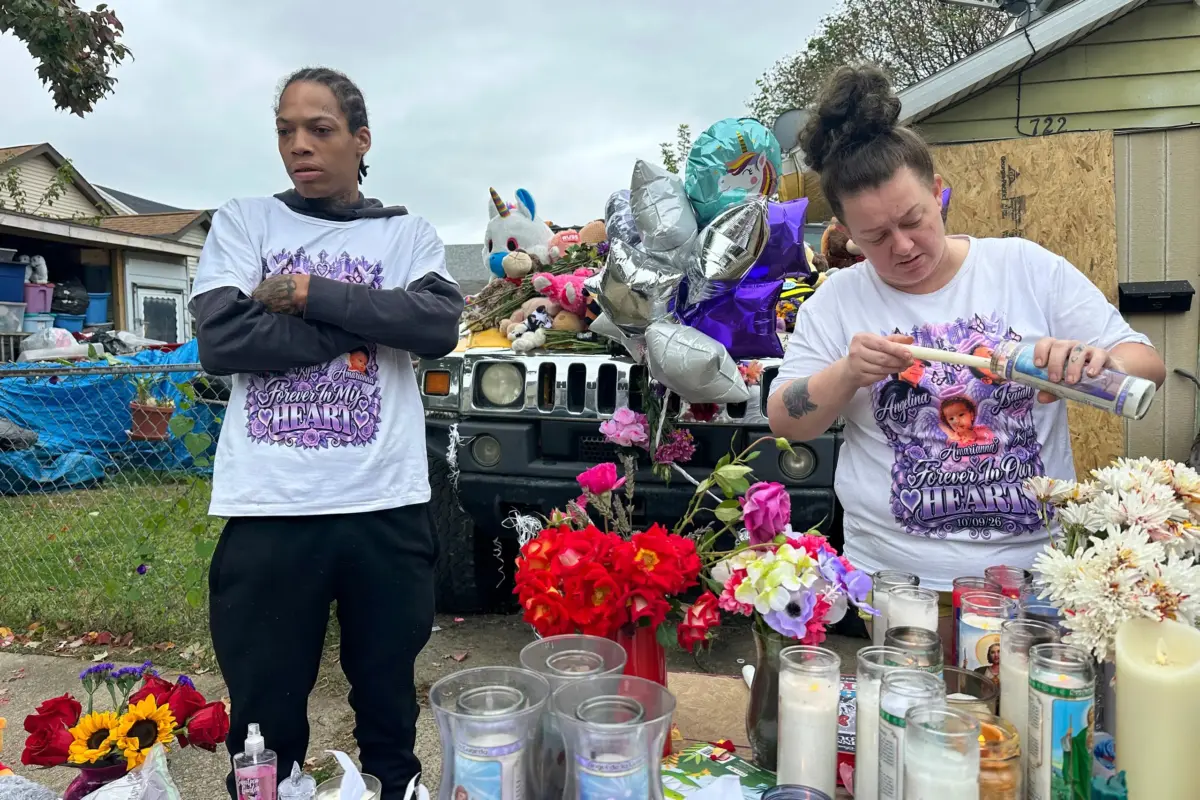
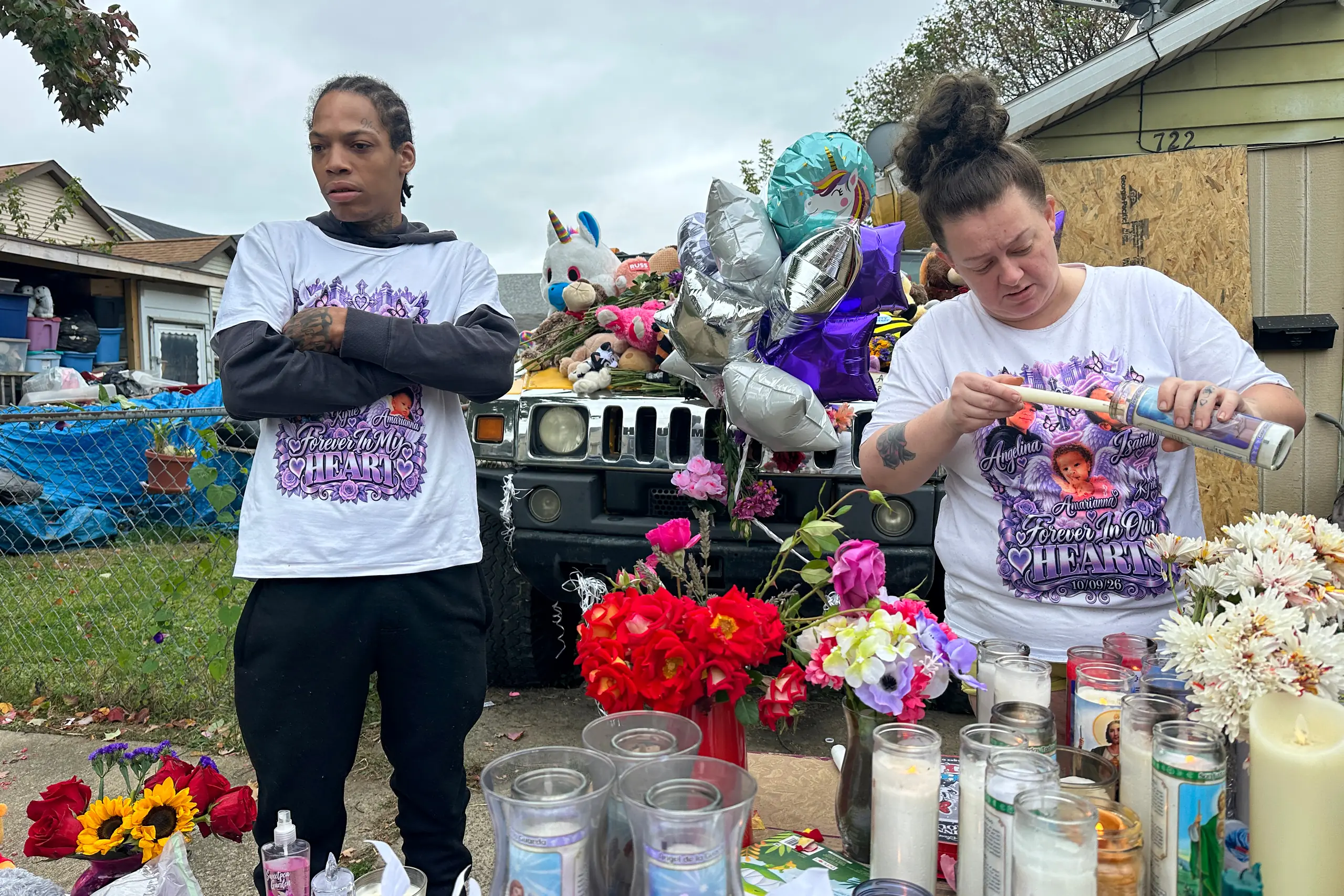
Over the weekend, the makeshift memorial outside the Erie home grew exponentially. Mourners, neighbors, and grieving relatives converged on the site, laying candles, floral bouquets, and stuffed animals to honor the dead.
Among the visitors was Julius Windham, whose world was shattered when his 1-year-old daughter, Amarianna, was killed in the massacre. Windham also lost the child’s pregnant mother, the mother’s 5-year-old son, and their unborn baby. Wearing a custom-printed T-shirt bearing photos of the slain mother and children alongside the words “Forever In My Heart,” Windham shared his agonizing internal conflict with reporters.
"Words can’t even explain what I’m going through right now," Windham said, his voice heavy with grief. "But I gotta be strong for my community, you know what I’m saying? My family, my daughters, my sons, everybody."
Windham painted a chilling picture of the alleged gunman—a man who functioned as a grandfather figure within the familial circle. Despite the horror he would eventually unleash, Windham noted that the shooter had consistently projected an amiable persona.
- "I think that was a front for him," Windham observed. "Him every day, him smiling and being just — you would think of nothing like that would happen."
Longtime acquaintances of the family offered similar recollections. Nicole and Debra Eller, who had known the family for more than three decades, expressed utter disbelief. Nicole Eller noted that the shooter had historically been viewed as a "good guy" before appearing to spiral downward in his personal life. Debra Eller echoed this sorrow, questioning how a grandfather could perpetrate such atrocities against his own flesh and blood.
Historical Parallels
Mass casualty incidents involving familial massacres are statistically rare, making their occurrence profoundly shocking to the public consciousness. Criminologists and historians immediately drew parallels between the Erie tragedy and the historic 1982 massacre in Wilkes-Barre, Pennsylvania, where gunman George Banks shot and killed 13 people, including five of his own children. Such historical context underscores the terrifying reality that domestic environments, rather than public spaces, occasionally play host to the most calculated and catastrophic bursts of targeted violence.
Official Statements
Law Enforcement and Municipal Leadership
At subsequent press briefings, city and police officials sought to balance transparency with the protection of the integrity of an ongoing, complex investigation.
Erie Police Chief Rick Lorah addressed reporters regarding the investigative steps being taken to uncover a motive, noting that investigators are currently analyzing the cellphones of the two women who were killed outside the home.
"They knew something was going on at that house," Lorah stated, pointing to the urgency of digital forensics. "We have to figure out what that is."
While declining to officially confirm a definitive motive, Lorah strongly suggested that severe underlying mental health issues may have played a significant role in the escalation of violence. Police have withheld the names of the victims and the shooter pending full family notifications and out of sensitivity to the minor victims involved.
Erie Mayor Daria Devlin spoke directly to the grieving families during a Saturday press conference, offering the unconditional support of the municipal government and the wider regional population.
"I am so deeply sorry," Devlin said, visibly moved. "What happened to you was horrific, and there is nothing that any of us can say today that will make this any easier… Our entire community is with you, we’re grieving with you. And we are here to support you."
Future Outlook
The Path Forward for Erie
As the investigation transitions from immediate response to meticulous forensic analysis, the city of Erie faces a long and arduous healing process. The immediate future will see grief counseling services mobilized across local schools, community centers, and religious institutions to aid children, families, and first responders grappling with acute trauma.
Key Focus Areas in the Ongoing Investigation:
- Digital and Communications Forensics: Law/enforcement extraction of data from the cellphones of the victims who arrived at the scene is expected to shed light on urgent distress signals sent prior to the police arrival.
- Behavioral Health Audit: Investigators will interview extended family members, coworkers, and acquaintances to map out the alleged shooter’s psychological decline and determine if prior threats or behavioral red flags were reported.
- Community Support Infrastructure: Local leaders are organizing memorial funds and long-term psychological assistance frameworks to ensure that surviving relatives, such as Julius Windham and other extended family members, receive sustained assistance.
Ultimately, the tragedy in Erie serves as a solemn reminder of the hidden vulnerabilities existing within domestic spaces. As the community continues to lay its youngest and most innocent victims to rest, the collective resolve remains focused on honoring their memories while confronting the systemic and mental health challenges that underlie such unprecedented acts of violence.

0 Comments