

Executive Overview
WASHINGTON — In a dramatic and sweeping directive issued via social media on Sunday, President Donald Trump ordered the Pentagon to substantially scale back upcoming joint military exercises with South Korea. The presidential command, which arrives just as 18,000 South Korean service members and thousands of U.S. troops were poised to begin an 11-day defensive readiness campaign, sends immediate shockwaves through the geopolitical architecture of East Asia and Washington’s traditional alliance networks.
According to the President, the decision was multifaceted. First, Trump expressed deep frustration that Seoul had allegedly declined to assist the United States in diplomatic efforts to denuclearize Iran. Second, he argued that large-scale military drills conducted on the doorstep of North Korea send a “totally inappropriate and hostile” signal to Pyongyang. Trump asserted that North Korea has remained “unthreatening and respectful” during his tenure in the White House, doubling down on a personal rapport with Supreme Leader Kim Jong Un that has long baffled and concerned traditional defense hawks and foreign policy establishment insiders alike.
The directive targets the 11-day combined command post and field training exercises, which were meticulously designed to enhance combined operational readiness against escalating nuclear and conventional provocations from Pyongyang. U.S. and South Korean forces had planned to execute complex, multi-domain combat scenarios—including live-fire precision targeting, tactical maneuver operations, complex wet gap river crossings, and the rapid distribution of prepositioned strategic military assets.
With logistics too advanced and the timeline too compressed to scrap the maneuvers entirely, Trump announced he had instructed Secretary of War Pete Hegseth to immediately dial back the scale and intensity of the operations. This latest development marks a striking continuation of Trump’s long-standing skepticism regarding traditional alliance-based burden sharing, the utility of large-scale peninsular war games, and his persistent preference for direct, leader-to-leader summit diplomacy over institutional deterrence.
Detailed Chronology: From Air Force One Directive to Regional Fallout
The Weekend Announcement
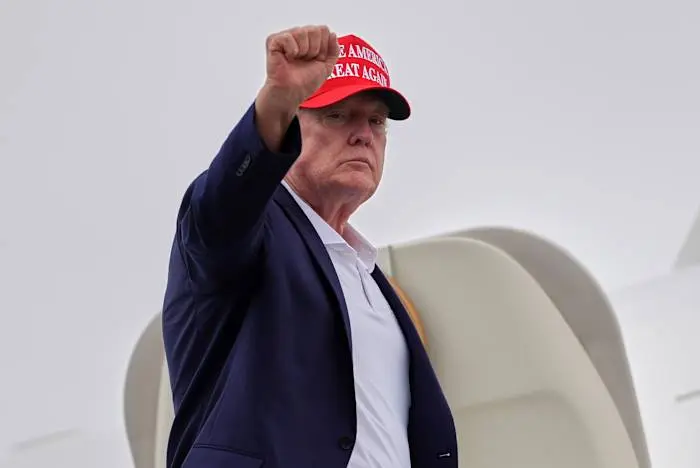
The sequence of events leading to the sudden curtailment of the military exercises unfolded rapidly over the weekend. President Trump boarded Air Force One at Morristown Airport in New Jersey on Sunday, Aug. 16, 2026, heading back to Washington. Before takeoff, or immediately upon settling into flight operations, the President finalized a public statement that would upend weeks of rigorous tactical planning by the United States Forces Korea (USFK) and the Republic of Korea (ROK) Armed Forces.
In his social media dispatch, Trump framed the decision as both a financial and strategic correction. Citing the immense monetary cost of executing large-scale force deployments and maneuvers, the President targeted the perceived political messaging behind the drills.
"Therefore, and based on the fact that it is too late to cancel, I have instructed Secretary of War, Pete Hegseth, to substantially reduce the Joint Military Exercises!" Trump wrote, bypassing traditional bureaucratic notification channels through the National Security Council and the Department of Defense in favor of direct public instruction.
The Buildup and the Backchannel
The exercises slated to begin this week were the result of months of bilateral staff talks between Washington and Seoul. The allied militaries had intended to stress-test their combined defensive architecture amid a persistent backdrop of North Korean ballistic missile testing, artillery drills, and aggressive rhetoric.
However, tension had been quietly simmering behind closed doors. Reports indicate that friction had developed between the White House and the administration of South Korean President Yoon Suk Yeol regarding broader global security commitments—specifically, Washington’s ongoing containment and denuclearization campaigns targeting Iran. When Seoul reportedly demurred on providing tangible diplomatic or economic assistance for U.S.-led initiatives in the Middle East, the White House perceived a lack of allied reciprocity.
This diplomatic friction dovetailed with Trump’s pre-existing worldview regarding military exercises on the Korean Peninsula. Just a day prior to his Sunday order, Trump published a nostalgic archival photograph of himself standing side-by-side with North Korea’s Kim Jong Un. Accompanying the photograph, Trump remarked that the two leaders “get along great,” dismissing visual cues of tension by writing, “despite the unfriendly look on this particular picture.”
Supporting Context & Metrics: The Scale of the Drills and Historical Precedent
To understand the magnitude of Trump’s directive, it is necessary to examine the operational scope of the exercises and the historical context of U.S.-ROK military integration.
Operational Metrics of the Exercises
- Total Personnel: Approximately 18,000 South Korean soldiers, alongside thousands of integrated U.S. service members stationed regionally and rotationally.
- Duration: 11 intensive days of synchronized operations.
- Core Scenarios:
- Live-fire exercises testing joint precision targeting and maneuver warfare capabilities.
- Complex wet gap crossings designed to test engineering corps under simulated combat stress.
- Rapid distribution and mobilization of prepositioned military equipment (WRM-4 inventories).
- Strategic Objective: Countering asymmetrical threats, command-and-control synchronization, and ensuring high-readiness posture across the Demilitarized Zone (DMZ).
Historical Parallels: The 2018 Singapore Precedent
This is not uncharted territory for the Trump administration. During his first term, Trump similarly upended allied military planning with a sudden, unilateral declaration regarding joint drills. Following his historic June 2018 summit with Kim Jong Un in Singapore, Trump stunned Pentagon officials and regional allies alike by announcing the suspension of major war games, which he explicitly labeled “provocative.”
Speaking to reporters in Singapore at the time, Trump stated:
"We will be stopping the war games, which will save us a tremendous amount of money, unless and until we see the future negotiation is not going along like it should."
That decision led to a significant scaling back of exercises such as Ulchi Freedom Guardian and Foal Eagle during the height of the administration’s first-term diplomatic push. Critics at the time warned that halting the drills degraded alliance readiness, eroded muscle memory between allied staffs, and created tactical vulnerabilities that could be exploited by Pyongyang. Supporters, conversely, argued it was a necessary and bold diplomatic concession that opened the door for direct summits in Hanoi and at the Panmunjom truce village in the Demilitarized Zone.
Official Statements and Institutional Reactions
The sudden announcement has triggered an immediate flurry of activity and concern across defense ministries, diplomatic outposts, and legislative offices in Washington, Seoul, and beyond.
The Pentagon and Secretary of War Pete Hegseth
Secretary of War Pete Hegseth, tasked with translating the President’s social media directive into concrete operational orders, faces an unprecedented logistical challenge. Modifying active deployments, live-fire ranges, and multinational logistical chains with mere hours’ notice is an extraordinarily complex undertaking. As of Sunday evening, Pentagon spokespersons emphasized that the Department of Defense is working closely with the Joint Chiefs of Staff and the Indo-Pacific Command (INDOMOPACOM) to execute the President’s orders while maintaining baseline deterrence frameworks.
Seoul’s Diplomatic Dilemma
In Seoul, the government of South Korea finds itself in a precarious diplomatic posture. South Korean defense officials have consistently maintained that these joint exercises are purely defensive in nature, rooted in the mutual defense treaty signed in the wake of the Korean War.
The North Korean Foreign Ministry, however, has predictably seized on the friction, repeatedly characterizing the U.S.-South Korean training as “a rehearsal for an aggressive war” that intentionally destabilizes the region. While parts of the South Korean public and progressive political factions may quietly welcome a reduction in tensions with Pyongyang, the conservative security establishment views any unilateral dilution of the alliance’s readiness posture as an unacceptable strategic risk in the face of an advancing North Korean nuclear arsenal.
Congressional and Expert Reactions
Foreign policy experts and congressional leaders on both sides of the aisle have expressed mixed reactions.
- Defense Hawks argue that conditioning vital national security exercises on unrelated geopolitical disputes—such as cooperation on Iran—undermines the credibility of American security guarantees in East Asia and weakens the deterrence posture against nuclear-armed adversaries.
- Administration Supporters praise the move as a masterclass in transactional diplomacy, asserting that allies must contribute meaningfully to global U.S. security objectives if they expect unconditional American military backing and expensive regional deployments.
Future Outlook: Navigating Uncharted Waters in US-ROK Relations
As Secretary Hegseth implements the scaled-down parameters for the ongoing exercises, the long-term ramifications for the U.S.-South Korea alliance remain deeply uncertain.
- The Future of Summits: President Trump has repeatedly signaled his desire to restart personal diplomacy with Kim Jong Un. Whether Pyongyang will respond favorably to this latest unilateral concession—much as it did in 2018—remains to be seen. Historically, North Korea has accepted suspension of drills while continuing its underlying nuclear weapons development and missile testing programs.
- Allied Cohesion: The linkage of regional Korean defense drills to global diplomatic compliance regarding Iran establishes a provocative precedent. Seoul must now navigate the delicate balance between maintaining its foundational security alliance with Washington and preserving its own sovereign diplomatic and economic calculus regarding Middle Eastern affairs.
- Readiness Implications: Military analysts will closely monitor the operational impact of the reduced drills. If allied command staffs are unable to regularly practice complex, multi-domain maneuvers, questions will inevitably arise regarding the true combat effectiveness of the combined forces should deterrence fail.
Ultimately, Sunday’s directive underscores the enduring hallmark of Trump’s foreign policy: a willingness to disrupt established institutional norms, leverage military assets as transactional instruments of statecraft, and prioritize personal diplomacy and cost-cutting over traditional alliance management. As the week unfolds, the eyes of the global intelligence and diplomatic communities will remain fixed on Washington, Seoul, and Pyongyang to gauge the full fallout of this high-stakes geopolitical maneuver.

0 Comments