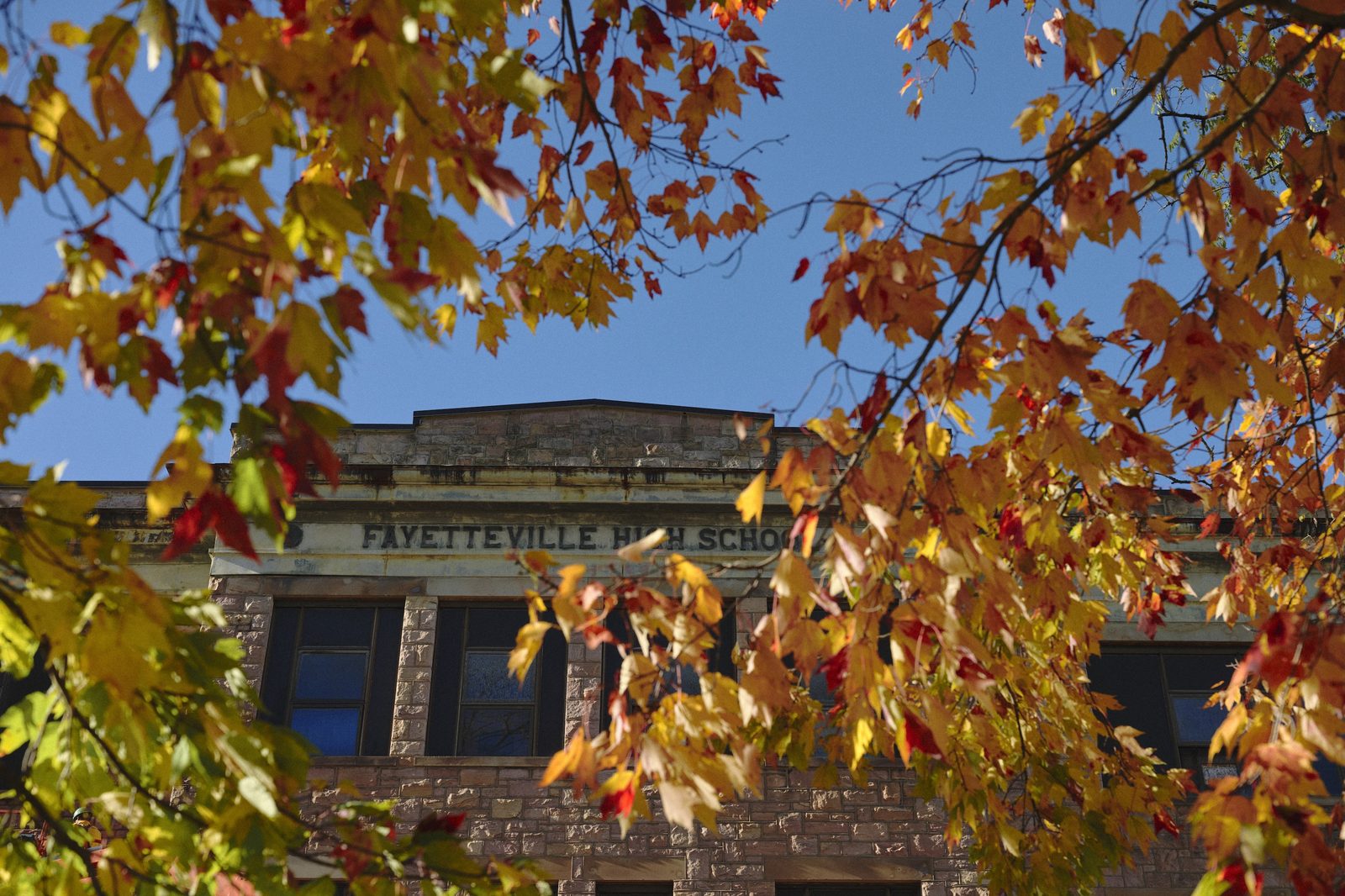
In the heart of Fayetteville, West Virginia—a historic Appalachian community long defined by its rugged landscape, coal-mining roots, and proximity to the wild rapids of the New River—a quiet architectural renaissance has taken shape. Hill Hall, a newly opened 40-key boutique hotel, represents a striking transformation: the adaptive reuse of two vacant public school buildings that sat idle for decades. Developed by Mountain Shore Properties and spearheaded by CEO Stephen Wendell, the property bridges the gap between historical preservation and modern design-forward hospitality.
Opening its doors in an era catalyzed by the 2020 designation of the nearby New River Gorge as the country’s newest national park, Hill Hall arrives at a critical juncture. For years, travelers seeking access to the gorge’s world-class rock climbing, hiking, and whitewater rafting found themselves constrained to rustic cabins, campgrounds, or standard vacation rentals. Hill Hall fills a distinct niche in the regional market, offering a sophisticated, design-driven basecamp that honors its academic pedigree while delivering high-end hospitality.
Yet, the soul of Hill Hall reaches far beyond commercial viability. At its core, the project is a deeply personal love letter to Fayetteville, guided by the vision of Stephen Wendell’s late grandmother, Pat Phillips Wendell. An antiques dealer, community pillar, and the town’s unofficial historian, Pat was instrumental in securing Fayetteville’s place on the National Register of Historic Places in 1990. Through meticulous architectural curation, homestyle culinary concepts, and subtle nods to the buildings’ past lives as the local high school and middle school, Hill Hall transforms a relic of the community’s past into an anchor for its future.
Detailed Chronology: From Academic Halls to Modern Hospitality
The Rise, Fall, and Vacancy of Fayetteville’s Schools
Long before it welcomed travelers seeking outdoor adventure, the property housing Hill Hall served as the educational heartbeat of Fayetteville. Comprising a former middle school and high school, the structures echoed with the daily routines of generations of local youth, whose athletic teams competed proudly under the banner of the Fayetteville Pirates.
However, shifts in local demographics, educational consolidation, and changing municipal infrastructure eventually rendered the aging school buildings obsolete. By the late 1990s, the classrooms emptied out, the hallways fell silent, and the complex joined the ranks of countless historic public facilities across rural America left vulnerable to urban decay, neglect, and eventual demolition. For more than two decades, the sprawling brick structures sat vacant, serving as monuments to a bygone era of small-town civic pride.
The Preservation Seed: Pat Phillips Wendell’s Legacy
The salvation of these architectural assets began long before Mountain Shore Properties drafted its first blueprint—it began with paperwork filed decades prior. In 1990, Pat Phillips Wendell successfully spearheaded the grassroots effort to have Fayetteville’s historic district added to the National Register of Historic Places.
Operating entirely in a pre-computer era, Pat meticulously cataloged the architectural and historical significance of the town, driven by a fierce devotion to her community. Little did she know that her archival labor would lay the foundational legal and structural framework required to save the abandoned schools decades later. Without the historic district designation secured by Pat, the adaptive reuse tax credits, zoning permissions, and historic preservation exemptions necessary to finance and execute the Hill Hall project would have been virtually impossible to secure.
Acquisition, Design, and the August Soft Opening
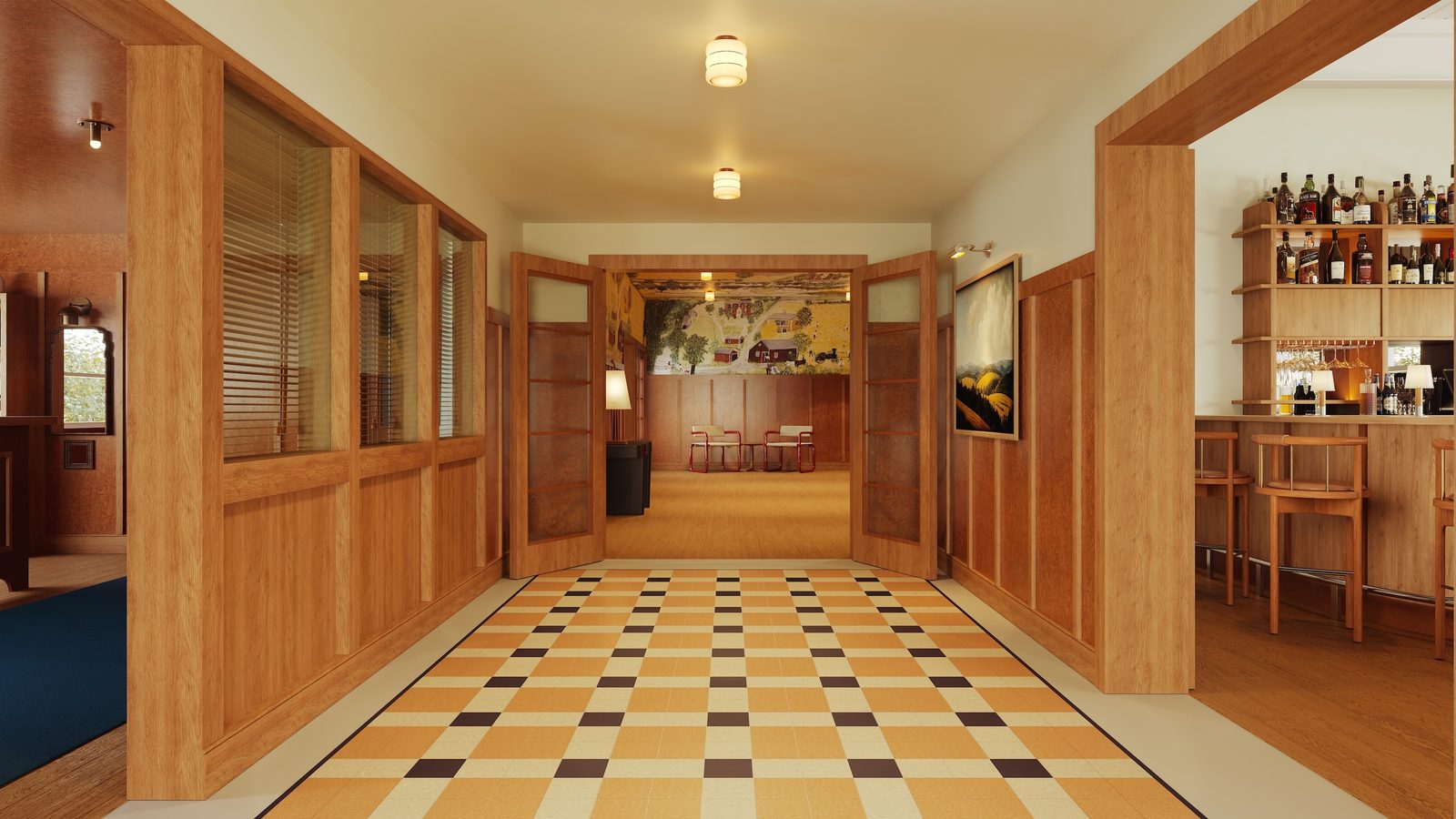
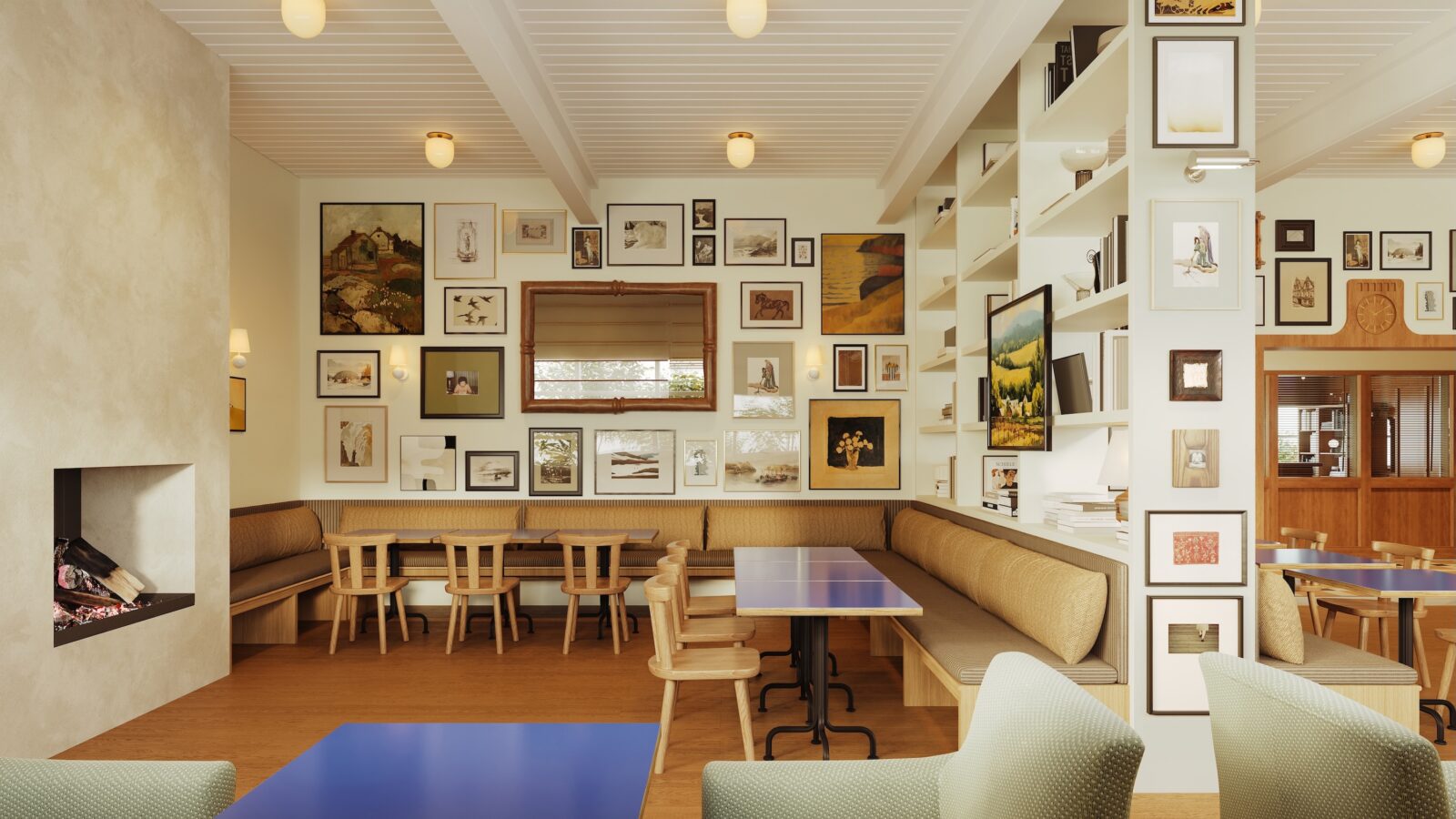
When Mountain Shore Properties acquired the vacant school complex, the vision was clear: honor the buildings’ structural integrity while injecting a vibrant, midcentury-modern design vocabulary infused with a distinct Wes Anderson-esque whimsy. Under the direction of Mae Pate, head of design at Mountain Shore Properties, the development team meticulously repurposed the interior architecture.
The Check-In Desk: Formerly the principal’s office, where students were once sent for disciplinary actions, now serves as the welcoming reception area for arriving guests.
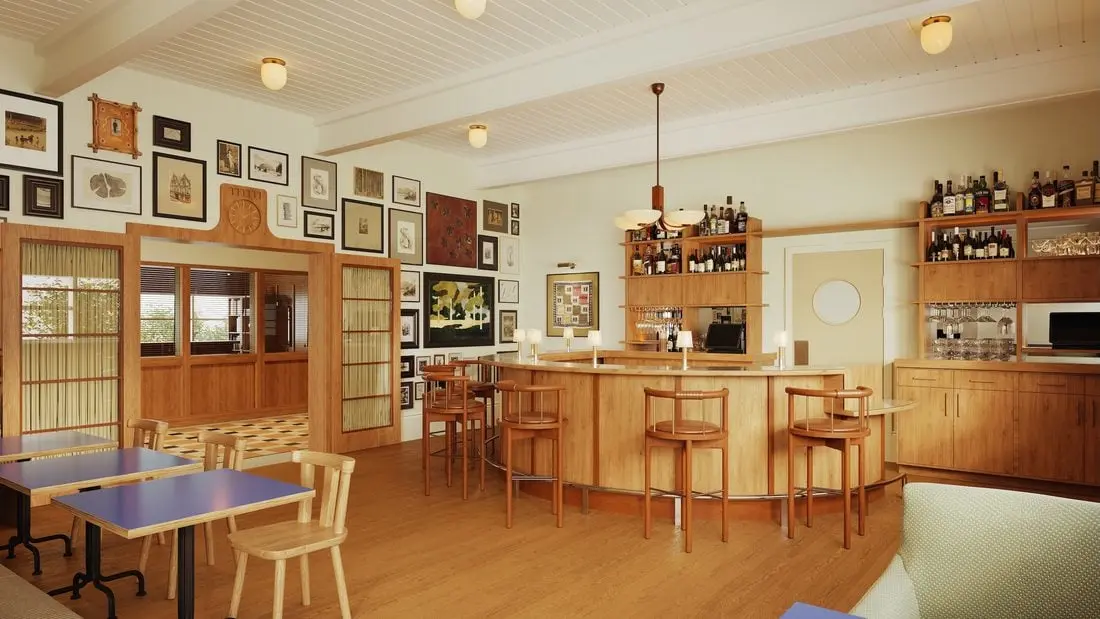
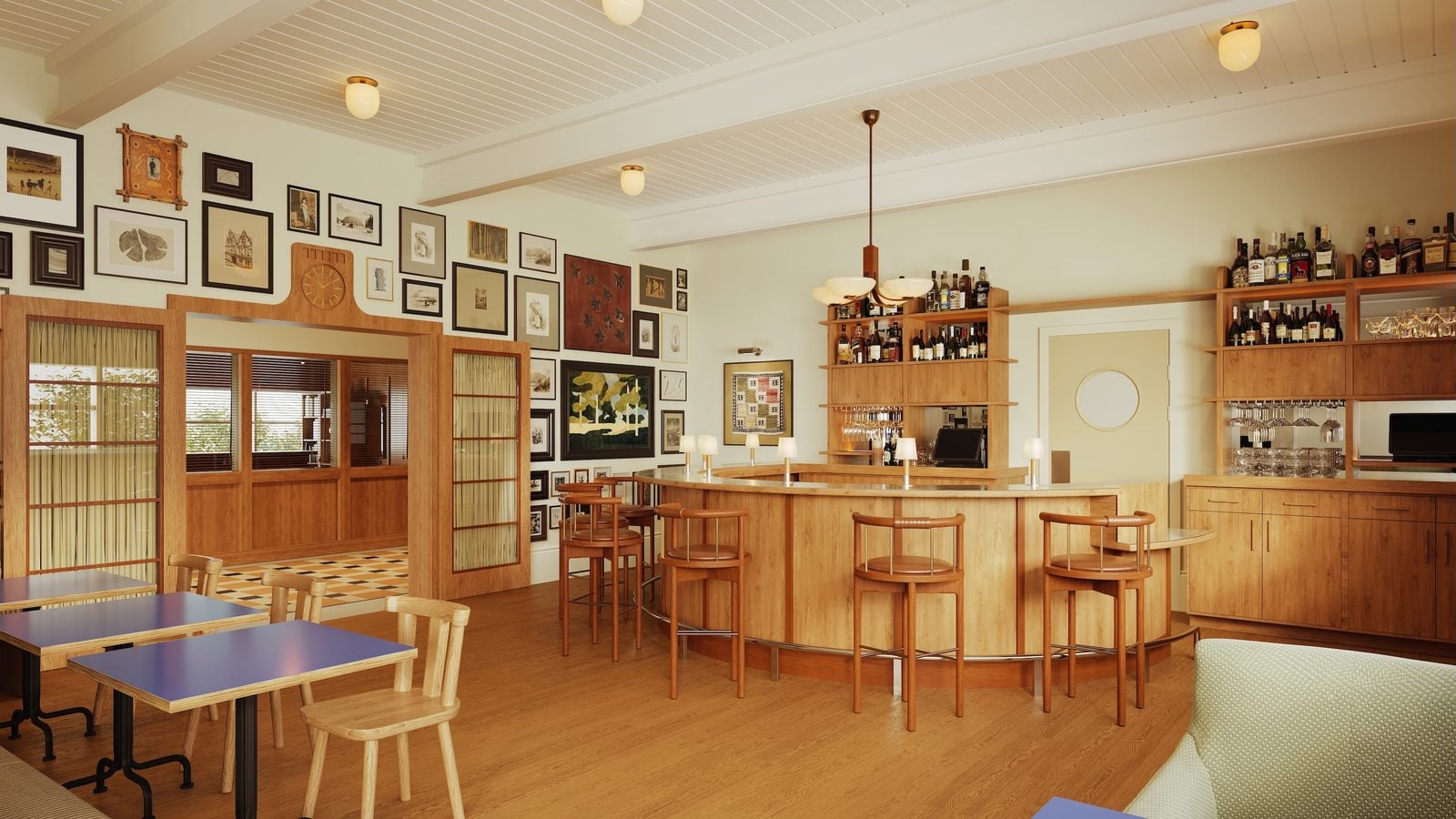
The Bar: The school’s former chemistry lab has been cleverly transformed into the hotel’s signature watering hole, complete with honey-hued wood finishes and cocktail menus that nod to scientific precision and comfort.
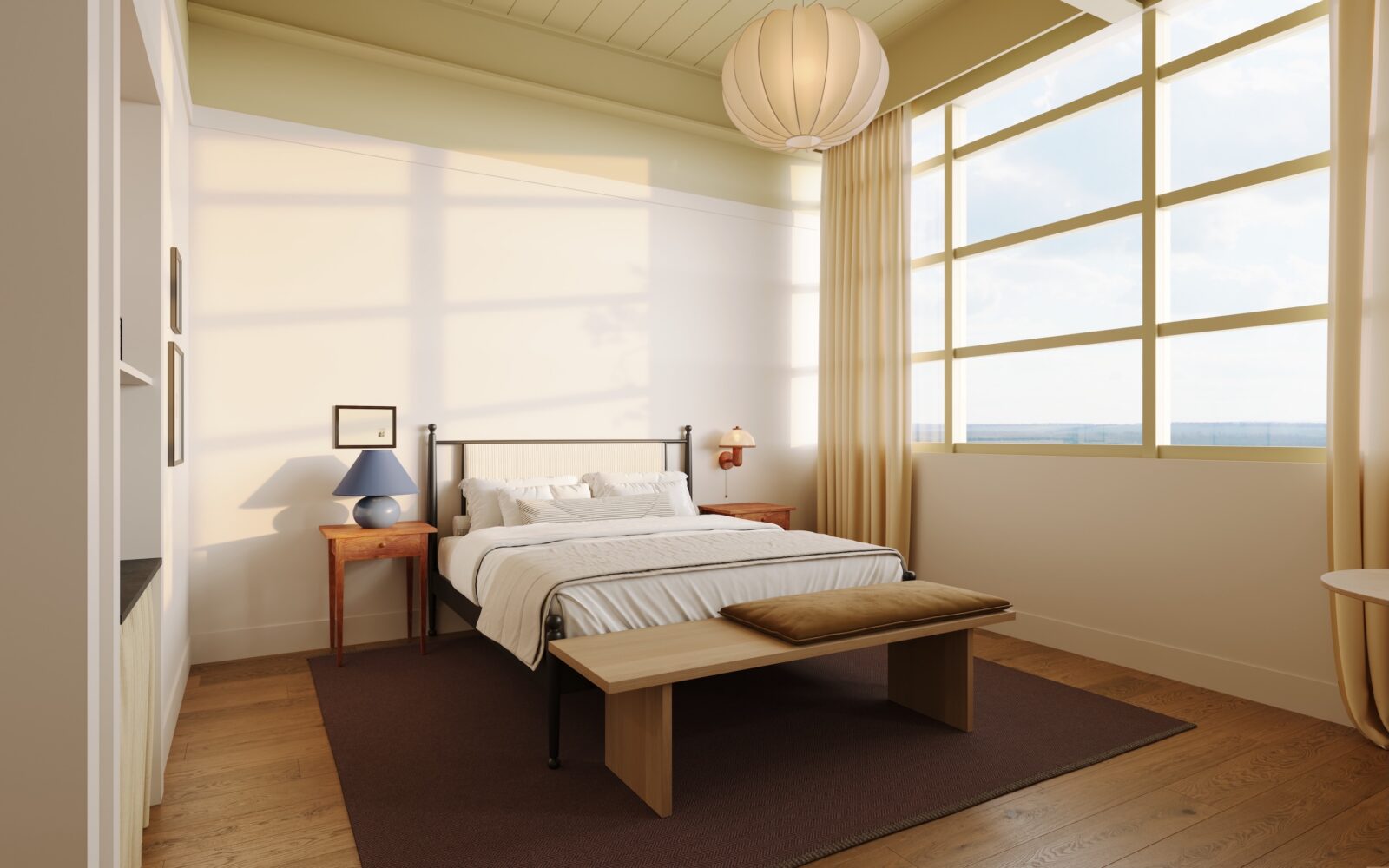
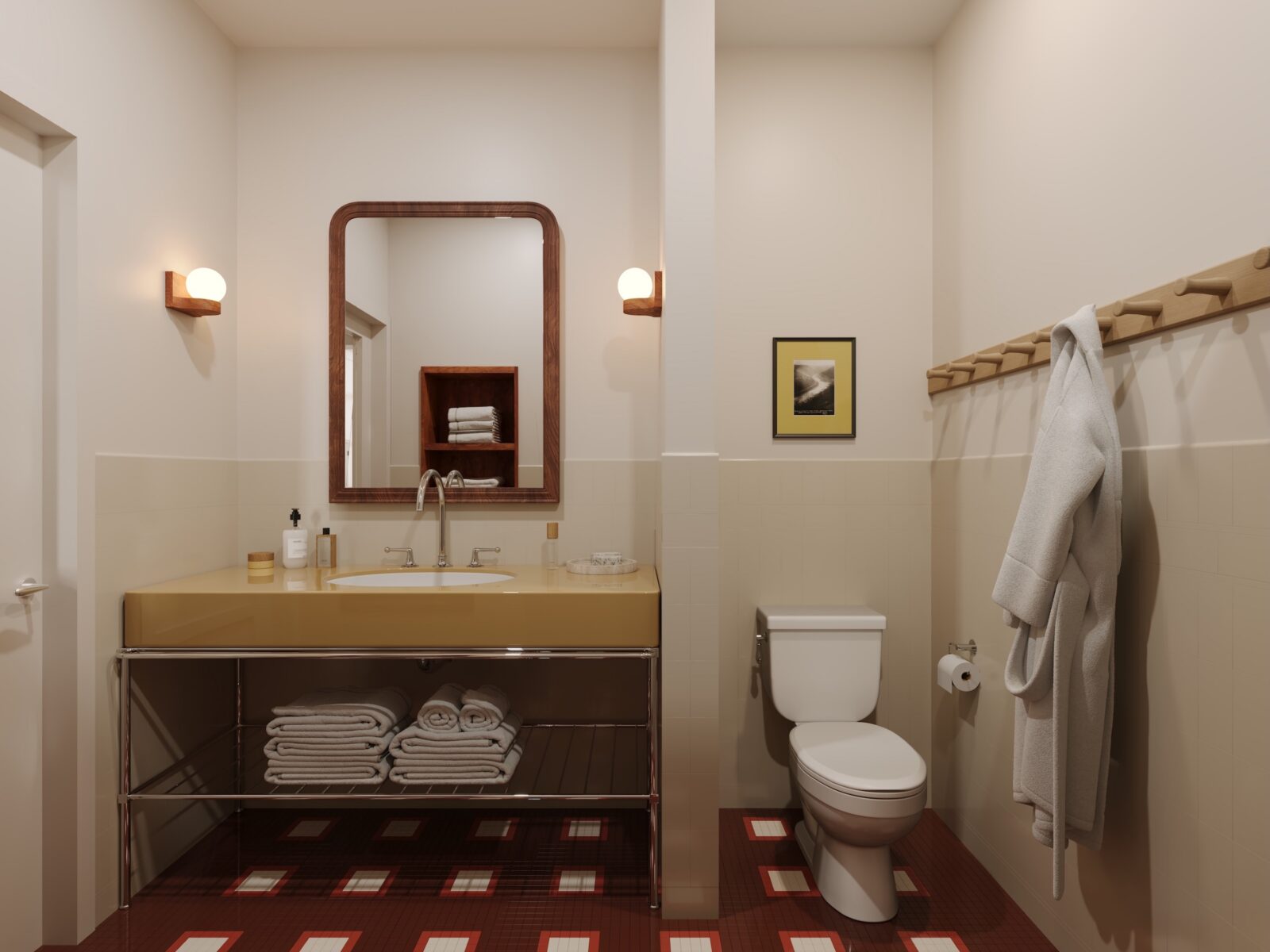
The Guest Rooms: Individual classrooms have been re-engineered into 40 distinct guest rooms, capitalizing on high ceilings, large historic windows, and abundant natural light. Bathrooms feature striking tilework, including rich burgundy accents that contrast sharply with the industrial heritage of the buildings.
In August, Hill Hall hosted a soft opening that brought former students and local alumni back into the halls they once navigated as teenagers. The homecoming revealed a wave of nostalgia, as graduates hunted for hidden "Easter eggs" embedded in the interior design. From Wi-Fi passwords that wink at school inside jokes to subtle murals depicting the Pirate mascot integrated into the public spaces, the hotel was intentionally crafted to bridge the gap between memory and modern luxury.
Supporting Context & Metrics: The New River Gorge Boom
Tourism Catalyst: The National Park Designation
Hill Hall’s arrival in Fayetteville is strategically timed to intersect with a massive shift in regional tourism dynamics. In December 2020, Congress officially redesignated the New River Gorge National River as the New River Gorge National Park and Preserve. As America’s 63rd national park, the designation instantly placed southern West Virginia on the international travel map.
Prior to the designation, the region drew steady streams of outdoor enthusiasts—particularly whitewater rafting junkies tackling the ferocious Class IV and V rapids of the New River, and rock climbers scaling the sheer sandstone cliffs of the gorge. However, the national park status triggered an exponential surge in visitation, drawing families, casual hikers, and luxury travelers who previously bypassed Appalachia for more traditional resort destinations.
Economic Impact and Lodging Deficit
Despite the influx of visitors flocking to the Canyon Rim Visitor Center and the iconic New River Gorge Bridge, Fayetteville faced a well-documented hospitality bottleneck:
Traditional Options: Overnight accommodations were overwhelmingly dominated by rustic cabins, primitive campgrounds, mom-and-pop motels, and decentralized vacation rentals (such as Airbnb and VRBO).
The Boutique Gap: There was a severe lack of high-design, full-service boutique hotel properties capable of offering curated guest experiences, on-site fine dining, and professional hospitality infrastructure within walking distance of downtown Fayetteville’s commercial district.
Hill Hall directly addresses this market gap. By providing 40 thoughtfully appointed guest rooms, an executive culinary program, and communal gathering spaces, the hotel elevates the baseline of hospitality infrastructure in Fayette County. It successfully captures high-net-worth travelers who demand aesthetic sophistication without sacrificing proximity to wilderness adventure.
Official Statements and Culinary Vision
The Guiding Star: Stephen Wendell on His Grandmother
For CEO Stephen Wendell, every major decision regarding Hill Hall’s development was filtered through a deeply personal lens. When asked about the conceptual inspiration behind the multimillion-dollar boutique project, Wendell points unequivocally to his family lineage.
"My grandmother has been the North Star of every decision," Wendell reflects.
Recalling Pat Phillips Wendell’s tireless civic advocacy, Wendell notes the profound irony and poetic justice of utilizing her historic preservation work to revitalize the very buildings she fought to protect. When asked what his grandmother would think of the finished hotel, Wendell becomes visibly emotional, bridging the gap between the town she preserved and the modern destination it has become:
"What would she say? I think about that often. It makes me a bit emotional. I think she’d be what she used to call ‘tickled.’ This state is often overlooked; therefore, the town is overlooked. I think she’d be most proud that Fayetteville is getting its due and deserving of it."
Culinary Storytelling at Patsy’s
The connection to Pat Wendell extends directly into the hotel’s culinary heartbeat: Patsy’s, the on-site restaurant and bar managed by Chef Jeffrey Toth. Rather than imposing an avant-garde menu disconnected from the region’s culinary heritage, Chef Toth turned directly to Pat Wendell’s well-worn, personal recipe books.
Guests lounging at the honey-hued bar are greeted not only with craft cocktails but also with complimentary bowls of Pat’s legendary, custom-mixed Chex mix. The dinner and brunch menus feature upscale, soul-warming reinterpretations of traditional Appalachian home cooking:
Honey-butter glazed wings
Rich, savory meatloaf paired with seasonal farm vegetables
Braised mustard greens cooked low and slow
Classic blackberry cobbler served warm with vanilla bean ice cream
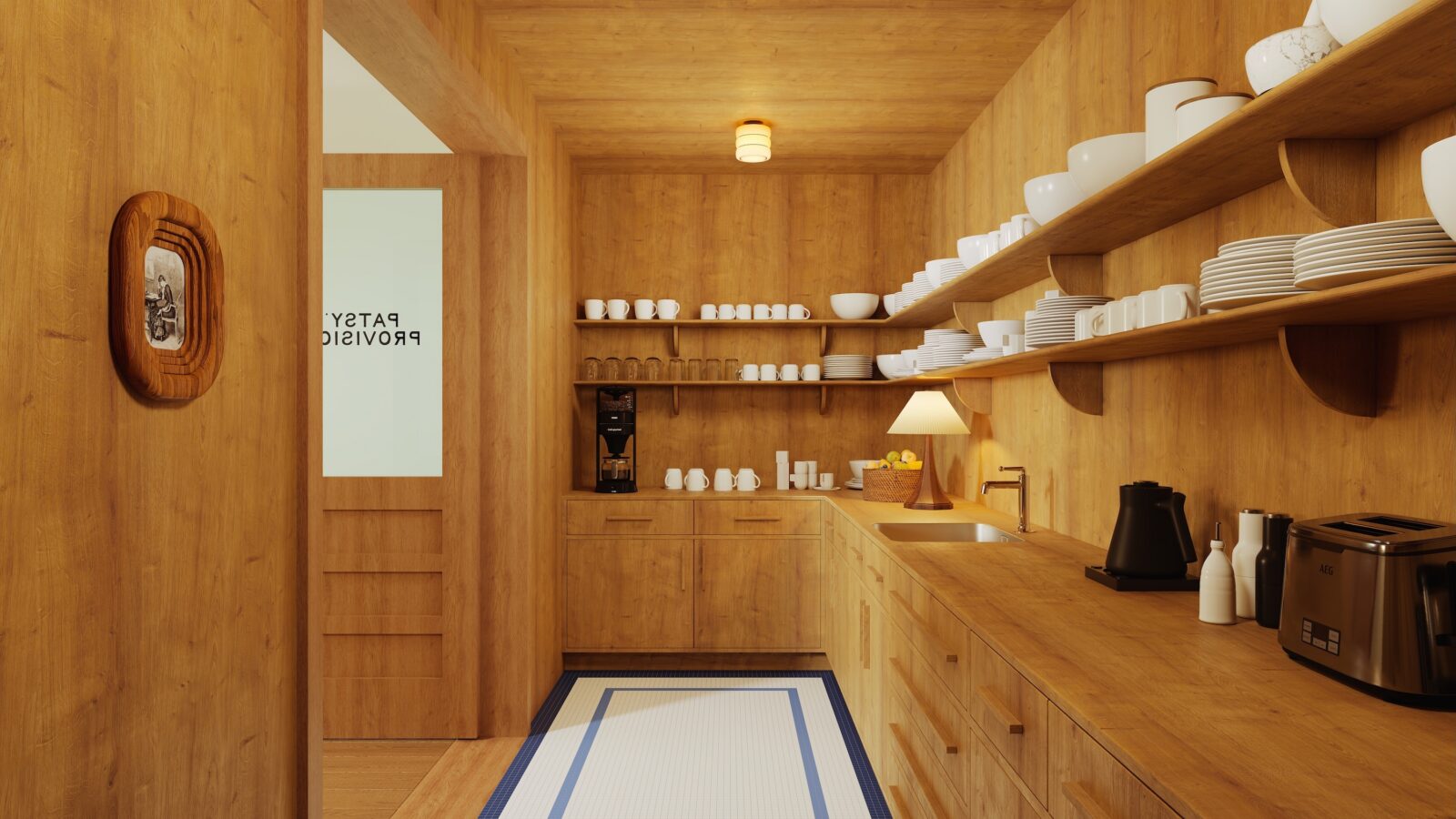
Complementing the restaurant is Patsy’s Provisions, an honor pantry and intimate bar space designed for guests seeking artisanal snacks, local provisions, and curated beverages around the clock.
Future Outlook: Setting a Precedent for Appalachian Revitalization
The opening of Hill Hall signals more than just the debut of a successful boutique hotel; it establishes a replicable blueprint for rural economic development across Appalachia. As former industrial towns, mining communities, and manufacturing hubs seek to transition into sustainable tourism economies, the adaptive reuse of abandoned public infrastructure—such as schools, courthouses, and municipal buildings—offers a compelling path forward.
Key Takeaways for Regional Development:
Preservation as an Economic Engine: Leveraging historic tax credits and National Register designations can turn multi-decade liabilities into high-value community assets.
Authentic Storytelling: Modern travelers increasingly reject homogenized, cookie-cutter corporate hospitality in favor of properties deeply rooted in local history, architecture, and personal narrative.
Synergy with Public Lands: Properties positioned adjacent to national parks and protected wilderness areas are uniquely situated to capture high-yield experiential travelers, provided the local lodging infrastructure evolves to meet their expectations.
As fall foliage blankets the steep ridges of the New River Gorge and visitors pack into Fayetteville’s downtown eateries, Hill Hall stands as a testament to the power of memory, design, and familial devotion. By transforming the empty classrooms of yesterday into the welcoming suites of today, Stephen Wendell and the team at Mountain Shore Properties have ensured that Pat Phillips Wendell’s legacy will continue to educate, inspire, and shelter travelers for generations to come.



0 Comments