North Charleston’s historic Navy Yard—once a bustling hub of naval logistics and ship construction—is undergoing a profound cultural and culinary renaissance. Anchoring this ongoing transformation is Riva Mare, a stunning rooftop restaurant perched atop Storehouse Nine. Representing the Navy Yard’s very first full-service dining establishment, Riva Mare bridges two distinct culinary worlds: the breezy, sun-drenched coastal traditions of Italy’s Ligurian and Amalfi coasts and the rich, hyper-local bounty of South Carolina’s Lowcountry.
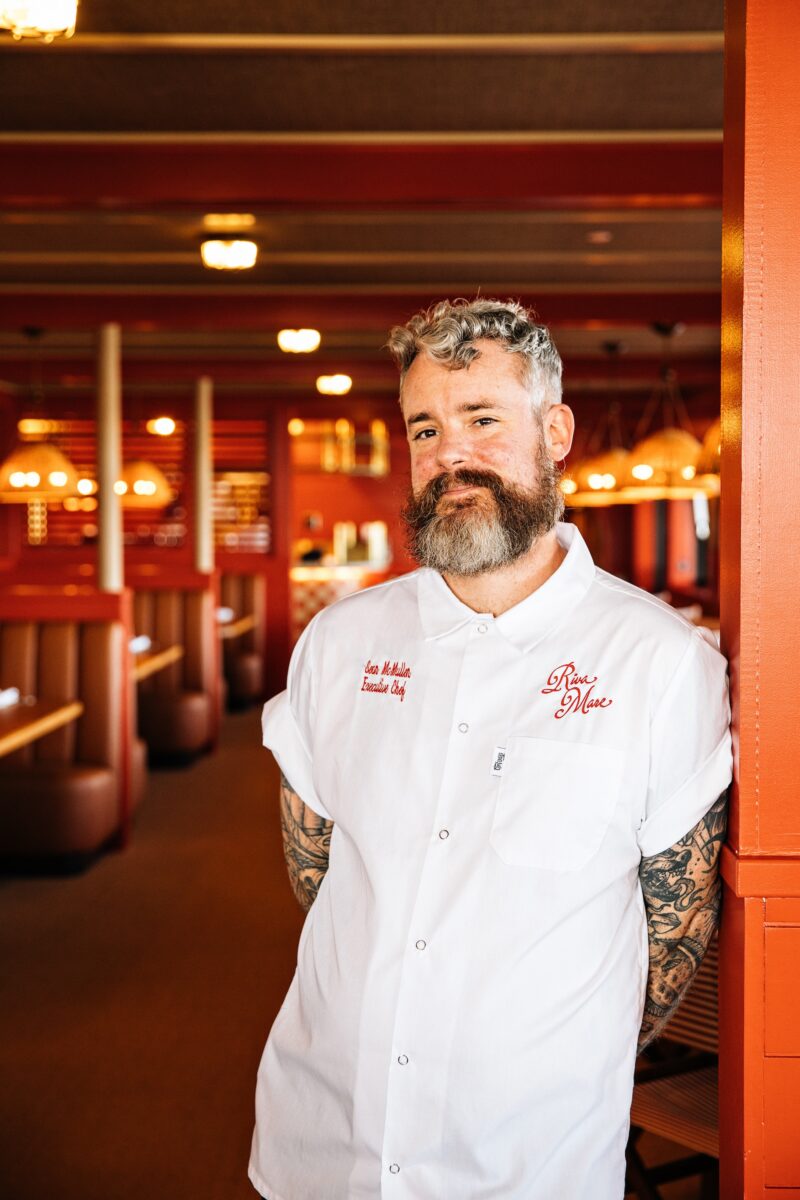
At the helm of this ambitious venture is Executive Chef Sean McMullen, a culinary talent celebrated for his resourcefulness, commitment to sustainability, and a sophisticated touch that honors regional agriculture. Brought to life by the renowned hospitality group Indigo Road—the creative force behind Southern culinary mainstays such as Indaco, Colletta, and O-Ku—Riva Mare is more than just a new place to eat; it is a masterclass in cross-cultural gastronomic synthesis.
By marrying sustainable Italian techniques with local South Carolina sourcing, McMullen has engineered a menu that feels simultaneously transportive and deeply rooted in its geography. From squid-ink pansotti filled with locally sourced shrimp “bits” to wood-fired pizzas finished with house-made tuna conserva, Riva Mare invites diners to experience an entirely different time and place without ever leaving the Cooper River waterfront.
Detailed Chronology: From the Mountains of Asheville to the Lowcountry Coast
A Foundation in Sustainability and Mountain-Italian Fare
Chef Sean McMullen’s journey to the rooftop of Storehouse Nine was paved with rigorous culinary discipline and a deep-seated respect for the environment. Before relocating to the Charleston area earlier this year, McMullen honed his craft as the chef de cuisine at Luminosa in Asheville, North Carolina.
At Luminosa, McMullen championed the fusion of Appalachian ingredients with classic Italian preparations. His dedication to sustainable kitchen practices was not merely philosophical; it earned the establishment a prestigious Michelin Green Star, an accolade recognizing restaurants at the forefront of environmental standards, waste reduction, and ethical sourcing. This background in zero-waste innovation and circular kitchen economics laid the groundwork for his approach at Riva Mare.
Discovering the Navy Yard
The vision for Riva Mare required a setting as dramatic as its menu. Enter Storehouse Nine within North Charleston’s Navy Yard. The historic district, once echoing with the industrial clatter of the U.S. Navy, has evolved into a vibrant ecosystem of artisan workshops, modern residences, and boutique commerce.
When the Indigo Road hospitality group scouted the roof of Storehouse Nine, they recognized an unfulfilled potential: the Navy Yard lacked a premier, full-service restaurant that could anchor its evening economy and offer sweeping views of the Cooper River. McMullen was brought in to translate this architectural marvel into a sensory destination.
"When you come up the elevator and enter the space, it’s like entering an entirely different time and place," McMullen reflects, describing the immediate psychological shift guests experience as they transition from industrial history to coastal Italian elegance.
Building the Sourcing Network
Upon arriving in the Charleston area, McMullen faced the exciting challenge of translating his Italian playbook into a Lowcountry vernacular. Having spent childhood summers visiting the South Carolina coast, the region held a nostalgic familiarity, yet the day-to-day realities of building a commercial seafood supply chain required boots-on-the-ground resourcefulness.
Through a network of industry peers and local contacts, McMullen quickly integrated himself into Charleston’s tight-knit culinary community. Rather than relying solely on commercial distributors, he sought out independent fishmongers and local farmers who shared his ethos of quality and waste minimization. This investigative, relationship-driven approach to sourcing became the beating heart of Riva Mare’s kitchen.
Supporting Context & Metrics: The Anatomy of a Sustainable Menu
Riva Mare’s menu is an exercise in creative frugality, where high-end coastal Italian dining intersects with the practical wisdom of Lowcountry fishermen and farmers. McMullen’s dishes prove that sustainability does not require compromising on flavor; rather, it often enhances it.
The Art of Waste Reduction: Shrimp Bits and Tuna Trims
One of the most striking examples of McMullen’s inventive sourcing involves his partnership with Miss Paula at Tarvin Seafood. In the process of preparing whole shrimp, commercial operations often generate waste in the form of "shrimp bits"—the broken pieces left over after peeling and deveining. While many kitchens overlook or discard these fragments, McMullen saw pure potential.
At Riva Mare, these shrimp bits are transformed into a savory, delicate filling for triangular pansotti. To elevate the dish visually and texturally, the pasta dough is dyed black with squid ink, then brightened with a dynamic seasoning of fresh lemon juice and spicy Calabrian chili.
Similarly, McMullen refuses to let high-grade trimmings go to waste. When breaking down tuna carpaccio, the trim is carefully seasoned and gently poached in high-grade olive oil to create a rich, house-made tuna conserva. This conserva forms the star topping for a rotating wood-fired pizza, paired with the sharp, acidic bite of pickled serrano peppers.
A Tour of the Menu: From Raw Bar to Wood-Fired Hearth
The culinary offerings at Riva Mare are categorized by a reverence for freshness and seasonality:
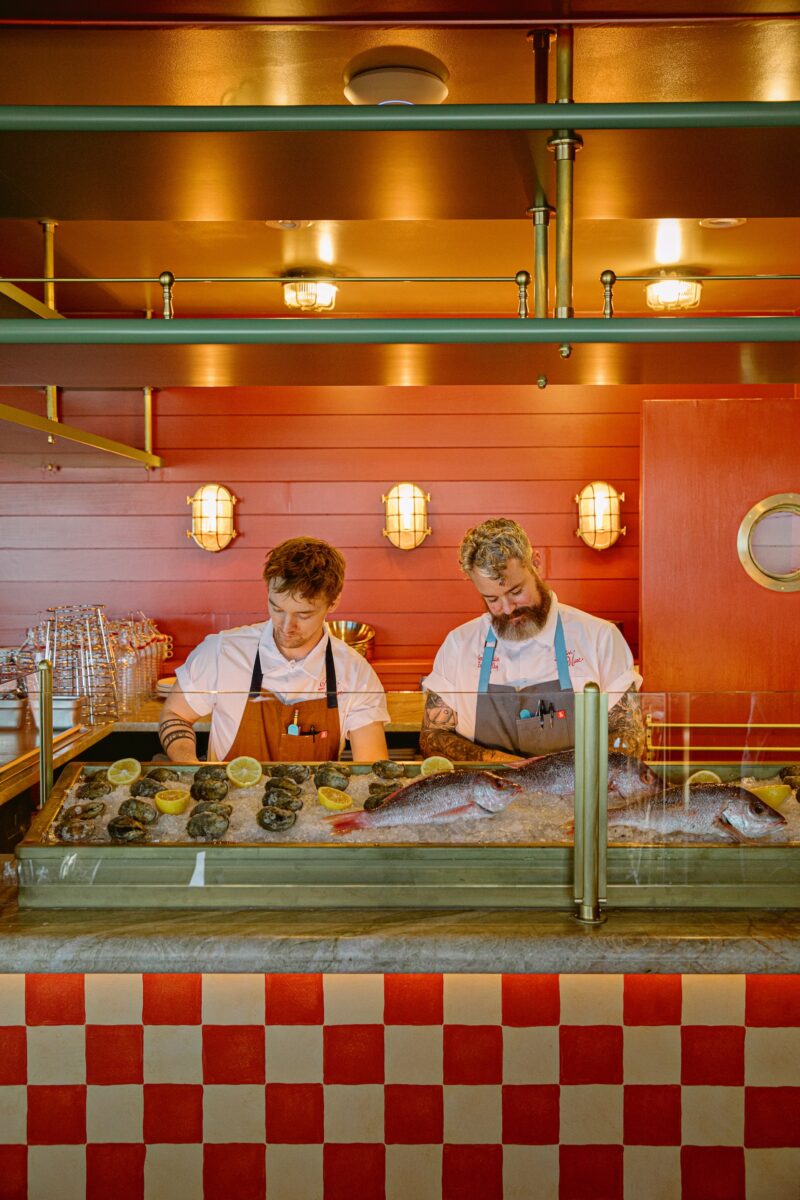
The Raw Bar: Anchored by a striking checkered counter, the raw bar serves up pristine Carolina oysters alongside a smoky snapper tartare. The tartare balances the rich, clean flavor of the fish with charred corn, fresh mint, and vibrant citrus notes.
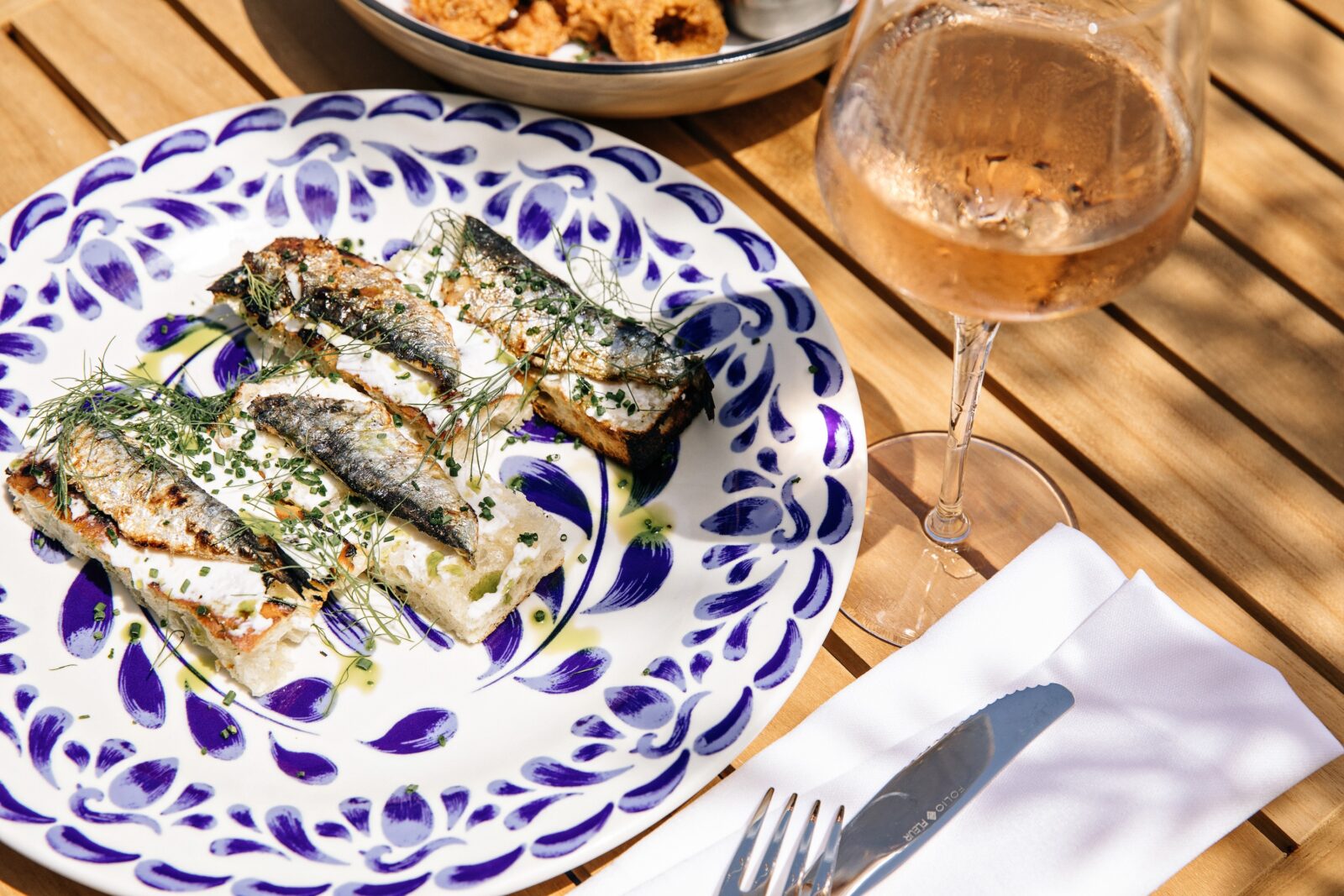
Sardine Toast & Fritters: Served on grilled focaccia, the sardine toast features whipped ricotta, pickled serrano, and a drizzle of robust olive oil. It is often paired with a golden, crispy medley of fried sardines, shrimp, and squid, accompanied by a bright lemon aioli.
Appalachian Meets Lowcountry Pasta: In a nod to his time in the mountains, McMullen features a summer corn-filled pasta utilizing sweet corn sourced directly from South Carolina’s renowned Bradford Farm.
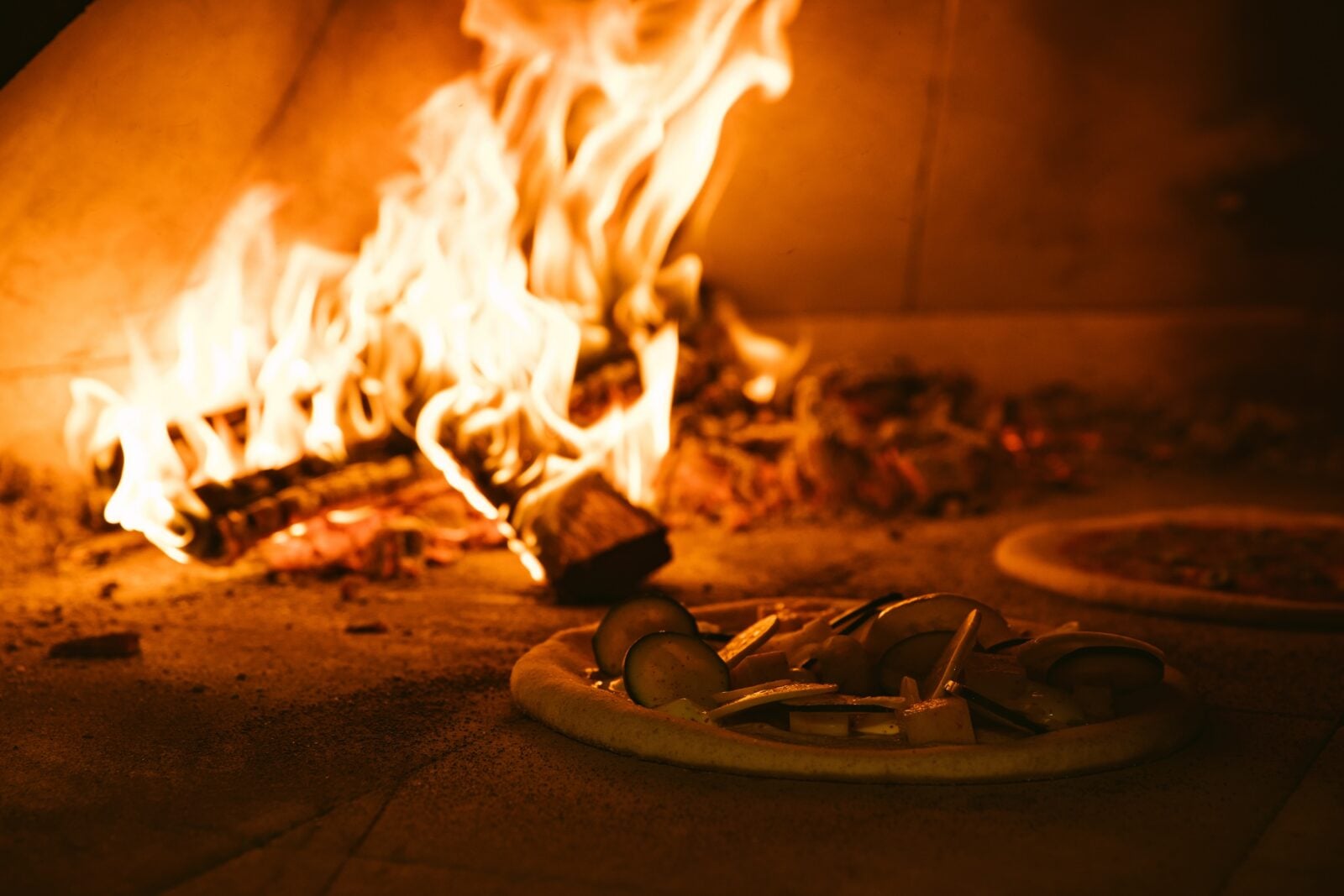
Wood-Fired Pizzas and Whole Fish: The kitchen’s central wood-burning oven produces blistered, artisanal pizzas that change dynamically with the seasons. Meanwhile, whole fish preparations are dictated entirely by the morning’s catch, arriving table-side charred to perfection and drizzled with herbaceous basil oil and charred lemon.
Architectural and Mixological Harmony
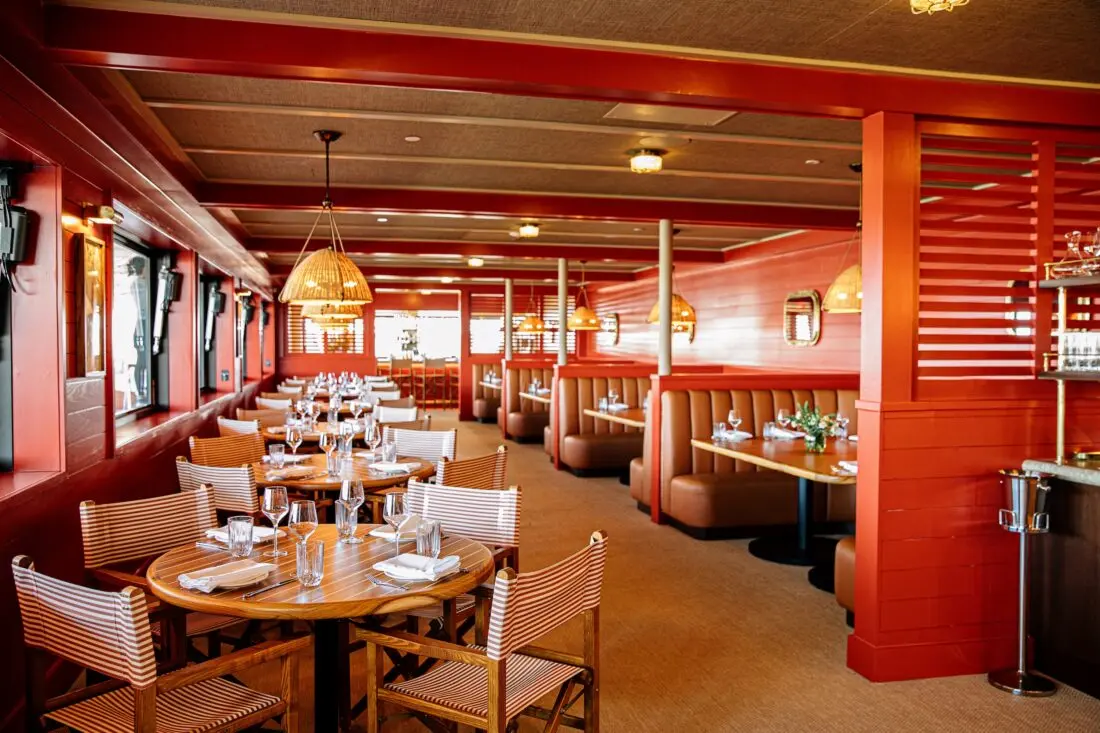
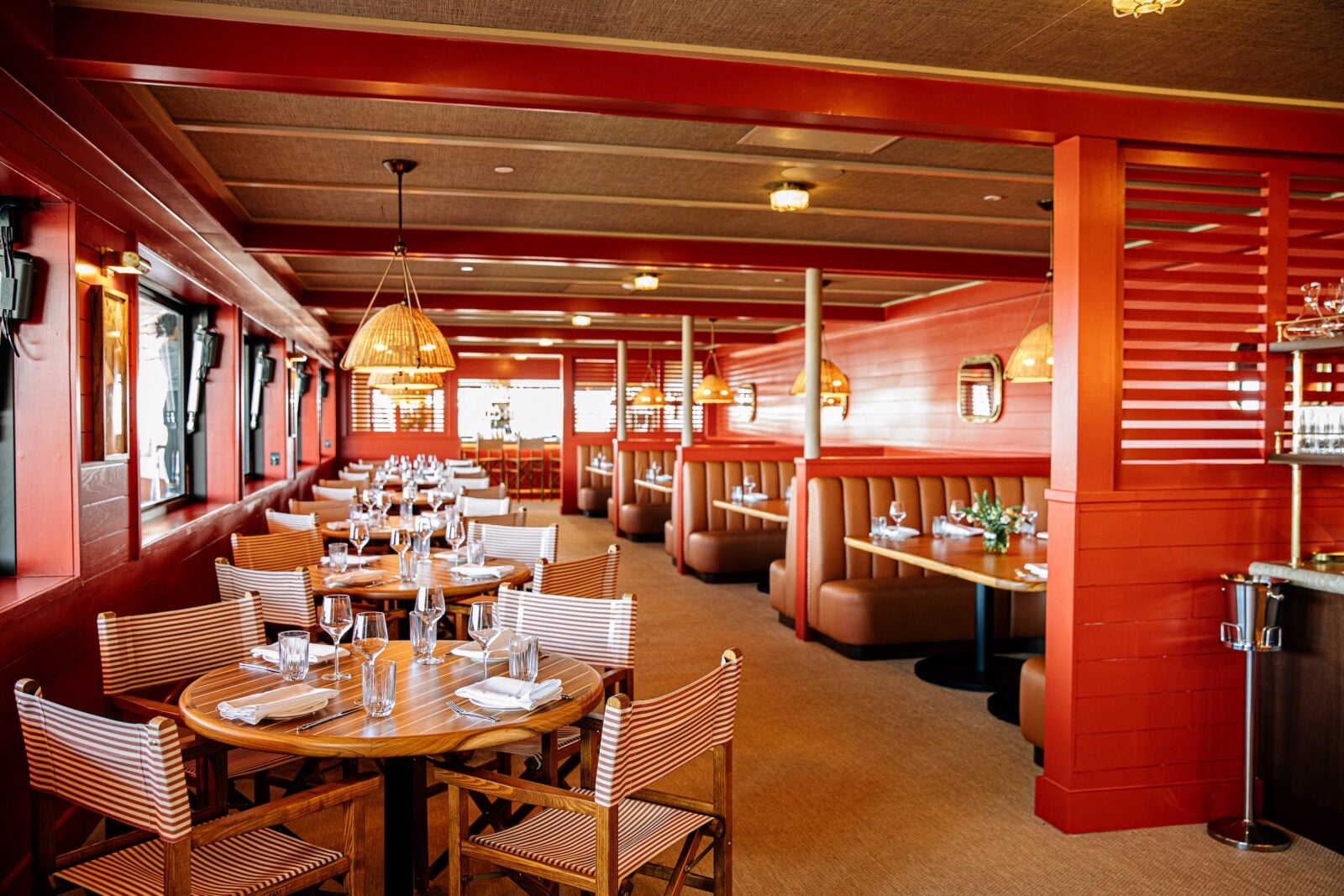
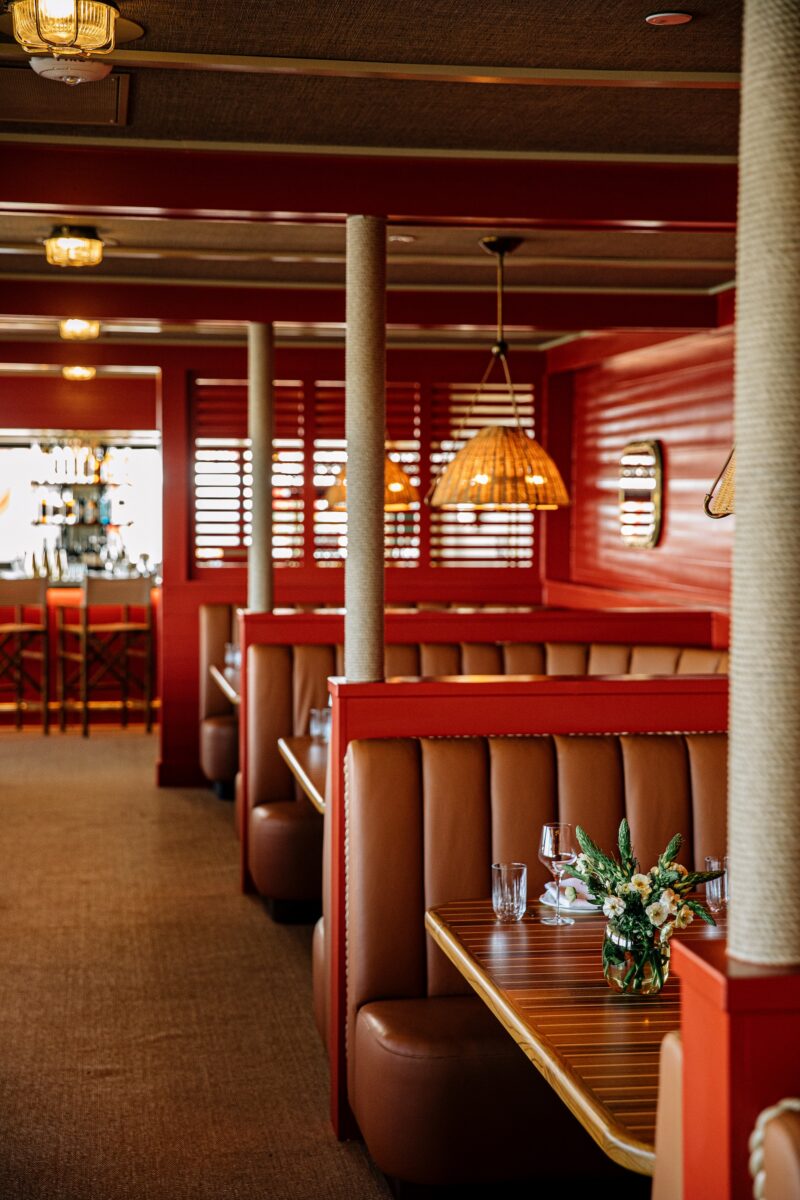
The physical space of Riva Mare mirrors the vibrancy of its plates. Designed by David Thompson Studio, the interior leans heavily into a cheerful, retro-coastal aesthetic defined by coral-colored shiplap, cozy red booths, and authentic chairs imported directly from Italy. The open-kitchen concept ensures complete transparency; guests seated in the red-and-white-striped dining room watch McMullen and his brigade orchestrate the evening’s service in real-time.
At the bar, mixology follows the same coastal ethos. Signature cocktails like the aqua pazza—a sophisticated blend of cherry tomato- and parsley-infused gin, bitter aperitif, and vermouth blanc—provide a refreshing, savory counterpoint to the rich seafood dishes, perfectly suited for sipping on the rooftop patio overlooking the Cooper River.
Official Statements & Industry Perspectives
The opening of Riva Mare has sent a wave of positive energy through the South Carolina dining scene, a testament to the collaborative spirit that defines contemporary Southern gastronomy.
Reflecting on his excitement to work with local marine life, Chef Sean McMullen notes:
"I’m so excited for the opportunity to work with fish and with all these great local catches. When you walk into the restaurant, you are walking by the open kitchen. We’re on full display."
This openness extends beyond the kitchen walls and into the broader Charleston culinary landscape. Rather than viewing fellow restaurateurs as competitors, McMullen views the city’s thriving food scene as a rising tide that elevates every establishment. Having reconnected with peers running acclaimed local concepts such as Chubby Fish, Vern’s, Baréo, Kultura, and Cane Pazzo, McMullen finds profound motivation in their shared passion:
"I’ve got so many friends who are doing awesome things… It’s so inspiring and invigorating to join the scene here. A rising tide lifts all ships."
Future Outlook
As Riva Mare settles into its landmark home atop Storehouse Nine, its long-term trajectory looks exceptionally bright. By proving that fine dining can successfully merge historic adaptive reuse, zero-waste kitchen philosophies, and hyper-local coastal sourcing, the restaurant has set a new benchmark for North Charleston’s commercial development.
For the Indigo Road hospitality group, Riva Mare represents a triumphant expansion into a burgeoning neighborhood that is rapidly defining the future of Lowcountry leisure. For Chef Sean McMullen, it is the realization of a culinary philosophy years in the making—one where Appalachian ingenuity meets the maritime traditions of Italy and the abundant waters of South Carolina.
As diners stream off the elevator into the coral-hued dining room, they are participating in more than just a meal; they are partaking in a culinary evolution that honors the past while boldly charting the flavors of tomorrow.



0 Comments