

Executive Overview
For generations, popular historical narratives framed pre-Columbian North America as an unbroken, pristine wilderness—a hyper-abundant continent largely untouched by human hands until the arrival of European settlers. However, an expanding body of historical, ecological, and archaeological research is fundamentally upending this long-standing myth. Long before European ships reached the shores of the New World, Indigenous nations across North America were actively, intentionally, and systematically managing their environments.
As explored in this installment of the American Agriculture History Minute, hosted by Mark Oppold, Native American communities were pioneering agriculturalists and environmental stewards. Through sophisticated land-use strategies—chiefly controlled fire regimes and strategic settlement along dynamic river floodplains—indigenous populations shaped vast ecosystems to support food production, community stability, and long-term survival.
This deep-rooted history reveals that agriculture in North America did not begin with European colonization. Instead, Indigenous societies developed intricate, sustainable food systems tuned to the rhythms of local ecosystems long before European agricultural traditions were introduced to the continent. Recognizing this legacy offers a more accurate, comprehensive perspective on the origins of American land use and agricultural innovation.
Detailed Chronology: Centuries of Indigenous Stewardship
To understand the scope of pre-Columbian agricultural history, historians and scientists look back across millennia of human habitation, environmental adaptation, and landscape transformation.
Pre-Contact Era: The Foundation of Indigenous Land Management
- Ancient Innovations: Millennia before European contact, Indigenous groups across North America observed, experimented with, and adapted to local ecological niches. Societies transitioned from purely nomadic hunter-gatherer models to complex, semi-sedentary, and sedentary agricultural communities.
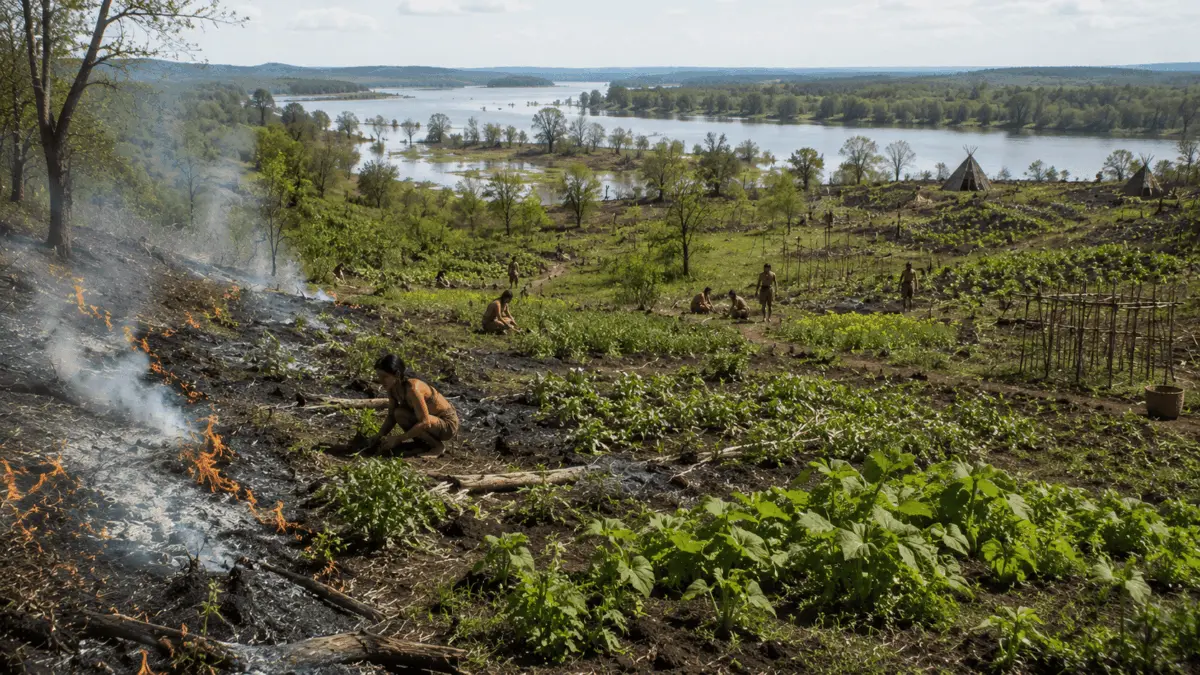
- The Rise of Controlled Burning: Indigenous groups systematically integrated fire into their environmental toolkits. By utilizing controlled burns, tribes across the Great Plains, Eastern Woodlands, and Western valleys deliberately altered vegetation structures, cleared underbrush, and fostered habitats favorable to game animals and economically vital plant species.
- The "Three Sisters" Cultivation: Over centuries, Indigenous agriculturalists perfected companion planting techniques—most notably the cultivation of corn, beans, and squash (known as the Three Sisters). This symbiotic agricultural system maximized soil nutrients, provided structural support for crops, and ensured a balanced, highly nutritious diet.
The Era of European Contact (15th–18th Centuries)
- Misunderstood Landscapes: When European explorers and settlers first traversed North America, they frequently described the landscape as an untamed Eden. Lacking the ecological literacy to recognize managed forests, open oak savannas, and engineered floodplains as human-crafted landscapes, early chroniclers mistakenly assumed the land was entirely wild.
- Adoption of Indigenous Methods: Early European settlers frequently relied on Indigenous agricultural knowledge, cleared fields, and crop varieties to survive their first harsh winters in the New World. Despite this reliance, the systemic methodologies behind Indigenous land management were largely overlooked or intentionally dismissed in early historical accounts.
Modern Historical Re-Evaluation (20th–21st Centuries)
- The Ecological Turn: Modern historical research, ethnobotany, and paleoecology begin to challenge the "pristine wilderness" myth. Researchers utilize charcoal strata analysis, pollen records, and oral histories to reconstruct the profound impact of Indigenous fire management and riverine agriculture.
- Public Education and Preservation: Initiatives like the American Agriculture History Minute bring these vital historical corrections to broader audiences, integrating Indigenous contributions directly into the mainstream narrative of American agricultural development.
Supporting Context & Metrics: The Science Behind Indigenous Agriculture
The sophistication of pre-Columbian land management lay in its alignment with natural ecological processes rather than heavy reliance on artificial inputs or mechanized technology.
Fire as an Ecological and Agricultural Catalyst
Far from being destructive wildfires, controlled burns orchestrated by Native Americans were precise management tools. These fires served multiple agricultural and ecological functions:
- Nutrient Recycling: The ashes left behind by controlled vegetation burns functioned as a natural, highly effective fertilizer. The combustion process rapidly released locked-up nutrients—such as potassium, phosphorus, and calcium—back into the soil, enriching the seedbed for subsequent growth.
- Vegetation Control: Regular burning cleared dense underbrush, reduced the risk of catastrophic wildfire, and opened up tracts of land suitable for planting or gathering wild food crops like berries, nuts, and tubers.
- Faunal Management: Fires created open mosaic landscapes that attracted economically vital game species, such as white-tailed deer and bison, ensuring a reliable secondary source of protein and materials for clothing and tools.
The Strategic Importance of River Floodplains
Without the heavy iron hand tools and draft animals (such as oxen and horses) that came to define European-style agriculture, Native American communities optimized their settlement and planting locations based on natural geography.
- Natural Irrigation and Fertilization: Major river systems—including the Mississippi, Ohio, Missouri, and their numerous tributaries—served as the lifeblood of Indigenous agriculture. Seasonal spring flooding naturally replenished topsoil nutrients by depositing rich alluvial sediment across adjacent floodplains.
- Sustainable Fertility: Rather than depending on synthetic fertilizers or exhausting soil plots through continuous monocropping, Indigenous farmers leveraged these natural flood cycles to maintain long-term soil fertility. This allowed communities to establish permanent and semi-permanent settlements capable of supporting growing populations.
Official Perspectives & Expert Insights
Historians, agricultural experts, and cultural researchers emphasize that rewriting the narrative of early American agriculture is essential for honoring Indigenous heritage and understanding modern ecology.
Mark Oppold, host of the American Agriculture History Minute, highlights the foundational nature of these early practices:
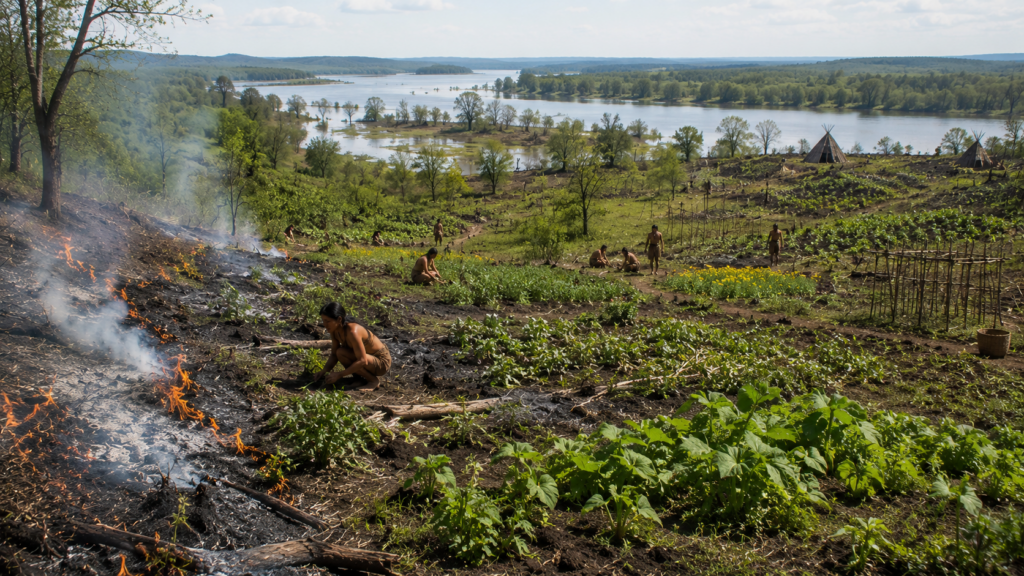
"The landscape Europeans encountered in the New World was the product of both natural forces and human activity. Native Americans had been modifying their surroundings long before European settlement, using techniques that reflected a detailed understanding of local ecosystems."
Oppold further underscores that agricultural ingenuity is not exclusively tied to modern machinery:
"Generations of accumulated knowledge about fire, soil, water, and vegetation allowed Native American communities to make productive use of the resources around them… Agriculture in North America did not begin with European settlement."
Environmental historians note that contemporary conservation science is increasingly validating traditional Indigenous land-management practices. Modern forestry and wildlife management agencies now frequently look to historical Indigenous burning practices—often referred to as "good fire" or cultural burning—as a sustainable model for mitigating modern wildfire risks and restoring ecosystem health.
Future Outlook: Integrating Indigenous Wisdom into Modern Agriculture
As modern agriculture faces unprecedented challenges—including climate change, soil degradation, water scarcity, and the quest for sustainable food production systems—the ancient practices of Indigenous North Americans offer valuable, forward-looking insights.
1. Regenerative Agriculture Parallels
Many core tenets of modern regenerative agriculture—such as minimal soil disturbance, continuous soil cover, crop diversity, and the integration of livestock—mirror the holistic philosophies practiced by Indigenous agriculturalists for centuries. By viewing the farm not as a factory floor, but as an interconnected ecosystem, modern growers can learn much from traditional land stewardship.
2. Reviving Controlled and Cultural Burning
Across the American West and Southeast, land managers, forestry services, and tribal nations are increasingly collaborating to reintroduce cultural burning. These practices help clear hazardous fuel loads, restore native plant species, and rejuvenate ecosystems in a manner tested by centuries of human experience.
3. Broadening Educational Curricula
The ongoing integration of Indigenous history into agricultural education—championed by programs like the American Agriculture History Minute—ensures that future generations of farmers, scientists, and historians understand the true roots of North American land use. Acknowledging that the American landscape was consciously shaped, managed, and cultivated long before 1492 provides a richer, more accurate foundation for the future of agriculture in the United States.

0 Comments