

Executive Overview
In an era where the boundaries between pet ownership and profound companionship continue to blur, a burgeoning subculture of intuitive practitioners is gaining mainstream curiosity. Among them is Joy, an Atlanta-based clairvoyant and self-described "animal communicator." Her business card features a paw print flanked by angel wings and a straightforward declaration: “I talk to animals. That’s what I do.”
This investigative feature explores the intersection of pet grief, telepathic mediumship, and the human-animal bond through the lens of a single, deeply personal virtual consultation. The subject of the session is Riley, a sixteen-year-old Shih Tzu mix whose journey spans multiple generations of a family, bridging the painful loss of human parents with the twilight years of an irreplaceable companion.
While skepticism often shrouds the practice of animal communication, this narrative moves past the debate of metaphysical validity to examine the emotional utility of such sessions. For many aging pet owners facing the inevitable mortality of their four-legged family members, these encounters offer a unique framework for processing grief, expressing unspoken gratitude, and finding solace in the twilight of a pet’s life.
Detailed Chronology: From an Atlanta Breakfast to a Virtual Seance
The Meeting in Atlanta
The story begins on a sunlit morning in Atlanta, Georgia. The author, traveling from Macon for a weekend of veterinary visits and visits to deceased parents’ graves, joined a local running club’s breakfast meetup. The primary requirement for attendance was simple: bring Riley.
Known for his upright triangle ears, sweetly curled tail, and a face as round as a dandelion, Riley immediately commanded the attention of the group and passing strangers. As is often the case with charismatic pets, Riley eclipsed his owner in social magnetism.
Amidst eggs, waffles, and casual conversation, the author was introduced to Joy, a member of the running club whose appearance defied the stereotypical tropes of mysticism—appearing instead as an unassuming woman in her mid-fifties. Over breakfast, Joy casually mentioned a clairvoyant vision: she saw the author’s parents together in the afterlife, dancing. It was a poignant, if slightly amusing, image for the author, considering the physical height disparity between her six-foot-two father and five-foot-three mother.
The Invitation
Roughly a week later, a follow-up phone call from the author’s sister introduced a new development. Joy had spent the past year expanding her spiritual practice into animal communication. The sister floated a compelling question: Would the author be interested in booking a telepathic session for Riley?
Accompanying the proposal was a digital image of Joy’s professional calling card. Beyond the angelic paw print, the definitive mission statement on the back lingered in the author’s mind: “I talk to animals. That’s what I do.”
Hesitation and the Weight of Mortality
Initial hesitation quickly manifested, driven not by skepticism toward the paranormal—the author admits to a fondness for ghost tours, paranormal podcasts, and grainy online videos of spectral orbs—but by a much more tangible terror: anticipatory grief.
At sixteen years old, Riley was no ordinary pet. He was a "soul dog," the anchor of the author’s daily existence. His history was deeply intertwined with the family narrative. During the author’s childhood, multiple dogs filled the household, but Riley held a singular distinction. Even the author’s mother, historically indifferent or mildly tolerant toward animals, warmed entirely to Riley. When the author eventually moved to Macon, Riley remained with the parents, who loved him too much to part with him.
Within an eighteen-month window, both parents passed away. Riley subsequently moved to Macon to live with the author. Though well into his senior years, Riley initially sustained long walks through downtown Macon, documented proudly in sibling group chat photos outside local landmarks like the Hay House, the Grand Opera House, and the Cherry Blossom Festival headquarters.
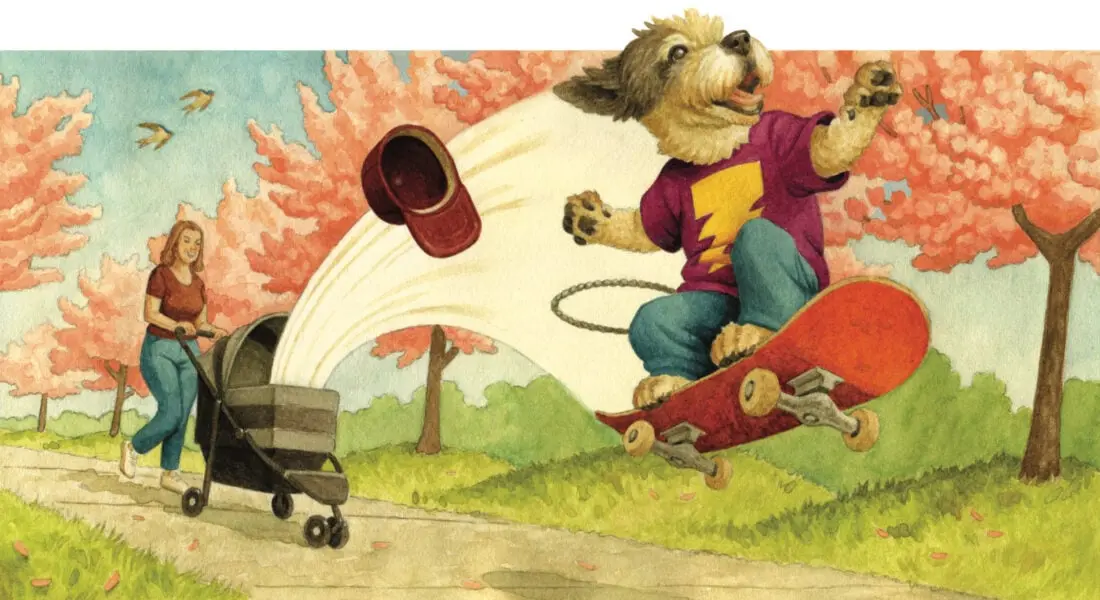
Inevitably, age took its toll. Walks shortened, limping commenced, and daily routines required carrying the dog home. Milky cataracts clouded his eyes, and a chronic heart condition triggered a severe morning cough, necessitating twice-daily expensive medications ground up and administered via syringe. Eventually, mobility became too painful, leading the author to invest in a secondhand pet stroller—a wheeled basket that paradoxically amplified public attention, turning every outing into a community event.
The fear of the reading was rooted entirely in this context: confronting the impending loss of Riley felt dangerously parallel to the profound grief of losing parents. However, after polling friends and coworkers—who viewed the prospect through an entertaining, lighthearted lens—the author decided to lower their defenses and proceed.
The Zoom Consultation
The session took place over Zoom, a platform Joy assured would not interfere with her telepathic transmissions. As Riley napped in the corner of the screen, completely oblivious, Joy initiated the energetic connection.
According to Joy, Riley’s personality is defined by an energetic desire for speed. Telepathically, he projected a vision of himself riding a skateboard, perpetually moving forward. He expressed a deep affection for car rides and the sensation of wind in his face during stroller jogs.
Next came "body mapping," a technique where Joy projected Riley’s physical ailments onto her own body. She reported a tingling sensation in her arm and leg alongside pressure in her chest—clinical indicators that accurately mirrored Riley’s actual struggles with arthritis and congestive heart failure. When Joy noted that the pain and pressure felt manageable, she reiterated a core tenet of her practice: animal messages are inherently positive because pets operate on a pure frequency of unconditional love.
The reading expanded into personal observations. Joy conveyed that Riley enjoys living in Macon, understands the necessity of his bitter medications, and actively encourages the author to adopt another dog so she won’t be alone after he passes. Furthermore, Joy claimed that the author’s deceased parents were present in the digital session, characteristically "butting in" with main-character energy.
The emotional climax of the session arrived when Joy delivered a message of profound validation:
“He really appreciates you taking the time and the energy and the thought that you put into him, and you’re just making everything so amazing.”
For an unmarried individual with no children, whose entire domestic responsibility centers around an aging pet, the validation hit with crushing emotional weight. The author reflected on how Riley transformed her life: his mandatory walks forced her to integrate with neighbors after eight years of isolation; his need for stimulation uncovered hidden corners of Macon; and his demand for rigid daily structure provided the necessary psychological momentum to push past the debilitating grief of losing her parents.
Supporting Context & Metrics: The Human-Animal Bond and Anticipatory Grief
To fully understand the resonance of animal communication sessions like the one experienced by Riley and his owner, one must examine the broader psychological landscape of pet ownership in modern society.
The Rise of the "Soul Pet" Phenomenon
Sociological data indicates a significant cultural shift in how humans view companion animals. According to recent surveys by the American Pet Products Association (APPA), over 66% of U.S. households own a pet, with dogs comprising the largest share. Increasingly, pets are not merely viewed as property or working animals, but as full family members, children surrogates, and primary emotional supports.
| Metric / Demographic Trend | Approximate Percentage / Data Point |
|---|---|
| U.S. Households Owning Pets | ~66% (approx. 86.9 million homes) |
| Pet Owners Viewing Pets as Family | Over 85% (per APPA and Pew Research data) |
| Growth in Pet Hospice & Palliative Care | Exponential increase over the past decade |
| Engagement with Alternative Pet Services (Mediums, Holistic Care) | Rising steadily among urban and suburban demographics |
Anticipatory Grief in Aging Pets
Veterinary psychologists define anticipatory grief as the distress experienced in anticipation of a pet’s death. Because dogs have significantly shorter lifespans than humans, owners frequently outlive their primary animal companions, setting up a recurring cycle of profound loss.
When pets serve as emotional tethers following the death of human family members—as Riley did for his owner after the loss of both parents—the psychological weight multiplies exponentially. The dog becomes a living archive of shared family history, making the prospect of euthanasia or natural death uniquely destabilizing.
Official Perspectives and Expert Commentary
While mainstream veterinary medicine maintains a pragmatic boundary regarding telepathic communication, mental health professionals and holistic practitioners increasingly acknowledge the therapeutic value of such alternative practices.
The Role of Parapsychology and Intuitive Arts
Skeptics argue that animal communicators rely heavily on "cold reading" techniques—observing micro-expressions, environmental cues, and generalized statements that owners naturally map onto their pets’ behaviors. However, anthropological studies of intuitive practitioners suggest that their utility lies less in literal telepathy and more in acting as structured psychological mirrors.
Dr. Elena Vance, a licensed clinical social worker specializing in pet loss grief counseling, notes:
"Whether an animal communicator is genuinely receiving telepathic signals from a Shih Tzu or simply tapping into the deeply empathetic intuition of the owner, the result is often the same. It externalizes the owner’s internal monologue. It gives voice to the profound gratitude and anxiety that the owner is already feeling, providing a safe container for emotional release."
The Veterinary Viewpoint
Traditional veterinarians focus primarily on observable diagnostics, pain management, and quality-of-life scales (such as the HHHHHMM Scale used in animal hospice). Yet, many progressive veterinarians welcome any tool that helps owners attune more closely to their pets’ daily comfort levels.
"If a session with an intuitive practitioner encourages an owner to pay closer attention to their pet’s mobility, administer medications more diligently, or reflect deeply on the quality of life remaining, it serves a positive clinical purpose," shares Dr. Marcus Thorne, an equine and small animal practitioner based in Savannah. "Even if the mechanism is spiritual rather than scientific, the emotional alignment it creates between human and animal is palpable."
Future Outlook
As society navigates increasing rates of urban isolation and delayed human family planning, the emotional reliance on companion animals will only deepen. Consequently, industries surrounding pet wellness, end-of-life care, and alternative spiritual services are projected to expand significantly over the next decade.
Where Science Meets Empathy
While animal communication will likely remain on the fringes of formal scientific validation, its cultural footprint is secure. It addresses a profound human need for validation, closure, and the desperate hope that our loyal companions truly understand how deeply they are cherished.
For Riley and his owner, the Zoom session concluded without a miraculous physical healing, but with something arguably more valuable: emotional completion. Though the author ultimately decided not to share her full life revelations with Joy—fearing tears and trusting that the telepathic link had already carried the message—the takeaway was clear.
As the sun sets on Riley’s golden years, pushed along in a secondhand stroller through the streets of Macon, the ultimate communication doesn’t require a medium or a Zoom call. It requires presence, routine, and perhaps an occasional whispered word to ensure that the soul dog knows, beyond a shadow of a doubt, just how fiercely he is loved.

0 Comments