

Executive Overview
Agricultural producers across the United States face a critical window of opportunity—and potential financial risk—as the enrollment and election period for the federal Agriculture Risk Coverage (ARC) and Price Loss Coverage (PLC) safety-net programs moves into full swing. With recent administrative adjustments and program updates taking effect, the United States Department of Agriculture (USDA) is intensifying outreach efforts to ensure that farmers and landowners do not miss vital administrative deadlines.
The current election cycle, which opened on September 16, 2026, and officially closes on December 11, 2026, governs the 2026 crop year. Undersecretary Richard Fordyce has stressed the absolute necessity of active participation, noting that failure to submit program elections and enroll in a timely manner results in the immediate forfeiture of eligibility for any potential safety-net payments associated with the upcoming marketing year.
These federal programs serve as the bedrock of income support for America’s crop producers, shielding them against unexpected market volatility, sharp downward price fluctuations, and localized revenue losses. However, the mechanics of ARC and PLC require careful navigation, strategic planning, and an understanding of how commodity-specific choices impact farm-level risk management. This comprehensive report explores the timeline of the current sign-up period, the underlying mechanics of ARC and PLC, the critical guidance provided by USDA leadership, and the broader economic implications for producers managing tight margins in an unpredictable agricultural economy.
Detailed Chronology of the 2026 ARC/PLC Cycle
Understanding the regulatory and administrative timeline is essential for agricultural operators seeking to maximize their risk-management strategies. The lifecycle of an ARC/PLC program year involves a multi-stage process spanning enrollment, crop harvesting, marketing year tracking, and eventual payment distribution.
The 2026 Sign-Up Window
- September 16, 2026: The official enrollment and election period opened nationwide across all USDA Farm Service Agency (FSA) county offices. Producers became eligible to review baseline data, consult with extension specialists, and make their official program elections for the 2026 crop year.
- December 11, 2026: The hard deadline established by the FSA for all farm operators and landowners to complete their ARC and PLC elections and contract enrollments. USDA officials emphasize that this deadline is strictly enforced, with no automatic rollovers or grace periods for late submissions.
- Late 2026 to Fall 2027: The ongoing duration of the 2026 marketing years for various covered commodities, during which national average market prices and county-level revenue figures are continuously tracked and compiled by the National Agricultural Statistics Service (NASS) and the Economic Research Service (ERS).
- Late 2027 / Early 2028: The anticipated payment window. Because ARC and PLC calculations depend entirely on finalized marketing year data, federal disbursements occur roughly one year after the crop has been harvested and the official marketing year has concluded.
Historical Context and Administrative Evolution
The ARC and PLC programs were formally institutionalized under modern federal farm legislation to replace legacy direct payment structures with a risk-based safety net. Over successive legislative renewals and administrative updates, the USDA Farm Service Agency has refined the software, data systems, and decision tools available to producers.
In recent years, fluctuating input costs—including fertilizer, fuel, and seed—combined with volatile global commodity markets have heightened the stakes of annual program selections. Producers must weigh historical base acres against current planting intentions, analyzing whether revenue-based protection (ARC) or price-based protection (PLC) offers the most robust shield against market downturns for each specific crop and county.
Supporting Context, Mechanics, and Economic Metrics
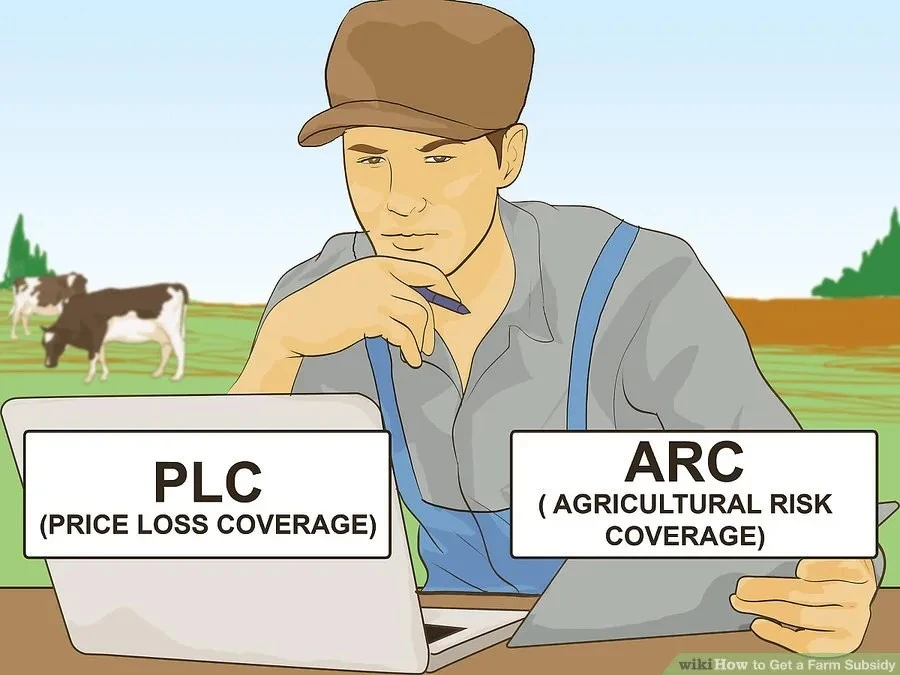
To make informed decisions ahead of the December 11 deadline, producers must understand the fundamental differences between the two primary commodity support programs managed by the FSA. While both programs are designed to assist farmers when market conditions deteriorate, their triggers and payout calculations operate on entirely different metrics.
Agriculture Risk Coverage (ARC)
ARC provides income support based on historical crop revenue—combining both yield and price—rather than price alone. It is offered in two distinct formats:
- ARC-CO (County): Payments are triggered when the actual actual crop revenue of a specific county falls below the county revenue guarantee. This option is widely utilized by producers whose local yields historically track closely with county averages.
- ARC-IC (Individual): Payments are triggered when the actual individual revenue of all covered commodities planted on the farm falls below the farm’s individual revenue guarantee. This option evaluates the entire farm’s operation rather than isolated county data, offering a tailored safety net for diversified operations.
ARC is particularly responsive to localized weather disasters, such as localized droughts, excessive rainfall, or severe storm damage that depresses local yields even if national prices remain relatively stable.
Price Loss Coverage (PLC)
PLC operates strictly as a price-protection mechanism. Payments are triggered when the effective price for a covered commodity falls below its established reference price set by federal statute.
- Reference Prices: These are statutory price floors designed to reflect baseline costs of production. If the national average market price for a commodity during its designated marketing year drops below the reference price, a PLC payment is generated, regardless of the farm’s actual harvest volume.
- Yield-Driven Calculations: PLC payments are calculated using the farm’s established PLC yield, multiplied by the payment acres (typically 85% of base acres) and the payment rate (the difference between the reference price and the effective price).
The Mechanics of the One-Year Lag
A crucial operational detail emphasized by USDA officials is the structural time lag inherent in federal commodity programs. As Undersecretary Richard Fordyce noted, government payments are invariably "one year behind or one year after the crop is completed."
For the 2026 crop—much of which is currently being harvested across the country—producers must make their program elections now, while combines are actively rolling through the fields. However, if market conditions warrant a federal payout based on the performance of the 2026 marketing year, those funds will not be disbursed until late 2027, after the marketing year has officially closed and federal statisticians have finalized all pricing and yield data. This structural delay underscores the importance of maintaining robust operational working capital and short-term credit lines, as government safety-net payments cannot be relied upon for immediate cash-flow relief during the active harvest season.
Official Statements and USDA Guidance
As the agricultural sector navigates the complexities of the current sign-up cycle, USDA leadership has mobilized resources to ensure producers have direct access to accurate, actionable information.
Undersecretary Richard Fordyce on Program Navigation
Addressing the agricultural community regarding the rollout of the updated ARC and PLC provisions, Undersecretary Richard Fordyce outlined clear, step-by-step guidance for producers seeking assistance:
"What I would do is just direct people to the Farm Service Agency. You can go, there’s a number of websites. If you wanted to Google ARC and PLC sign-up dates or whatnot, you know, that’ll take you to an FSA website that will have all the information related to, you know, what is ARC, what is PLC. The farmer is actually going to do their elections, so choosing which crop goes into which program for the 2026 crop, and that started September 16th, and it’ll run through December 11th."
Fordyce underscored the urgency of the matter, particularly given the timing of the harvest season:
"What’s important about that is the crop, the 2026 crop, that in a lot of cases people are harvesting right now, those are the ones that folks will be making the elections for. So it’s important that they enroll. If they do not enroll, they won’t be eligible for any payment."
Reinforcing the reality of the administrative timeline, Fordyce added:
"If there is a payment, they won’t be eligible next year when we make those payments. We’re always one year behind or one year after the crop is completed. The marketing year is over for that crop when we do the ARC and PLC payment."
FSA Resources and Digital Tools
To assist producers in evaluating their options, the USDA Farm Service Agency provides a suite of online decision support tools in partnership with university extension economists. These tools allow farmers to model different price and yield scenarios, comparing potential ARC-CO, ARC-IC, and PLC outcomes against historical market data.
Producers are strongly encouraged to contact their local USDA Service Center or visit the official FSA ARC/PLC Resource Portal to schedule appointments, update farm operating records, and finalize their contract signatures before the December 11 cutoff.
Future Outlook and Strategic Considerations for Producers
Looking ahead, the agricultural economy remains subject to intense global pressures, shifting trade dynamics, and escalating input costs. In this environment, strategic utilization of federal safety-net programs is not merely an administrative checkbox—it is a vital component of holistic farm financial management.
Key Action Items for Farmers and Landowners
- Immediate Consultation: Producers who have not yet reviewed their base acres and historical yields should contact their local county FSA office immediately to schedule an appointment.
- Scenario Modeling: Operators should utilize USDA-approved decision tools to run financial models comparing price protection (PLC) against revenue protection (ARC-CO/ARC-IC) based on current input cost projections and local yield histories.
- Strict Adherence to Deadlines: With the December 11, 2026 deadline fast approaching, administrative backlogs at local offices can create bottlenecks. Early submission prevents clerical errors or last-minute technical hurdles from jeopardizing multi-thousand-dollar safety-net eligibility.
- Financial Planning Around the Lag: Farm financial managers must account for the structural one-year payment lag when budgeting for the upcoming production cycle. Relying on safety-net disbursements for immediate operational liquidity is risky; instead, ARC and PLC should be viewed as long-term actuarial backstops against catastrophic market downturns.
As global agricultural markets continue to test producer margins, proactive engagement with USDA risk-management programs remains one of the most effective tools available to secure the long-term viability of American family farms and agricultural enterprises.

0 Comments