
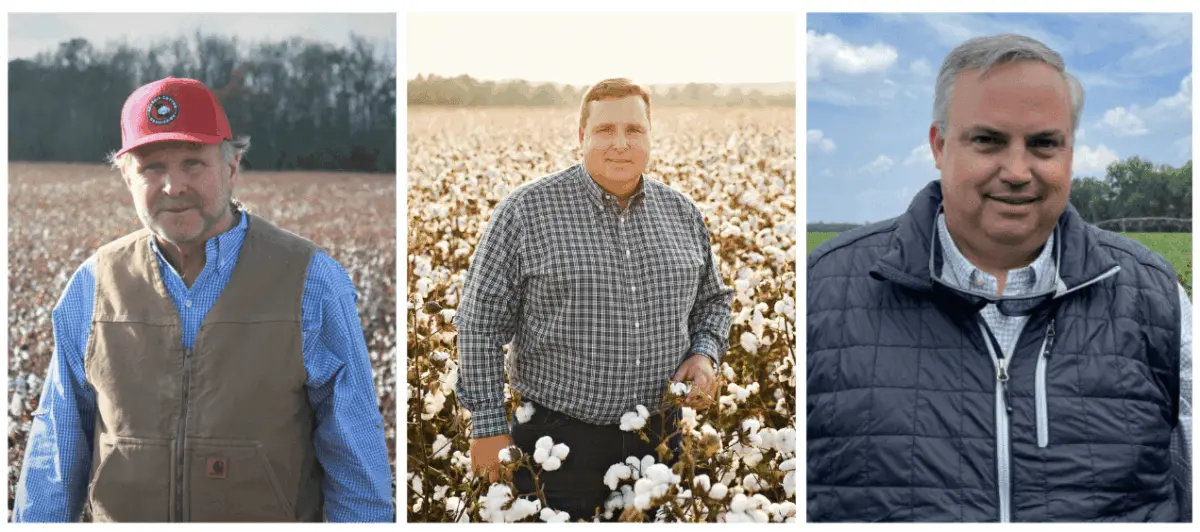

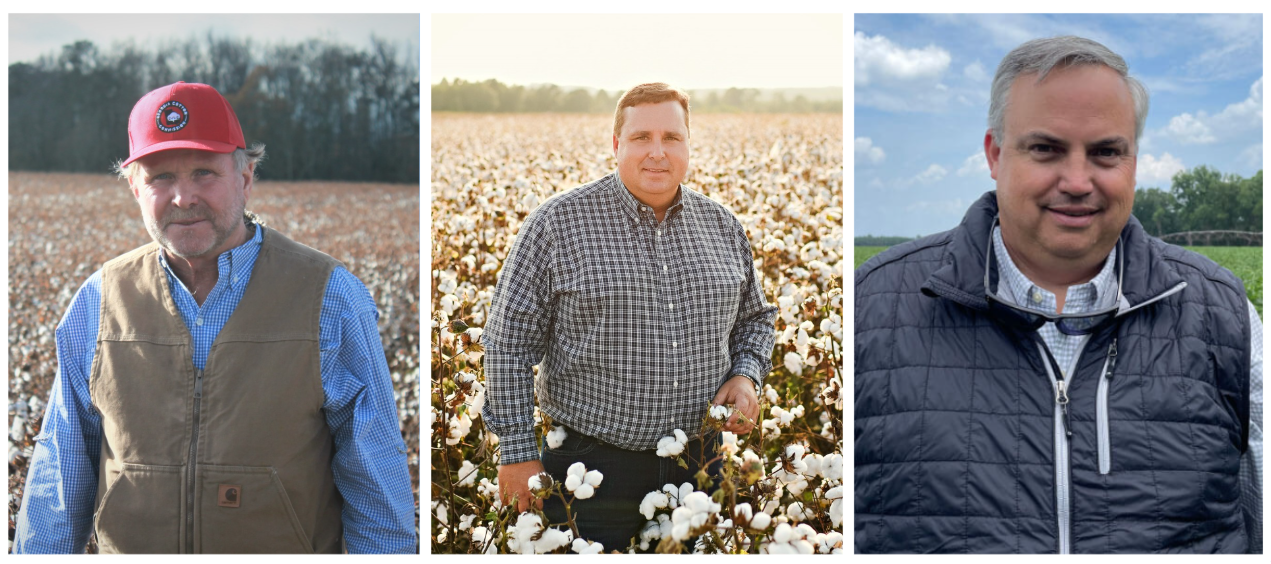
PERRY, Ga. — In a decisive move underscoring the value of generational continuity and hands-on agricultural expertise, the Commodity Commission Ex-Officio Committee officially announced the reappointment of three prominent producers to the Georgia Cotton Commission Board of Directors. Following a comprehensive review session in late July, veteran cotton farmers John Ruark of Morgan County, Chris Hopkins of Toombs County, and Greg Sikes of Bulloch County were unanimously awarded new three-year terms.
These reappointments ensure that the state’s multi-billion-dollar cotton industry remains guided by leaders who possess deep-rooted experience not only in field production, but also in regional agribusiness, commodity research governance, and national agricultural policy advocacy.
Executive Overview: A Foundation of Proven Leadership
The Georgia Cotton Commission, established in 1965 and headquartered in Perry, operates as a producer-funded organization dedicated to advancing the interests of the state’s cotton growers. Through mandatory assessments paid by producers at the point of sale, the Commission invests heavily in critical research, domestic and international promotion, and educational outreach programs.
Guiding these investments requires a board of directors capable of navigating complex economic pressures, fluctuating global commodity markets, and evolving environmental and technological demands. The decision by the Commodity Commission Ex-Officio Committee to retain Ruark, Hopkins, and Sikes signals a strong institutional vote of confidence. Together, these three men represent decades of localized insight, widespread geographical coverage spanning over a dozen Georgia counties, and extensive leadership roles across state and national cotton organizations.
The continuity provided by these reappointments is especially vital as Georgia producers face a modern landscape defined by shifting input costs, water management challenges, labor constraints, and the constant imperative to improve fiber quality and sustainability.
Detailed Chronology: The July Appointive Proceedings and Board Evolution
The pathway to these reappointments began earlier this summer, culminating in a late-July assembly of the Commodity Commission Ex-Officio Committee. Charged with overseeing governance appointments across Georgia’s various agricultural commodity commissions, the committee evaluates candidate portfolios based on industry engagement, operational success, leadership capability, and geographic representation.
While the Georgia Cotton Commission’s board seats are structured around staggered terms to ensure a balance between fresh perspectives and institutional knowledge, the simultaneous review of Ruark, Hopkins, and Sikes highlighted a unique convergence of tenure milestones.
- John Ruark, who first joined the Commission’s board in 2014, approached the conclusion of his previous term amidst a legacy of deep infrastructure involvement.
- Chris Hopkins, an appointee since 2017, represented a critical voice for first-generation farming enterprises and southeastern Georgia production dynamics.
- Greg Sikes, another foundational first-generation grower deeply integrated into academic and private industry trial networks, rounded out the group of incumbents whose leadership mandates came up for renewal.
Following rigorous evaluation by the Ex-Officio Committee, the formal motion to reappoint all three men to fresh three-year terms was ratified, locking in the existing leadership triad to steer the Commission through its upcoming strategic initiatives.
Supporting Context & Metrics: Profiles in Agricultural Excellence
To fully understand the weight of these reappointments, one must examine the expansive operations, institutional responsibilities, and agricultural backgrounds that each director brings to the table.
John Ruark: Multi-Generational Heritage and Ginning Infrastructure
Representing Morgan, Walton, and Oconee Counties, John Ruark is deeply entrenched in the agrarian fabric of central Georgia. Farming as part of a multi-generational family operation alongside his father, son, and cousin, Ruark’s agricultural enterprise is impressively diverse. The family produces a comprehensive mix of commodities, including cotton, soybeans, wheat, beef cattle, and poultry.
Beyond primary production, Ruark’s industry footprint extends directly into the processing sector as an operator of Bostwick Gin & Supply. This vantage point gives him unique insight into the entire supply chain, from seed selection and field management to ginning efficiency and textile market demands.
Ruark’s governance resume is equally substantial. In addition to his service on the Georgia Cotton Commission board since 2014, he holds influential roles across major national and regional bodies:
- Director, Cotton Incorporated: Shaping national research and promotion strategies funded by growers across the United States.
- Director, Southern Cotton Growers: Advocating for regional policy interests and grower profitability across the Sunbelt.
- Director, Boll Weevil Eradication Foundation of Georgia: Protecting the phytosanitary health of the state’s cotton crop.
- Alternate Producer Delegate, National Cotton Council of America (NCC): Participating in the formulation of nationwide legislative and trade policies impacting the cotton sector.
Chris Hopkins: First-Generation Tenacity and Financial Stewardship
Operating across Toombs and Tattnall Counties, Chris Hopkins provides a compelling narrative of first-generation agricultural success. Armed with degrees from the University of Georgia’s prestigious College of Agricultural & Environmental Sciences, Hopkins and his wife, Marilynn, laid the groundwork for their farming enterprise in 2005 with a modest 50-acre parcel.
Through meticulous business management, agronomic adaptability, and relentless hard work, they have expanded their enterprise into a thriving operation producing cotton, peanuts, corn, and rye. Hopkins has lent his expertise to the Georgia Cotton Commission board since 2017.
Beyond the farm gate, Hopkins is a pillar of his local community and regional economy. His leadership positions include:
- President, Toombs County Farm Bureau: Serving as a localized champion for agricultural advocacy, member services, and public outreach.
- Chairman, Community Board of Directors for Ameris Bank: Bridging the gap between agricultural producers and commercial financial institutions, ensuring growers have access to sound credit and capital management strategies.
Greg Sikes: Innovation, Agribusiness, and Extension Collaboration
A native of Bulloch County, Greg Sikes represents another powerful success story of a first-generation farmer scaling an operation through grit and continuous learning. After earning his degree from Abraham Baldwin Agricultural College (ABAC), Sikes spent several years working in localized agribusiness and assisting fellow farmers before establishing his own enterprise.
Today, alongside his wife and son, Sikes manages a sprawling operation producing cotton, peanuts, and corn across a six-county footprint encompassing Bulloch, Bryan, Screven, Burke, Jenkins, and Treutlen Counties.
Sikes is widely recognized within the agricultural community for his commitment to data-driven farming. He regularly partners with the University of Georgia (UGA) Extension service and private industry stakeholders to conduct on-farm field trials, testing new crop protection products, seed varieties, and precision agriculture technologies. Furthermore, his investments in complementary agribusiness ventures provide him with a holistic view of the agricultural service sector.
Sikes’s broader industry involvement mirrors that of his peers:
- Director, Southern Cotton Growers
- Producer Delegate, National Cotton Council of America
Official Perspectives: The Mandate of the Georgia Cotton Commission
The operational framework overseen by Ruark, Hopkins, and Sikes is rooted in a statutory mission that dates back nearly six decades. Founded in 1965, the Georgia Cotton Commission was created to give growers a collective voice and a self-funded mechanism to drive industry growth.
The Mechanics of Producer-Funded Progress
Under Georgia law, cotton producers pay a mandatory assessment on every bale produced. These funds are pooled under the stewardship of the Commission’s board of directors, which allocates resources across three core pillars:
- Research: Funding cutting-edge scientific investigations conducted by institutions like the University of Georgia. These projects address pressing agronomic challenges, such as combating resilient weed biotypes, optimizing irrigation efficiency through smart-sensor technologies, managing insect pressures (such as plant bugs and nematodes), and breeding high-yielding, high-quality seed varieties tailored to Georgia’s unique soil and climatic conditions.
- Promotion: Executing targeted marketing campaigns designed to bolster consumer preference for cotton over synthetic fibers, highlighting natural fiber benefits, and supporting international trade missions to secure overseas markets for Georgia cotton lint and cottonseed products.
- Education: Providing growers with timely, data-driven extension bulletins, hosting educational seminars, sponsoring youth leadership programs (such as 4-H and FFA cotton judging teams), and keeping producers informed regarding federal farm bill provisions and regulatory changes.
With cotton remaining a cornerstone of Georgia’s agricultural economy—frequently ranking among the state’s top row crops in total economic impact—the strategic deployment of these assessment funds is paramount. The leadership continuity provided by Ruark, Hopkins, and Sikes ensures that millions of dollars in grower investments will continue to be managed with prudence, foresight, and practical field-level wisdom.
Future Outlook: Navigating the Next Horizon for Georgia Cotton
As Ruark, Hopkins, and Sikes step into their newly renewed three-year terms, the Georgia Cotton Commission faces an environment rich with both technological promise and macroeconomic headwinds.
Embracing Precision Agriculture and Sustainability
The modern cotton grower is no longer just a manager of soil and weather; they are data analysts, environmental stewards, and logistics coordinators. Over the next three years, the Commission is expected to lean heavily into research initiatives that promote sustainable farming practices, carbon sequestration accounting, and water conservation. With urban encroachment and resource competition pressing upon rural Georgia, demonstrating the environmental responsibility of cotton production is critical for maintaining social license and regulatory favor.
Moreover, the rapid integration of artificial intelligence, autonomous machinery, and variable-rate input application requires the Commission to fund adaptive research that helps everyday farmers adopt profitable technologies without incurring prohibitive financial risk. Board members like Greg Sikes—who has built a reputation on hosting collaborative field trials—will be instrumental in translating complex academic research into actionable, boots-on-the-ground management strategies.
Market Volatility and Trade Dynamics
On the economic front, global supply chain fluctuations, shifting currency valuations, and volatile international trade agreements continue to impact the profitability of Georgia cotton. With a substantial portion of the state’s harvest destined for export markets, the policy expertise brought by directors who serve on the National Cotton Council and Southern Cotton Growers—specifically Ruark, Hopkins, and Sikes—will provide the Commission with vital lines of communication to federal policymakers and trade negotiators.
By retaining a board composed of active, multi-faceted producers who are fully immersed in everything from ginning operations and banking to cutting-edge agronomic trials, the Georgia Cotton Commission has positioned itself securely for the challenges ahead. As John Ruark, Chris Hopkins, and Sikes embark on their new terms, Georgia’s cotton farmers can rest assured that their interests are being fiercely defended by seasoned veterans dedicated to the enduring prosperity of the state’s agricultural heritage.
For further information regarding the Georgia Cotton Commission, ongoing research initiatives, or upcoming grower educational seminars, interested parties may contact the Commission’s Perry headquarters at 478-988-4235 or visit their official web portal at www.georgiacottoncommission.org.

0 Comments