

By Staff Food & Culture Correspondent
Published: September 1, 2026
Recipe by Marcus Woodham | Photography by Elizabeth Collier
Executive Overview
Football season is a time of unwavering tradition. Across stadiums, universities, and cul-de-sacs throughout the American South and beyond, fans religiously unpack the same coolers, fire up the same grills, and arrange the same predictable spreads of chips, dips, and heavy finger foods. Yet, just as any championship-winning football coach knows that a stagnant playbook leads to defeat, the masters of the pregame tailgate understand that culinary innovation is the key to maintaining supremacy in the parking lot.
Enter a clever, modern reimagining of a historic regional classic: the Muffuletta Dip.
Conceived by Marcus Woodham, executive chef of Charles & Julia—the celebrated small-plates-and-cocktails lounge nestled in Uptown New Orleans—this inventive recipe takes all the complex, savory, and briny components of the legendary Big Easy sandwich and deconstructs them into a highly shareable, scoopable format. Designed specifically with pregame huddling in mind, the dip strips away the dense, bulky bread of the traditional loaf while preserving every ounce of the bold flavor profile that has made the muffuletta a culinary icon for more than a century.
In this comprehensive journalistic feature, we examine the accidental beachside origins of Chef Woodham’s creation, break down the sensory architecture that makes the dish a triumph of texture and taste, explore the deep cultural roots of the New Orleans sandwich that inspired it, and provide a masterclass on how to integrate this game-changing appetizer into your autumn tailgating traditions.
Detailed Chronology: From Stale Beach Bread to Tailgate Triumph
Great culinary innovations rarely emerge from sterile test kitchens under clinical conditions. Instead, they are frequently born of convenience, improvisation, and the pragmatic handling of pantry leftovers. The muffuletta dip is no exception.
The journey of the dish began far away from the bustling streets of New Orleans or the roaring concrete amphitheaters of autumn college football stadiums. It started on a sun-drenched family beach vacation. Chef Marcus Woodham, accustomed to the fast-paced, high-concept environment of a professional kitchen, found himself tasked with casual family meal planning. On the menu was a staple of Louisiana picnicking: classic muffulettas packed with cured meats, provolone, and the essential, oil-slicked olive salad.
However, tropical heat and humidity—or simply the passage of time—had taken their toll on the provisions.
"We had muffulettas, and the bread was a little past its prime," Woodham recalls, reflecting on the moment of serendipity. "I remember thinking, I bet all this stuff would be damn great on its own."
What began as an idle musing quickly evolved into active kitchen experimentation. Woodham recognized that while the voluminous, sesame-crusted round loaf of a traditional muffuletta is structural perfection for a packed sandwich meant to be wrapped in butcher paper and pressed, it can also overpower the delicate interplay of the fillings. By stripping away the bread, the core ingredients—the briny olives, the unctuous meats, the sharp cheeses, and the sharp bite of vinegar and garlic—were suddenly liberated.
Upon returning to the kitchens of Charles & Julia in Uptown New Orleans, Woodham began refining the concept. He tested various ratios of cured meats to cheeses, experimented with different dicing techniques to ensure optimal scoopability, and sought out the precise acidic kick required to balance the rich, fatty profile of the ingredients.
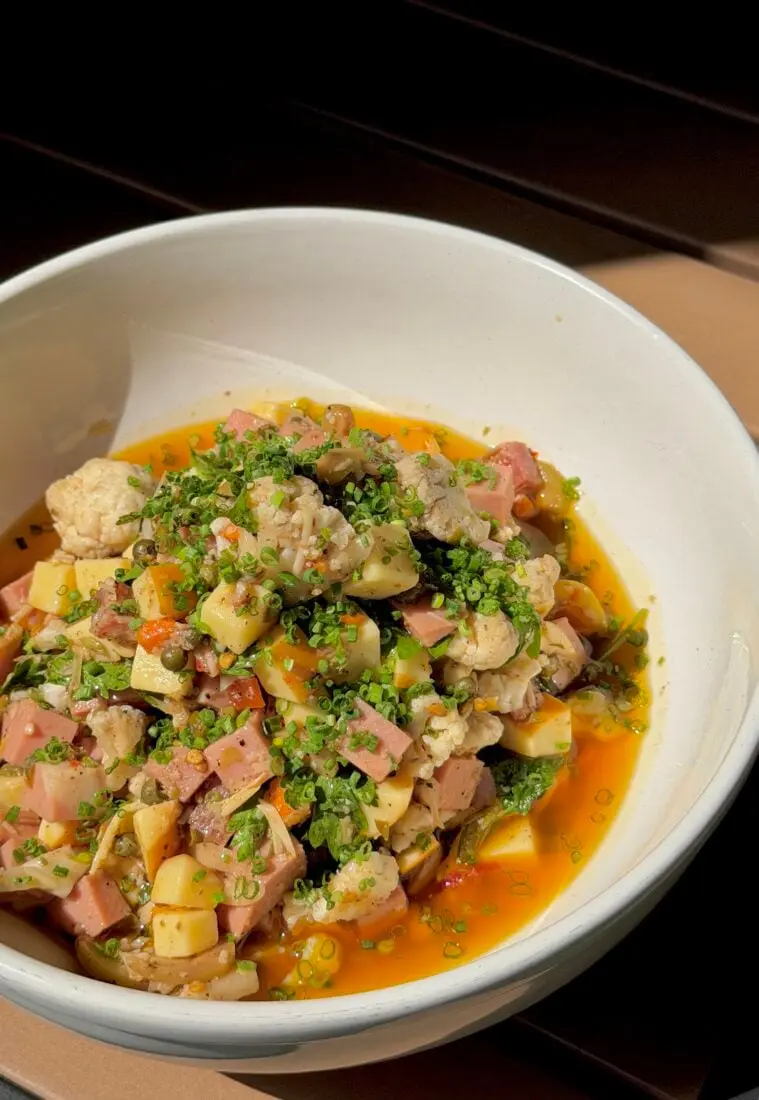
The resulting recipe bypassed the traditional slow rollout of fine dining. Instead, Woodham fast-tracked the dip for immediate deployment during the opening weeks of the college football season, recognizing that football fans are perpetually hungry for high-flavor, low-fuss appetizers that travel well and pair effortlessly with ice-cold beverages. Elizabeth Collier captured the final dish in all its vibrant glory—a textured, rustic mosaic of reds, greens, and creams that immediately signals to onlookers that this is not your average jarred salsa or store-bought queso.
Supporting Context & Metrics: The Anatomy of a Modern Tailgate Revolution
To truly understand why the muffuletta dip works so brilliantly as a tailgating asset, one must examine the intersection of tailgate food science, regional Louisiana foodways, and modern consumer dining habits.
The Tailgate Economy and Consumer Preferences
According to recent consumer food trends analysis, game-day snacking habits have shifted dramatically over the past decade. While traditional heavy hitters like buffalo chicken dip, chili, and pulled pork sliders remain perennial favorites, contemporary tailgaters increasingly prioritize foods that offer:
- High Flavor Complexity: A departure from flat, one-note cheeses and bland dips.
- Structural Integrity: Foods that do not sog out under humid autumn tailgating conditions or break apart under the weight of a heavy tortilla chip.
- Portability and Low Maintenance: Dishes that can be prepped entirely in advance, transported in a single container, and served at ambient or cool temperatures without requiring Sterno cans or cumbersome electrical warmers.
The muffuletta dip checks every single one of these boxes. By converting a sandwich into a dip, Woodham has engineered a food product optimized for the parking lot environment.
The Sensory Architecture of the Dip
According to Chef Woodham, the secret to the dip’s success lies in its dynamic textural contrast—a quality he compares to a rustic cowboy caviar.
- The Chew: Unlike smooth, homogeneous dips, Woodham’s creation relies on finely diced Italian charcuterie, primarily high-quality salami. This imparts a satisfying, firm chew that breaks up the monotony of soft dips.
- The Squeak and Cream: Cheeses—typically a blend of provolone and mozzarella or Swiss—provide a rich creaminess punctuated by the characteristic "squeak" of fresh, high-fat dairy.
- The Briny Pop: Central to any true muffuletta experience is the olive salad. Capers and a medley of green and black olives contribute sharp, salty, and briny pops of flavor that cut through the richness of the meats and cheeses.
- The Modern Kick: Perhaps Woodham’s most inspired departure from historical tradition is the inclusion of Calabrian chiles. Hailing from southern Italy, these vibrant peppers introduce a quick, clean flash of heat that wakes up the palate without overpowering the subtle herbal and acidic notes of the olive salad.
"Every scoop is a little different, which is part of the fun," Woodham notes. "It’s great for tailgating because it has all those salty, savory flavors that make you want a cold beer, without being weighed down by a lot of bread. It’s easy to put out, and easy for people to snack on."
Official Statements and Culinary Philosophy
The philosophy behind Charles & Julia has always centered on approachability married to technical precision. Known for a menu that balances refined small-plate techniques with the relaxed, convivial atmosphere of an Uptown neighborhood lounge, the culinary team views food as a social connector rather than an exercise in culinary pretension.
In statements regarding the creation of the muffuletta dip, Woodham emphasizes the importance of respecting tradition while daring to break its structural boundaries.
"We live in a city—New Orleans—where food history is treated almost like a religion," Woodham explains. "You don’t mess with a po-boy lightly, and you certainly don’t mess with a Salvatore Lupo muffuletta from Central Grocery without knowing your history. But cooking is also about evolution. If a sandwich is great because of its fillings, why shouldn’t those fillings be allowed to shine on their own terms? The tailgate is the ultimate equalizer; nobody wants to sit around wrestling with a soggy, giant sandwich when they’re standing outside watching pregame warmups. They want something immediate, vibrant, and fun."
This philosophy has resonated strongly within the local culinary community. Food historians and casual diners alike have embraced the dip as a loving tribute to Sicilian-New Orleans heritage rather than an affront to it.
Future Outlook: The Legacy of the Deconstructed Sandwich
As the 2026 college football season gathers momentum, food trends analysts predict that the muffuletta dip will move well beyond the Crescent City, inspiring home cooks and professional caterers across the American South and nationwide.
The success of Woodham’s creation points toward a broader trend in modern gastronomy: the deconstruction of regional comfort foods into highly versatile, interactive formats. Just as traditional cheeseburgers have been transformed into egg rolls, sliders, and dips, the historic New Orleans muffuletta—born in the French Market in the early 20th century by Sicilian immigrants—has officially found its 21st-century avatar.
For those planning their menus for the upcoming weekend matchups, the directive is clear. Leave the heavy loaves at home, clear out the pantry of your favorite Italian cured meats and briny olives, and prepare to elevate your tailgate playbook. With Chef Marcus Woodham’s muffuletta dip anchoring your spread, your pregame setup is guaranteed to emerge victorious.
Recipe Overview: Muffuletta Dip
- Yield: 8 generous servings
- Prep Time: 15–20 minutes
- Best Served With: Toasted baguette slices, sturdy pita chips, or Italian crostini.
- Pairing Recommendation: An ice-cold, crisp pilsner or a dry, effervescent Italian lambrusco to cut through the rich charcuterie and sharp olive brine.

0 Comments