After more than two decades of defying conventional domestic milestones, British designer, author, and style icon India Hicks and her longtime partner, David Flint Wood, surprised even those closest to them by opting for a remarkably traditional wedding ceremony. Following a bewildering eighteen-month period defined by the global disruptions of the COVID-19 pandemic, Hicks experienced a profound psychological longing for stability, reassurance, and structural grounding—not solely for herself, but for her children, who, alongside families globally, had been shaken by isolation and uncertainty.
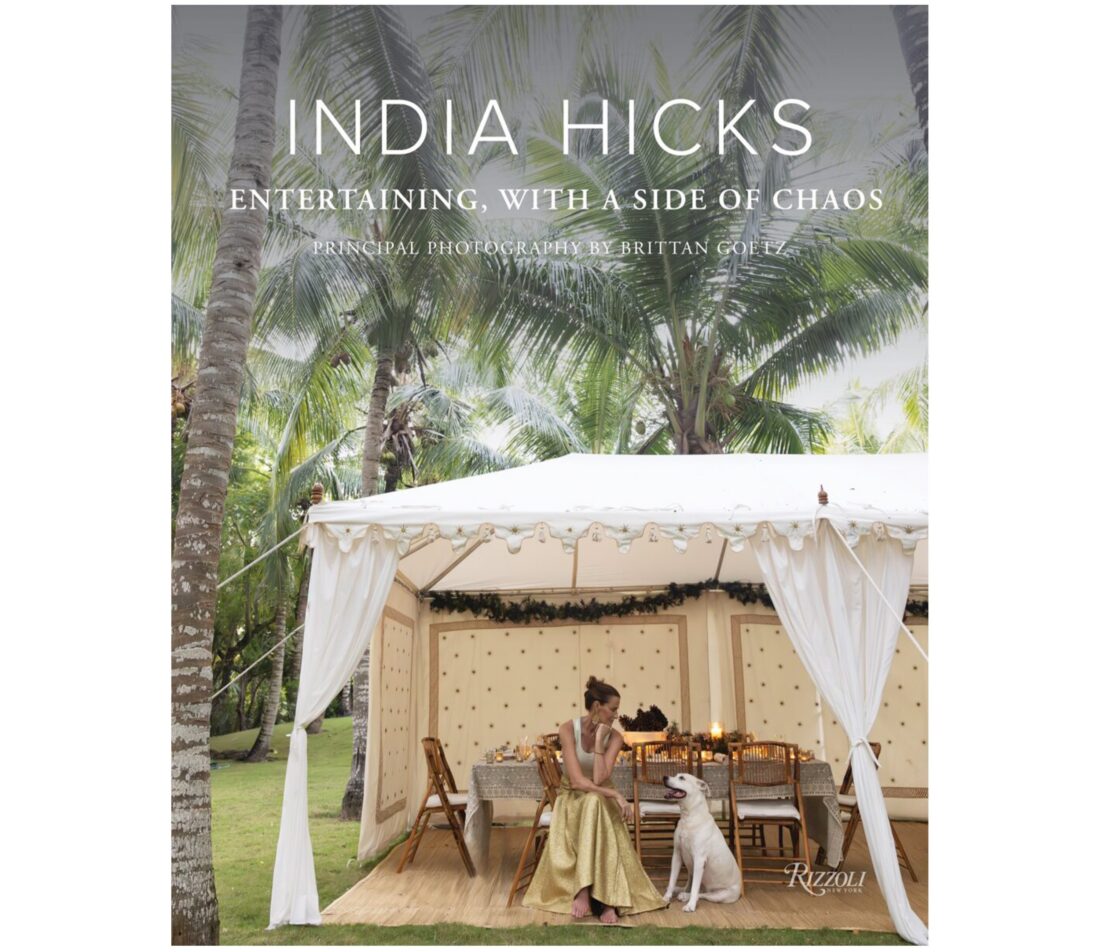
The union, which serves as a central narrative in Hicks’s forthcoming book, India Hicks: Entertaining, with a Side of Chaos (published by Rizzoli), bridges a quarter-century of shared life, five children, and a deeply unconventional domestic arrangement on a remote Bahamian island with the deeply rooted heritage of the British countryside.
This comprehensive report examines the meticulous planning, personal styling choices, familial roles, and deliberate subversion of standard wedding timelines that characterized the celebration. By juxtaposing a deeply unconventional twenty-five-year courtship against a rigid, hyper-traditional English parish wedding, Hicks and Flint Wood managed to construct a celebration defined less by bridal perfection and more by authentic human connection, local economic support, and the joyous reclamation of community ties.
Detailed Chronology: From a Bahamian Kitchen to an Oxfordshire Parish
The Proposal and the Paradigm Shift
The journey toward the altar began not with a grand romantic gesture on a sun-drenched terrace, but quietly, over a domestic supper at the couple’s home on a tiny Bahamian island. Following the psychological toll of the pandemic, Hicks turned to Flint Wood and delivered a simple directive: "Let’s get married."
The proposition arrived twenty-five years after Flint Wood first asked Hicks to marry him, a request made when she was pregnant with their first son, Felix. At the time, Hicks maintained a fiercely independent stance, declining the proposal while ensuring that Felix—and the children who subsequently arrived—carried Flint Wood’s surname. (Their adopted son, Wesley, joined the family with his name already established.)
Having spent over two decades building a life completely outside the bounds of conventional matrimony, the couple made a paradoxical choice: their wedding would be intensely, uncompromisingly traditional. They selected their family church in Oxfordshire—a sacred geographical anchor where Hicks had been christened, where her father is buried, and situated just down the lane from the home of her mother, where Hicks spent her formative years.
The Bridal Attire: Engineering Grace Kelly Elegance
At fifty-four years of age, Hicks faced a uniquely modern existential question familiar to many older brides entering formal matrimony for the first time: What does one wear without feeling like a caricature? To navigate this sartorial challenge, Hicks enlisted her close friend and designer Emilia Wickstead.
The creative brief was precise: "Grace Kelly-esque, but with a modern twist." Together, Wickstead and Hicks designed a gown featuring a demure high neckline, an exaggerated waistband curving gracefully under the bust, a sculptural silhouette, and a voluminous skirt. The defining material was an ivory French lace selected after careful swatching.
The engineering of the dress presented technical challenges, particularly regarding the underarm fit. Hicks insisted on a tightly fitted sleeve, which initially threatened to compromise Wickstead’s design integrity through visible seams. Following numerous fittings, shared cups of tea, and Oxfordshire parking tickets, the design team achieved a seamless fit. Furthermore, Hicks established a pragmatic mandate for her wedding morning: she needed to be able to slip into the dress, zip it up independently, and walk out the door without hooks, frills, or complicated assistance.
The bridal bouquet was entrusted to Pulbrook & Gould—the exact floral house that had crafted Hicks’s mother’s wedding bouquet in 1961. When the creative director asked Hicks if she had ever held a bouquet before, she quipped that she was practically a professional bridesmaid, having served in that capacity nine times. The resulting arrangement was intentionally wild and intensely fragrant, blending rosemary, lavender, and eucalyptus with tuberose, jasmine, hydrangeas, roses, love-in-a-mist, old man’s beard, phlox, Japanese anemones, lisianthus, and eryngium. Composed of cream tones with subtle hints of pale blue, it served as Hicks’s "something blue."
The Eve of the Ceremony and the Procession
On the eve of the wedding, the bridal party observed traditional separation protocols. Hicks stayed at her mother’s historic home, while Flint Wood lodged locally with their four sons, his brothers, and his best man.
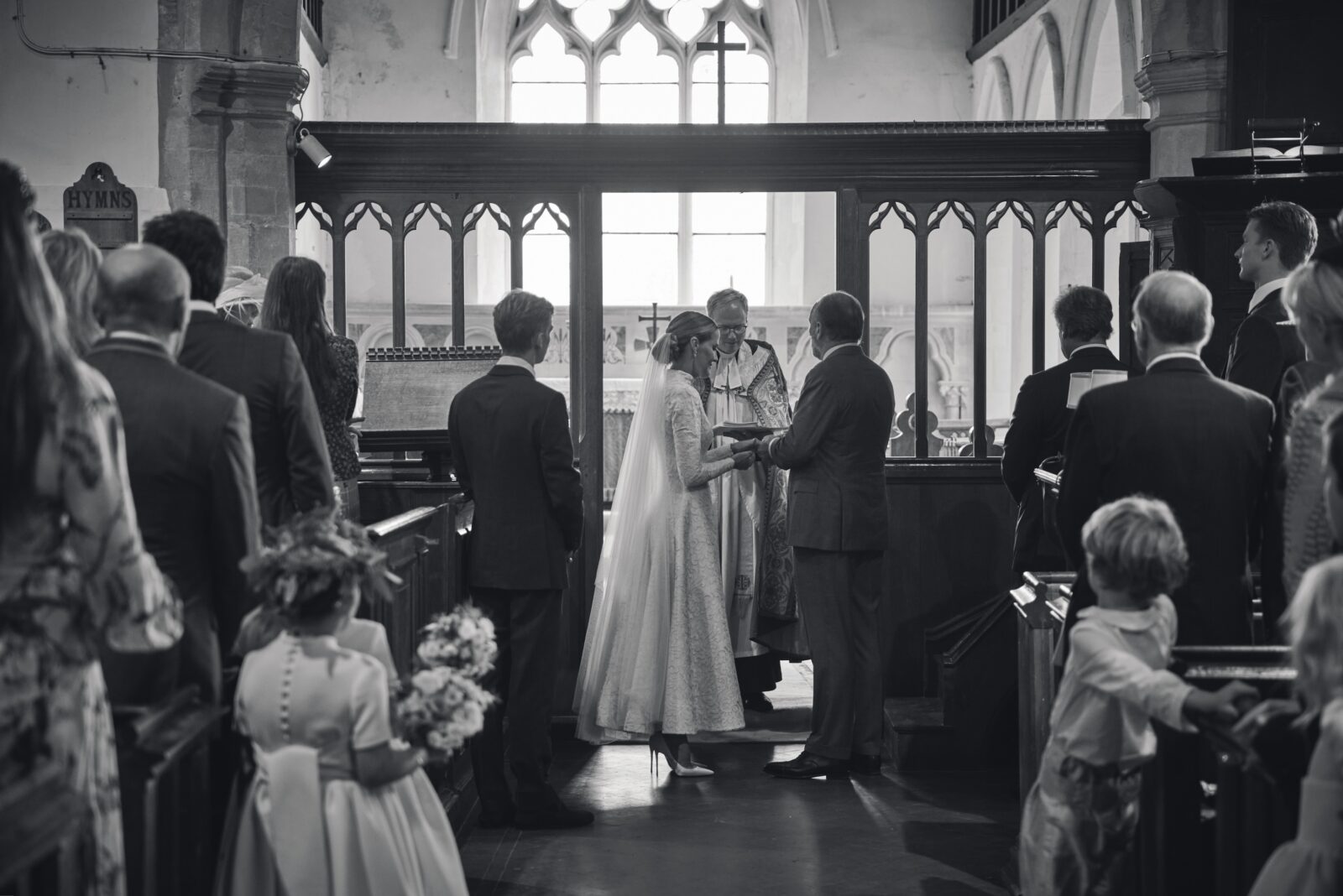
On the wedding day, Wesley drove Hicks to the church in Flint Wood’s vintage 1966 Mercedes cabriolet. Felix walked his mother down the aisle, delicately folded back her veil—a traditional symbol of virginity that Hicks ultimately embraced as a simple, deeply symbolic bridal gesture—and handed her over to Flint Wood.
The service followed a strictly traditional liturgy, complete with a parish choir, an organist, and soaring hymns. Literary readings anchored the emotional core of the ceremony:
Conrad read a poignant passage by Morgan Harper Nichols, concluding with the assurance: "And I just hope this reminds you, your story is far from finished yet and you are allowed to find peace here, even before you know what happens next."
Charles Finch, Flint Wood’s closest friend, read the Psalm of David, which was thoughtfully reproduced within the order of service using facsimiles of Flint Wood’s handwriting.
The bridal party was managed by Domino, Hicks’s chief bridesmaid, who wore a minimalist ivory dress with capped sleeves designed by Wickstead. Domino marshaled a young, energetic cohort of bridesmaids and page boys, including Hicks’s goddaughter Inès de Givenchy, Christian Louboutin’s daughters Paloma and Eloise, and page boys Kit Fraser and Fraser Flint Wood. Guided by Domino’s quiet encouragement, the children processed down the aisle as church bells rang out and sunlight broke through the Oxfordshire clouds.
Supporting Context & Metrics: Logistics, Local Economy, and Community
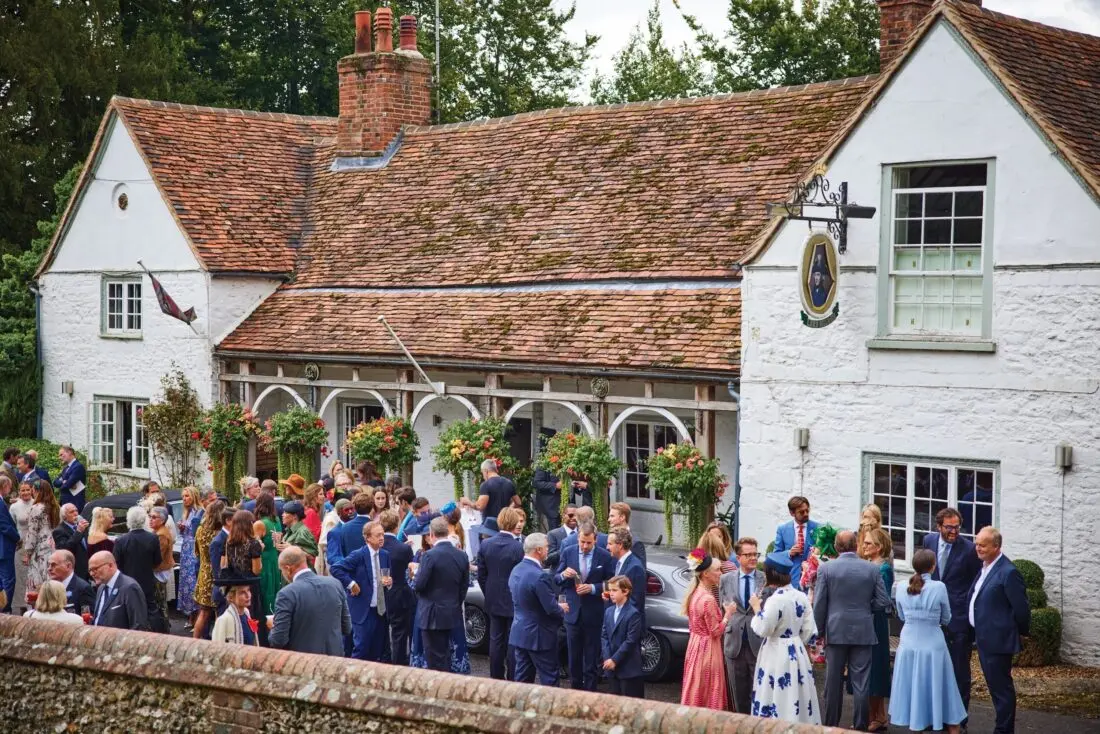
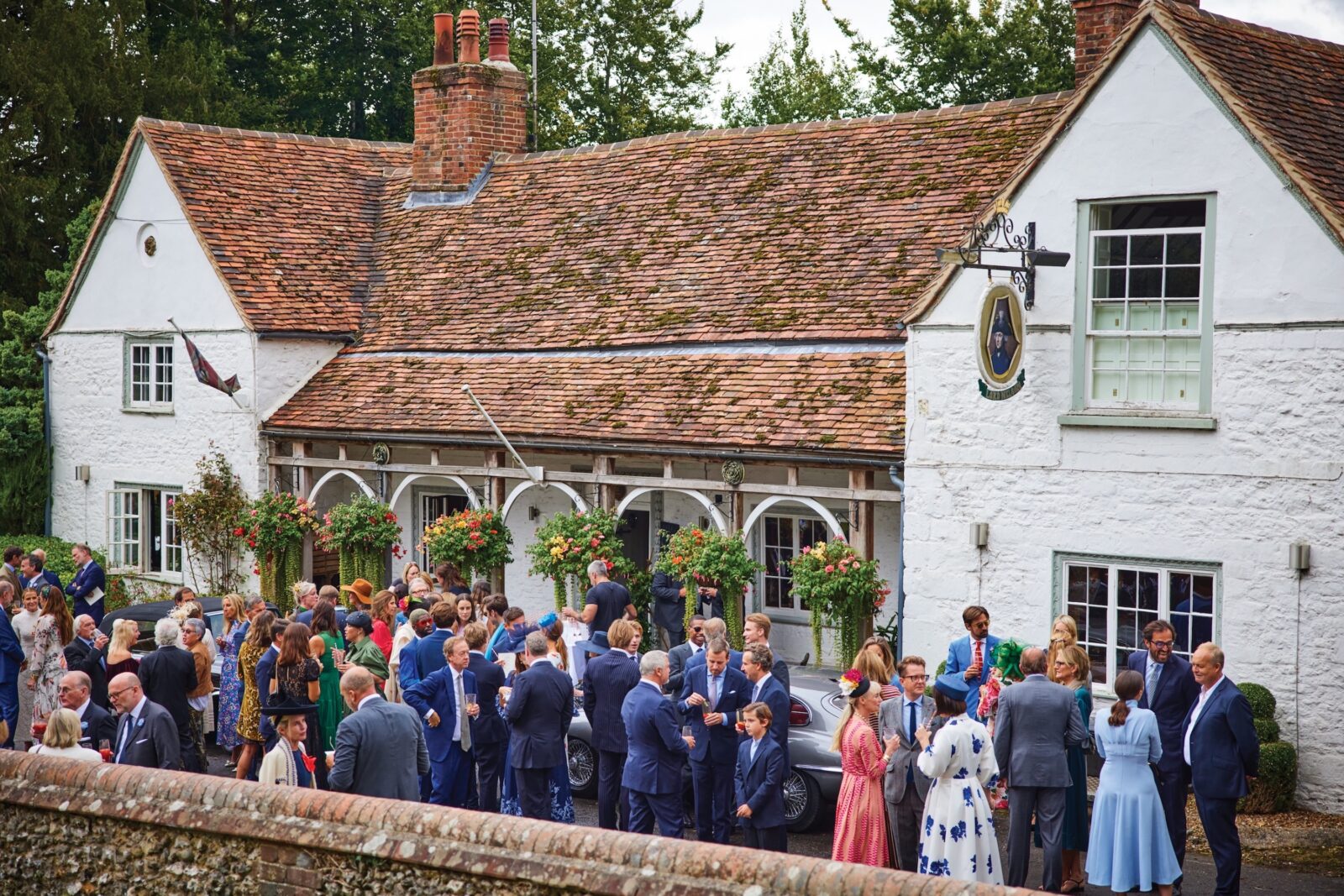
The transition from the church ceremony to the reception highlighted the couple’s commitment to hyper-local commerce and relaxed celebration. Eschewing hyper-exclusive, remote catering monopolies, Hicks chose to anchor the post-ceremony celebration at the Lord Nelson pub, located directly across the lane from the church.
Gastronomic and Logistical Breakdown
Pre-Reception Refreshments: Guests were greeted with traditional British libations, including Bloody Marys and Pimm’s.
Local Bakery Partnership: Seventeen-year-old local baker Kitty produced one hundred custom brioche rolls, each individually stenciled with the couple’s initials.
Artisanal Dairy and Bread: The menu featured artisan cheeses sourced from the Nettlebed Creamery, paired with fresh sourdough baked by Flea St. George.
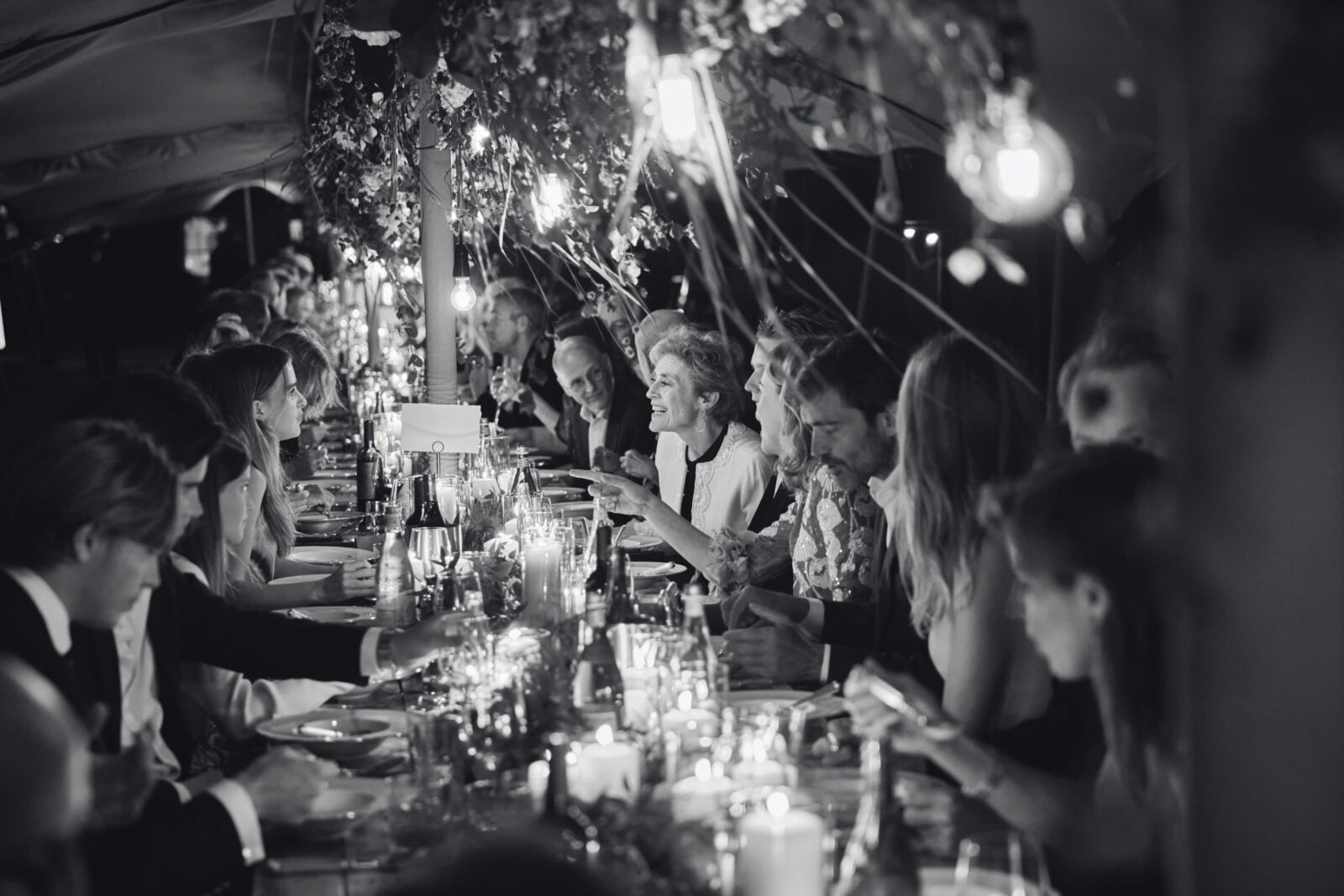
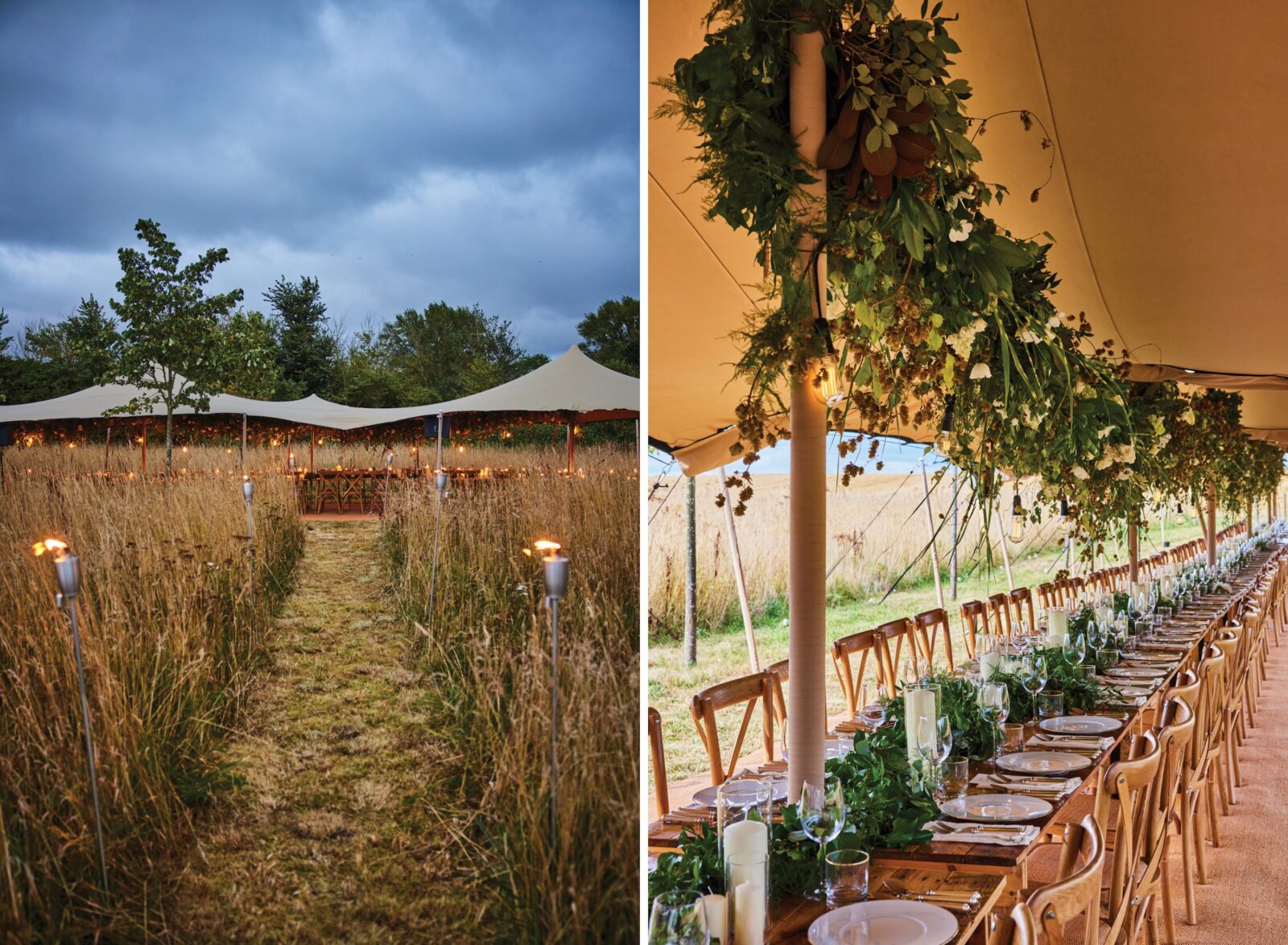
Pre-Wedding Entertainment: Because the couple’s timeline was inherently unconventional—marked by twenty-five years of partnership and five children—they inverted standard schedules by hosting their primary dinner and dancing reception the night before.
Cooked by private chef "Top Banana" Claire, the field-side celebration the night prior ensured that by the time attendees assembled inside the parish church the following morning, the atmosphere was entirely devoid of stiff formalities or brittle perfection. Guests arrived relaxed, deeply connected, and nursing mild hangovers—a humanizing detail that underscored the event’s rejection of artificial pageantry.
Official Statements and Reflections
In her upcoming publication, India Hicks: Entertaining, with a Side of Chaos, Hicks reflects candidly on the motivations driving her sudden transition from lifelong non-conformist to traditional bride:
"Having lived an unconventional life together for more than two decades, we decided our wedding should, by contrast, be very traditional."
Reflecting on the psychological climate that catalyzed the decision, Hicks explains:
"After a bewildering eighteen months of Covid, I felt a longing for something reassuring, something anchoring—not just for me, but for my children, who, like everyone else, had been shaken by the pandemic. One evening, after supper at home on the tiny Bahamian island where we live, I turned to David and said, ‘Let’s get married.’"
The focus of the event remained steadfastly fixed on the emotional reality of their shared history rather than the aesthetic perfectionism that dominates modern wedding culture. By leaning into community, localized supply chains, and familial participation—with sons driving cars, walking down aisles, and reading literature—Hicks and Flint Wood successfully transmuted a quarter-century of domestic partnership into a public covenant anchored by love rather than obligation.
Future Outlook
The publication of India Hicks: Entertaining, with a Side of Chaos by Rizzoli on September 8, 2026, guarantees that this Oxfordshire wedding will extend far beyond a personal family milestone, positioning it as a cultural touchstone for contemporary entertaining. As societal norms continue to evolve, Hicks’s narrative provides a compelling blueprint for modern families seeking to reconcile unconventional life paths with traditional rituals.
Looking forward, the wedding serves as a testament to the resilience of family structures tested by global crises. By choosing to honor their roots in Oxfordshire while maintaining their transnational lifestyle between the United Kingdom and the Bahamas, Hicks and Flint Wood demonstrate that tradition is not necessarily a rigid cage, but rather a flexible framework capable of holding decades of shared memory, imperfect human connection, and enduring affection.



0 Comments