
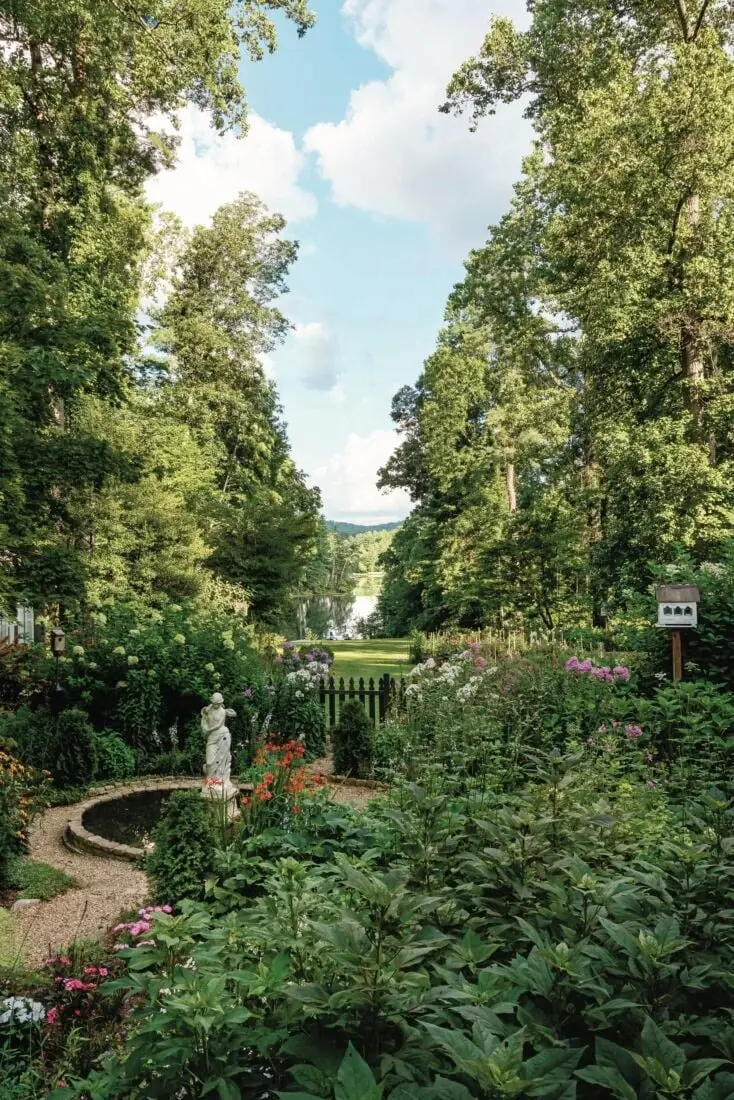

High in the shadowed mountains of Flat Rock, North Carolina, far from the stifling humidity and brick-lined alleys of the historic Lowcountry, a horticultural masterpiece has taken root. For decades, the name Marty Whaley Adams Cornwell has been quietly synonymous with Southern art, lineage, and a profound reverence for the earth. Now, the celebrated Charleston gardening family has completed a remarkable geographical and artistic migration, trading the rigidly formal design of their legendary South Carolina roots for a sprawling, vibrant floral utopia in the Blue Ridge Mountains.
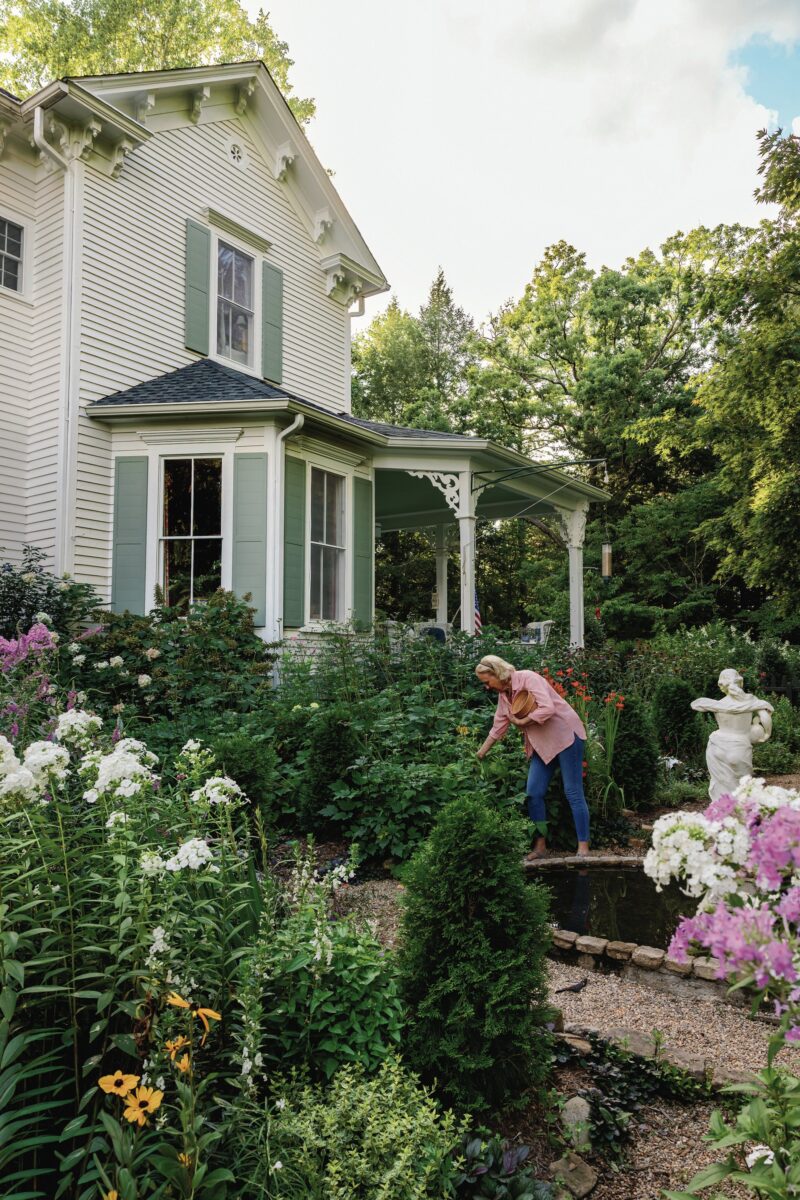
The centerpiece of this North American mountain retreat is an 1876 Victorian white clapboard cottage flanked by hemlocks, pines, and a breathtaking panorama of Highland Lake. Here, Marty Whaley Adams Cornwell—alongside the indelible ghost and living memory of her mother, the legendary Mrs. Whaley—has cultivated a sanctuary that bridges generations of Southern history. What began as a familial summer escape from the scorching Charleston heat has transformed into a full-time artistic and botanical haven.
This expansive feature explores the deep-rooted transition of a prominent Southern family, charting their evolutionary shift from the formal, walled confines of downtown Charleston to the untamed, luminous landscapes of Western North Carolina. Through decades of familial legacy, dramatic acts of nature, personal triumphs, and profound losses, the Whaley-Cornwell family has redefined what it means to live in concert with the seasons.
Detailed Chronology: A Century of Soil, Seed, and Sanctuary
Roots in the Lowcountry
To understand the vibrant floral tapestry blooming today along the shores of Highland Lake, one must trace the lineage back to the hallowed grounds of Charleston, South Carolina. Marty Whaley Adams Cornwell’s family tree is deeply planted in Southern horticultural lore. Her great-grandmother and grandmother were master gardeners, laying a foundation of botanical appreciation that would define the family’s identity for generations.
The most prominent architect of this green-thumbed dynasty was Marty’s mother, Emily Whaley, immortalized in her celebrated memoir, Mrs. Whaley and Her Charleston Garden. Tendered at 58 Church Street and originally designed by renowned landscape architect Loutrel Briggs, the property became a legendary paradigm of formal Southern green space. As a young girl, Marty spent hours leafing through seed catalogues—the primary lifeline for sourcing plants before modern commercial nurseries dotted the landscape—ordering violas, stock, and snapdragons under her mother’s watchful eye. Simultaneously, visits to her grandparents in Pinopolis, South Carolina, exposed her to manicured camellias, sprawling sweet pea walls, and meticulously arranged foyer bouquets that established an early aesthetic standard.
The Mountain Migration (1984)
The North Carolina chapter of the family’s story began in 1984. Marty, an accomplished artist whose childhood summers were spent swimming in Highland Lake near an Arts and Crafts-style house built by her great-grandfather, instantly agreed when the 1876 white clapboard Victorian property came on the market. Purchasing the twelve-acre parcel with her first husband provided an ideal escape from the punishing coastal heat.
"Daddy taught me to swim in this lake," Marty reflects, noting that returning to the property felt entirely like coming home.
Following her divorce in 1984, the property evolved into a deeply collaborative mother-daughter sanctuary. Until Emily Whaley’s passing in 1998, the duo utilized the mountain retreat as an artistic and botanical incubator. While Emily painted and penned her memoirs on the back porch, Marty set up her easel on the front porch. During her seventies, Emily actively dug up volunteer sprouts of a century-old maple tree, replanting them along the lawn’s edges toward the lake. Today, those trees stand proudly alongside blue hydrangeas propagated directly from Marty’s older sister’s 1950-wedding bouquet.
The Transformation of the Mountain Plot
Over the past thirty years, Marty has steadily shaped the flat-rock landscape into an abundant, free-flowing paradise. Nature itself occasionally forced a redesign; a dramatic turning point occurred when two massive pine trees were struck by lightning while Emily and her bridge-playing companions sat on the porch—an event Marty recalls as nearly blowing the hair off her mother’s head.
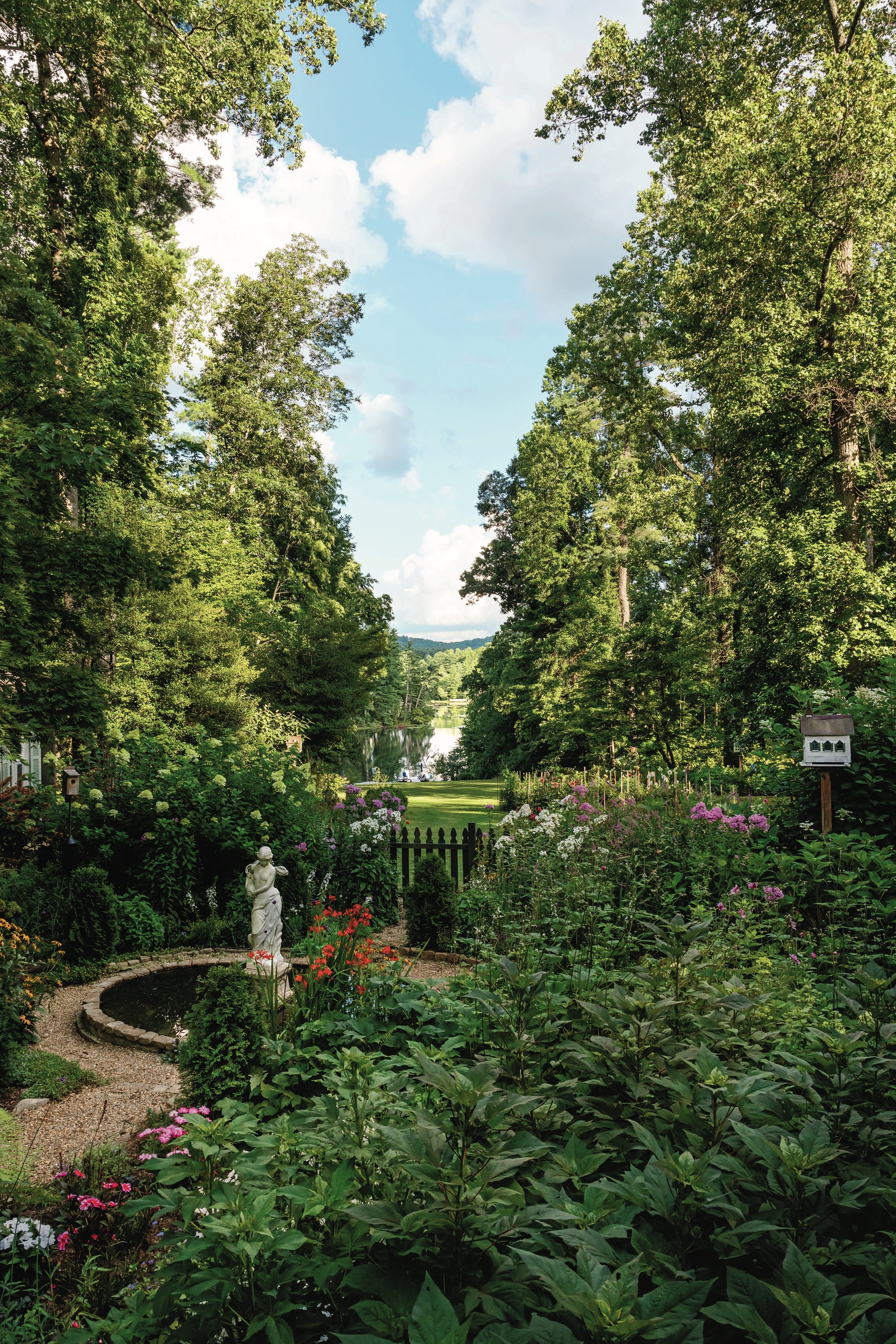
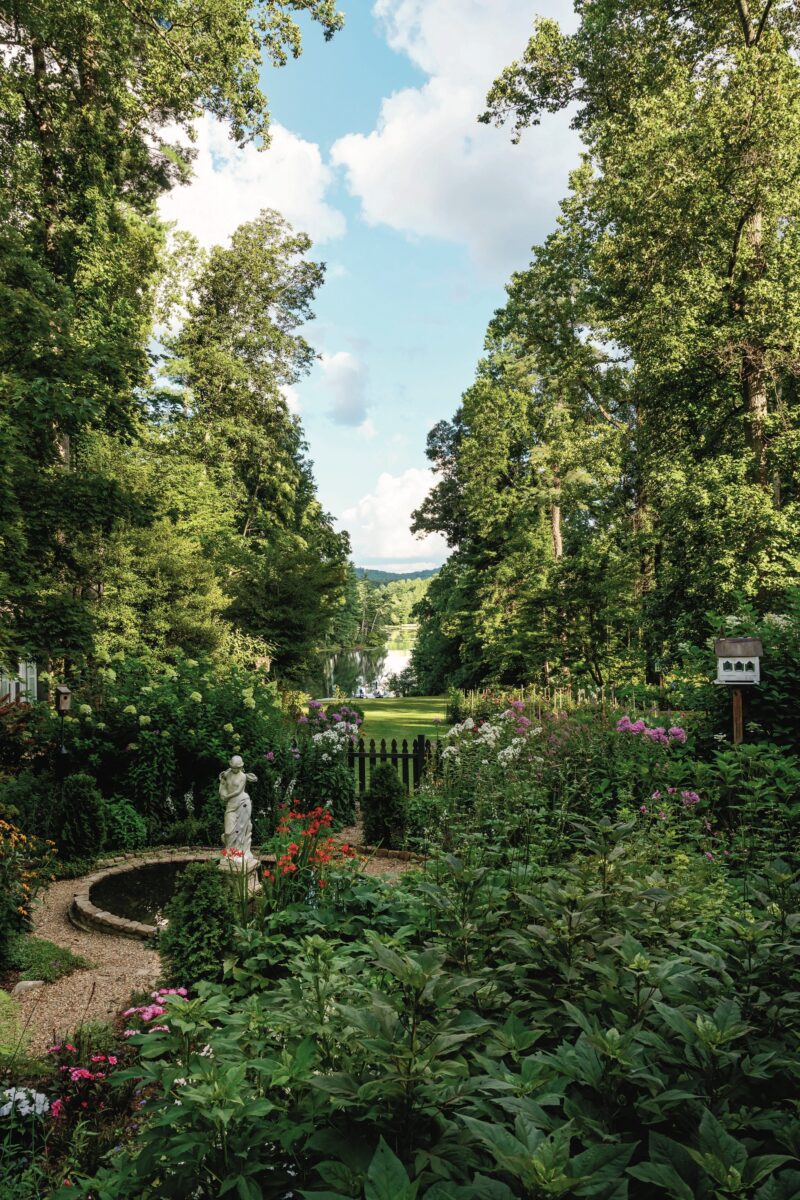
In place of the fallen pines, Marty engineered a stunning centerpiece: an oval pond framed by elegant statuary brought up from her great-aunt’s historic garden near Charleston. The pond serves as a direct northern homage to the serene pool at 58 Church Street, immortalized on the cover of Garden & Gun’s debut issue in 2007, where author Pat Conroy famously stood.
By 2022, the pull of the mountains became absolute, and Marty made the decision to relocate to Flat Rock full-time. The following year brought both closure and new beginnings when she made the agonizing choice to sell the iconic Church Street home and "Mrs. Whaley’s Garden"—a process she notes took two years of deep emotional preparation as her second husband, Charles Cornwell, battled illness. Charles passed away at the Flat Rock estate the following year, binding Marty’s grief, resilience, and daily existence inextricably to the North Carolina soil.
Supporting Context & Metrics: Flora, Art, and Ecosystems
The physical transformation of the twelve-acre Flat Rock property represents a deliberate departure from the rigid symmetry of Lowcountry design toward an organic, immersive floral utopia. The garden’s composition relies on a delicate balance of heirloom perennials, robust mountain-hardy shrubs, and carefully orchestrated color palettes.
Botanical Inventory and Maintenance
- Hydrangeas & Perennials: The estate is punctuated by massive fields of Strawberry Sundae hydrangeas, Angelonia, and David phlox.
- Dahlias & Floristry: Sierra Glow dahlias bloom brilliantly under the care of Marty’s son’s partner, professional florist Kylie Ammerman, whose floral interventions provide a bridge between the garden’s raw produce and refined artistic design.
- Shade and Woodland Elements: Variegated Solomon’s seal, fall-blooming anemones, and robust clusters of deep ruby bee balm cling to the sides of the Victorian porch, attracting native pollinators including hummingbirds, butterflies, and bluebirds.
- The Studio Build: Integrating her artistic career with her botanical environment, Marty constructed a small framing studio adjacent to the historic maple tree, utilizing three distinct, salvaged windows sourced locally.
Artistic Convergence
Living permanently in the mountains has profoundly influenced Marty’s sixth decade as a professional painter. Known widely for her floral still lifes, her daily proximity to the garden provides an endless stream of visual subjects. The synergy between her physical cultivation of the land and her canvas work underscores a fundamental philosophy:
"A garden is like a painting: Stir a little here, mix a little color there. Things practically grow themselves here. They just take off."
Official Statements & Reflections
Reflecting on the emotional weight of relinquishing her family’s historic Charleston foothold while embracing the sanctuary of Flat Rock, Marty Cornwell offers profound insight into the cycles of life, art, and nature:
-
On the Healing Power of the Mountains:
"When I sit on this porch and look out at the lilies, at the bees drunk on the monarda, it soothes about any problem. Just listen to that woodlark; it’s like church." -
On the Philosophy of Impermanence and Growth:
"Gardening reminds you that everything has a season. As Mama would say, ‘A storm blowing through makes room for something new.’" -
On the Miraculous Nature of Mountain Horticulture:
"It’s just so miraculous, to plant moonflowers from seed and watch them come up. I mean, how could I not be a gardener?"
Future Outlook
As the historic 58 Church Street property in Charleston undergoes a meticulous restoration by its new owners—a development that brought immense joy to Marty upon learning that both the eighteenth-century house and its formal garden are being lovingly preserved—the focus of the Whaley-Cornwell legacy firmly settles in the Blue Ridge Mountains.
The immediate future holds significant milestones for Marty. She is currently preparing for a highly anticipated solo art exhibition scheduled for October at Flat Rock’s Marsha Hammel Studio. Featuring her latest collection of floral still lifes and mountain-inspired canvases, the exhibition captures the culmination of decades of artistic refinement born directly from the soil outside her studio window.
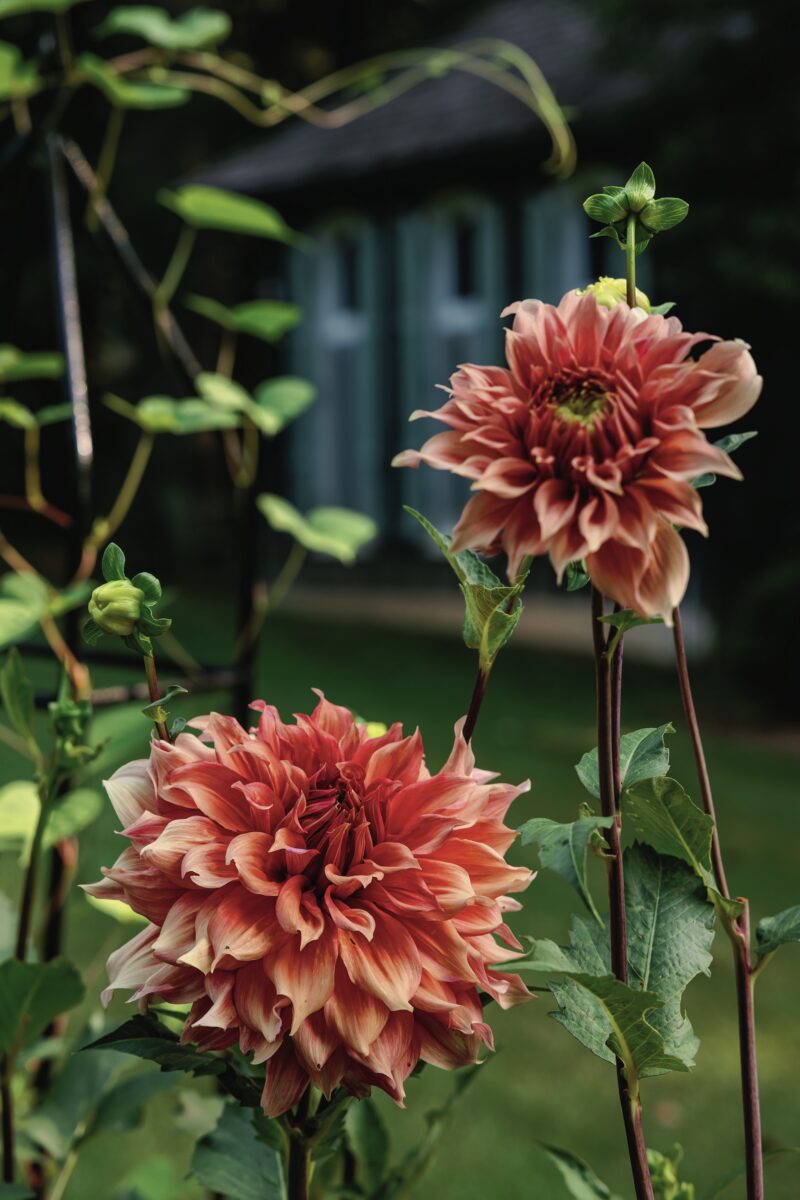
Ultimately, while the physical address has shifted from the coast to the peaks, the enduring spirit of Mrs. Whaley lives on. Where a sign on the Church Street gate once instructed visitors to "invite your soul to rest," the natural symphony of Flat Rock—the rustling hemlocks, the shimmering expanse of Highland Lake, and the unbridled riot of zinnias and dahlias—accomplishes this effortlessly. In this mountain utopia, the Whaley family’s horticultural lineage has not merely survived a cross-state relocation; it has blossomed into something wilder, deeper, and profoundly eternal.

0 Comments