The landscape of collegiate athletics has undergone an unprecedented seismic shift since the NCAA first permitted Name, Image, and Likeness (NIL) compensation in 2021. What began as a straightforward avenue for student-athletes to monetize their personal brands and public identities has rapidly metastasized into a complex, multi-faceted commercial ecosystem. Today, the conversation surrounding college sports is no longer confined to traditional recruiting pipelines and athletic performance; it is fundamentally intertwined with corporate law, digital marketing, institutional revenue sharing, roster construction, and long-term financial literacy.
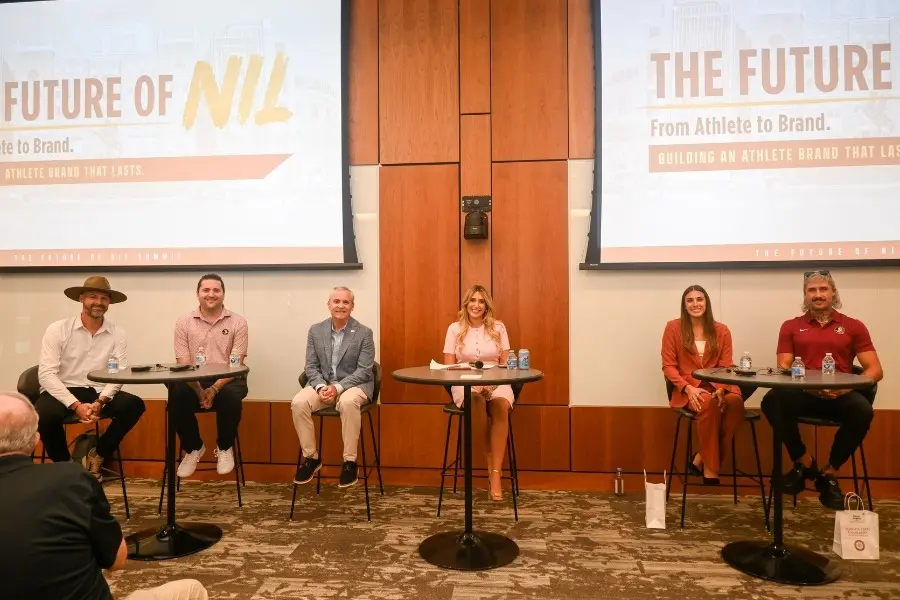
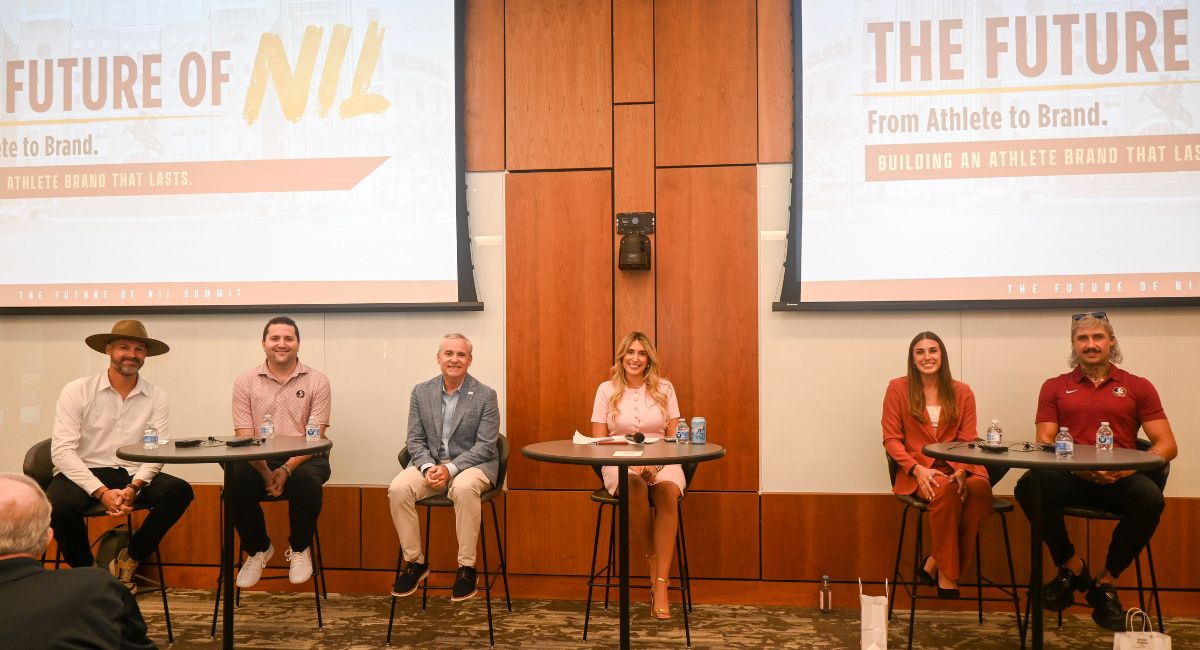
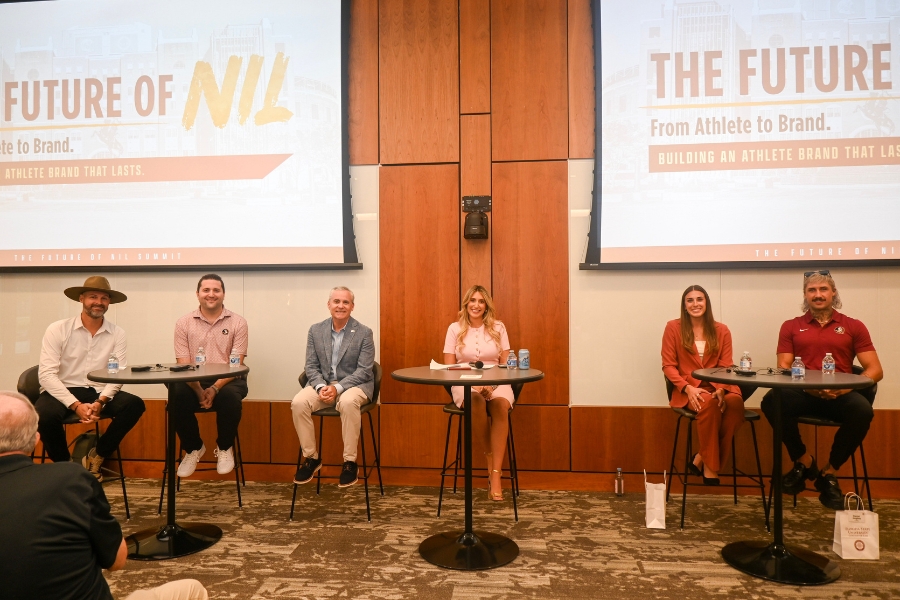
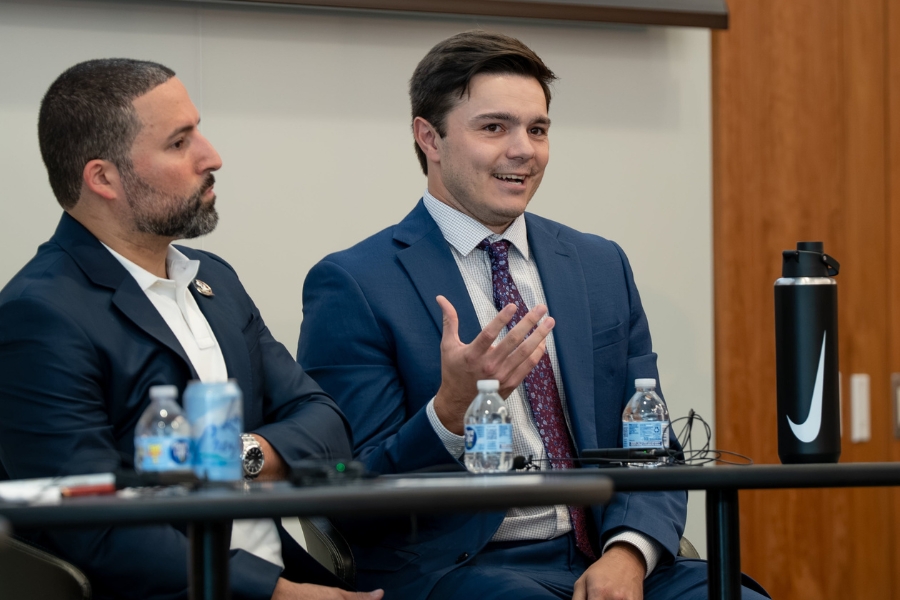
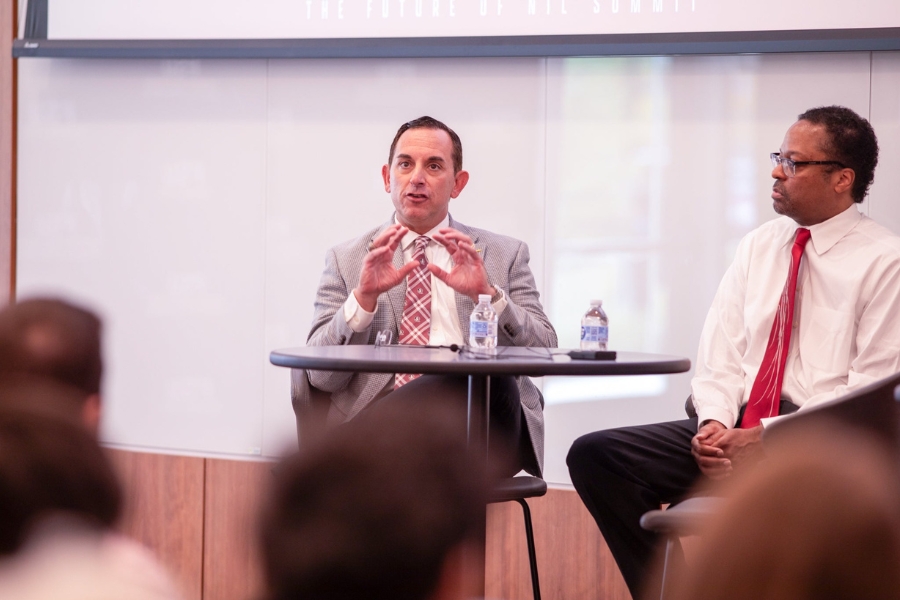
To address these compounding complexities head-on, Florida State University (FSU) recently hosted its second annual Future of NIL Summit at the Herbert Wertheim College of Business. Convening campus leaders, legal experts, athletic administrators, coaches, and student-athletes, the interdisciplinary event served as an intellectual and tactical clearinghouse for navigating the brave new world of modern collegiate sports.
The summit was a collaborative triumph, spearheaded by the FSU College of Law’s Stoops Center for Law and Business, in partnership with the Herbert Wertheim College of Business, the Jim Moran School of Entrepreneurship, and the Sport Management Student Organization. By examining the NIL landscape through cross-disciplinary lenses—legal, commercial, entrepreneurial, and athletic—FSU underscored its forward-thinking, proactive commitment to institutional leadership. Rather than waiting for absolute regulatory clarity from a shifting legal and legislative horizon, the university is actively positioning its student-athletes and academic stakeholders to thrive in an era defined by constant evolution.
Detailed Chronology and Collaborative Genesis
The journey toward the second annual FSU Future of NIL Summit reflects a broader timeline of institutional adaptation that began long before the gavel dropped on the NCAA’s interim NIL policy in July 2021. As state legislation across the country began forcing the hand of collegiate governing bodies, visionary leaders within Florida State University recognized that the university’s institutional infrastructure would need to transform to support its student-athletes adequately.
In the wake of the 2021 policy shift, FSU established specialized internal support systems designed to protect and educate athletes navigating the commercial waters of social media endorsements, local business partnerships, and digital branding. Recognizing that athletic excellence and academic preparation could no longer be treated as isolated silos, the university fostered unprecedented collaboration among its academic powerhouses. The FSU College of Law—specifically through the Stoops Center for Law and Business—teamed up with the Herbert Wertheim College of Business and the Jim Moran School of Entrepreneurship to study and teach the commercial realities of the new market.
The culmination of these cross-campus efforts led to the creation of the annual Future of NIL Summit series. The most recent iteration expanded significantly upon its predecessor, bringing together diverse panels of experts to dissect the macro-level economic forces reshaping college sports. From exploring the fine points of contract law to evaluating the psychological impacts of personal branding on young athletes, the summit’s timeline of discussions mapped out the exact trajectory of how a localized policy change blossomed into a nationwide economic restructure. Through carefully curated panels involving everyone from athletic department coordinators to sport management professors, the event charted the historical milestones of NIL, contextualized the current state of collegiate athletics, and laid out pragmatic blueprints for the future.
Supporting Context, Metrics, and Market Realities
To fully grasp the urgency and magnitude of the topics discussed at the FSU summit, one must analyze the broader financial and regulatory metrics currently governing Division I athletics. The economic realities of college sports have been radically upended by landmark legal decisions, most notably the House v. NCAA antitrust settlement.
Under the framework of the House settlement, Power Four and other Division I athletic departments are granted the unprecedented authorization to distribute up to 22% of their average annual athletic revenues directly to student-athletes. This revenue-sharing model establishes a hard cap starting at approximately $20.5 million per school annually—a figure that financial analysts project will scale upward incrementally with each subsequent fiscal year. This massive influx of capital fundamentally redefines the relationship between universities and athletes, shifting the paradigm from amateurism toward a professionalized employment or partnership model.
However, this financial injection has created a complex web of logistical challenges. As Michael Fly, general manager and assistant coach for the FSU men’s basketball program, articulated during the summit, the lack of a standardized federal framework or unified governance leaves athletic departments operating in a perpetual state of flux.
"Until there’s some type of structure, we’re all out here trying to do the best that we can in an ever-changing environment," Fly explained.
In the context of recruiting, these multi-million dollar revenue-sharing allocations and robust NIL packages have leveled the financial playing field among elite programs. When prospective student-athletes evaluate multiple institutions offering comparable financial compensation, Coach Fly noted that recruitment inevitably reverts to the timeless pillars of collegiate sports: authentic human relationships and institutional culture.
"Once you get into similar ranges financially, it reverts back to what it’s always been, which is relationships and how comfortable you feel on visits," Fly said. "It’s one of those things, like anything else in life, where you can either sit back and say, ‘Oh man, it’s not like it used to be,’ and ‘I can’t believe this is what we’re doing now.’ Or you say, ‘OK, let’s adapt and let’s try to figure out how to get as close to apples to apples as you can.’"
Concurrently, the operational side of athletic departments has had to adapt by embedding specialized personnel to manage these financial streams. Charlie Votey, FSU Athletics’ NIL coordinator, serves as a frontline resource for student-athletes navigating compensation, compliance, and financial education. Votey emphasized that the ultimate goal of the athletic department’s support structure extends far beyond securing immediate endorsement dollars; it is fundamentally about imparting lifelong financial literacy.
"I’m one of those individuals who acts as the resource for the student-athletes to be able to talk over with them and be an educational piece for them to understand," Votey stated. "We want to do more with financial literacy and things like that. It’s just another education process for them. It’s just another opportunity for them to learn."
Official Statements and Perspectives from the Ground
The human element of the NIL era was a central focus of the summit, illuminated by firsthand accounts from student-athletes and faculty members who witness the daily realities of personal branding.
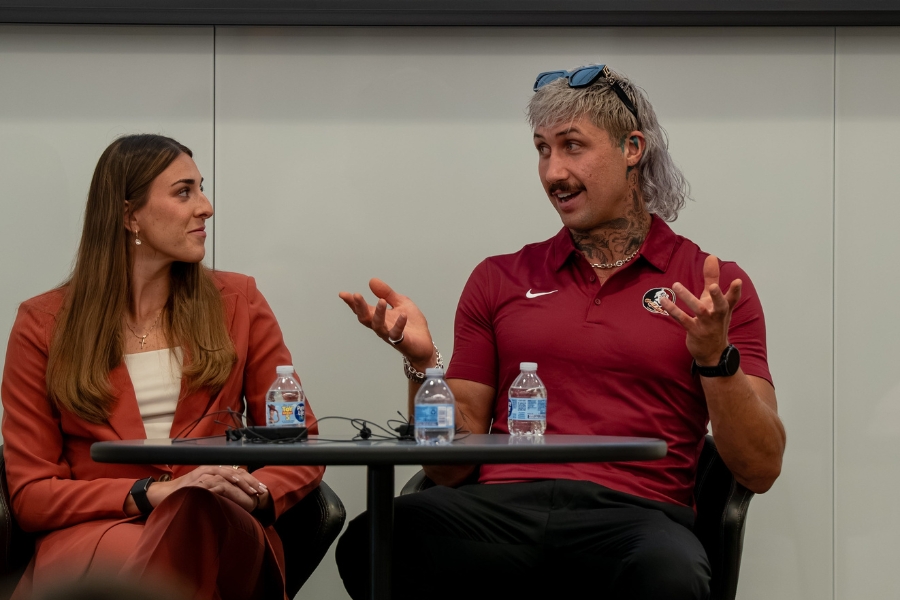
Daniel Hughes, an FSU football punter and an Australian student-athlete who previously earned Ray Guy Award semifinalist honors at New Mexico, offered a profound perspective on the dual identity required of modern athletes. Hughes, who has amassed a sizable digital footprint with over 80,000 followers and millions of views across TikTok and Instagram, stressed that athletic performance must always supersede digital curation.
"I’m a footballer first," Hughes asserted. "The social media side is secondary. I want people to remember that first. But the brand side is beyond football. What am I going to do when my career is over and my body kicks out? What am I going to use?"
Hughes also highlighted the unique regulatory hurdles faced by international student-athletes. Due to strict federal visa restrictions, international athletes like Hughes are legally prohibited from monetizing their NIL brand deals while studying in the United States, forcing them to focus entirely on organic audience growth, networking, and long-term brand equity rather than immediate financial gain. Furthermore, Hughes offered valuable advice regarding authenticity in content creation, warning against the pitfalls of chasing disingenuous partnerships.
"You have to be authentic and genuine," Hughes added. "If you’re not yourself, then your content doesn’t do as well. People can see through it."
From an educational and career-development perspective, Jason Pappas, a sport management professor in the Anne Spencer Daves College of Education, Health, and Human Sciences, emphasized that the explosion of the NIL economy is generating an entirely new job market for university students. As coordinator of the Sport Management Internship Program, Pappas fields constant inquiries from students eager to break into the professional sports industry through the vectors of NIL management, sports law, social media marketing, and agency representation.
"NIL is not merely a temporary trend affecting current athletes; it is an economic engine that is actively creating robust, viable career pathways for the next generation of sports business professionals," Pappas noted during summit discussions.
Future Outlook: Navigating Uncertainty with Strategic Foresight
Looking ahead, the horizon of collegiate athletics remains clouded with regulatory uncertainty. Stakeholders across the country continue to grapple with unresolved questions, ranging from potential federal antitrust legislation and collective bargaining rights for athletes to the long-term sustainability of athletic department budgets under the House v. NCAA revenue-sharing model. The specter of perpetual litigation and shifting transfer portal dynamics ensures that the regulatory ground beneath college sports will remain unstable for the foreseeable future.
Yet, the resounding consensus emerging from Florida State University’s Future of NIL Summit is that passive resistance or waiting for a utopian regulatory framework is a losing strategy. Institutions that choose to lament the past rather than adapt to the present risk falling irreparably behind in the hyper-competitive arms race of modern collegiate athletics.
FSU’s proactive, interdisciplinary approach demonstrates that success in the post-NIL era requires a harmonious blend of immediate adaptability and meticulous long-term planning. By synthesizing legal scholarship, business acumen, athletic management, and entrepreneurial grit, Florida State is not merely surviving the paradigm shift—it is actively charting the course for how major universities can empower their student-athletes to succeed both during their playing days and long after they have left the arena.



0 Comments