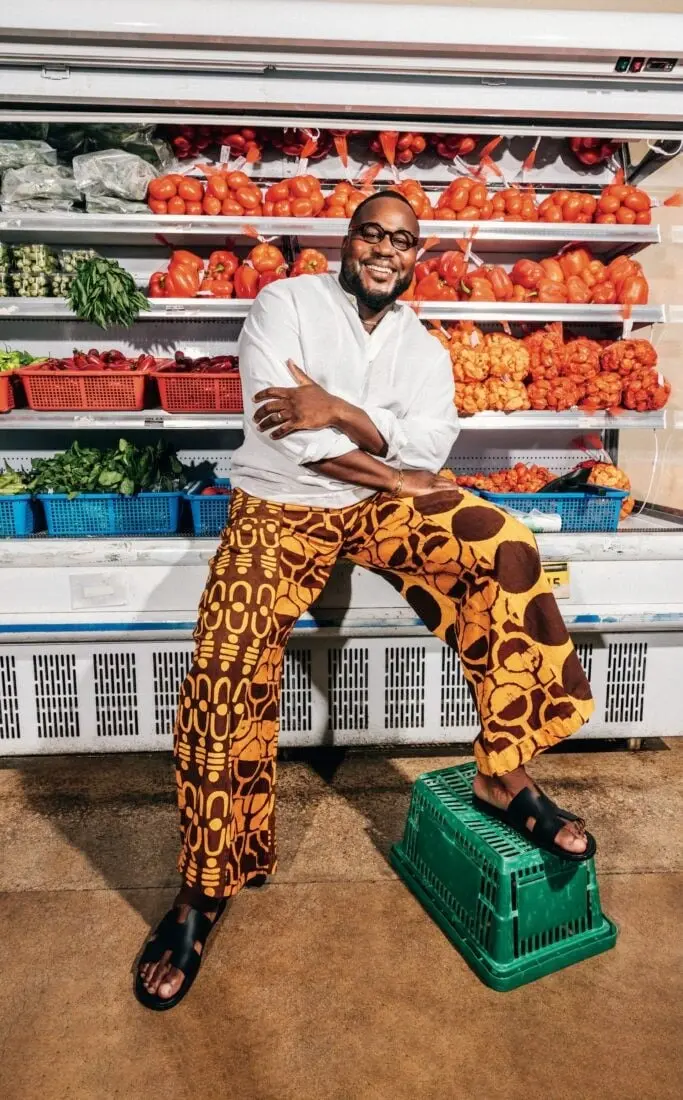
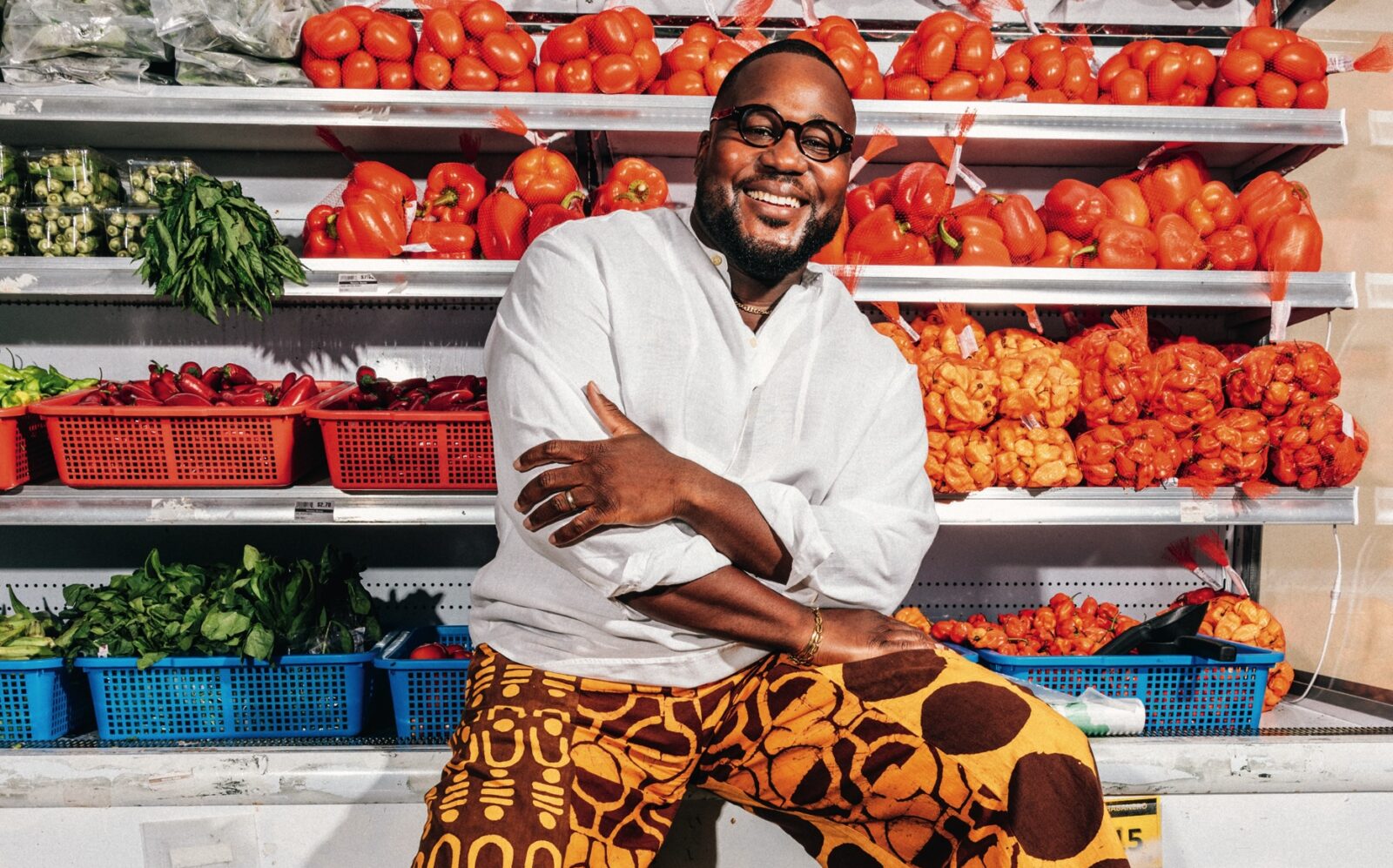
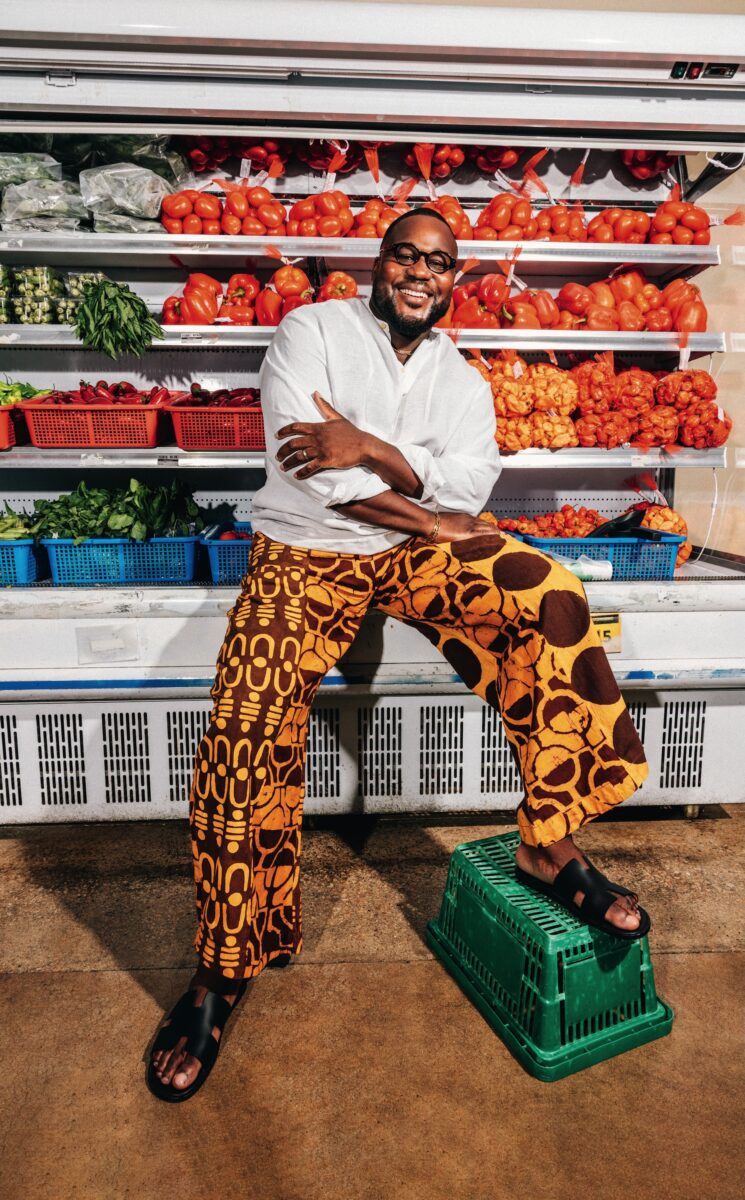
In the sprawling, culturally diverse culinary landscape of Houston, Texas, an unspoken rule governs the restaurant community: every great tour of the city’s dining scene begins with someone else’s kitchen. For Ope Amosu, a thirty-nine-year-old entrepreneur-turned-restaurateur, this ritualistic tour of culinary appreciation is more than a courtesy; it is an homage to a community that shaped him. Amosu is the creative force behind Chá pnBlá k (ChopnBlok), a West African dining phenomenon that opened in Houston’s vibrant Montrose neighborhood in late 2024.
What began as an ambitious, corporate-minded attempt to engineer a "West African Chipotle"—a fast-casual empire centered around accessible, bold flavors—has organically evolved into something far more culturally significant. Chá pnBlá k is no longer merely a quick-service concept; it has transformed into a full-service culinary destination. It stands proudly as one of the hottest scenes in Texas and one of the most intellectually and sensorially exciting places to eat in the United States.
Amosu’s journey from a corporate executive track at General Electric to a James Beard Award finalist for Best Chef: Texas represents a watershed moment for modern American dining. By bridging the rich, complex culinary traditions of West Africa with the historical and contemporary rhythms of the American South, Amosu has crafted a menu that tastes remarkably like the future of American food. This in-depth report explores the chronology of Amosu’s entrepreneurial leap, the deep cultural roots anchoring his mission, the operational realities of scaling an immigrant cuisine, and the future outlook for a concept that has firmly captured the national palate.
Detailed Chronology
From Lagos to London and Space City
Ope Amosu’s relationship with West African cuisine and cross-cultural identity began long before he ever set foot in a professional kitchen. Born in London to Nigerian-born parents, Amosu and his brother were sent back to Lagos in their early childhood to live with their grandmother, receiving an unvarnished, immersive education in Nigerian culture, language, and sensory experiences.
By the time he was four years old, Amosu relocated to Texas, initially landing in Alief—a Houston suburb that transformed during the 1980s into a thriving multicultural melting pot. Later, as his family achieved greater financial footing, they moved to the affluent suburb of Sugar Land. For the young Amosu, this bred a dual existence: navigating the expectations of private school education, pop culture, and Western comforts by day, while absorbing the sounds of Nollywood, the language of his heritage, and the rich scents of jollof rice at home.
An athletic scholarship took Amosu away from Texas to Truman State University in northeastern Missouri, where he played defensive end until a debilitating knee injury cut his football career short during his sophomore year. The move to the Midwest exposed a profound cultural deficit. Far from the dense Nigerian diaspora of Houston, Amosu experienced an acute homesickness.
"I realized I’m not hearing the language that I heard every day. I’m not getting access to the food I used to get at home. And I wanted that stuff," Amosu recalls.
The Corporate Detour and the Epiphany
After graduating in 2010 with a business degree, Amosu returned to Houston, earned an MBA from Rice University, and subsequently entered the corporate sector on the elite executive track of General Electric’s oil and gas division. For nearly a decade, his career required extensive domestic and international travel, taking him to Latin America, Southeast Asia, Dubai, and Philadelphia.
Across these global postings, a persistent frustration followed him: accessing the comfort foods of his childhood required navigating logistical hurdles and driving upwards of ninety minutes to locate specialty markets or family-run operations. Concurrently, while based in Philadelphia, Amosu observed the explosive rise of fast-casual dining pioneers like Sweetgreen, Shake Shack, and Honeygrow.
The conceptual breakthrough occurred during a business trip to Houston for an energy conference. Passing an Italian fast-casual restaurant on his way to a site visit, a singular thought crystallized in his mind: I am going to open the first modern West African–inspired food and beverage concept.
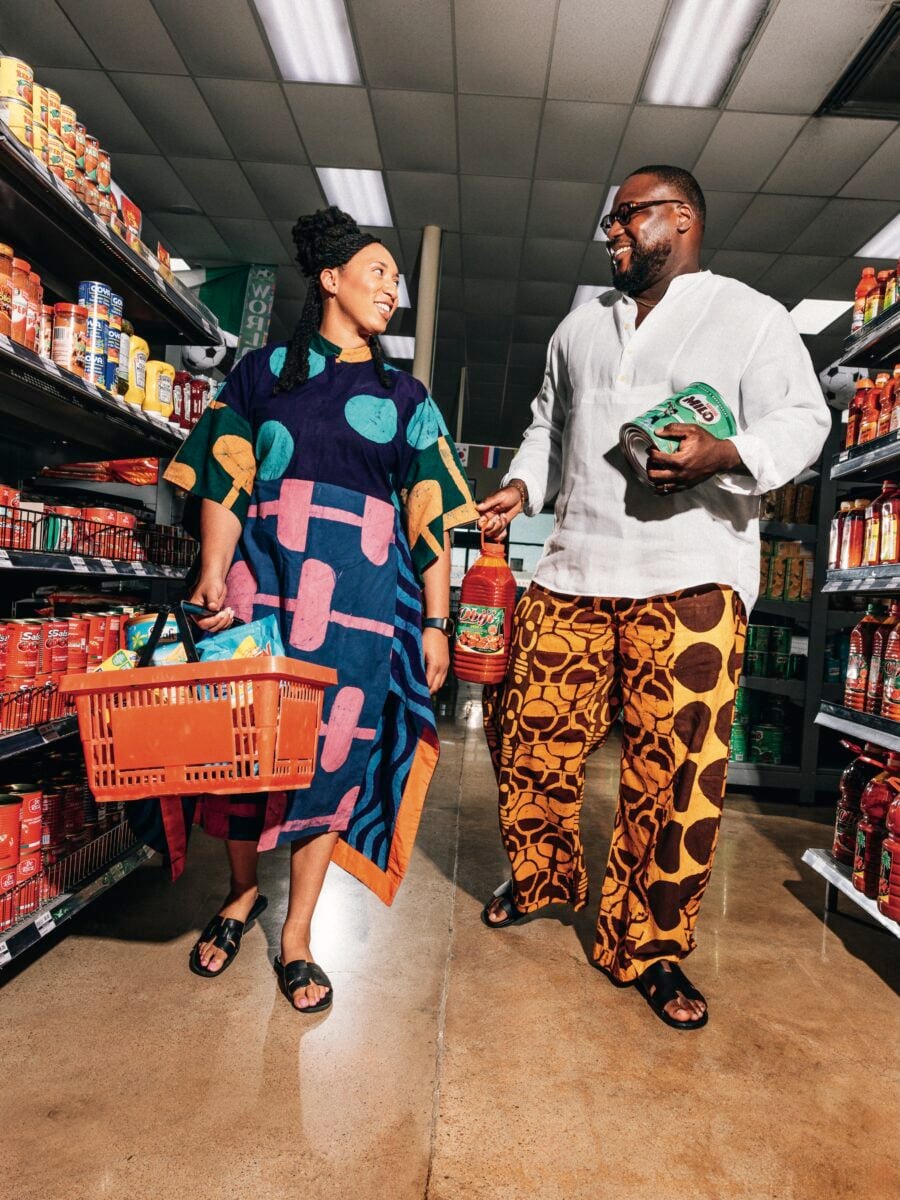
He immediately took his vision to his wife and business partner, Janelle—a fellow Truman State business graduate. Her initial response was pragmatic skepticism: "Dude, that is a terrible idea. Working at a restaurant is hard labor! Why would we want to do that?"
Edging into the Industry: The Chipotle Staging Ground
Undeterred by skepticism, Amosu drafted a comprehensive business plan. Recognizing that his corporate background lacked foundational operational experience in hospitality, he engineered a rigorous, self-imposed training regimen. While maintaining his demanding day job in the oil and gas sector, Amosu applied for and secured a part-time position as a prep cook and dishwasher at Chipotle.
His motives were tactical. He needed to study high-volume operational systems, inventory management, and labor workflows. Crucially, he noted, "My restaurant was going to run off of rice, so I needed a restaurant that moves a lot of rice."
Amosu spent four months immersed in the grind of fast-casual food prep. Yet, a hard truth soon emerged during conversations with Janelle. She confronted him directly:
"What you haven’t realized is that the reason you have to drive out of your way to go get your food is that you don’t know how to make it. You don’t have a product. So, I think you should stop talking to me about this until you come up with one."
The R&D Phase: Chop’d & Stewd Pop-Ups
Realizing he needed to transition from consumer to creator, Amosu embarked on an exhaustive research and development phase. He leaned on home cooks from Philly to Dubai, consulted family matriarchs, and dove deep into the digital content ecosystem of TikTok and Instagram, where a new generation of African chefs and creators were pushing culinary boundaries.
To test his recipes and market viability, Amosu launched a series of pop-up dinners in 2018 under the moniker Chop’d & Stewd—a deliberate homage to Houston’s native chopped and screwed hip-hop culture. Rather than relying on passive feedback, Amosu turned these dinners into structured market research laboratories.
He curated guest lists representing a detailed taxonomy of his target audience: "Ericans" (Americans of Nigerian descent), "OGs" (first-generation immigrants), and "Cultural Millennials" who viewed culinary exploration as a core component of their identity. Guests paid a $40 deposit refunded upon arrival, provided they completed exhaustive comment cards rating both the food and their demographic dining habits. Set against the cultural backdrop of the film Black Panther, diners would cross their arms in a Wakandan salute and take an oath of honest engagement.
By November 2021, these cult-favorite pop-ups culminated in the opening of a 670-square-foot stall inside POST Houston, a dynamic food hall housed within a historic post office. The brand officially adopted the name Chá pnBlá k.
Supporting Context & Metrics
The Houston Diaspora Ecosystem
To understand the cultural soil from which Chá pnBlá k grew, one must examine Houston’s unique demographic profile. Following the oil boom of the 1970s and 1980s, the Houston metropolitan area became the primary epicenter for Nigerian immigration to the United States. Today, an estimated 150,000 Nigerian Americans reside in the Greater Houston area, representing the largest and most concentrated Nigerian diaspora community in the nation.
This deep-rooted community established an intricate, localized infrastructure of neighborhood grocery stores (such as Wazobia Market in Alief), underground catering networks, and regional restaurants (such as Famous Princess African Kitchen). For decades, these establishments served primarily immigrant populations seeking a direct taste of home. Amosu’s genius lay not in inventing West African food, but in translating its complex flavor profiles for a broader, multi-ethnic American public without stripping away its historical integrity.
Operational Pivot: Fast-Casual to Full-Service
The original architecture of Chá pnBlá k was built on the efficiencies of the fast-casual model: order at the counter, pick up your tray, and move along. However, the realities of consumer behavior in Houston’s Montrose neighborhood quickly reshaped the business model.
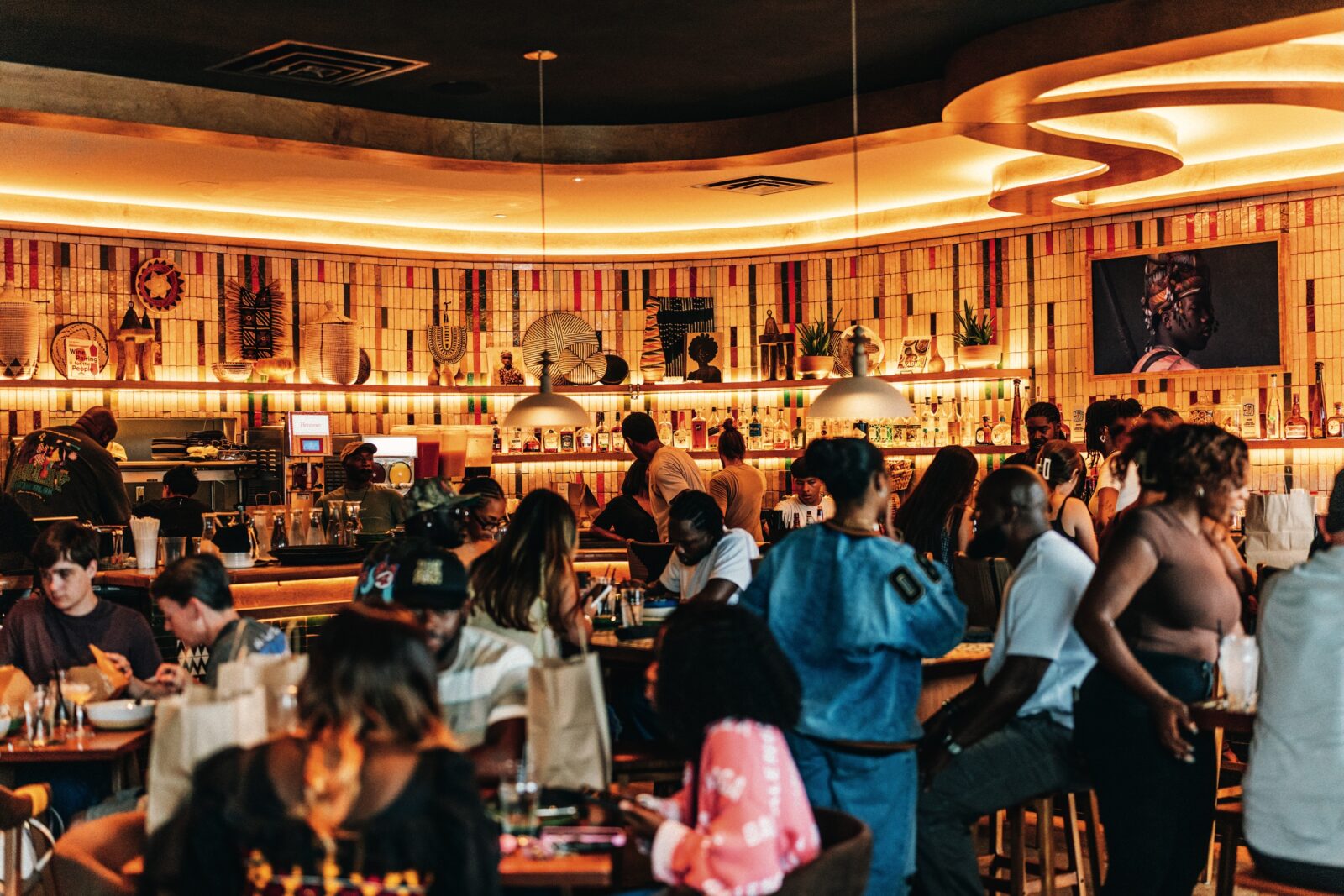
Within a week of opening, management observed systemic friction. Patrons sat down at tables expecting traditional table service, hesitated before ordering, and—most importantly—refused to leave, settling in for hours to enjoy the immersive atmosphere, music, and social energy.
"It just felt like an unfulfilled experience," Janelle Amosu notes, describing an atmosphere characterized by initial operational awkwardness. Recognizing the market signal, the Amosus pivoted, transforming Chá pnBlá k into a full-service restaurant. This strategic adjustment catalyzed the brand’s meteoric rise, turning dinner service into one of the most coveted reservations in Texas.
Key Conceptual Metrics & Menu Architecture
Concept Element
Traditional West African Roots
Chá pnBlá k Adaptation
Rice Base
Smoky Nigerian Jollof rice prepared in large open pots.
Charred jollof rice integrated with the Creole holy trinity (onion, celery, bell pepper) for a cross-cultural jambalaya resonance.
Proteins
Slow-cooked goat, beef, and assorted offal stewed in palm oil or melon seed bases.
Accessible staples like suya-spiced grilled chicken, shrimp, and beef suya kebabs.
Vegetables & Greens
Highly textured "draw" soups (okra, ogbono) with mucilaginous finishes.
Silky, braised collard greens executed as vegan "Liberian greens" designed for universal appeal.
Service Format
Family-style communal platters or quick-service counter pickup.
Interactive bowls ("The Golden," "The Black Star") designed for spork-friendly, democratic dining alongside full-service hospitality.
Official Statements
Reflecting on the unexpected trajectory of his brand, Ope Amosu addresses the tension between his corporate background and his new identity as a celebrated culinary figure:
"I didn’t set out to be a traditional chef. I set out to solve a logistical problem: why did I have to drive two hours to access my culture’s food? But once you step into the kitchen, you realize that food is the ultimate language of storytelling. You have to respect the craft, honor the lineage, and then build the systems to let it scale."
Janelle Amosu, balancing the visionary drive of her husband with operational pragmatism, highlights the collaborative dynamic driving their success:
"He’s the dreamer. I’m more like, ‘Here are all the steps that have to happen to make this dream a reality.’ Working in a restaurant is hard labor! But once we saw how deeply people connected not just with the food, but with the community we were building, there was no turning back."
Benjy Levit, restaurateur and founder of Local Foods—who served as a fast-casual mentor and eventual friend to Amosu—weighs in on Amosu’s entry into the industry:
"I wouldn’t call it stalking. I’d call it manifesting. Ope studied the mechanics of successful local concepts with surgical precision before executing his own vision."
Future Outlook
The success of Chá pnBlá k in Montrose and its predecessor at POST Houston marks a cultural turning point, but it is merely the opening chapter of a broader expansion strategy. Having successfully navigated the transition from a fast-casual experiment to a high-end, full-service dining institution, the Amosus are actively evaluating regional and national growth vectors.
Scaling Without Dilution
The primary challenge facing Chá pnBlá k’s future outlook is maintaining the delicate balance that defines its current acclaim: what culinary critics describe as "compromisingly authentic." By softening the intense functional funk of fermented ingredients, omitting the polarizing mucilaginous textures of traditional "draw" soups, and utilizing accessible formats like customizable bowls, Amosu has successfully onboarded a diverse demographic of diners.
As the brand eyes expansion into other major metropolitan markets—particularly cities with robust cultural diasporas and sophisticated dining scenes like New York, Atlanta, and Washington, D.C.—the operational blueprint must retain the vibrant energy that defines the Montrose flagship. This includes preserving the immersive sensory environment: the tilework echoing Nigerian textiles, the curated soundtrack fusing Afrobeats, hip-hop, and R&B, and the deliberate employment of art and design to celebrate both West African heritage and Black Houstonian identity.
Institutional Recognition and Cultural Impact
With Amosu’s recognition as a James Beard Foundation finalist for Best Chef: Texas, the validation of West African cuisine within the American fine dining canon is complete. No longer relegated to the periphery of ethnic novelty, West African flavor profiles—characterized by complex spice rubs, fermented depth, smoky grains, and vibrant heat—are being recognized as foundational pillars of contemporary American gastronomy.
As Chá pnBlá k looks toward the horizon, Ope Amosu remains grounded in the simple, driving mission that started in the back of an energy conference in Houston: bridging the distance between home and the rest of the world, one bowl at a time.



0 Comments