
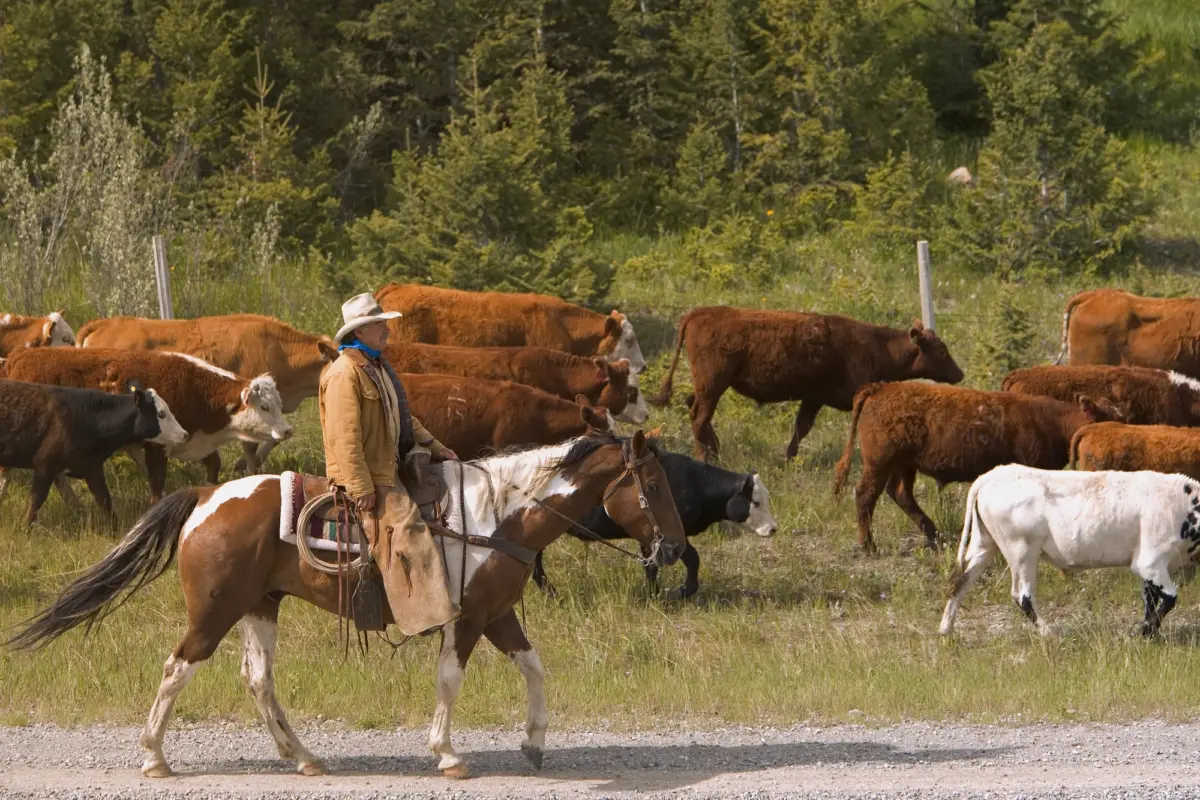

In a decisive move aimed at shoring up the foundations of American agriculture, President Donald Trump signed two sweeping executive orders designed to revitalize the nation’s livestock sector, protect producers from predatory threats, and inject greater transparency into the domestic beef supply chain. The signing ceremony, held in Washington, D.C., was framed by the administration as a historic milestone, solidifying its designation as one of the most pro-rancher administrations in modern political history.
At the core of this policy pivot is an urgent economic and agricultural reality: the United States cattle herd currently sits at its smallest inventory level since the 1950s. Decades of cyclical droughts, surging input costs, land-use pressures, and intense market consolidation have squeezed independent ranchers, threatening the viability of rural communities that depend heavily on beef production.
The dual executive orders tackle these systemic vulnerabilities through distinct yet complementary mechanisms. The first order focuses heavily on risk mitigation and environmental management, specifically directing federal agencies to overhaul predator management protocols—including a targeted review of gray and Mexican wolf populations under the Endangered Species Act—while streamlining the authorization process for livestock protection. The second order pivots to the marketplace, directing the U.S. Department of Agriculture (USDA) to aggressively review mandatory Country of Origin Labeling (COOL) for beef products and step up antitrust enforcement under the Packers and Stockyards Act.
Bolstering these directives, Secretary of Agriculture Brooke Rollins announced a complementary suite of USDA initiatives. These include adding nearly one million new acres to the Grasslands Conservation Reserve Program (CRP), modernizing beef grading technologies through remote and instrument-enhanced systems, and continuing targeted support frameworks for beginning and veteran agriculturalists. Together, these measures represent a coordinated, multi-agency push to reverse decades of contraction, safeguard family-owned operations, and restore robust competition to the American livestock market.
Detailed Chronology: The Road to the Pro-Rancher Directives
The path leading to the signing of these executive orders reflects a multi-year convergence of economic distress in rural America, shifting legislative priorities, and sustained lobbying by livestock associations. Understanding how the administration arrived at this policy juncture requires examining the sequence of events that brought the structural challenges of the cattle industry to the forefront of national politics.
The Mounting Pressure on the American Herd (2020–2023)
For years, agricultural economists and industry groups tracked a steady, alarming contraction in the national beef cow inventory. Prolonged, severe droughts across the Southern Plains, Western states, and parts of the Southeast forced ranchers to liquidate their herds prematurely because grazing lands withered and feed costs skyrocketed. Instead of retaining heifers for breeding to rebuild inventory, producers were compelled to send them to feedlots just to manage immediate cash flow deficits.
Compounding these weather-related crises was persistent market anxiety over consolidation. Independent cattle producers frequently voiced frustration regarding a widening spread between live cattle prices and boxed beef prices—a dynamic that allowed major meatpacking conglomerates to record massive profit margins while independent producers absorbed the brunt of operational risks and depressed margins.
Formulation of the USDA Beef Industry Plan and Ranchers First Initiative (2024–2025)
Recognizing the geopolitical and economic importance of domestic food security, the USDA under the Trump administration began synthesizing industry feedback into actionable strategic frameworks. The formulation of the USDA Beef Industry Plan, paired with the broader "Ranchers First" initiative, served as the ideological and policy blueprint for the current executive actions.
During this period, agricultural stakeholders pressed the federal government for structural reforms in three major areas:
- Regulatory relief regarding federal lands and predator populations that frequently prey on calves and mature cattle.
- Fairness in marketing, specifically demanding that federal regulators crack down on anticompetitive practices among dominant meatpackers.
- Enhanced consumer clarity, allowing domestic producers to market their high-quality beef directly to consumers who prefer American-grown products.
The Washington Summit and Executive Order Signings (September 2026)
Culminating months of interagency coordination between the USDA and the Department of Justice (DOJ), President Trump officially signed the executive orders during a high-profile agricultural summit in Washington. Surrounded by industry leaders, agricultural state lawmakers, and livestock producers, the administration framed the event not merely as a regulatory adjustment, but as a cultural and economic defense of the American cowboy and rural heritage. The immediate release of the accompanying USDA programs—such as the massive Grasslands CRP expansion—signaled that the executive orders were designed to roll out with immediate administrative backing rather than languish in bureaucratic review.
Supporting Context & Metrics: The State of the Industry
To fully grasp the gravity of the administration’s new directives, one must examine the hard economic and environmental metrics defining the modern U.S. cattle market.
The 1950s Inventory Paradox
According to data from the USDA National Agricultural Statistics Service (NASS), the total U.S. cattle and calf inventory has experienced structural declines over the past several decades. While individual animal carcass weights have increased significantly due to advances in genetics and nutrition—meaning total beef production remains relatively high despite lower head counts—the sheer number of operational cows has plummeted. A smaller breeding herd leaves the nation acutely vulnerable to supply shocks, international market volatility, and prolonged weather anomalies. When cow inventories drop to levels last seen in the Eisenhower administration, any localized disaster can send ripple effects through consumer grocery prices nationwide.
[U.S. Cattle Inventory Trend Overview]
1950s Baseline ──────> Historical Peak (1970s) ──────> Recent Multi-Decade Lows (2024-2026)
(Inventory Low)            (Over-expansion)               (Current Rebuild Focus)
Predator Pressures and Federal Land Constraints
For ranchers operating in Western and Midwestern states, wildlife management policies under the Endangered Species Act (ESA) have long been a flashpoint. Populations of gray wolves (Canis lupus) and Mexican wolves (Canis lupus baileyi), successfully reintroduced or protected under federal statutes, have expanded their territories.
While conservationists celebrate these ecological milestones, livestock producers face direct economic losses when predators target newborn calves and nursing cows. Historically, federal compensation programs for livestock depredation were frequently plagued by bureaucratic delays, complicated verification procedures, and inadequate funding pools. Furthermore, securing permits to remove specific problem predators involved cumbersome federal red tape, often leaving ranchers legally hamstrung while their herds remained under threat.
Market Concentration and the Packers and Stockyards Act
Market dynamics in the beef sector are heavily concentrated among a handful of major multinational processing corporations. For decades, independent ranchers have argued that this oligopolistic structure suppresses the prices they receive for live cattle while insulating packers from free-market fluctuations.
The Packers and Stockyards Act, originally enacted in 1921 to safeguard farmers and ranchers from unfair, deceptive, and monopolistic practices, has often been critiqued for lax enforcement during periods of intense corporate consolidation. Prioritizing investigations into potential violations of this act—and forging a closer operational pipeline with DOJ antitrust lawyers—marks a strategic shift toward active federal market policing.
Official Statements & Institutional Perspectives
The announcement of the executive orders generated immediate reactions from across the political spectrum, agricultural cooperatives, consumer advocacy groups, and environmental organizations.
Administration and USDA Leadership
President Trump emphasized during the Washington event that the survival and prosperity of the American rancher are inextricably linked to national security and economic independence. "We are standing up for the men and women who put food on our tables, ensuring that they have the regulatory freedom, fair markets, and federal backing they deserve," the administration noted in a joint release.
Secretary of Agriculture Brooke Rollins elaborated on the pragmatic application of the new policies:
"These latest executive actions build directly upon the foundational work of the USDA Beef Industry Plan and our Ranchers First initiative. By tackling predatory wildlife challenges, restoring integrity to market competition, and expanding conservation access, we are laying the groundwork to rebuild the great American cattle herd and create sustainable, generational opportunities for producers across rural America."
Industry Associations and Producer Reactions
National cattlemen’s associations and state-level agricultural groups offered largely positive assessments of the executive orders, particularly praising the focus on predator management and market oversight.
- The National Cattlemen’s Beef Association (NCBA) highlighted the long-standing burden of predator conflicts, noting that streamlining removal authorizations and updating compensation standards provide vital relief to family operations navigating tough grazing conditions.
- Independent Cattlemen’s groups expressed strong optimism regarding the renewed focus on the Packers and Stockyards Act. For years, independent producers have championed tighter antitrust enforcement to ensure that price discovery remains transparent and equitable across public auction barns and direct-to-packer sales.
Environmental and Conservation Responses
Conversely, conservation organizations voiced cautious concern regarding the directives concerning the Endangered Species Act review. Wildlife advocacy groups argue that gray wolves and Mexican wolves remain vulnerable in significant portions of their historical ranges. Streamlining predator removal and altering ESA classifications, they warn, could roll back decades of hard-fought ecological recovery.
In response, USDA and Department of the Interior officials stressed that the executive orders do not dismantle environmental protections outright; rather, they mandate a balanced, scientifically sound review process designed to harmonize wildlife conservation with the economic realities of working agricultural landscapes.
Future Outlook: Implementation, Challenges, and Long-Term Viability
As the dust settles on the Washington announcement, the true test of these executive orders will lie in their execution. Transforming sweeping policy mandates into tangible, on-the-ground improvements for rural communities requires sustained administrative coordination, adequate funding, and navigation of potential legal challenges.
Overhauling Predator Management and Compensation
The directive instructing federal agencies to review wolf statuses and update compensation standards will require meticulous interagency cooperation between the USDA, the U.S. Fish and Wildlife Service, and state wildlife agencies.
- Streamlining Authorizations: Simplifying permits for predator removal must balance legal accountability with rapid response times for ranchers facing active depredation.
- Fair Compensation: Updating compensation formulas to reflect current market values of livestock—rather than outdated historical averages—will be essential for maintaining producer buy-in for conservation co-existence models.
Revitalizing Country of Origin Labeling (COOL) and Market Competition
Revisiting mandatory Country of Origin Labeling for beef products carries significant international trade implications. Past iterations of COOL faced challenges at the World Trade Organization (WTO) from key trading partners like Canada and Mexico. The USDA’s current review must carefully thread the needle between providing consumers transparent, accurate information about domestic versus imported beef while remaining compliant with international trade obligations.
Concurrently, the success of expanded Packers and Stockyards Act investigations will depend heavily on the allocation of investigative resources and the tenacity of joint DOJ-USDA task forces. If federal regulators successfully prosecute anticompetitive behavior and foster the growth of small and regional meat processing plants, independent ranchers could see a more diversified marketplace with reduced bottleneck dependencies on mega-packers.
Conservation as an Economic Tool: The Grasslands CRP
By enrolling nearly one million new acres into the Grasslands Conservation Reserve Program, the administration is leveraging conservation funding as a direct economic support mechanism for livestock producers. This program allows ranchers to maintain working grazing lands while receiving financial assistance for sustainable land stewardship, soil health preservation, and carbon sequestration.
Conclusion: A Pivotal Era for Rural America
The convergence of executive orders, enhanced conservation enrollment, technological modernization in beef grading, and rigorous market enforcement marks one of the most comprehensive federal interventions in the livestock sector in decades. Whether these initiatives successfully reverse the historic contraction of the U.S. cattle herd will depend on steady implementation, cooperative federalism with state agricultural departments, and the resilience of American ranchers weathering the economic storms of the 21st century.

0 Comments