

Executive Overview
As the 2026 agricultural calendar shifts into the critical harvest and late-season management phase, the American Southeast is preparing for a premier series of educational events, research field days, and industry tours. Designed for growers, agronomists, extension agents, industry stakeholders, and policy influencers, these upcoming gatherings highlight the cutting edge of cotton and peanut production. From Tifton, Georgia, to Blackville, South Carolina, and Lewiston-Woodville, North Carolina, the agricultural community is mobilizing to share invaluable insights, review seasonal field trials, and address the macroeconomic pressures facing two of the region’s most vital cash crops.
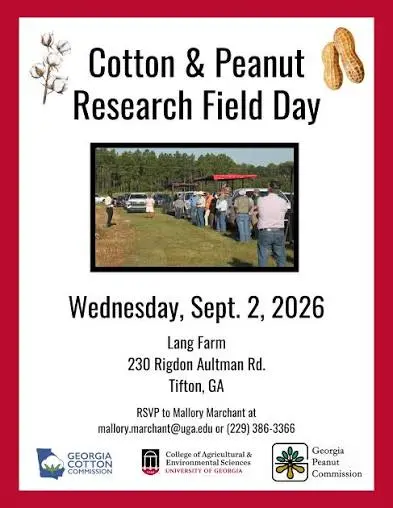
The premier slate of events kicks off on September 2, 2026, with the highly anticipated Cotton and Peanut Research Field Day at the University of Georgia (UGA) Tifton Campus Comfort Center. This event sets the stage for a busy month of ag-tech demonstrations, pest management updates, and commodity-specific briefings curated by leading university researchers and industry specialists. Following closely are key regional fixtures, including the South Carolina Peanut and Cotton Field Day in Blackville and the North Carolina Peanut Growers Meeting in Lewiston-Woodville—both scheduled for September 10, 2026.
Capping off this intensive month of grower engagement is the 38th Annual Georgia Peanut Tour, running from September 22 through September 24, 2026, in the Savannah and surrounding coastal areas. Featuring on-farm harvest demonstrations, processing facility tours, a dedicated Hot Topic Seminar, and a strategic look at export logistics via the Georgia Ports Authority, this year’s tour promises an unprecedented look at the supply chain from seed to global market.
This report provides an in-depth chronological breakdown of these events, explores the technological and agronomic context driving modern cotton and peanut research, outlines official perspectives from organizing bodies, and evaluates the long-term outlook for Southeastern commodity producers.
Detailed Chronology of Upcoming Events
The late-summer and early-fall educational circuit offers producers multiple opportunities to interact directly with researchers, examine localized field trials, and evaluate new management practices before planning for the subsequent crop year.
[Timeline of Events - September 2026]
├── Sept 2: UGA Cotton & Peanut Research Field Day (Tifton, GA)
├── Sept 10: SC Peanut & Cotton Field Day (Blackville, SC)
├── Sept 10: NC Peanut Growers Field Day (Lewiston-Woodville, NC)
└── Sept 22-24: 38th Annual Georgia Peanut Tour (Savannah, GA & Surrounding Areas)
September 2, 2026: Cotton and Peanut Research Field Day (Tifton, Georgia)
Hosted at the University of Georgia Tifton Campus Comfort Center, the Cotton and Peanut Research Field Day serves as the foundational academic and practical showcase for Southeastern row-crop producers.
- Focus Commodities: Upland and Pima cotton varieties alongside runner, Virginia, and Spanish peanut cultivars.
- Key Programming: Organizer Mallory and the UGA Cooperative Extension team have assembled a robust roster of presenters. Attendees will receive commodity-specific updates addressing late-season defoliation strategies, irrigation management under variable weather patterns, and advanced pest control protocols.
- Field Tours: Participants will have direct access to trial plots managed by UGA Tifton scientists, observing firsthand the phenotypic performance of new germplasm lines under drought and high-humidity stresses typical of the 2026 growing season.
September 10, 2026: Dual Regional Showcases (South Carolina & North Carolina)
The second week of September features a simultaneous double-header of agricultural outreach across the Carolinas, allowing localized growers to evaluate regional solutions tailored to their specific soil types and microclimates.
1. South Carolina Peanut and Cotton Field Day (Blackville, South Carolina)
- Location: Clemson University Edisto Research and Education Center (EREC).
- Significance: EREC is a cornerstone of agricultural research in the Edisto River Basin. The field day will emphasize sustainable irrigation practices, precision nutrient placement, and innovative weed management systems designed to combat herbicide-resistant Palmer amaranth—a persistent challenge for coastal plain producers.
- Demonstrations: Researchers will showcase small-plot sprayers, unmanned aerial vehicle (UAV) imagery applications for crop scouting, and cover crop integration trials aimed at improving soil organic matter.
2. North Carolina Peanut Growers Meeting and Field Day (Lewiston-Woodville, North Carolina)
- Location: Peanut Belt Research Station.
- Significance: Situated in the heart of North Carolina’s historic peanut-producing region, this station has long been a hub for Virginia-type peanut research.
- Programming: Growers will tour ongoing cultivar trials, disease management plots focusing on Cercosporidium personatum (early leaf spot) and Sclerotinia blight, and harvest-timing trials designed to optimize grade percentages and dollar returns per acre.
September 22–24, 2026: The 38th Annual Georgia Peanut Tour (Savannah, Georgia & Surrounding Region)
The crown jewel of the September agricultural calendar is the 38th Annual Georgia Peanut Tour, operating out of the Savannah area and drawing stakeholders from across the globe.
- Kickoff and Hot Topic Seminar (September 22): The tour opens with a comprehensive Hot Topic Seminar addressing current regulatory hurdles, international trade agreements, input cost forecasts, and emerging market demands.
- On-Farm Harvest Demonstrations & Clinics: Attendees will witness state-of-the-art harvesting equipment in action on working farms throughout the region, complete with technical clinics on combine adjustments, loss reduction, and moisture management.
- Research Station Showcase: A dedicated stop at the University of Georgia Southeast Research and Education Center will provide a deep dive into ongoing long-term agronomic studies.
- Logistics & Export Focus: Reflecting Savannah’s role as a global trade hub, the itinerary features an exclusive tour of the Georgia Ports Authority, illustrating how locally harvested peanuts move efficiently from regional buying points to international ports-of-destination across Europe, Asia, and the Americas.
Supporting Context, Agronomic Trends, and Metrics
To fully appreciate the significance of these gatherings, one must examine the broader socioeconomic and environmental backdrop shaping the 2026 cotton and peanut seasons in the American Southeast.
Agronomic Challenges in 2026
Producers across Georgia, South Carolina, and North Carolina have navigated a complex meteorological landscape this year. Periodic excessive rainfall events during early vegetative stages created ideal conditions for fungal pathogens, requiring aggressive fungicide applications. Conversely, localized mid-season dry spells tested the limits of dryland production systems, emphasizing the critical value of precision irrigation management.
- Disease Management: In peanuts, managing white mold (Sclerotium rolfsii) and leaf spot remains a top economic priority. Researchers at the upcoming field days will present updated efficacy data on novel chemical mixtures and biological controls.
- Insect and Weed Pressures: For cotton, controlling plant bugs (Lygus lineolaris) and managing resistance profiles in key weed species continue to drain grower margins. Integrated Pest Management (IPM) strategies featured at the Tifton and Blackville events offer actionable pathways to protect net returns without escalating input expenditures.
Economic Metrics and Supply Chain Dynamics
Both cotton and peanuts represent multi-billion-dollar economic engines for the Southeastern rural economy.
[Southeastern Cotton & Peanut Economic Impact Factors]
├── Input Costs: Seed, fertilizer, and chemistry pricing pressures remain elevated.
├── Export Markets: Global demand resilience heavily influences domestic pricing structures.
└── Infrastructure: Port efficiency (e.g., Georgia Ports Authority) dictates export velocity.- Input Cost Volatility: While supply chain bottlenecks have eased compared to previous years, diesel, fertilizer, and agricultural chemical costs remain high, compelling growers to adopt precision agriculture technologies to optimize every input dollar.
- Global Trade Integration: With a significant percentage of U.S. peanuts and cotton entering international export channels, supply chain fluidity is vital. The Georgia Peanut Tour’s inclusion of the Georgia Ports Authority highlights the industry’s proactive stance on monitoring export logistics, container availability, and freight rates.
Official Statements and Industry Perspectives
Agricultural leaders, extension directors, and commodity commission representatives emphasize that these events are indispensable tools for transferring knowledge from the laboratory bench to the farmer’s field.
"The challenges facing our cotton and peanut growers today are more dynamic than ever—ranging from shifting pest pressures to complex international trade dynamics. Events like the Cotton and Peanut Research Field Day in Tifton and the regional tours across the Carolinas provide our producers with the exact science-backed solutions they need to remain competitive, sustainable, and profitable."
— Dr. Agricultural Extension Director (UGA / Regional Research Network)
Industry stakeholders also point out that these gatherings foster invaluable networking opportunities. Seed breeders, equipment manufacturers, chemical company representatives, and financial lenders converge at these field days, creating a collaborative ecosystem where growers can evaluate innovations in real time.
Furthermore, the involvement of commissions such as the Georgia Cotton Commission and the Georgia Peanut Commission ensures that grower check-off dollars are visibly translating into practical, high-impact research outcomes that directly protect farm gate value.
Future Outlook: Looking Beyond the 2026 Harvest
As the agricultural community transitions from the field days of September into the peak harvest window of October and November, the insights gathered at these events will directly influence strategic decision-making for the 2027 crop year.
- Adoption of Smart-Ag Technologies: Expect to see an accelerated uptake in autonomous equipment, variable-rate fertilizer applicators, and soil moisture telemetry systems, largely driven by the data presented by university researchers this fall.
- Varietal Selection Evolution: Data compiled from the Tifton, Blackville, and Lewiston-Woodville trial plots will dictate seed orders for the upcoming winter, as growers seek out high-yielding, disease-resistant cultivars proven to perform under local stress conditions.
- Market Resilience: By maintaining a strong focus on both agronomic efficiency and global export logistics—exemplified by the Georgia Peanut Tour’s port visits—Southeastern agriculture continues to reinforce its position as a reliable, high-quality supplier in the global marketplace.
Producers, industry representatives, and researchers are strongly encouraged to mark their calendars, register early for specialized tours like the Georgia Peanut Tour, and actively participate in these cornerstone educational events to secure a prosperous and resilient future for Southeastern cotton and peanut farming.

0 Comments