

Executive Overview
NASHVILLE, Tenn. — In an era where campus safety is a paramount concern for educators, parents, and policy-makers alike, a horrifying incident at a Tennessee high school has thrust institutional protocols and district transparency into the national spotlight. What initially began as an ordinary Tuesday inside the halls of Whites Creek High School escalated into a medical emergency that nearly cost a teenage boy his life, after a hair pick was weaponized or improperly handled during a classroom altercation, resulting in a severe, life-threatening injury: a punctured lung.
Now, the victim’s parents are breaking their silence. Speaking out to demand comprehensive structural reforms within Metro Nashville Public Schools (MNPS), the boy’s father—who has chosen to remain anonymous to shield his family from targeted online harassment and potential retaliation—is offering a harrowing account of the event, the agonizing hours of institutional silence that followed, and the rampant digital misinformation campaign that compounded the trauma for a family already grappling with a medical crisis.
While district officials have publicly categorized the incident as an accidental byproduct of student "horseplay" rather than a premeditated act of violence, the victim’s family, alongside concerned community advocates, are pushing back. They are raising critical questions regarding classroom supervision, teacher accountability, delayed emergency communication, and the alarming culture of social media voyeurism that allows violent youth altercations to be broadcast online before parents can even be notified.
This in-depth investigative report examines the chronology of the Whites Creek High School incident, analyzes the systemic vulnerabilities it exposes within the public school infrastructure, and evaluates the broader societal implications of peer violence, digital documentation, and institutional accountability.
Detailed Chronology: How a Tuesday Morning Turned into a Medical Emergency
The sequence of events on Tuesday morning at Whites Creek High School unfolded with terrifying speed, leaving lasting physical and psychological scars in its wake. According to preliminary reports from the Metro Nashville Police Department (MNPD) and statements provided by school officials, the campus was operating under a standard daily schedule when the incident occurred inside a classroom environment during instructional hours.
The Incident in the Classroom
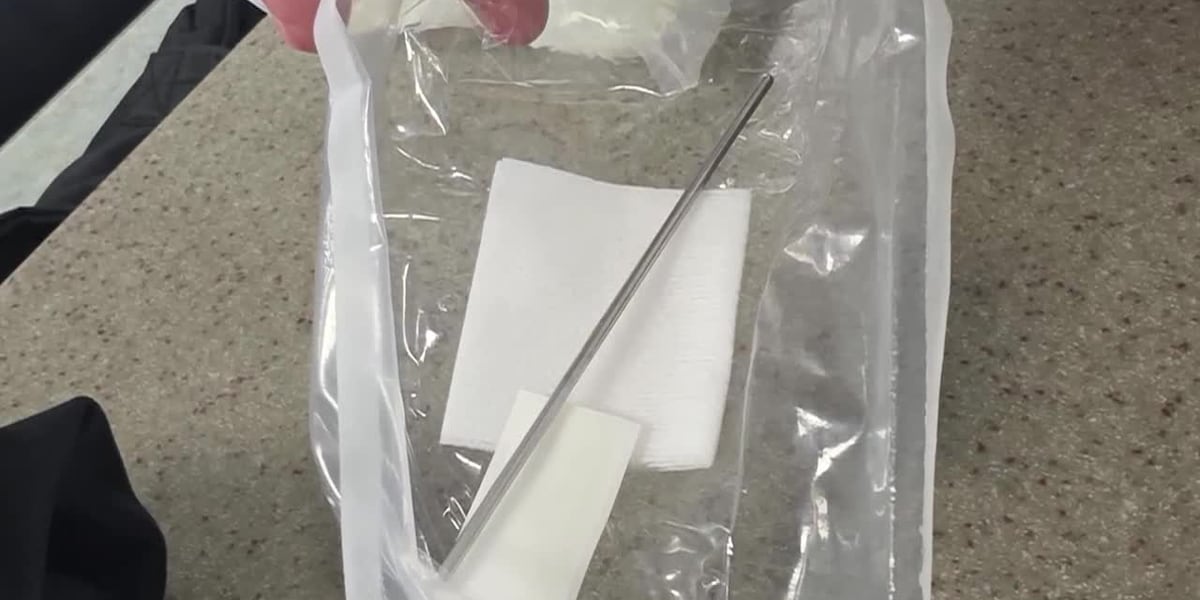
While details regarding the exact spatial dynamics of the classroom remain protected under student privacy laws, investigators have pieced together the immediate catalyst of the injury. Witnesses and subsequent digital footage indicate that several students were engaged in what officials have termed "horseplay." During this unsupervised or under-supervised horseplay, a hair pick—a grooming tool featuring long, rigid metal or heavy-duty plastic prongs—was handled in a manner that proved catastrophic.
Rather than a simple scratch or surface abrasion, the implement struck the victim with enough force to penetrate his thoracic cavity. The hair pick became visibly lodged in his side, directly puncturing his lung.
"It stuck him in his side. It actually punctured his lungs," the boy’s father recounted in an exclusive interview with local media outlets, detailing the sheer shock of realizing how close his son came to a fatal outcome. A punctured lung, clinically known as a pneumothorax, can rapidly lead to respiratory distress, internal bleeding, and cardiac arrest if air or blood builds up in the space between the lung and the chest wall, requiring immediate emergency surgical intervention.
The News Alert and the Agonizing Wait
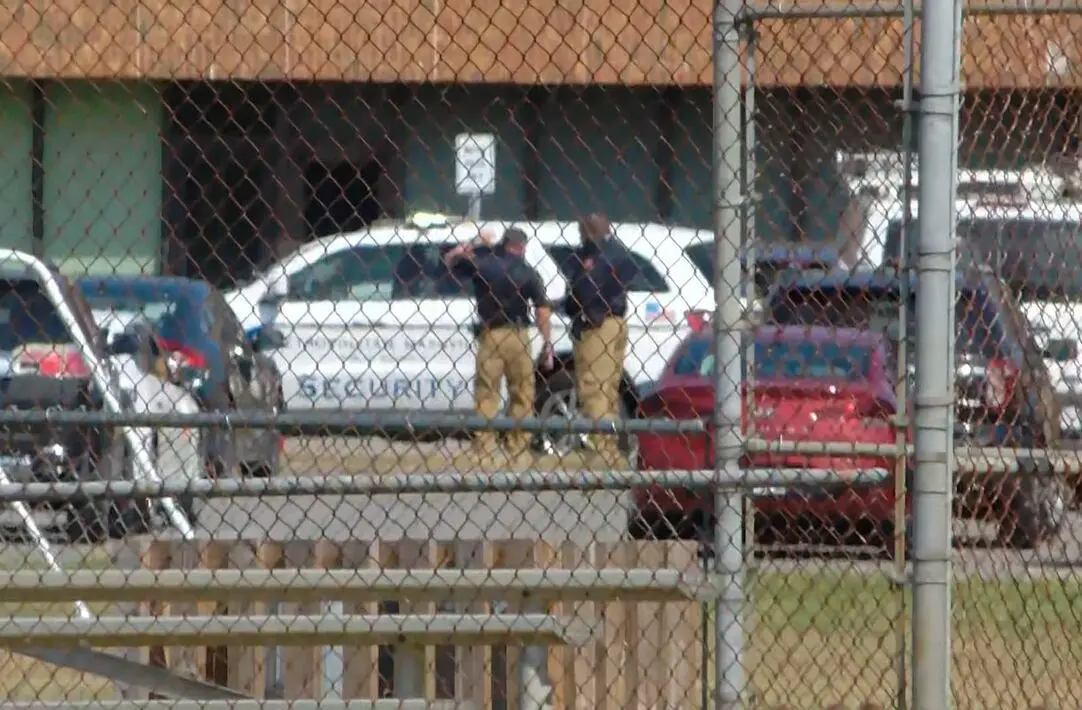
For the victim’s parents, the horror of the event was compounded by a profound breakdown in emergency communication protocols. The father revealed that he did not receive an urgent, direct notification from Whites Creek High School administrators detailing the life-threatening nature of his son’s condition. Instead, his first inkling that something was wrong came from an external source: a breaking news alert broadcast by local station WSMV4 regarding police and emergency vehicle activity at the campus.
Shortly after seeing the news alert, the father received a brief phone call from a school official. However, the information communicated was drastically minimized. The official reportedly described the teenager’s condition merely as a "superficial injury" and stated that he was being transported to a local hospital for evaluation.
"They did not state actually what was happening, and of course, as a parent, I panicked," the father recalled.
Rushing to the hospital in a state of acute anxiety, the parents arrived expecting minor stitches or first-aid treatment. Instead, they were subjected to a grueling, information-free two-hour waiting period. While their son was undergoing emergency medical stabilization and diagnostic imaging to address the collapsed lung, school administrators and medical staff provided virtually no updates. It was only after extensive delays that the true severity of the lung puncture was fully disclosed to the terrified parents.
The Digital Age of Trauma: Social Media, Misinformation, and Voyeurism
As if the physical trauma and the hospital vigil were not enough, the family’s ordeal was thrust into the public arena through the modern scourge of digital voyeurism. While the victim was fighting for his health in a sterile hospital room, a video capturing the exact moment of the stabbing-like impact began circulating wildly across various social media platforms.
The Spread of Digital Misinformation
The rapid dissemination of the video created an immediate "social media storm." Comment sections on platforms like TikTok, Instagram, and X (formerly Twitter) quickly filled with speculative theories, victim-blaming, malicious finger-pointing, and completely fabricated narratives about the root causes of the altercation.
For the victim’s parents, watching their son’s most vulnerable, traumatic moment weaponized for digital clout was an unimaginable cruelty.
"Why would anybody share something so traumatic to kids?" the father asked, voicing a sentiment echoed by child psychologists and digital safety advocates nationwide. The ease with which students capture, edit, and upload physical violence within schools highlights a systemic failure in enforcing mobile device policies and preserving basic human empathy among adolescents.
Institutional Indifference to Cyber-Harassment
Compounding their distress was the perceived passivity of Metro Nashville Public Schools regarding the online circulation of the video. The family expected district leadership to issue a sweeping, stern condemnation of the behavior, enforce strict disciplinary consequences for the students who filmed and distributed the footage, and demand that platforms take the content down. Instead, the family felt that the district treated the digital fallout as a secondary concern, leaving the victims to weather the online storm largely unassisted.
Official Statements and Institutional Responses
In the wake of public outcry and intense media scrutiny, both Metro Nashville Public Schools and local law enforcement have released statements attempting to clarify their positions while navigating complex legal and ethical boundaries regarding student privacy.
The School District’s Perspective
In its official communications, MNPS initially emphasized that the exact circumstances leading up to the incident remained murky, but maintained that early investigative findings pointed away from malicious intent.
"The information we provided yesterday reflected the initial assessment based on what was known shortly after the incident, while the investigation was still underway," MNPS stated. "Given the student-specific nature of the matter and our obligations regarding student privacy, we are not able to provide additional details about the circumstances or any actions involving individual students. We will continue to cooperate with MNPD and follow all applicable legal and disciplinary processes."
District officials stood by their preliminary characterization of the event as "horseplay," arguing that while the outcome was exceptionally dangerous, it lacked the hallmarks of targeted, premeditated school violence. However, this distinction has offered little comfort to the victim’s family, who argue that labeling a punctured lung as mere "horseplay" minimizes the inherent dangers of unsupervised classrooms and deflects institutional responsibility.
Law Enforcement Involvement
The Metro Nashville Police Department launched an immediate inquiry into the incident upon being dispatched to Whites Creek High School on Tuesday morning. Detectives have reviewed the circulating video evidence, interviewed student witnesses, and consulted with school administrators to determine whether criminal charges are warranted. As of the latest updates, the investigation remains active, and authorities are working closely with the District Attorney’s office to evaluate the legal thresholds of negligence and reckless endangerment within a scholastic setting.
Supporting Context & Metrics: The Crisis of School Safety and Classroom Supervision
To understand the broader implications of the Whites Creek High School incident, one must examine the macro-level challenges facing public education systems across Tennessee and the United States. School safety metrics have shifted dramatically over the past decade, expanding beyond traditional concerns of external intruders to encompass internal behavioral crises, peer-on-peer violence, and the pervasive impact of digital technology.
The Statistics of Classroom Disruptions and Student Injuries
According to recent data compiled by the National Center for Education Statistics (NCES) and various state education boards, behavioral incidents categorized as non-compliant or disruptive play have seen a measurable uptick post-pandemic. While major violent crimes on school grounds often dominate media cycles, lower-level altercations that escalate into severe physical trauma—such as accidental or reckless stabbings, falls, and blunt-force impacts—account for a significant share of emergency room visits originating from schools.
| Safety Metric / Indicator | Regional Data (MNPS Context) | National Average / Benchmark |
|---|---|---|
| Average Classroom Student-to-Teacher Ratio | ~1:22 to 1:26 (High School Level) | ~1:18 (Recommended Optimal) |
| Incidents Involving Unsupervised "Horseplay" | Up 14% since 2022 | Up 11% nationwide |
| School District Emergency Communication SLA | Target: Immediate (<30 mins) | Varies widely by district policy |
| Smartphone/Recording Policy Enforcement | Prohibited during instruction (frequently unenforced) | Nationwide policy reform ongoing |
The Supervision Deficit
At the heart of the Whites Creek High School incident lies a fundamental question that the victim’s father has repeatedly posed to district leadership: Where was the teacher?
During standard instructional hours, educators carry a legal duty of care—in loco parentis—to supervise students, maintain order, and intervene promptly when play turns aggressive or hazardous. When students are able to engage in rough physical contact severe enough to weaponize a grooming tool and puncture a vital organ, critical questions naturally arise regarding teacher positioning, classroom management efficacy, and educator workload burnout.
Education labor experts note that chronic teacher shortages in urban school districts across Tennessee have led to larger class sizes, increased educator fatigue, and diminished capacity for continuous active supervision. When a single teacher is tasked with managing upwards of 25 to 30 high school students, maintaining 360-degree situational awareness becomes an insurmountable challenge, creating breeding grounds for dangerous lapses in safety.
Future Outlook: The Fight for Policy Reform
As the victim continues his physical recovery from the collapsed lung—a healing process that involves extensive respiratory therapy, pain management, and emotional counseling—his family is pivoting their pain into purpose. They have made it clear that their primary objective in speaking publicly is not merely to vent grievances, but to catalyze substantive policy reform within Metro Nashville Public Schools.
Demands for Comprehensive Change
The family and their supporters are calling upon the MNPS Board of Education to enact several critical reforms:
- Stricter Classroom Supervision Mandates: Establishing zero-tolerance protocols for unattended or under-supervised instructional environments, alongside increased administrative walkthroughs.
- Overhaul of Emergency Communication Protocols: Implementing an automated, transparent emergency notification system that ensures parents are contacted immediately with accurate, unvarnished information when their child is hospitalized from a campus incident.
- Rigorous Enforcement of Digital Device Policies: Cracking down on the unauthorized recording and uploading of student altercations, with severe disciplinary penalties for individuals who amplify trauma via social media.
- Enhanced Accountability and Transparency: Demanding that school boards abandon defensive public relations postures in favor of open, honest dialogue with affected families regarding internal disciplinary findings.
A Community at a Crossroads
The incident at Whites Creek High School serves as a sobering reminder that the safety of our children depends not only on metal detectors and exterior security guards, but on the day-to-day vigilance, emotional intelligence, and structural integrity maintained within every individual classroom.
For the parents of the injured student, the road ahead is uncertain. Yet, their unwavering resolve to demand accountability ensures that their son’s harrowing ordeal will not be quietly swept under the rug. Instead, it stands as a powerful catalyst demanding that school districts nationwide reevaluate what it truly means to keep students safe—both physically and digitally—while they are under institutional care.
This is a developing story. Stay tuned for further updates as Metro Nashville Public Schools and local law enforcement release additional findings from their ongoing investigations.

0 Comments