
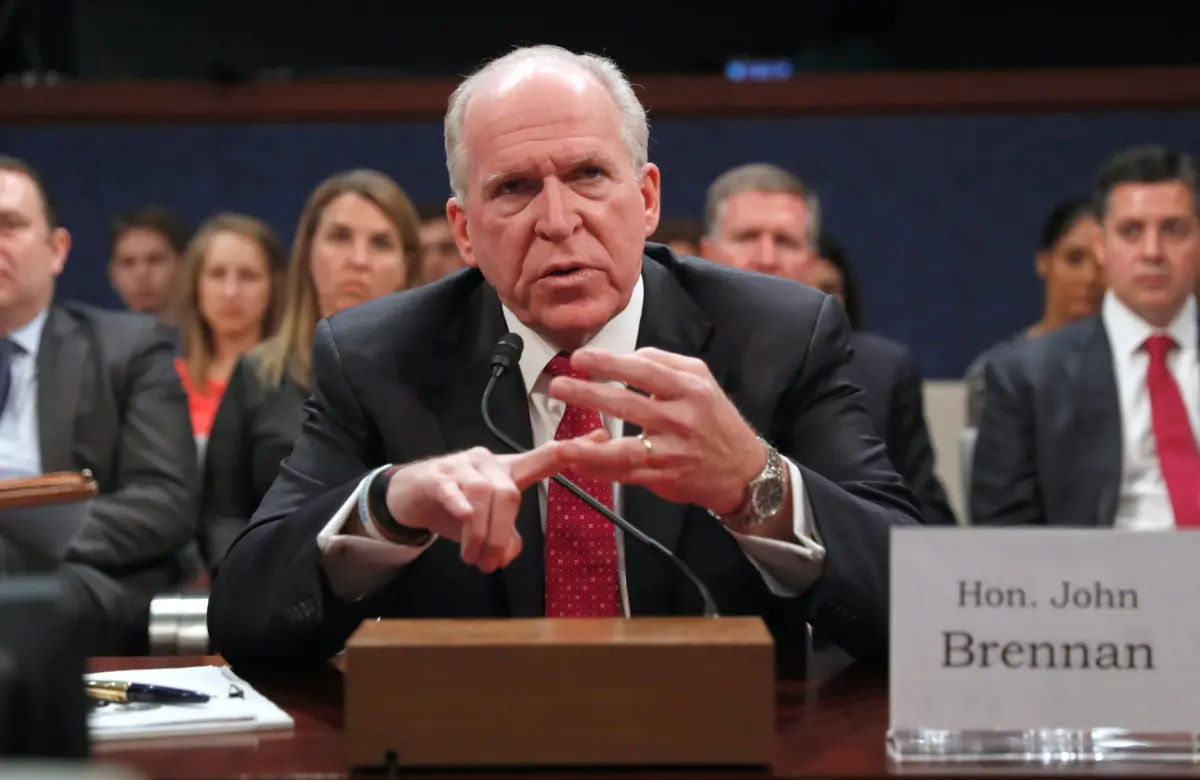

WASHINGTON — In a dramatic escalation of ongoing federal scrutiny involving high-ranking intelligence veterans, former CIA Director John Brennan has been officially subpoenaed to testify before a federal grand jury in Fort Pierce, Florida.
According to a court filing disclosed on Monday by his legal counsel, Ken Wainstein, prosecutors have ordered Brennan to appear on October 15. The summons forms a central piece of a sprawling, controversial Justice Department criminal inquiry investigating whether former law enforcement and intelligence officials conspired to deprive Donald Trump of his civil rights over the course of the past decade.
The sweeping probe targets officials connected to various high-profile investigations into Trump—ranging from the 2016 inquiry into Russian election interference to the more recent federal handling of classified documents recovered at his Mar-a-Lago estate. The subpoena issued to Brennan is part of a recent, coordinated flurry of legal demands that have intensified tensions between the national security establishment and federal investigators.
Executive Overview
The unfolding legal battle marks a profound and contentious chapter in modern American politics, pitting key architects of the U.S. intelligence community against a justice system navigating allegations of political retribution.
At the center of the controversy is a "far-reaching" criminal probe operating out of Florida, which utilizes a loosely defined conspiracy theory asserting that career government officials abused their authority to target Donald Trump politically. Simultaneously, Brennan faces separate, ongoing legal maneuvers in Washington regarding whether he made false statements to Congress during 2023 testimony—allegations that Brennan and his legal team have repeatedly and vehemently denied.
The issuance of the Fort Pierce grand jury subpoena coincides with internal turmoil within the prosecutorial team itself, including the abrupt resignation of the probe’s lead prosecutor, Joe diGenova. Against a backdrop of parallel civil litigation filed by Brennan seeking the preservation of investigative records, the case highlights deep institutional fractures, fueling intense debate over the boundaries of prosecutorial discretion, executive power, and accountability within America’s intelligence apparatus.
Detailed Chronology of Events
The trajectory of the federal investigations surrounding John Brennan has unfolded across multiple jurisdictions, shifting abruptly through administrative changes, withdrawn subpoenas, and high-profile legal filings.
Spring to Summer: The False Statements Probe in Washington
The initial phase of heightened legal pressure on Brennan centered in Washington, D.C., where Department of Justice investigators explored whether the former CIA director lied to Congress during a 2023 appearance.
- The Spring Subpoenas: In the spring, federal prosecutors issued grand jury subpoenas demanding Brennan’s testimony regarding the false statement allegations.
- The Abrupt Reversal: In an unusual procedural pivot, those subpoenas were abruptly withdrawn. Prosecutors instead opted to pursue voluntary interviews with Brennan’s legal team, signaling a brief de-escalation of that specific Washington-based probe.
Mid-September: The Florida Grand Jury Subpoena
The focus shifted sharply southward to Florida as federal prosecutors revived aggressive grand jury tactics under a broader mandate.
- The Disclosure (Monday): Ken Wainstein revealed in a court filing that prosecutors had formally handed him a grand jury subpoena last Thursday.
- The Mandate: The document commands Brennan to appear before a federal grand jury in Fort Pierce, Florida, on October 15. Wainstein was informed that the inquiry examines a sweeping conspiracy theory targeting officials involved in decade-long investigations into Trump.
Parallel Leadership Shakeups and Legal Filings
The delivery of the Florida subpoena occurred on the exact day of a major leadership fracture within the prosecution team.
- Resignation of Joe diGenova: Prosecutor Joe diGenova, who spearheaded the inquiry colloquially known as the "grand conspiracy" investigation, abruptly resigned. Sources familiar with the matter indicated his departure followed mounting displeasure from both the Justice Department and the White House regarding the pace and strategic management of the probe.
- The Kurt Olsen Factor: Following diGenova’s departure, communications with Brennan’s defense team transitioned to Kurt Olsen. Olsen is notable for previously urging the Justice Department in 2020 to validate Trump’s false claims that the presidential election had been stolen.
- Brennan’s Lawsuit in D.C.: Hours after the subpoena was made public, a scheduled court hearing took place in Washington regarding a civil lawsuit filed by Brennan. The former CIA chief is petitioning the court for an order compelling the preservation of all records tied to the investigations against him. Brennan’s attorneys argue that these documents are vital to mounting a robust defense against any potential indictment, specifically under the legal doctrine of vindictive prosecution.
Supporting Context & Metrics
To fully understand the gravity of the Brennan subpoena, it is necessary to examine the broader historical and structural landscape of the federal investigations involving Donald Trump and the intelligence community.
Decade-Long Investigations Framework
The current Florida grand jury probe does not examine a single isolated incident; rather, it attempts to retroactively criminalize a decade of institutional oversight and counterintelligence work. The scope encompasses:
- The 2016 Russia Investigation (Crossfire Hurricane): The FBI’s initial counterintelligence assessment examining links between the Trump 2016 campaign and Russian government interference.
- The Mueller Investigation (2017–2019): Special Counsel Robert Mueller’s probe into Russian interference and potential obstruction of justice.
- The Impeachments and Congressional Oversight: Various congressional investigations led by House and Senate intelligence and judiciary committees.
- The Mar-a-Lago Classified Documents Inquiry: The post-presidential retrieval of classified materials from Trump’s Florida estate, which led to a federal indictment subsequently overseen by Special Counsel Jack Smith.
Key Institutional Players and Legal Metrics
- Jurisdictions Involved: Two primary federal hubs—Washington, D.C. (focusing on potential false statements) and Fort Pierce, Florida (housing the grand conspiracy grand jury).
- Target Status: Brennan remains designated as a target in the Washington-based false statements inquiry, while facing broader grand jury scrutiny in the Florida-based civil rights conspiracy probe.
- Legal Precedents: Vindictive prosecution claims—the foundation of Brennan’s civil preservation lawsuit—historically carry an exceptionally high legal threshold to prove, requiring defendants to demonstrate that a prosecution was initiated out of actual animus or a desire to punish the exercise of constitutional rights.
Official Statements & Legal Arguments
The public dissemination of court filings and resignations has prompted sharp, contrasting statements from the legal teams and institutional stakeholders involved.
Brennan’s Defense Team
Ken Wainstein and Brennan’s broader legal representation have consistently maintained the former director’s absolute innocence, characterizing the ongoing scrutiny as politically motivated retribution.
- Denial of Wrongdoing: Brennan’s attorneys have repeatedly affirmed that his testimony before Congress was entirely truthful and that his official actions as CIA director adhered strictly to the law and standard intelligence community protocols.
- The Push for Preservation: In court papers supporting the D.C. civil lawsuit, Brennan’s legal team emphasized that access to government records is essential to safeguard against politically driven overreach. "Without the preservation and production of these foundational administrative records," a legal filing implies, "defendants targeted by shifting prosecutional theories are stripped of their fundamental ability to test whether an indictment is the product of vindictiveness."
Department of Justice and Administration Silence
The Department of Justice has maintained a cautious public posture.
- Absence of Formal Announcements: The agency has neither publicly confirmed the specific parameters of the Fort Pierce grand jury nor announced a permanent successor to replace Joe diGenova as lead prosecutor.
- Internal Friction: While institutional leadership has avoided public commentary on diGenova’s sudden departure, sources close to the department acknowledge growing internal friction regarding the viability, speed, and evidentiary foundation of the "grand conspiracy" theory being pursued in Florida.
Future Outlook
As the calendar turns toward the October 15 grand jury appearance date, the legal landscape surrounding John Brennan and the broader accountability investigations stands at a volatile crossroads.
Imminent Legal Milestones
- The D.C. Civil Ruling: A federal judge in Washington is expected to rule on Brennan’s motion demanding the comprehensive preservation of investigative records. A favorable ruling could grant his defense crucial discovery tools; a denial would significantly constrain his ability to mount a vindictive prosecution defense.
- The Fort Pierce Grand Jury: Whether Brennan will ultimately appear to testify on October 15—or invoke his constitutional protections against self-incrimination—remains a central question for his legal team. Negotiations between Wainstein and prosecutors could yield modified terms or scheduling adjustments.
- Leadership and Direction of the Probe: With diGenova’s exit and Kurt Olsen stepping into prominent coordination roles, legal analysts will closely monitor whether the Justice Department narrows, expands, or reevaluates the overarching civil rights conspiracy theory.
Broad Implications for National Security and the Rule of Law
The proceedings in Florida and Washington represent a critical test for the American legal and political systems. By intersecting the accountability mechanisms governing former intelligence chiefs with allegations of politically motivated prosecutions, the case establishes a high-stakes precedent.
Whether the inquiry results in formal indictments or dissolves under the weight of evidentiary and administrative scrutiny, the investigation into John Brennan will undeniably leave a lasting imprint on the relationship between future administrations, the Department of Justice, and the nation’s intelligence apparatus.

0 Comments