

Executive Overview
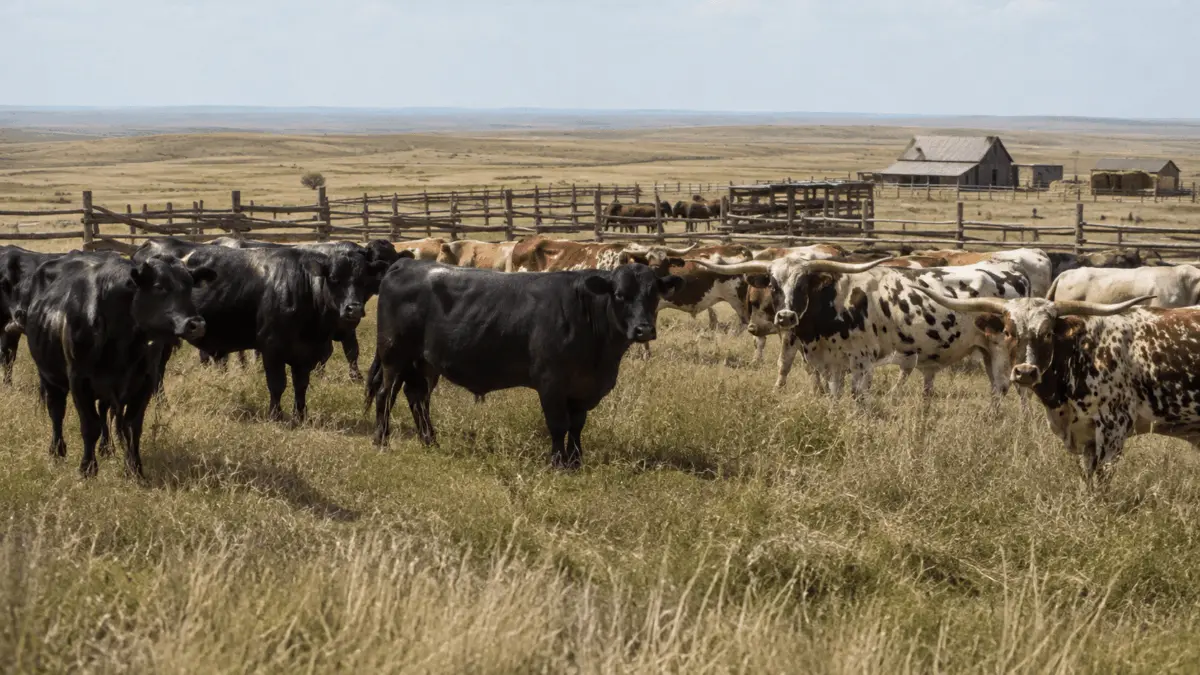
In the annals of American agriculture, few moments match the profound, long-term economic and biological impact of a single shipment of livestock arriving in Victoria, Kansas, in May 1873. Spearheaded by Scottish visionary, financier, and entrepreneur George Grant, this importation consisted of just four black, naturally hornless cattle: Aberdeen-Angus bulls. At the time, the vast, unforgiving expanses of the American Great Plains were dominated by the hardy yet rangy Texas Longhorn and the heavy-set, traditionally popular Shorthorn breeds. To many contemporary cattlemen, Grant’s unusual imports looked like biological oddities—curiosities to be viewed with skepticism, if not outright derision.
Yet, these four bulls carried a genetic blueprint that would fundamentally alter the trajectory of the United States beef industry. When crossed with native Longhorn cows, the resulting progeny demonstrated extraordinary resilience against the harsh prairie winters, superior feed conversion, and impressive spring weight gains. Although Grant’s utopian vision of an exclusive, wealthy British colony in Ellis County, Kansas, ultimately faltered—and Grant himself passed away in relative obscurity just five years later in 1878—his agricultural contribution proved immortal.
Today, the black-hided, polled phenotype stands as the gold standard of the global beef market. This comprehensive retrospective examines the historical convergence of Scottish tenacity and American frontier determination, tracing the journey of the four bulls that built an agricultural empire.
Detailed Chronology: The Genesis of American Angus
1873: The Transatlantic Voyage and Arrival in Victoria
The saga of American Angus began with a dream of colonization and high-end livestock breeding. George Grant, a wealthy Scottish merchant who had made a fortune in London silk, envisioned a utopian agricultural settlement on the high plains of Kansas. In 1873, Grant purchased tens of thousands of acres of land along the Kansas Pacific Railroad in Ellis County and founded the town of Victoria, naming it after the British monarch.
Accompanying Grant and his fellow British settlers across the Atlantic were several prized livestock specimens sourced directly from the rugged hills of Scotland. Among these were four black, polled (hornless) bulls. While Grant’s broader ambitions included establishing a sprawling community of aristocratic British stock-raisers, it was this small quartet of beef bulls that would secure his place in history. Arriving in May 1873, the animals stepped off the railcars and onto a prairie landscape that was wild, unpredictable, and entirely foreign to European livestock.
1873–1878: The First Crosses and Frontier Trials
The initial reception of the Angus bulls by established American stockmen was far from celebratory. The dominant cattle of the era were the long-horned, semi-feral Texas Longhorn—celebrated for its ability to endure long cattle drives and harsh trail conditions—and the Shorthorn, which was favored for its size and early maturity. By comparison, Grant’s smooth-coated, solid black, hornless bulls appeared delicate and unusual. Some local ranchers dismissed them as "freaks of nature."
Undaunted, Grant put his vision to the test. He turned the four bulls out with native Texas Longhorn cows. The results of this experimental crossbreeding quickly silenced the skeptics. The half-blood calves inherited the hardiness of their mothers combined with the blocky conformation, early maturity, and aggressive foraging ability of their Scottish sires.
Crucially, the crossbred calves proved exceptionally hardy. Historic accounts from the era, later validated and archived by the American Angus Association, noted that Grant’s crossbred calves survived punishing Midwestern winter blizzards far better than many native or competing breeds. When spring arrived, these animals demonstrated superior weight retention and growth rates, offering hard, empirical proof of hybrid vigor and genetic superiority.
Late 1873: The Kansas City Exhibition
Seeking to educate the broader agricultural community, Grant transported two of his Angus bulls to the Kansas City Livestock Exposition later in 1873. Exhibited alongside traditional breeds, the bulls generated intense curiosity. While crowds gathered to gawk at their solid black coloring and lack of horns, discerning livestock judges and forward-thinking producers began to look past the novelty. They recognized that the polled trait eliminated the costly and stressful practice of dehorning, while the uniform black coats signaled a dominant genetic marker that could bring uniformity to chaotic commercial herds.
1878: The Passing of a Pioneer
George Grant’s life on the Kansas prairie was heartbreakingly brief. Worn down by the financial pressures of maintaining the Victoria colony, the harsh realities of frontier business, and failing health, Grant passed away in 1878 at the age of 56.
Within years of his death, many of the British settlers who had accompanied him to Victoria abandoned the harsh climate and returned to the British Isles. The grand, aristocratic livestock empire Grant envisioned on the Kansas plains never fully materialized in the exact form he planned. However, the biological seed he had planted had already taken deep root. The commercial success of his crossbreeding trials had sparked interest among neighboring ranchers, setting off a wave of independent importations that would swell the ranks of Angus cattle across the North American continent.
1883: Institutionalization and the Breed Association
As the popularity of the breed surged, the need for a formal registry and standardized pedigree tracking became paramount. In November 1883, visionary breeders and importers gathered in Chicago, Illinois, to establish the American Aberdeen-Angus Breeders’ Association (later shortened to the American Angus Association).
This organization provided the rigorous record-keeping, performance testing, and promotional framework necessary to transform a regional curiosity into a dominant national powerhouse. By protecting the purity of the lineage and encouraging selective breeding for carcass quality, fertility, and structural soundness, the association ensured that the legacy of Grant’s four original bulls would be systematically multiplied across millions of commercial cattle.
Supporting Context & Metrics: The Evolution of a Super-Breed
To fully comprehend the magnitude of George Grant’s 1873 importation, one must analyze the structural economics and biological metrics of the nineteenth-century beef industry compared to modern agricultural science.
Biological Advantages of the Angus Phenotype
The four bulls introduced several distinct genetic traits that revolutionized herd management:
- The Polled Trait: The absence of horns (polled) is a simple dominant genetic trait. When horned cattle (like Longhorns or Shorthorns) are crossed with a homozygous polled Angus, the resulting offspring are overwhelmingly hornless. This eliminated the danger of cattle goring one another in transit or feedlots, reduced bruising on carcasses, and saved producers the labor-intensive chore of physical dehorning.
- Color Dominance: The solid black coat color acts as a dominant genetic marker. In commercial crossbreeding, black calves became synonymous with uniformity, a trait highly prized by feedlot operators and meatpackers seeking consistent lot performance.
- Carcass Quality and Marbling: Scottish Angus cattle were bred for generations on nutrient-dense pastures to produce tender, heavily marbled beef. When introduced to American herds, they rapidly injected superior intramuscular fat distribution into livestock populations that had previously produced lean, tougher meat.
Economic Impact and Market Dominance Today
What began as a risky gamble with four imported bulls has evolved into the foundational bedrock of the multi-billion-dollar U.S. beef industry. According to industry data compiled by the American Angus Association and the United States Department of Agriculture (USDA):
- Market Share: Today, Angus and Angus-cross cattle account for the vast majority of the commercial beef cattle population in the United States. More than 70% of all commercial cows in the U.S. carry significant Angus influence.
- The Certified Angus Beef® (CAB) Phenomenon: Launched in 1978 by the American Angus Association, CAB established the world’s first brand-name beef specification program. To qualify for the CAB label, carcasses must meet 10 strict scientific standards regarding marbling, maturity, and sizing. Today, CAB is a global economic driver, generating billions of dollars in retail and foodservice sales annually and returning substantial premiums to producers who invest in high-end Angus genetics.
Official Perspectives & Historical Analysis
Agricultural historians and modern livestock geneticists frequently reflect on the disproportionate impact of George Grant’s enterprise. Unlike government-sponsored scientific initiatives or massive corporate investments, the birth of American Angus was driven by private, individual passion.
Dr. Arlo Johnson, an agricultural historian specializing in nineteenth-century Great Plains development, notes the irony of Grant’s legacy:
"George Grant wanted to build a cultural enclave, a slice of Victorian high society transplanted to the windswept plains of Ellis County, Kansas. That utopian vision largely dissolved within a decade. Yet, by sheer intuition and an eye for quality livestock, he accomplished something far more enduring. He smuggled the biological future of American protein in the hold of a steamship and turned them loose on the grass. The community he built vanished, but the cattle stayed, multiplied, and conquered the continent."
Similarly, modern livestock geneticists emphasize the foresight embedded in the selection of those original Scottish sires. By choosing cattle adapted to the damp, cool, high-roughage environment of northeast Scotland, Grant inadvertently secured animals whose metabolic efficiency and foraging instincts translated seamlessly to the expansive, challenging terrain of the American West.
Future Outlook: The Next Century of Angus Genetics
As the global agricultural sector faces unprecedented demands to increase protein production while simultaneously reducing environmental footprints, the descendants of George Grant’s four original bulls continue to lead the charge through advanced biotechnology.
Genomic Selection and Precision Breeding
Modern Angus breeding has evolved far beyond visual appraisal and basic pedigree recording. Today’s producers utilize high-density DNA testing (genomic enhancement) to evaluate replacement heifers and herd sires for complex economic traits long before the animals ever enter the breeding pasture. EPDs (Expected Progeny Differences) now incorporate genomic data to provide hyper-accurate predictions for traits such as:
- Feed efficiency and residual feed intake (RFI), helping producers lower input costs and reduce methane emissions per pound of beef produced.
- Calving ease and maternal longevity, ensuring herd sustainability across diverse geographical climates.
- Advanced carcass ultrasound and ribeye area optimization, maximizing lean meat yield without sacrificing the legendary marbling that defined the breed in Scotland.
Climate Resilience and Adaptability
As climate variability presents new challenges to livestock producers—ranging from severe droughts in the American Southwest to unpredictable weather patterns across the Great Plains—the inherent hardiness bred into Angus cattle over 150 years ago remains a critical asset. Breeders continue to select for structural soundness, heat tolerance, and foraging versatility, ensuring that the breed can thrive on marginal lands where crop farming is impossible.
Conclusion: A Legacy Carved in Bone and Muscle
When George Grant unloaded his four black bulls in Victoria, Kansas, in the spring of 1873, he could not have foreseen that his name would become synonymous with the transformation of global protein markets. His grand colonial experiment may have faded into the prairie wind, but the genetics he introduced became an indomitable force in American agriculture.
From four skeptical curiosities viewed as prairie "freaks" to the undisputed king of the cattle industry, the Aberdeen-Angus stands as a testament to the power of visionary importation. More than a century and a half later, every premium steak bearing the hallmark of rich marbling and deep flavor traces its lineage back to those four trailblazing bulls and the Scottish pioneer who dared to dream on the Kansas prairie.

0 Comments