


By Agribusiness & Agricultural Entomology Desk
Published: September 2026
Executive Overview
Georgia’s agricultural sector, a vital engine of the state’s economy, is once again casting a wary eye toward a tiny yet formidable pest: the cotton jassid. Speaking recently at the annual University of Georgia (UGA) Cotton and Peanut Research Field Day, UGA Extension Cotton Entomologist Dr. Phillip Roberts delivered a crucial mid-season update to growers, agronomists, and industry stakeholders. While the statewide impact of the jassid has remained relatively subdued for much of the current growing season compared to the severe outbreaks experienced in 2025, recent field observations indicate a sharp, concerning uptick in population densities.
The resurgence has prompted agricultural extension services to issue immediate warnings, particularly for farmers managing fields in southeastern Georgia, which has once again emerged as the primary epicenter for the pest’s activity. Although proactive management strategies have kept widespread crop devastation at bay thus far, entomologists emphasize that the margin for error is razor-thin. With the approaching harvest season triggering defoliation processes across early-planted crops, jassids are beginning to migrate, threatening to concentrate their feeding pressure on vulnerable, late-planted acreage.
This report provides an in-depth look at the current jassid threat, detailing the biology of the pest, the economic risks to Georgia’s cotton harvest, official treatment thresholds, and strategic advice for producers navigating the remainder of the 2026 season.
Detailed Chronology: The Evolution of the Jassid Threat in Georgia
To understand the gravity of the current agricultural advisory, one must examine the timeline of how the cotton jassid established itself as a prominent economic concern for southeastern producers.
The 2025 Outbreak: A Wake-Up Call
Prior to the 2025 growing season, cotton jassids—frequently recognized in global agricultural entomology for their destructive potential—were not considered a primary, frontline target for routine chemical applications in the United States Cotton Belt. However, the 2025 season altered that paradigm. The pest swept across large swaths of Georgia’s cotton-producing belt, inflicting severe, highly visible damage to crops.
Growers caught off-guard by the rapid proliferation of the insect faced complex management challenges. The sheer speed at which populations expanded overwhelmed traditional scouting routines, resulting in significant foliar degradation, reduced photosynthetic capacity, and, consequently, yield penalties. The agricultural community spent the subsequent off-season analyzing data, reviewing pesticide efficacy trials, and recalibrating economic injury levels.
The 2026 Season: Relative Lull Followed by a Late-Summer Surge
As the 2026 cropping cycle commenced, early-season indicators brought a measure of relief. For the spring and early summer months, jassid pressures remained minimal across most of the state’s traditional agricultural regions. Producers who had braced for a repeat of the previous year’s trials initially reported clean fields and low insect counts.
However, the situation shifted dynamically during late August and early September. As Dr. Roberts noted during the UGA Research Field Day, field monitors began detecting a sudden, aggressive spike in insect numbers.
"The main thing about jassid is we are seeing numbers pick up in the last couple weeks, but we’re in much better shape this year than we were a year ago, and that’s good," Roberts told attendees. "We are actively treating in some areas, and it’s somewhat scattered, but southeast Georgia, again, seems to be the hot area."
This localized resurgence highlights the unpredictable nature of migratory and sporadic agricultural pests, proving that a quiet start to a season does not guarantee immunity from late-stage infestations.
Supporting Context & Metrics: Understanding the Pest and Economic Stakes
To effectively manage the cotton jassid (Amrasca species and related leafhopper complexes), producers must comprehend both the biological mechanics of the insect and the economic consequences of unmitigated feeding.
Biology and Symptomology
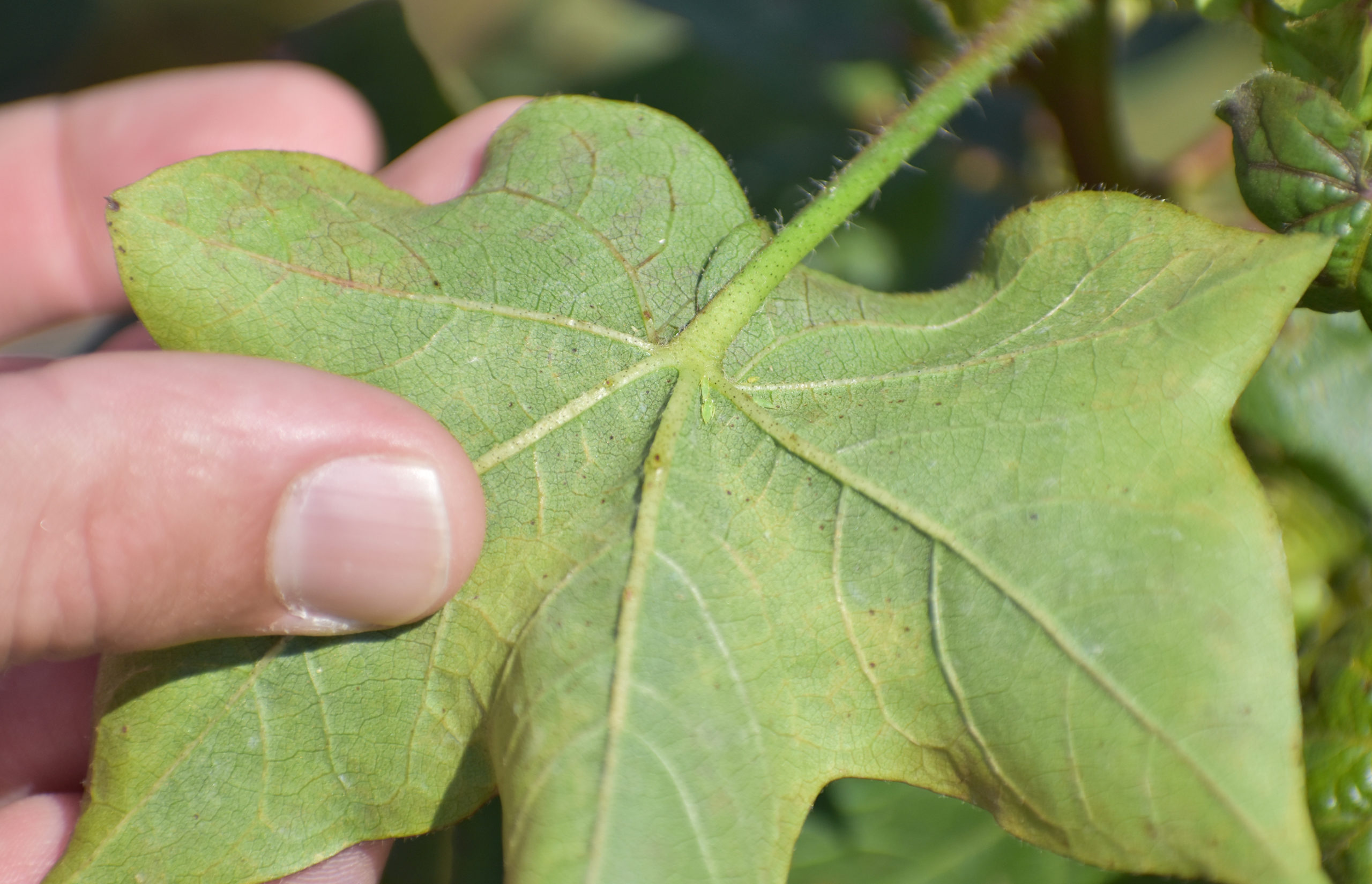
The cotton jassid is an exceptionally small insect, making visual confirmation of the pest itself difficult during the early stages of an infestation. More often than not, agronomists will spot the physical damage inflicted upon the plant long before they sight the actual organism.
Jassids are piercing-sucking insects that target the underside of cotton leaves. Using specialized mouthparts, they puncture plant cells and extract vital cellular contents, disrupting the plant’s vascular and metabolic processes.

- Phase 1 (Initial Damage): The earliest visible symptom of jassid feeding is a subtle yellowing of the leaf margins and interveinal spaces.
- Phase 2 (Progression): As feeding continues and salivary toxins induce cellular breakdown, the leaves progress from yellow to a distinct reddening.
- Phase 3 (Advanced Necrosis): Eventually, the leaves take on a characteristic "bronzed" appearance. Severe infestations lead to premature leaf senescence, defoliation, and a severe reduction in the canopy’s ability to capture sunlight for boll development.
Economic Stakes for Georgia Agriculture
Cotton remains a cornerstone of Georgia’s agricultural portfolio, ranking among the top state commodities in total economic value. Yield losses driven by uncontrolled pest outbreaks translate directly into substantial financial distress for family farms and corporate agricultural enterprises alike.
Because jassids attack the functional leaf area of the plant—the very mechanism responsible for carbohydrate production and boll filling—uncontrolled populations can stunt fiber development, reduce micronaire quality, and diminish overall lint yields. The economic threshold established by extension entomologists is designed precisely to intercept the pest before these physiological tipping points are reached.
Official Guidelines and Expert Recommendations
With populations climbing in localized pockets, Dr. Roberts and the UGA Extension team have reinforced the absolute necessity of rigorous, disciplined field scouting.
Scouting Protocol and Action Thresholds
Farmers and pest control advisors (PCAs) cannot afford to rely on casual, drive-by field evaluations. A systematic approach is mandatory.
- Target Zone: Scouts must inspect the fourth leaf down from the terminal of the cotton plant. This specific stratum of the canopy typically harbors active feeding populations and provides the most reliable index of overall infestation severity.
- Action Threshold: The established economic threshold for cotton jassids is an average of one jassid (adult or nymph) per leaf.
- Timely Intervention: "If you average one jassid adult or one jassid nymph, we need to treat in a timely manner," Roberts stressed. Delays in chemical application once this threshold is breached can allow populations to compound exponentially, rendering subsequent treatments far less effective.
Selecting and Applying Control Measures
When thresholds are crossed, producers must consult current UGA Pest Management Handbooks to select insecticides with proven efficacy against piercing-sucking pests. Because jassid populations can rebound rapidly if residual control fails, application coverage must be thorough. Experts advise ensuring optimal spray calibration and water volumes to penetrate the mid-to-upper canopy and reach the undersides of leaves where jassids reside.
Future Outlook: The Critical Window Ahead
As the 2026 growing season enters its homestretch, the focus of entomologists and growers shifts from broad-scale monitoring to managing the complex dynamics of crop maturation, defoliation, and late-season pest concentration.
The Defoliation Migration Threat
A primary concern moving forward is the impending harvest schedule. As farmers initiate the chemical defoliation process on early-planted cotton fields, the habitat for resident jassid populations rapidly deteriorates. Stripped of their food sources and shelter in mature fields, these insects will not simply vanish; they will actively seek out alternative green vegetation.

"One of the things moving forward I anticipate we’re going to see, as we start defoliating some cotton, we’re going to see these jassids move out of that older cotton and they’re going to concentrate on some of our later planted cotton," Roberts warned.
This behavioral pattern poses an acute hazard to producers with delayed maturity or late-planted crops. These fields, which may already be carrying heavy fruit loads as they approach cutout, will become prime targets for concentrated, high-density pest invasions.
On-Station Observations and Statewide Preparedness
UGA research facilities are already documenting this exact migratory phenomenon. Dr. Roberts pointed out that researchers at the Tifton experiment station are observing jassids shifting from maturing plots to greener trials—a trend he fully expects to replicate across commercial acreage throughout the state.
"We’re seeing that on the station here in Tifton, and I expect to see that across the state," Roberts said. "We need to really keep looking and be prepared. You cannot miss a spray on this insect."
Conclusion: Vigilance as the Ultimate Defense
The cotton jassid has firmly established itself as a pest that demands the continuous attention of Georgia growers. While the overall threat landscape for 2026 remains more manageable than the widespread challenges of 2025, localized spikes and the looming danger of harvest-driven pest migration mean complacency is not an option.
By maintaining strict scouting regimens, adhering to the one-per-leaf threshold, and executing timely, precise insecticide applications, Georgia cotton producers can safeguard their investments and protect their yields through the final weeks of the season.

0 Comments