

Executive Overview
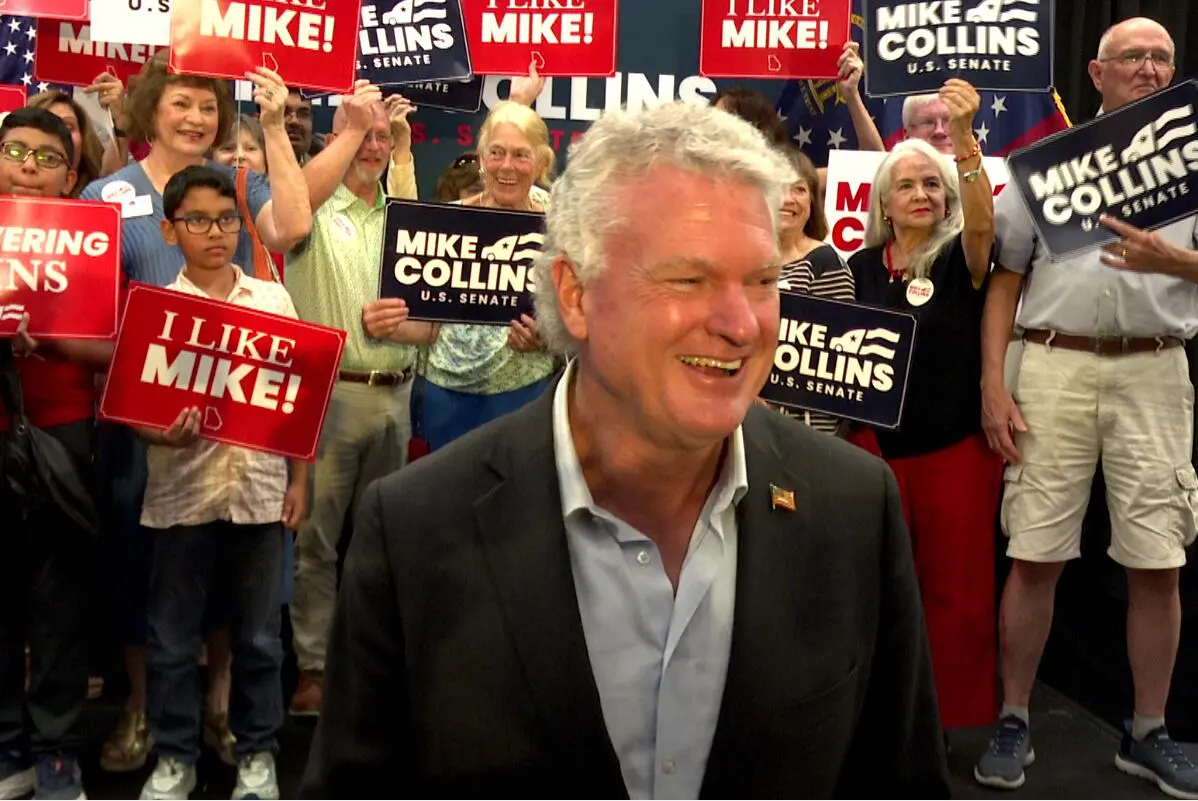
ATLANTA, Ga. — With the midterms entering their critical final stretch, the political landscape in Georgia shifted dramatically Monday morning as Governor Brian Kemp officially endorsed U.S. Representative Mike Collins in his high-stakes campaign to unseat Democratic incumbent Senator Jon Ossoff. The endorsement, announced via social media and rapidly reverberating through national and state political circles, delivers a unifying boost to the Republican ticket less than two months before Election Day.
The alliance between Kemp and Collins caps off months of intra-party realignment following a grueling Republican primary season. It solidifies the state GOP’s front against a well-funded Democratic incumbent who has commanded a massive financial advantage. The race, widely viewed as a battleground contest that could tip the balance of power in the U.S. Senate, has drawn intense national attention. Both campaigns are ramping up ad spending, ground game operations, and high-profile messaging.
As the countdown to November accelerates, the rhetoric between the campaigns has reached a fever pitch. Ossoff’s campaign launched a blistering critique following Kemp’s announcement, highlighting past primary divisions and casting a sharp spotlight on the ideological fault lines of the race. Against this backdrop of escalating tensions, voters look toward an upcoming statewide televised debate as a pivotal moment that could define the final weeks of the campaign.
Detailed Chronology: From Primary Battles to the General Election Trail
The road to the current general election matchup has been marked by significant political maneuvering, high-stakes conventions, and a crowded primary field that tested the unity of the Georgia Republican Party.
The GOP Primary and National Recruitment
Earlier this year, national Republican powerbrokers engaged in extensive efforts to recruit Governor Kemp into the 2026 Senate race, viewing the popular two-term governor as their strongest potential candidate to challenge Senator Ossoff. However, Kemp ultimately declined to enter the federal race, leaving an open field for conservative hopefuls.
U.S. Representative Mike Collins ultimately navigated a contentious Republican primary, defeating fellow U.S. Representative Buddy Carter and political newcomer Derek Dooley. During the primary contest, regional dynamics and differing endorsements—including noted alignment between some party factions and primary opponents—created temporary friction within the state GOP. However, Monday’s endorsement by Governor Kemp signals an intentional consolidation of the party behind Collins as the general election approaches.
The Dallas National Convention
Last week, the national spotlight shifted to Dallas, Texas, where President Donald Trump spearheaded a rare and unconventional midterm Republican national convention. In a sign of his growing stature within the national party apparatus, Representative Collins delivered a high-profile, prime-time speech at the event. The convention served as a rallying point for conservative candidates nationwide, reinforcing messaging centered on economic nationalism, border security, and opposition to federal overreach.
Collins’s appearance in Dallas underscored his alignment with the populist wing of the Republican Party, while Monday’s endorsement from Kemp bridges that wing with the state’s establishment conservative base—a combination state strategists view as essential for statewide victory in Georgia.
The Countdown to Election Day
With fewer than two months remaining before voters cast their ballots, the cadence of the campaign has intensified. Both candidates are locked in a relentless schedule of public appearances, fundraising drives, and media blitzes. The race has transformed into a referendum on governance, economic policy, and representation, drawing millions of dollars in outside spending from political action committees and national party organizations.
Supporting Context & Metrics: The Financial and Strategic Landscape
Georgia has firmly established itself at the epicenter of American politics, serving as a laboratory for modern electoral strategy, voter mobilization, and media spending.
Financial Disparities and Campaign Operations
Senator Jon Ossoff entered the 2026 midterm cycle with a formidable campaign war chest, the result of robust national fundraising efforts and sustained small-dollar contributions. This financial cushion has allowed the incumbent Democrat to outspend Collins significantly on television and digital advertising, as well as to build an expansive ground game operations network across both urban centers and rural counties.
Conversely, Collins’s campaign has leaned heavily on grassroots enthusiasm, high-profile conservative endorsements, and alignment with national legislative agendas to amplify its message. While trailing in raw campaign cash-on-hand compared to Ossoff, Collins’s recent integration with state-level Republican infrastructure—accelerated by Kemp’s endorsement—is designed to close the organizational gap in the final weeks.
The Demographic and Geographic Battleground
The Senate contest reflects Georgia’s broader identity as a fiercely contested purple state. The outcome will likely hinge on turnout dynamics in several key areas:
- Metro Atlanta Suburbs: Rapidly diversifying counties surrounding Atlanta remain critical battlegrounds where moderate suburban voters could sway the election.
- Rural Georgia: Strongholds of conservative support where turnout must remain exceptionally high for Republicans to offset Democratic margins in urban centers.
- Mid-Sized Media Markets: Cities like Savannah, Augusta, Macon, and Columbus, where local advertising and grassroots engagement will play an oversized role in capturing undecided voters.
Official Statements and Political Reactions
The endorsement announcement prompted immediate, sharp reactions from both camps, illuminating the stark ideological divide defining the race.
Representative Mike Collins
In his social media announcement releasing the endorsement, Collins praised Governor Kemp’s executive leadership and framed the upcoming election as a vital defense against progressive policies.
“Governor Kemp has never been afraid of a tough fight, and Georgia is stronger today because he’s been willing to take them on,” Collins wrote. “I’m grateful to have him standing with me to take back Georgia’s Senate seat, stand up to the far-left agenda, and defeat Jon Ossoff this November.”
Governor Brian Kemp
Kemp emphasized Collins’s business background and legislative track record, pointing to shared goals for the state’s economic future and family welfare.
“Mike Collins and I share a commitment to making Georgia an even better place to live, work, and raise a family,” Kemp stated. “Mike has delivered results as a businessman and commonsense leader in Washington, and that’s what we need in our next senator.”
Senator Jon Ossoff’s Campaign
The response from the Ossoff campaign was swift and uncompromising. Campaign representatives pointed to the contentious Republican primary dynamics—specifically noting Kemp’s past support for primary rival Derek Dooley—to question the sincerity and timing of the unity display.
In a pointed statement released shortly after the endorsement, the Ossoff campaign remarked:
“There’s a reason Kemp worked so hard to defeat bigot Mike Collins in the GOP primary and waited to endorse the congressman until less than two months from Election Day, and it’s that Collins, who’s only a congressman because his daddy was a congressman, is surrounded at work and at home by neo-Nazis and white nationalists.”
The aggressive counter-punch highlights the intensely personal and polarized nature of the campaign, setting a combative tone for the remaining weeks before the electorate decides.
Future Outlook: The Oct. 8 Debate and Path Forward
As the rhetoric sharpens and campaign spending reaches unprecedented levels, all eyes are now fixed on the upcoming statewide debate as the definitive inflection point of the cycle.
The Atlanta News First Statewide Debate
Senator Ossoff and Representative Collins have officially accepted invitations to participate in an exclusive, live debate scheduled for Thursday, October 8, 2026.
- Broadcasting: Hosted and produced by Atlanta News First, the debate will be broadcast statewide across all Gray Media television stations in every Georgia market, ensuring that voters from Rabun County to the coastal plains have direct access to the proceedings.
- Format & Moderation: The event will be moderated by Atlanta News First anchor Rick Folbaum. It will follow a traditional, rigorous format featuring a panel of professional journalists questioning the candidates on the critical domestic, economic, and foreign policy issues facing both Georgia and the nation.
Deciding the Senate Balance
Political analysts widely agree that the October 8 debate could serve as the single most important platform for undecided and independent voters to evaluate the candidates side-by-side. With control of the United States Senate potentially hanging in the balance, Georgia’s voters once again find themselves at the center of the national political universe.
As mail-in voting approaches and campaign ads flood the airwaves, the race between Jon Ossoff and Mike Collins stands as a testament to the high-stakes reality of modern American democracy—where every endorsement, dollar, and debate performance carries monumental weight.

0 Comments