

Executive Overview
In an era defined by global polarization, armed conflict, and historical reckoning, the written word remains one of humanity’s most resilient instruments for empathy. This fundamental truth was underscored with the announcement of the 2026 Dayton Literary Peace Prizes, a distinguished literary awards program that honors authors whose works champion peace, social justice, and global understanding.
This year’s top honors reflect the profound complexities of survival, historical trauma, and resilience across vastly different geographies and epochs. Sam Wachman claimed the fiction prize for his searing debut novel, The Sunflower Boys, which tracks the harrowing coming-of-age journey of two brothers navigating the devastation of wartime Ukraine. In the nonfiction category, veteran journalist Kevin Sack earned the top prize for Mother Emanuel: Two Centuries of Race, Resistance, and Forgiveness in One Charleston Church, a sweeping and deeply reported examination of the historic South Carolina institution that endured slavery, the Civil Rights Movement, and the tragic 2015 racially motivated mass shooting.
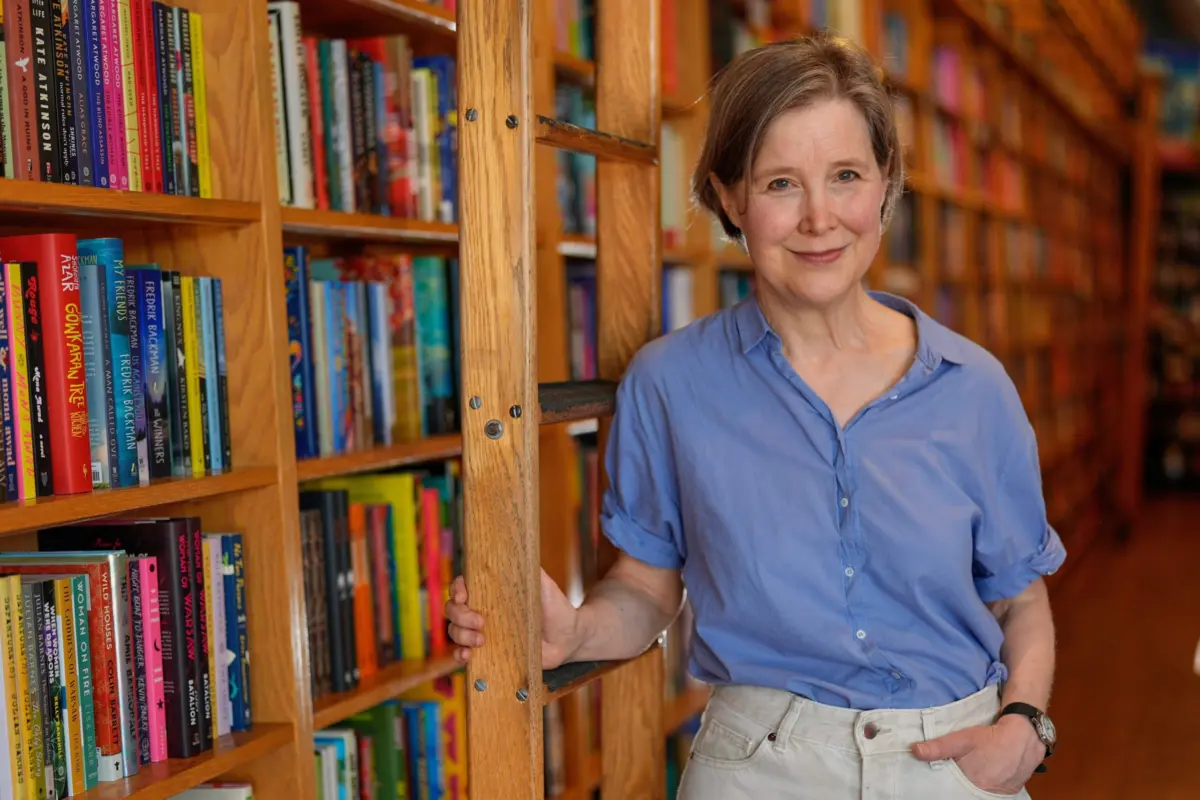
Complementing these major category winners, the Dayton Foundation previously announced that celebrated Bel Canto novelist Ann Patchett will receive this year’s Ambassador Richard C. Holbrooke Distinguished Achievement Award, cementing her legacy as a titan of contemporary American literature. Furthermore, the competition recognized vital runner-up voices: Charlotte McConaghy’s speculative exploration Wild Dark Shore in fiction, and Eve L. Ewing’s incisive sociological study Original Sins: The (Mis)education of Black and Native Children and the Construction of American Racism in nonfiction.
Established in 2006, the Dayton Literary Peace Prizes grew out of the legacy of the 1995 Dayton Peace Accords, which ended the war in Bosnia. Two decades later, the awards continue to reward literature that bridges cultural divides. As Executive Director Nicholas A. Raines noted, these works arrive at a critical juncture, offering a beacon of hope and understanding in a world where peace frequently feels increasingly elusive.
Detailed Chronology: From the Dayton Peace Accords to the 2026 Gala
The institutional genesis of the Dayton Literary Peace Prize is inextricably linked to diplomatic history. To understand the weight and purpose of the awards, one must trace a trajectory spanning three decades of conflict resolution, cultural programming, and literary evolution.
November 1995: The Dayton Peace Accords
At the Wright-Patterson Air Force Base near Dayton, Ohio, international leaders negotiated the General Framework Agreement for Peace in Bosnia and Herzegovina—commonly known as the Dayton Accords. The treaty successfully halted the bloody Bosnian War, demonstrating the profound capacity of dialogue, diplomacy, and perseverance to overcome seemingly intractable violence.
2006: Inception of the Literary Prize
Seeking to anchor Dayton’s identity not only in diplomatic history but in the ongoing cultural pursuit of global harmony, local leaders and visionaries established the Dayton Literary Peace Prize. Conceived as the first and only annual U.S. national literary award recognizing the power of the written word to foster peace, the prize sought to honor authors who illuminate the human cost of conflict and the structural roots of injustice. Early ceremonies established a high bar, honoring canonical figures and setting a tone of rigorous intellectual and moral engagement.
The Evolution of the Prize and Past Laureates
Over the ensuing two decades, the prize expanded its scope while maintaining its core mission. It has recognized masters of fiction and nonfiction alike, drawing critical acclaim for identifying books that later shape public discourse. Past laureates read like a pantheon of contemporary conscience, including celebrated authors such as:
- Ta-Nehisi Coates, for his groundbreaking explorations of systemic racism and historical memory.
- Alice Hoffman, whose lyrical prose often grapples with historical trauma, survival, and the Holocaust.
- Junot Díaz, renowned for chronicling immigrant identity, diaspora, and authoritarianism.
The 2026 Cycle
The 2026 award cycle kicked off with intense deliberation among a panel of judges tasked with evaluating hundreds of submissions. The process culminated in the selection of a slate that addresses urgent contemporary crises—from the front lines of modern European warfare to the deep historical roots of racial violence in the American South.
- The Lifetime Achievement Announcement: The Dayton Foundation formally announced that Ann Patchett would be awarded the lifetime achievement distinction, recognizing her decades-long contribution to building emotional empathy across cultural boundaries through best-selling novels such as Bel Canto, The Dutch House, and Tom Lake.
- The Category Winners and Runners-Up: The official announcement crowned Sam Wachman (The Sunflower Boys) and Kevin Sack (Mother Emanuel) as the primary victors, alongside runners-up Charlotte McConaghy and Eve L. Ewing, cementing a diverse and intellectually formidable 2026 cohort.
Supporting Context & Metrics: Analyzing the Winners and the Prize Economics
The 2026 Dayton Literary Peace Prizes are defined not only by their thematic gravity but also by the tangible institutional support provided to the authors, as well as the deep cultural resonance of the winning texts.
Prize Economics and Financial Support
In an industry where literary writers frequently struggle for financial stability, the Dayton Literary Peace Prize provides meaningful material backing alongside prestige.
- Fiction Winner: Sam Wachman receives $10,000.
- Nonfiction Winner: Kevin Sack receives $10,000.
- Fiction Runner-Up: Charlotte McConaghy (Wild Dark Shore) receives $5,000.
- Nonfiction Runner-Up: Eve L. Ewing (Original Sins) receives $5,000.
These cash prizes, funded by the Dayton Foundation and regional philanthropic partners, serve to elevate mid-list and debut authors, granting them the financial runway necessary to continue their demanding creative and journalistic pursuits.
Deconstructing the Winning Works
1. The Sunflower Boys by Sam Wachman (Fiction Winner)
Wachman’s debut novel is a masterclass in immersive, empathetic storytelling. Set against the backdrop of wartime Ukraine, the narrative follows two young brothers suddenly thrust into absolute autonomy after Russian bombardments destroy their home and separate them from their support systems. Rather than viewing the war purely through a geopolitical lens, Wachman zooms in on the micro-traumas of childhood interrupted: the sudden shifts in responsibility, the fragility of infrastructure, and the psychological endurance required to find humanity amidst ruins. Judges praised the book for its raw emotional honesty and its ability to humanize statistics of displacement.
2. Mother Emanuel: Two Centuries of Race, Resistance, and Forgiveness in One Charleston Church by Kevin Sack (Nonfiction Winner)
Sack, a seasoned investigative journalist, delivers a monumental historical accounting of Mother Emanuel AME Church in Charleston, South Carolina. The book traces the congregation’s extraordinary 200-year arc—from its clandestine origins under the shadow of chattel slavery, through its foundational role during the Civil Rights Movement, up to the horrific racially motivated massacre perpetrated by a white supremacist gunman in 2015. Sack weaves archival research with deeply reported oral histories, examining how a community steeped in historical trauma managed to project profound grace and resilience in the wake of modern tragedy.
3. Wild Dark Shore by Charlotte McConaghy (Fiction Runner-Up)
McConaghy’s speculative narrative extends the boundaries of peace literature by exploring ecological collapse, human isolation, and the struggle for preservation. Known for her atmospheric prose, McConaghy constructs a world where characters must confront the consequences of environmental destruction, offering a haunting meditation on humanity’s relationship with the natural world and the fragile hope for planetary healing.
4. Original Sins: The (Mis)education of Black and Native Children and the Construction of American Racism by Eve L. Ewing (Nonfiction Runner-Up)
Ewing’s incisive sociological and historical work dismantles institutional myths surrounding American public education. By examining how pedagogical structures have historically marginalized Black and Indigenous children, Ewing provides an unsparing analysis of systemic racism. The book serves as a vital pedagogical and political tool, arguing that true social peace is impossible without a complete, unvarnished reckoning with educational inequality.
Official Statements and Critical Reception
The cultural resonance of the 2026 awards was underscored by statements from foundation leadership, who emphasized the urgent necessity of literature in a fractured global landscape.
In a statement released on Thursday, Dayton Foundation Executive Director Nicholas A. Raines articulated the core philosophy driving the selection process:
"Year after year, our community and judges seek out and find four extraordinarily powerful books that center a story that promotes peace and understanding in a world where those ideals continue to feel more foreign with each passing year. These four books each offer something unique to readers that we hope will continue to inspire and teach for many years to come."
Literary critics have similarly lauded the 2026 slate for its refusal to shy away from difficult truths. Reviewers have noted that while the winning books deal with harrowing subject matter—war, slavery, mass murder, and institutional oppression—they are fundamentally united by an undercurrent of radical empathy. Rather than exploiting trauma for dramatic effect, Patchett, Wachman, Sack, McConaghy, and Ewing utilize narrative structure to restore agency, dignity, and historical memory to the marginalized and the displaced.
The selection of Ann Patchett for the lifetime achievement award drew widespread praise from the American literary community. Patchett, who operates Parnassus Books in Nashville in addition to her prolific writing career, has long been a champion of independent bookstores, literary community, and compassionate character-driven storytelling. Her body of work exemplifies the Dayton ideal: demonstrating how individual lives intersect across vast cultural divides, whether through an opera singer trapped in a hostage crisis (Bel Canto) or the intricate generational dynamics of a displaced family (The Dutch House).
Future Outlook: The Ongoing Legacy of Literature in Diplomacy
As the Dayton Literary Peace Prize looks toward its upcoming gala celebration and beyond, its mission feels more critical than ever. In an age dominated by instantaneous, highly fragmented digital media cycles that frequently exacerbate social polarization, long-form literature offers a vital corrective. Books require deep attention; they demand that the reader inhabit the interiority of an "Other"—whether that other is a Ukrainian child weathering artillery fire, an enslaved worshipper in antebellum Charleston, or an indigenous student navigating a hostile educational system.
The 2026 award winners demonstrate that the appetite for literature rooted in empathy and rigorous truth-telling remains robust. By rewarding works that interrogate the roots of conflict—both interpersonal and structural—the Dayton Literary Peace Prize ensures that literature continues to serve as an indispensable diplomatic tool.
Looking forward, the foundation plans to expand its educational outreach programs, bringing the themes of these winning books into classrooms across Ohio and the United States. By engaging young readers with stories of survival, resistance, and grace, the Dayton Literary Peace Prize is actively cultivating the next generation of peacemakers. In doing so, it fulfills the promise made in Dayton over thirty years ago: that dialogue, understanding, and the courageous sharing of human stories can ultimately prevail over division and despair.

0 Comments