


Executive Overview
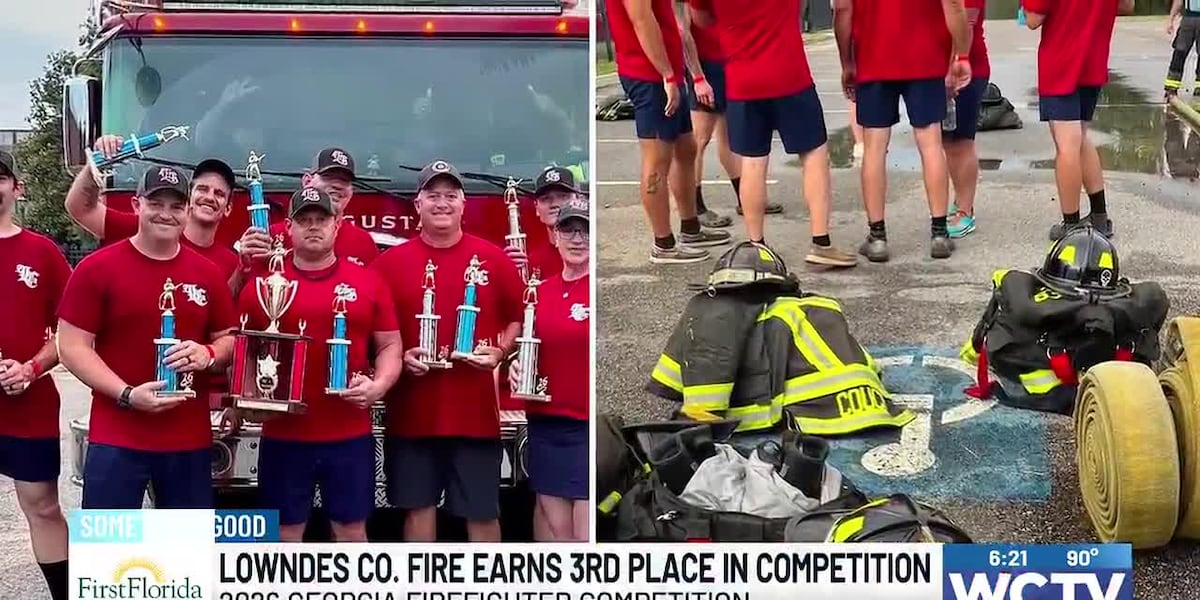
LOWNDES CO., Ga. — In a stellar demonstration of tactical prowess, physical endurance, and unwavering teamwork, Lowndes County Fire Rescue clinched a notable third-place overall finish at the annual Georgia Firefighter Competition. The statewide event, which draws elite firefighting squads from every corner of Georgia, serves as a rigorous testing ground for the skills required in life-or-death emergency scenarios.
Facing off against some of the most seasoned and highly decorated departments in the state, the Lowndes County delegation distinguished itself through exceptional performance across a series of demanding, highly specialized technical challenges. From rapid equipment deployment to intricate spatial navigation under pressure, the team proved that their local training regimens match—and frequently exceed—state standards.
This latest accolade not only highlights the high caliber of personnel serving Lowndes County but also reinforces the community’s confidence in its local emergency response infrastructure. As departments across Georgia grapple with evolving rescue dynamics, complex urban environments, and increasingly severe weather events, competitive exercises like the Georgia Firefighter Competition offer a vital metric for evaluating preparedness, leadership, and operational readiness.
Detailed Chronology of the Competition
The path to the state podium was neither short nor simple. Months before stepping onto the competitive arena, the members of Lowndes County Fire Rescue engaged in rigorous, off-duty physical conditioning and tactical drilling. When the competition officially commenced last week, these local heroes were immediately thrust into a sequence of physically punishing and mentally exhausting scenarios designed to mimic the chaotic realities of structural fires and hazardous rescues.
Day One: Establishing the Baseline
The opening phase of the competition tested foundational competencies. Competitors were evaluated on their ability to execute standard operating procedures under extreme time constraints. Unlike a traditional athletic contest, every event at the Georgia Firefighter Competition mirrors a critical phase of fire mitigation or victim extrication.
Lowndes County personnel quickly established a competitive rhythm, demonstrating the precise execution of knots, equipment checks, and rapid gear-donning that saves critical seconds during a residential or commercial dispatch. Judges closely monitored fluid communication protocols, a vital metric for teams operating in zero-visibility environments where auditory cues and verbal confirmations are the only link between safety and disaster.
Day Two: The Specialized Events
As the competition advanced into its core technical phases, Lowndes County Fire Rescue truly began to separate itself from the broader field of contenders. The itinerary featured a sequence of specialized events that have become staples of the Georgia firefighter circuit, each engineered to isolate a specific physical or technical capability:
- The Barrel Roll: A punishing test of upper-body strength and cardiovascular endurance, requiring firefighters to manipulate heavy, cumbersome objects across a designated course, simulating the clearing of massive debris fields.
- Dress ’n’ Squirt: A high-precision drill demanding absolute coordination, where participants must rapidly don full structural turnout gear—including Self-Contained Breathing Apparatus (SCBA)—and deploy a charged hose line to hit a specific target with pinpoint accuracy.
- Tight Squeeze: A claustrophobia-inducing navigation challenge that tests a firefighter’s ability to maneuver through constricted, obstacle-laden spaces while fully geared, replicating the realities of attic searches, collapsed structures, or narrow industrial corridors.
- Busted Hose Replacement: A high-intensity logistical test that requires teams to quickly identify a compromised water delivery line, disconnect the damaged segment under pressure, and seamlessly swap in a replacement line without compromising water supply or structural fire suppression.
The Mystery Event and the Final Stretch
Adding an unpredictable element to the competition, organizers introduced a "mystery event" designed to catch even the most experienced departments off guard. Stripped of the ability to pre-plan or drill repeatedly for this specific scenario, Lowndes County Fire Rescue had to rely purely on institutional knowledge, adaptability, and leadership cohesion. By swiftly assessing the unique parameters of the surprise challenge and executing a textbook response, the team secured crucial points that propelled them into the top tier of the overall standings.
When the final scores were tabulated, Lowndes County Fire Rescue stood proudly on the podium, claiming third place overall among an elite slate of competing departments from across Georgia.
Supporting Context & Metrics: The Anatomy of Modern Firefighting Competitions
To fully appreciate the significance of Lowndes County Fire Rescue’s third-place finish, one must examine the operational philosophy behind modern firefighter combat challenges. Far from mere pageantry or departmental bragging rights, these competitions are explicitly designed by fire service veterans and industrial safety experts to sharpen the exact muscle memory, mental resilience, and engineering familiarity required on the front lines.
The Science of Stress Inoculation
Emergency response work is defined by unpredictability. Firefighters routinely operate in environments characterized by extreme thermal loads, sensory deprivation, toxic atmospheres, and high-stakes decision-making. Psychological studies consistently demonstrate that performance under duress degrades unless personnel undergo systematic stress inoculation.
Events like the Georgia Firefighter Competition act as controlled crucibles. By forcing firefighters to execute complex motor skills while experiencing elevated heart rates and physical fatigue, the competition conditions the central nervous system to remain calm and focused when responding to actual community emergencies. The specific events tackled by the Lowndes County team—such as replacing a busted hose line or navigating a tight squeeze—directly translate to real-world scenarios where mechanical failure or structural instability can occur without warning.
Comparative Regional Standards
Georgia features a diverse patchwork of municipal, county, and volunteer fire rescue services, ranging from massive metropolitan departments with sprawling training facilities to lean, highly efficient rural and suburban outfits. Securing a top-three finish in a statewide open competition places Lowndes County in an elite echelon. It proves that a medium-sized department, through rigorous local commitment, intelligent resource management, and exceptional personnel selection, can successfully compete against—and outperform—agencies boasting significantly larger operational footprints and specialized budgets.
Furthermore, these competitive circuits foster a culture of continuous self-improvement. Department members who participate in state-level challenges return to Lowndes County as informal ambassadors of best practices. They share innovative techniques, advanced conditioning tips, and refined equipment-handling strategies with their peers back at the station, thereby elevating the operational baseline of the entire department.
Official Statements and Leadership Perspectives
While local celebrations have been enthusiastic, department leadership remains characteristically grounded, emphasizing that trophies are ultimately a byproduct of a daily culture dedicated to public safety and professional excellence.
In statements reflecting on the weekend’s achievements, command staff underscored the profound dedication exhibited by the participating personnel. "This recognition is a direct reflection of the long hours our firefighters spend not only responding to calls within Lowndes County, but proactively training, drilling, and challenging themselves to be better," remarked a department representative. "You do not place in the top three at a statewide competition by accident. It takes grit, cohesion, and an absolute refusal to cut corners."
Local municipal leaders have similarly voiced their pride, recognizing that top-tier emergency services are a cornerstone of economic development, community well-being, and property protection within Lowndes County. When businesses consider relocation and families search for a community to call home, the proven capability and state-recognized competence of the local fire rescue service serve as a powerful testament to the county’s overall stability and quality of life.
The firefighters themselves, however, deflect individual praise, choosing instead to emphasize the collective nature of the success. In high-stakes emergency services, the individual is only as strong as the crew standing to their left and right. The seamless execution seen in events like the Dress ’n’ Squirt and the Barrel Roll was born out of mutual trust forged during countless hours spent living, working, and training together at the firehouse.
Future Outlook: Building on State-Level Success
As Lowndes County Fire Rescue unpacks its gear and returns to the daily rhythm of station life, the focus has already shifted toward the future. A third-place finish at the Georgia Firefighter Competition is not viewed as a destination, but rather as a launchpad for even greater operational milestones.
Integrating Lessons Learned
The tactical insights gained through the competitive events are already being integrated into Lowndes County’s internal training curricula. For instance, the rapid-deployment mechanics honed during the Busted Hose Replacement challenge offer valuable lessons for managing fluid delivery systems in rural areas where municipal water hookups may be scarce or distant. Similarly, the spatial awareness and composure required during the Tight Squeeze event reinforce ongoing search-and-rescue modules utilized in local training academies.
Mentorship and Recruitment
Another vital dimension of this success lies in its impact on departmental recruitment and mentorship. In an era where fire and rescue services nationwide face persistent staffing shortages and recruitment challenges, high-profile achievements help project a dynamic, professional image to the community. Prospective recruits—particularly younger individuals considering a career in public safety—are naturally drawn to progressive agencies that invest heavily in training, teamwork, and professional development. Lowndes County Fire Rescue’s podium finish demonstrates that the department offers a fertile environment for growth, camaraderie, and meaningful service.
Preparing for Tomorrow’s Emergencies
Looking ahead, the challenges facing fire rescue services in South Georgia are evolving rapidly. From the increasing frequency of severe weather events and localized flooding to complex highway extrications along major regional corridors, Lowndes County firefighters must remain perpetually adaptable. The physical conditioning and mental agility demonstrated at the state competition ensure that when the next alarm sounds, the department will be more than ready to answer the call.
For the residents of Lowndes County, the message is clear: the men and women tasked with safeguarding their homes, businesses, and families are among the finest in the state. While the trophy may now reside in a display case at the station, the true value of the achievement rests in the heightened readiness, sharpened skills, and unwavering dedication that these firefighters bring back to the streets of Lowndes County every single day.

0 Comments