
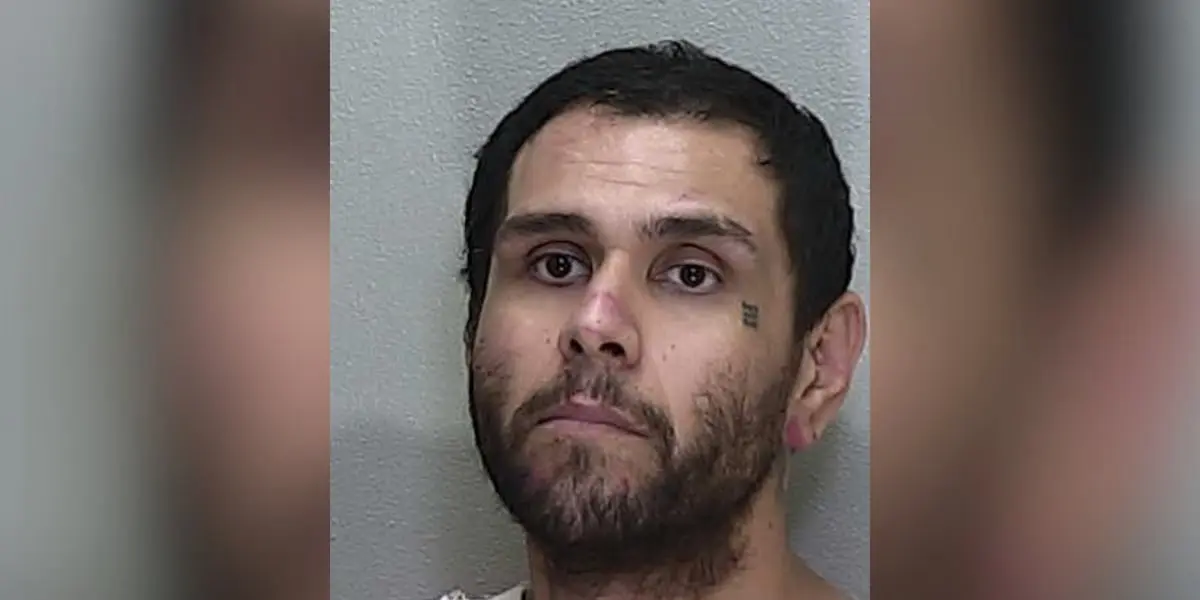

OCALA, Fla. — A 39-year-old Marion County resident is currently held behind bars facing severe felony charges, including child abuse and resisting law enforcement officers with violence, following a volatile domestic dispute that required the deployment of a conducted electrical weapon, commonly known as a Taser.
The suspect, identified as Rafael Barragan, was taken into custody on Wednesday following a swift response by deputies from the Marion County Sheriff’s Office (MCSO). According to preliminary incident reports, the confrontation escalated from a verbal disagreement into physical violence directed against a juvenile victim before culminating in a tense struggle with arresting officers.
As Barragan spends his third consecutive night in custody at the Marion County Jail, local authorities continue to piece together the events that led to the violent outburst. The case has reignited community concerns regarding domestic safety, juvenile protection, and the frequent dangers law enforcement officers face when responding to volatile domestic disturbance calls.
Executive Overview
The incident, which unfolded at an undisclosed residence in Marion County, underscores the persistent challenges emergency responders encounter when intervening in domestic violence and child abuse scenarios. Rafael Barragan now faces multiple charges after allegedly ripping out a young girl’s hair during a heated argument.
When deputies arrived at the scene to investigate the reported disturbance, the situation deteriorated further. Rather than complying with lawful commands, Barragan allegedly adopted a combative and aggressive posture toward law enforcement personnel. The escalation forced deputies to utilize a Taser to subdue the suspect safely and effect the arrest.
The overarching implications of this case extend beyond the immediate legal proceedings. It highlights critical themes in contemporary public safety:
- The Protection of Minors: The vulnerability of juveniles caught in domestic disputes and the legal framework designed to shield them from physical harm.
- Law Enforcement Protocols: The tactical challenges deputies face when suspects resist arrest, necessitating non-lethal force interventions such as tasers to protect both officers and suspects from greater injury.
- Judicial Processing: The immediate response of the Marion County judicial system, ensuring that individuals accused of violent crimes against children are swiftly removed from the community and held without immediate bond pending formal arraignment.
This comprehensive investigative report examines the chronology of the incident, provides broader context regarding child abuse and domestic disturbance enforcement in Marion County, analyzes official statements released by law enforcement agencies, and outlines the expected trajectory of the legal proceedings moving forward.
Detailed Chronology of Events
The Escalation: From Verbal Dispute to Physical Assault
While the exact catalyst of the initial argument remains part of an ongoing investigation by the Marion County Sheriff’s Office, the trajectory from a verbal dispute to violent physical assault occurred rapidly. According to investigators, Barragan became enraged during an argument involving a young female victim.
Domestic disputes involving juveniles often present high-stress environments where emotions run unchecked. In this instance, investigators state that the verbal altercation crossed a critical legal and moral boundary when Barragan resorted to physical violence. Witnesses or individuals within the household alerted authorities, setting emergency protocols into motion.
The specific act—ripping out the victim’s hair—constitutes a clear escalation from verbal disagreement to bodily harm. Under Florida law, acts of violence against children that result in physical injury, pain, or trauma immediately elevate an incident from a standard domestic dispute to felony child abuse.
Law Enforcement Dispatch and Arrival
Upon receiving the emergency call reporting a disturbance and potential violence against a child, the Marion County Sheriff’s Office dispatched units to the scene. First responders typically arrive at such calls with heightened awareness, recognizing that domestic incidents are among the most unpredictable and dangerous assignments law enforcement officers undertake.
Upon arrival, deputies quickly established control of the perimeter, separated involved parties to ensure safety, and began gathering preliminary statements. They identified Rafael Barragan as the primary aggressor in the physical altercation involving the juvenile.
Resistance and the Deployment of Non-Lethal Force
As deputies moved to place Barragan under arrest, the situation intensified. Rather than submitting to detention, Barragan allegedly became actively combative, physically resisting the deputies’ attempts to secure him in handcuffs.
Resisting an officer with violence—or even resisting without violence when accompanied by aggressive physical maneuvers—presents a dual threat: it endangers the physical safety of the deputies and risks escalating the confrontation to a level where greater force might become necessary. To neutralize the threat safely and swiftly without resorting to lethal firearms, deputies deployed a Taser.
The deployment of the conducted electrical weapon successfully incapacitated Barragan momentarily, allowing deputies to overcome his physical resistance, apply handcuffs, and take him safely into custody. Following standard medical protocols after a Taser deployment, Barragan was evaluated to ensure no life-threatening medical complications arose from the use of the non-lethal device.
Incarceration and Booking
Following his medical clearance, Barragan was transported to the Marion County Jail. As of Friday, he has spent three full nights behind bars as the legal machinery of the Fourth Judicial Circuit prepares formal charges. His detention serves as a preventive measure to ensure community safety and prevent any potential witness tampering or further contact with the victim.
Supporting Context & Metrics
Understanding Child Abuse in Marion County and Florida
Child abuse remains a critical issue facing communities across the state of Florida. According to data compiled by the Florida Department of Children and Families (DCF) and local law enforcement agencies, domestic environments unfortunately serve as the primary setting for crimes against minors.
When examining the broader metrics associated with child abuse and domestic violence:
- Prevalence of Domestic Triggers: A significant percentage of child abuse cases originate from escalated domestic arguments where adults lose emotional control and direct their frustrations toward vulnerable family members or children within the household.
- Law Enforcement Intervention Rates: Marion County deputies respond to thousands of domestic disturbance calls annually. A fraction of these calls escalate to physical violence requiring physical arrests and the use of specialized tactical tools.
- The Role of Non-Lethal Force: Statistics from the Bureau of Justice Statistics indicate that the use of Tasers in resisting-arrest scenarios significantly reduces injuries to both law enforcement officers and suspects compared to hands-on physical takedowns or the use of impact weapons.
Legal Classifications and Potential Penalties
In the state of Florida, child abuse is prosecuted rigorously under Florida Statute § 827.03. Depending on the severity of the injury, the age of the victim, and the intent of the perpetrator, child abuse can be charged as a felony of the third or second degree.
- Child Abuse (Without Great Bodily Harm): Typically classified as a third-degree felony, punishable by up to five years in state prison, five years of probation, and significant financial fines.
- Resisting an Officer with Violence: Classified as a third-degree felony under Florida Statute § 843.01, carrying similar potential prison sentences of up to five years.
Because Barragan faces multiple felony counts—specifically involving violence against a child and active resistance against law enforcement—his exposure to substantial prison time upon conviction is high.
Official Statements and Institutional Responses
Marion County Sheriff’s Office Statement
The Marion County Sheriff’s Office has maintained a transparent, albeit concise, posture regarding the arrest, emphasizing the swift action taken by deputies to protect the juvenile victim and restore order.
A spokesperson for the MCSO noted:
"Our deputies are trained to respond decisively to protect the most vulnerable members of our community. When an individual not only commits acts of violence against a child but also violently resists lawful arrest, our personnel are prepared to use appropriate, non-lethal force to neutralize the threat and ensure public safety. Rafael Barragan is currently in custody, and our detectives are continuing a thorough investigation to ensure justice is fully served."
Child Welfare and Protective Services Involvement
In alignment with standard operating procedures in Florida when a juvenile is the victim of alleged abuse within a domestic setting, the Florida Department of Children and Families (DCF) has been notified. Child protective investigators are working in tandem with law enforcement to assess the living conditions of the household, provide necessary support services and counseling to the victim, and ensure that the minor is placed in a secure, safe environment away from potential further harm.
Legal advocates emphasize that the psychological and emotional support required for victims of child abuse often extends far beyond the immediate physical healing process. Local victim advocacy groups in Marion County have mobilized resources to offer counseling and assistance to the family affected by this tragedy.
Future Outlook and Legal Proceedings
Upcoming Court Dates and Bond Hearings
As Rafael Barragan enters his fourth day in custody, the immediate future of the case will unfold within the Marion County court system.
- First Appearance and Formal Arraignment: Barragan will face a judge for his formal arraignment, where the state attorney’s office will officially file charges based on the deputies’ probable cause affidavits. During this hearing, the defense will have an opportunity to address bond conditions. Given the nature of the charges—specifically involving violence against a child and resisting law enforcement—the prosecution is expected to argue for a high bond or no bond, citing the danger the defendant poses to the community and the victim.
- Pre-Trial Discovery and Depositions: Defense counsel and the state attorney will exchange evidence, including deputy body-camera footage, Taser deployment logs, medical reports of the victim, and witness statements. This phase will determine whether the case proceeds toward a plea negotiation or a trial by jury.
- Trial Phase: If no plea agreement is reached, the case will be scheduled for trial in the Circuit Court of Marion County, where a jury of peers will evaluate the evidence and render a verdict on the child abuse and resisting arrest charges.
Community Impact and Prevention Initiatives
Incidents of this magnitude serve as a grim reminder of the hidden turmoil that can exist behind closed doors. Local community leaders and law enforcement agencies in Ocala and Marion County continue to urge residents to remain vigilant and report suspected domestic abuse or child endangerment immediately.
Resources such as the Florida Abuse Hotline (1-800-96-ABUSE) remain operational 24/7, offering a confidential avenue for citizens to report suspected abuse and potentially prevent tragedies before they escalate to physical violence.
As the legal proceedings against Rafael Barragan move forward, community stakeholders will be watching closely to ensure accountability, justice, and the safeguarding of the juvenile victim at the center of this disturbing case.

0 Comments