

BEIRUT / SANAA — In a grim continuation of regional hostilities, a fresh wave of military violence has gripped the Middle East. Recent developments underscore a dangerous intensification of hostilities on multiple fronts, leaving civilian populations paying the highest price.
In southern Lebanon, a pair of devastating Israeli airstrikes targeted the village of Kfar Rumman on Monday, claiming the lives of at least nine people, including women and children. Meanwhile, further south on the Arabian Peninsula, the Iran-backed Houthi movement in Yemen escalated tensions by claiming responsibility for downing multiple Saudi-operated reconnaissance aircraft over contested airspace.
As diplomatic channels strain under the weight of persistent military actions, humanitarian conditions across multiple theaters of conflict continue to deteriorate at an alarming rate.
Executive Overview
The geopolitical landscape of the Middle East remains deeply volatile, characterized by simultaneous flashpoints in the Levant and the southern Arabian Peninsula. On Monday, September 7, 2026, the convergence of fierce cross-border exchanges between Israel and Hezbollah in Lebanon, alongside ongoing internal and regional conflicts in Yemen, highlighted the precarious state of regional security.
In Lebanon, the Lebanese Ministry of Public Health confirmed that Israeli air raids obliterated residential infrastructure in Kfar Rumman, compounding the grief of communities already reeling from months of persistent conflict. The strikes obliterated a multi-story building and targeted an emergency response vehicle, killing both civilians and a frontline paramedic.
Simultaneously, in Yemen, Houthi military spokespersons announced a series of successful air-defense operations targeting Saudi reconnaissance assets operating in the country’s northern and central governorates. While these claims remain difficult to independently verify, they signal an active and dangerous phase in an ongoing struggle that defies durable peace agreements.
This report provides a comprehensive, multi-faceted analysis of the latest escalations, detailing the chronology of events, human tolls, official statements, and broader regional implications.
Detailed Chronology: Day of Carnage in Kfar Rumman
The tragic events in the southern Lebanese village of Kfar Rumman unfolded rapidly in the early hours of Monday morning, shattering what little normalcy remained in the border region.
The First Strike: Devastation of a Residential Building
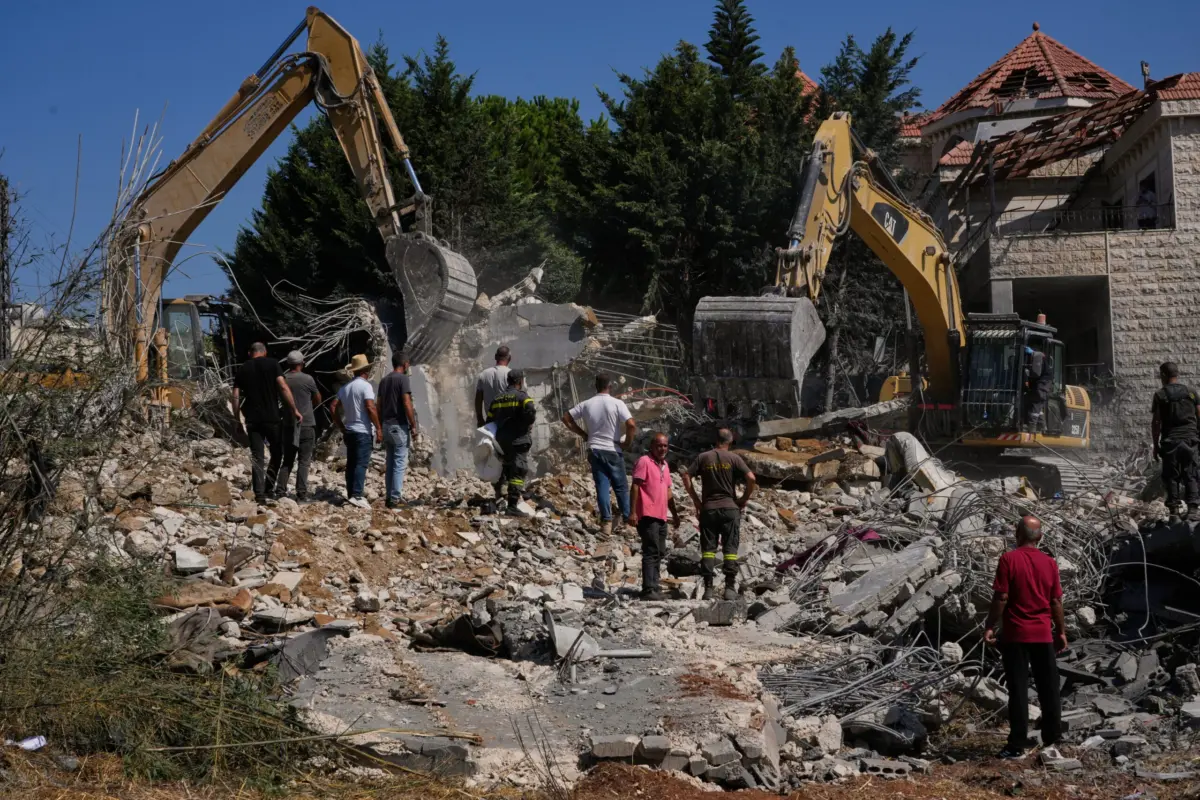
At approximately dawn, Israeli warplanes launched a targeted strike on a populated residential structure in Kfar Rumman. According to local emergency coordinators and the Lebanese Health Ministry, the munitions struck with devastating precision, causing the building to collapse entirely.
- Casualty Toll: Eight individuals were killed instantly in the collapse. Among the dead were two women and a young child, highlighting the lethal impact of military munitions on non-combatants.
- Injuries: First responders pulled 11 wounded individuals from the rubble. The injured demographic included four children and two women, many of whom sustained severe blast trauma, crush injuries, and severe burns.
- Rescue Operations: Local rescue workers, aided by heavy excavators and civilian volunteers, spent hours sifting through the concrete debris in search of survivors, facing the constant threat of secondary strikes or structural collapses.
The Second Strike: Targeting Emergency Responders
As rescue operations were actively underway, a second Israeli strike hit a moving vehicle within the same village. The targeted automobile belonged to the Lebanese Islamic Risala Scout Association, a civil defense and rescue organization affiliated with Amal, a political and militant movement allied with Hezbollah.
- Casualty Toll: The strike on the vehicle killed a frontline paramedic instantly.
- Injuries: Two other rescue workers inside or adjacent to the vehicle sustained serious wounds and were rushed to regional medical facilities for emergency surgical intervention.
- Implications: The targeting of emergency personnel underscores the perilous conditions under which humanitarian and medical workers operate in southern Lebanon, where frontline responders are frequently caught in active combat zones.
The Yemeni Theater: Houthi Claims and Aerial Escalation
While southern Lebanon absorbed the shock of Monday’s airstrikes, the conflict in Yemen saw a parallel escalation involving Houthi forces and Saudi-led coalition monitoring assets.
The Houthi Military Announcement
Brig. Gen. Yahya Saree, the military spokesperson for the Houthi movement, delivered a televised statement early Monday morning claiming that air-defense units had successfully intercepted and brought down a Saudi armed reconnaissance aircraft.
- Location: The primary incident reportedly occurred in the airspace above Jawf province, a strategically vital region in northern Yemen that has witnessed protracted ground and air battles.
- Stated Objective: According to Saree, the downed aircraft was operating on a "hostile mission" intended to gather intelligence and direct coalition operations against Houthi-held positions.
- Verification Challenges: International monitors and independent news agencies, including The Associated Press, have stated they are currently unable to independently verify the Houthi claims due to restricted access to the combat zones and the suppression of independent journalism in Houthi-controlled territories.
Escalation Over 24 Hours
Saree’s briefing went further, asserting that the incident in Jawf was part of a broader air-defense campaign over the preceding 24 hours.
- Drones Neutralized: The Houthi military claimed a total of three reconnaissance drones belonging to Saudi Arabia were shot down within a single 24-hour window.
- Secondary Sighting: This included an additional reconnaissance asset reportedly spotted and downed on Monday morning in the airspace above Bayda province in central Yemen.
- Regional Context: These claims, whether fully accurate or utilized for domestic propaganda, point to an intensification of shadow warfare and electronic/aerial surveillance operations despite nominal lulls in formal nationwide combat.
Supporting Context & Metrics
To fully understand the weight of these developments, one must examine the broader statistical and geopolitical frameworks governing the current conflicts.
The Lebanese-Israeli Front: A Chronic Humanitarian Crisis
The hostilities between Israel and Hezbollah, which dramatically escalated in late 2023 and have evolved into a protracted war of attrition, have fundamentally altered the demographics and infrastructure of southern Lebanon.
- Displacement: Tens of thousands of residents from southern Lebanese villages have been displaced to northern districts and Beirut, straining national resources and creating a protracted refugee crisis within Lebanon’s own borders.
- Infrastructure Deficit: Key civilian infrastructure—including electrical grids, water treatment facilities, and agricultural lands—has sustained billions of dollars in cumulative damage.
- Civilian vs. Combatant Casualties: International human rights organizations have repeatedly expressed alarm over the high proportion of civilian casualties in southern Lebanon, noting that densely populated residential areas have frequently borne the brunt of aerial bombardment.
The Yemeni Conflict: A Multi-Layered Quagmire
The war in Yemen, initiated in 2014 when Houthi forces seized the capital, Sanaa, remains one of the world’s most severe humanitarian catastrophes.
- Regional Dynamics: Although formal peace negotiations and localized ceasefires have reduced the intensity of direct Saudi-Houthi combat compared to the height of the intervention (2015–2022), the underlying fractures remain unhealed.
- Air Defense Capabilities: Over the course of the war, Houthi forces have demonstrably improved their asymmetric air-defense capabilities, frequently utilizing upgraded surface-to-air missiles and loitering munitions to challenge regional air superiority.
- Humanitarian Toll: Over 80% of Yemen’s population relies on humanitarian assistance, with ongoing military skirmishes severely disrupting supply chains, medical access, and agricultural production.
Official Statements and Diplomatic Reactions
As news of the bloodshed in Kfar Rumman and the aerial claims in Yemen reverberated globally, international actors and regional authorities issued varied responses.
Lebanese Ministry of Public Health
The Lebanese Health Ministry issued a stern condemnation of the strikes in Kfar Rumman, labeling the attacks on residential neighborhoods and emergency personnel as blatant violations of international humanitarian law.
"The persistent targeting of civilians, children, and those who wear the emblem of rescue and medical relief is an intolerable crime that demands immediate accountability from the international community," the ministry stated in an official release.
Israeli Defense Forces (IDF) Perspective
While specific commentary on the Kfar Rumman strikes continues to be processed through military operational reviews, the IDF has consistently maintained that its operations in southern Lebanon are strictly directed at dismantling Hezbollah’s military infrastructure, rocket-launching sites, and command nodes. Israeli military officials have frequently accused Hezbollah of embedding its combat assets within civilian population centers, effectively utilizing non-combatants as human shields—an allegation strongly denied by Lebanese authorities and Hezbollah leadership.
Houthi Military Command (Yemen)
In Sanaa, Houthi leadership utilized their public platforms to project resilience and military readiness. Brig. Gen. Yahya Saree warned that any further incursions into Yemeni airspace by hostile coalition forces would be met with an uncompromising response.
"Our skies are not open for hostile reconnaissance," Saree declared. "Our armed forces remain on high alert to defend our sovereignty and foil all plots by foreign aggressors."
Future Outlook: A Precarious Horizon
The convergence of these events highlights a deeply unsettling reality: the Middle East remains trapped in a cascading cycle of violence where localized flashpoints possess the potential to ignite broader regional conflagrations.
- Risk of Spillover: The ongoing exchanges between Israel and Hezbollah show no signs of abating. Without a durable ceasefire agreement backed by robust international guarantees, southern Lebanon risks permanent depopulation and structural ruin.
- Fragility in Yemen: The unverified downing of reconnaissance aircraft by Houthi forces serves as a reminder that Yemen’s fragile status quo is susceptible to sudden military flare-ups, threatening regional shipping lanes, energy corridors, and diplomatic breakthroughs.
- The Humanitarian Imperative: As winter approaches and medical supplies dwindle in both Lebanon and Yemen, international aid agencies are urgently appealing for safe corridors to deliver life-saving assistance to trapped populations.
Without renewed, good-faith diplomatic engagement from major global and regional stakeholders, the populations of Lebanon, Yemen, and the broader Middle East will continue to bear the devastating costs of protracted, unchecked militarism.
This report will be continuously updated throughout the day as new investigative details, casualty verifications, and diplomatic responses emerge from regional correspondents.

0 Comments