

Executive Overview
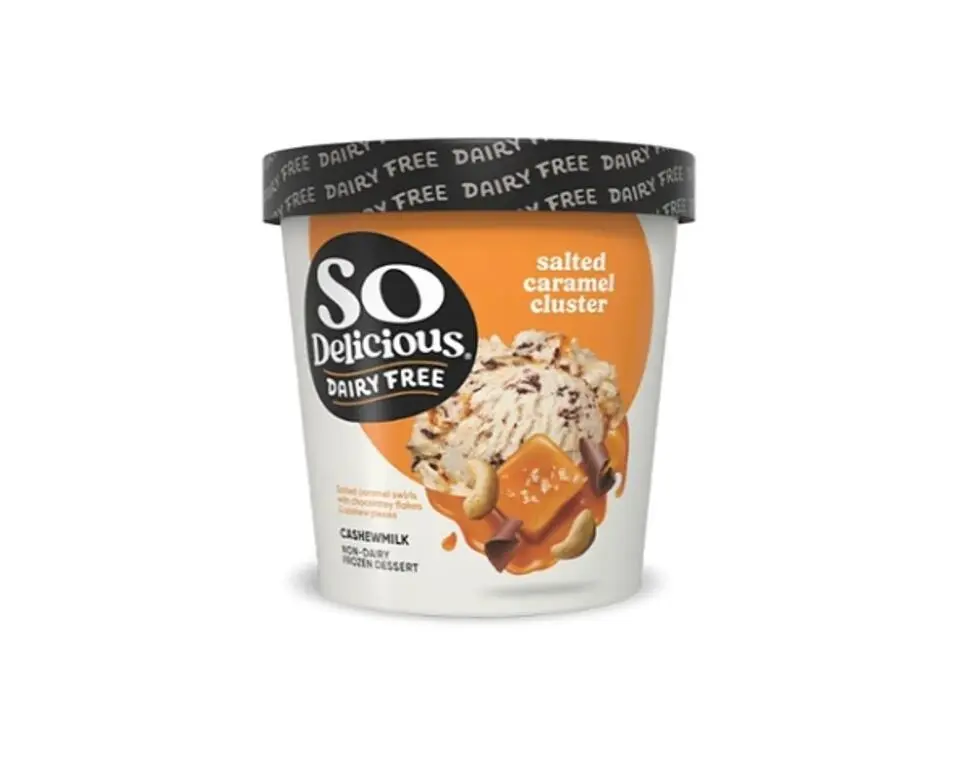
In a sweeping nationwide safety alert, Danone North America has announced a voluntary nationwide recall for specific batches of its popular So Delicious Dairy Free Salted Caramel Cluster Non-Dairy Frozen Dessert. The product withdrawal, coordinated alongside the U.S. Food and Drug Administration (FDA), was triggered following a growing series of consumer complaints regarding the presence of unexpected foreign materials embedded within the dessert’s signature cashew clusters.
According to regulatory filings and corporate advisories, the impacted product batches may contain small stones and other hard objects. These foreign objects pose significant physical hazards to consumers, including potential dental damage, lacerations of the oral mucosa, choking, and internal gastrointestinal injury.
The recalled items were distributed to major retail chains, grocery outlets, and independent vendors across the United States—most notably widespread retail giants such as Walmart and Target. Federal regulators and the manufacturing company are strongly urging consumers who have purchased the specified dairy-free pints to immediately cease consumption, discard the items safely, or return them to the point of purchase.
To mitigate consumer anxiety and address the logistical fallout of the incident, Danone North America has mobilized its Consumer Care division. The company is actively processing full product refunds and issuing replacement coupons for affected purchasers. This comprehensive report provides an exhaustive investigation into the recall, detailing product identification parameters, the origin of the foreign material contamination, institutional and consumer safety implications, and the broader regulatory context surrounding food supply chain vulnerabilities.
Detailed Chronology of the Recall
The sequence of events leading up to the public announcement of the So Delicious recall highlights the critical interplay between attentive consumer reporting, rapid corporate quality assurance investigations, and federal regulatory oversight.
1. The Initial Reports and Consumer Grievances
The timeline of the crisis began when the customer care wing of So Delicious Dairy Free registered an abnormal uptick in consumer grievances. Multiple buyers across varying geographical locations reported encountering hard, unyielding foreign objects while consuming the Salted Caramel Cluster Non-Dairy Frozen Dessert.
Unlike minor textural inconsistencies common in mass-manufactured frozen desserts, these reports explicitly cited solid, mineral-based debris—specifically small stones—lodged directly within the cashew cluster inclusions. Consumers voiced both alarm and physical discomfort, prompting internal quality control teams at Danone North America to escalate the incidents from isolated customer service complaints to a critical-tier safety review.
2. Internal Investigation and Supply Chain Traceability
Upon recognizing the pattern, quality assurance auditors initiated a comprehensive trace-back investigation. By analyzing the lot numbers, production dates, and UPC codes provided by the complainants, investigators successfully isolated the root of the defect.
The contamination was traced not to the primary dairy-free vanilla-flavored base or the salted caramel ribbons, but specifically to a batch of raw ingredient inputs—namely, the cashews utilized in the caramel cluster inclusions. Foreign material introduction of this nature typically points to an upstream processing failure, such as inadequate sorting, harvesting anomalies in agricultural fields where stones can be inadvertently harvested alongside tree nuts, or mechanical degradation along third-party shelling and roasting lines.
3. Regulatory Engagement and Voluntary Recall Execution
Having confirmed that the physical hazard extended beyond a single isolated package, Danone North America elected to initiate a voluntary recall in direct cooperation with the FDA.
A voluntary recall allows manufacturers to swiftly remove potentially hazardous merchandise from consumer refrigerators and retail distribution pipelines before regulatory enforcement actions, such as mandatory seizures or injunctions, become necessary. The official recall notice was formally published through the FDA’s safety alert portal, detailing the precise product specifications required for identification. Retailers nationwide were immediately notified to pull the specified pints from freezers and quarantine remaining inventory to prevent further sales.
Product Identification, Specifications, and Distribution
To ensure absolute clarity and prevent unnecessary waste of unaffected products, federal regulators and the manufacturer have released precise identification markers for the recalled merchandise. Consumers are advised to thoroughly inspect their freezers against the following criteria:
- Brand Name: So Delicious Dairy Free
- Product Name: Salted Caramel Cluster Non-Dairy Frozen Dessert
- Container Type: Standard Pints (16 fluid ounces)
- Universal Product Code (UPC):
744473476138 - Affected Best-By Dates: All units with best-by dates on or before April 3, 2028
- Distribution Channels: Shipped and retailed nationwide across the United States, prominently featuring major big-box department stores, supermarket chains, and organic food outlets, including Walmart and Target.
Strict Adherence to Identifiers
It is crucial for consumers to note that only the Salted Caramel Cluster flavor bearing the exact UPC code and specified expiration thresholds is subject to this safety alert. Other flavors within the expansive So Delicious Dairy Free product portfolio—including standard vanilla, chocolate, or alternative specialty cluster varieties—are entirely unaffected by this recall and remain safe for consumption.
Consumers possessing pints with different UPC codes or later best-by dates can be assured that their products fall outside the contaminated manufacturing window.
Supporting Context, Metrics, and the Hazards of Foreign Objects
Foreign object contamination in processed foods represents one of the most unpredictable yet hazardous challenges facing modern food safety systems. While biological contaminants (such as Salmonella or Listeria) dominate public health headlines, physical hazards—broadly categorized by the FDA as extraneous matter—account for thousands of emergency room visits and consumer complaints annually.
The Physics and Physiology of Hard Inclusions
When hard, mineral-based objects such as stones find their way into consumer products, the physiological risks are immediate and severe:
- Dental Trauma: The human tooth enamel is structurally unequipped to withstand sudden, unyielding pressure against high-density stone or metallic fragments. Biting into a hidden stone frequently results in cracked molars, fractured crowns, chipped porcelain veneers, and excruciating periodontal damage, often necessitating expensive and invasive dental surgeries.
- Oral and Esophageal Lacerations: Jagged or irregularly shaped stones can possess sharp edges capable of tearing delicate soft tissues inside the oral cavity, cutting the gums, or causing painful abrasions along the esophagus during swallowing.
- Choking Hazards: Particularly dangerous for young children, elderly individuals, or consumers eating absentmindedly, sudden solid obstructions in soft foods can easily block the airway, triggering acute choking emergencies.
- Gastrointestinal Perforation: In worst-case scenarios, swallowed stones or hard fragments can pass through the stomach and risk lodging in the intestinal tract, potentially causing internal bleeding, bowel obstructions, or full gastrointestinal perforation requiring emergency surgical intervention.
Supply Chain Realities: Agricultural Harvesting and Quality Control
The inclusion of stones in nut-based food products is an insidious industrial risk. Cashews, almonds, walnuts, and peanuts are harvested from agricultural orchards where crops frequently come into direct contact with soil, gravel, and earth.
While advanced processing facilities employ rigorous multi-stage cleaning protocols—including mechanical destoners, optical laser sorters, X-ray inspection systems, and manual sorting lines designed to catch foreign debris—the immense volume of modern food production creates narrow margins for error. A momentary failure in an optical scanner or an overwhelmed screening mesh can allow foreign particulate matter to slip through the cracks, ultimately ending up encapsulated in sticky, high-viscosity mediums like caramel clusters, where they remain entirely undetectable by the consumer until the moment of consumption.
Official Statements, Consumer Guidance, and Corporate Remediation
In the wake of the announcement, Danone North America has emphasized its unwavering commitment to food safety and consumer transparency. Company representatives have reiterated that customer well-being remains the organization’s highest operational priority.
Official Directives for Affected Consumers
Federal safety agencies and corporate spokespersons have outlined a clear, mandatory protocol for individuals who discover they are in possession of the recalled frozen dessert:
- Stop Consumption Immediately: Under no circumstances should consumers attempt to sample, taste, or finish the product, even if portions of the dessert have already been consumed without incident.
- Quarantine and Dispose: Secure the pint to prevent accidental consumption by family members, guests, or household pets. Safely dispose of the container in an outdoor waste receptacle.
- Initiate Refund or Replacement Claims: Consumers do not need to physically mail back the frozen dessert to secure compensation. Instead, Danone North America has established a direct consumer relations pipeline.
Consumer Care Contact Channels
Purchasers seeking reimbursement via a full product refund or a replacement coupon can connect directly with the manufacturer through the following dedicated channels:
- Telephone Helpline: Call 1-833-367-8975 to speak directly with a Consumer Care specialist.
- Online Portal: Visit the official corporate website at sodeliciousdairyfree.com/contact-us to submit digital claims and inquiries.
- Operating Hours: Customer care specialists are available to assist consumers Monday through Friday, from 9:00 a.m. to 6:00 p.m. Eastern Time.
Future Outlook: Industry Implications and Regulatory Scrutiny
As the dust settles on this nationwide recall, food safety analysts and supply chain economists are turning their attention to the broader systemic lessons and long-term implications for both Danone North America and the wider plant-based food industry.
The Rise of Plant-Based Products and Quality Pressures
The non-dairy and plant-based dessert market has experienced exponential global growth over the past decade, transitioning from niche health-food store items to mainstream grocery staples. However, this rapid commercial scaling places immense operational pressure on supply chains. As brands expand their sourcing networks to secure sufficient volumes of alternative ingredients like organic cashews, oat milk bases, and specialty inclusions, maintaining uniform quality control across complex, multi-tiered international supply chains becomes increasingly difficult.
Anticipated Technological Upgrades in Food Processing
In response to incidents involving foreign object contamination, industry leaders are heavily investing in next-generation detection infrastructure. Future manufacturing facilities are expected to accelerate the adoption of:
- Advanced Industrial X-Ray Systems: Capable of penetrating dense food matrices (such as thick caramel, nut pastes, and frozen emulsions) to identify low-density and high-density foreign bodies alike.
- Artificial Intelligence (AI) Optical Sorters: Machine-learning algorithms integrated into sorting lines that can instantly differentiate between natural food shapes and foreign contaminants based on nuanced visual and textural profiles.
- Upstream Supplier Audits: Heightened regulatory pressure on third-party raw ingredient vendors to certify their own harvesting and cleaning protocols before agricultural inputs are integrated into finished consumer goods.
Regaining Consumer Trust
For a brand like So Delicious Dairy Free, which has built its reputation on health consciousness, dietary transparency, and consumer trust, executing a flawless, communicative recall is vital for long-term brand preservation. By acting transparently, cooperating fully with the FDA, and offering prompt, frictionless customer restitution, the company aims to minimize brand erosion and reinforce its dedication to rigorous safety standards.
For consumers, this incident serves as an important reminder of the complex journey food takes from farm to freezer—and the critical vigilance required by both regulatory bodies and manufacturers to ensure that what we eat remains safe, wholesome, and free from unexpected hazards.

0 Comments