

Executive Overview
The tragic death of a man who jumped from the upper deck of the University of Florida’s iconic Ben Hill Griffin Stadium has reignited a high-stakes debate in Gainesville, Florida, regarding urban safety, homelessness, and the operational policies of local social service providers. For a university town that prides itself on community integration and progressive problem-solving, the incident has served as a painful catalyst, forcing city leadership, campus stakeholders, and local shelter operators to confront deep-seated anxieties.
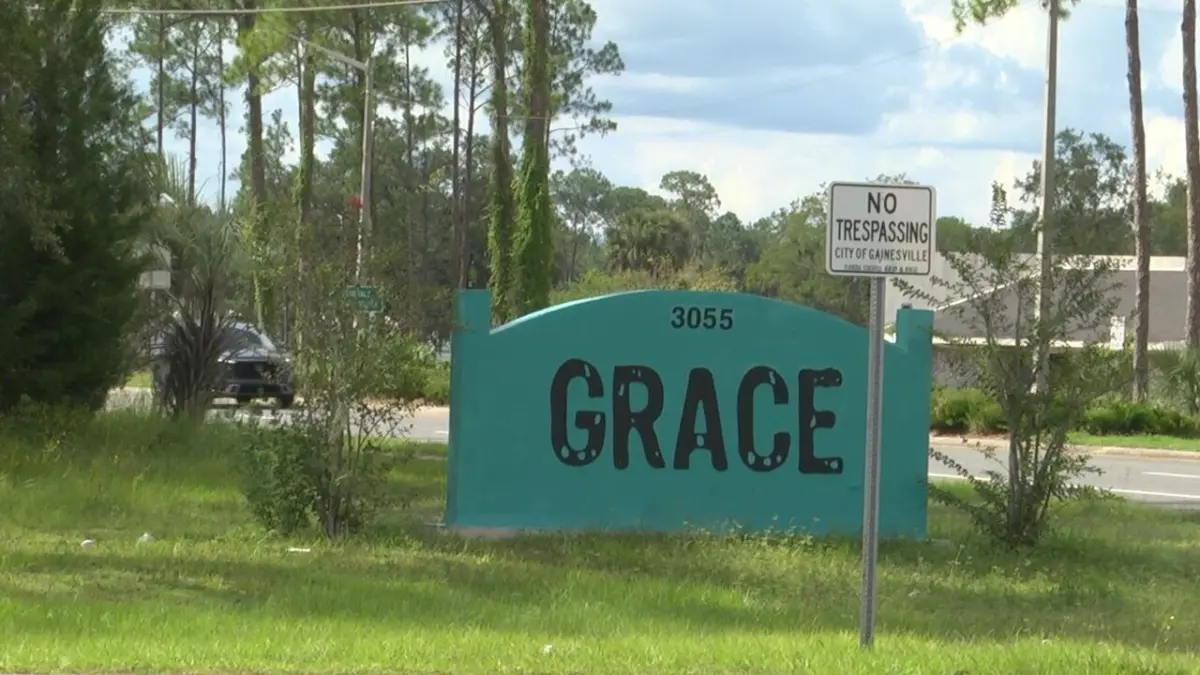
At the heart of the controversy is Grace Marketplace, Alachua County’s primary comprehensive homeless shelter and resource center. While the facility is widely credited by regional administrators for driving a sustained reduction in local street homelessness, its operational philosophy—specifically its decision to forgo mandatory criminal background checks and drug testing upon intake—has drawn fierce criticism from a vocal faction of University of Florida parents and downtown stakeholders.
Critics argue that an open-door, low-barrier service model risks compromising public safety, particularly in areas adjacent to the UF campus. They point to repeat offenders, individuals with violent criminal histories, and the broader vulnerabilities of a dense student population as compounding factors requiring heightened regulatory oversight. Conversely, shelter executives and local advocates vigorously defend the low-barrier approach, asserting that imposing punitive intake barriers would merely push vulnerable populations back onto the streets, exacerbating public disorder while undermining long-term recovery efforts.
This comprehensive report examines the complex friction points between municipal compassion and community security in Gainesville. Through detailed chronologies, empirical metrics, stakeholder testimonies, and broader socio-economic contexts, this article explores the intricate challenge facing a growing Florida municipality attempting to balance human welfare with public safety.
Detailed Chronology: From Campus Tragedy to Policy Polarization
The tension between urban transient populations and university safety protocols did not materialize overnight, but a sequence of recent events has sharply accelerated public discourse.
The Catalyst: The Ben Hill Griffin Stadium Incident
The tipping point in local anxieties occurred when a man gained unauthorized access to Ben Hill Griffin Stadium—affectionately known to millions of college football fans as "The Swamp"—and subsequently jumped to his death from the upper deck. While initial emergency response protocols focused on mental health crisis intervention and campus security failures, the incident quickly broadened into a community-wide conversation about transients, public infrastructure access, and the proximity of unhoused individuals to campus grounds.
For many parents of University of Florida students, the tragedy underscored a perceived vulnerability in how downtown Gainesville and the university fringe are managed. Social media forums, parent-led advocacy groups, and direct correspondence to city commissioners began filling with urgent inquiries regarding perimeter security, transient policing, and the social service safety net operating within city limits.
The Escalation of Parental Advocacy
In the weeks following the stadium incident, organized parent groups began mobilizing. Led by figures such as Melissa Bell, a vocal UF parent and community advocate, these groups started interrogating local governance structures. Their inquiries moved past standard university security measures to scrutinize regional homeless service providers.
The focus rapidly concentrated on Grace Marketplace. Parents began questioning the operational criteria of the facility, specifically probing how individuals are vetted, what accountability mechanisms exist for clients with extensive legal records, and whether the concentration of services in Gainesville acts as a magnet for transient populations from surrounding counties.
The Institutional Response and Public Fora
As public pressure mounted, local leaders and representatives from Grace Marketplace were compelled to publicly defend their operational models. Interim CEO Mark Bonner and other community stakeholders engaged in town halls and media interviews to clarify the mission of the facility. They sought to decouple the broader societal issue of homelessness from violent crime, emphasizing that public safety and humanitarian aid are not mutually exclusive, but rather interdependent facets of a healthy municipality.
Despite these assurances, the ideological divide remains stark. While municipal agencies attempt to chart a middle course, the polarization between campus protection advocates and social welfare proponents continues to shape the local political landscape in Gainesville.
Supporting Context & Metrics: The Numbers Behind Gainesville’s Homelessness Crisis
To understand the friction surrounding Grace Marketplace, one must examine the quantitative reality of homelessness in Alachua County, alongside the institutional frameworks designed to address it.
The Low-Barrier Model Explained
Grace Marketplace operates on what housing and social work professionals refer to as a "low-barrier" model. Traditional shelters often enforce strict regulations that can exclude chronically unhoused individuals—such as mandatory sobriety tests, clean criminal background checks, employment verification, and rigid curfews. While designed to maintain order, these prerequisites frequently disqualify the most vulnerable populations: those suffering from severe, untreated mental illness, active substance use disorders, or individuals with historical felonies stemming from poverty-related offenses.
By eliminating pre-admission background checks and drug screens, Grace Marketplace aims to establish an immediate point of contact. The logic is rooted in "Housing First" principles: individuals are more successfully stabilized, treated, and integrated into society when they are brought indoors and offered wrap-around support services rather than being left exposed on public streets.
Empirical Data: Progress vs. Perception
Proponents of Grace Marketplace lean heavily on empirical data to validate the facility’s efficacy. According to programmatic tracking and point-in-time counts cited by Interim CEO Mark Bonner, Alachua County has achieved significant milestones in reducing overall street homelessness:
- Short-Term Trajectory: Comparing data from the 2025 counts projected through 2026, Alachua County has recorded an estimated 28% decrease in its homeless population.
- Long-Term Impact: Measured from the inception of Grace Marketplace in 2014 to the present day, regional stakeholders report an estimated 60% decrease in overall unhoused populations roaming local streets and encampments.
These figures suggest that the facility functions as a powerful gravitational pull for stabilization, successfully transitioning hundreds of individuals out of encampments and into transitional or permanent housing solutions.
The Counter-Metric: The Criminal Justice Overlap
Despite the documented reduction in overall street homelessness, critics argue that aggregate numbers fail to account for the qualitative experience of community safety. Central to this argument is the intersection between transient populations and local law enforcement resources.
Community critics, including concerned parent representatives, point to the demographic composition of Alachua County detention facilities. Concerns have been raised regarding whether chronic offenders—individuals with extensive records comprising dozens of felony and misdemeanor offenses—are cycling through local jails and subsequently returning to low-barrier shelters without adequate supervision.
While homeless advocacy organizations stress that the unhoused population is profoundly diverse and non-monolithic, critics contend that the presence of even a small fraction of individuals with violent or chronic criminal histories poses an unacceptable risk to a densely populated university environment.
Official Statements and Stakeholder Perspectives
The debate in Gainesville is defined by two distinct, deeply entrenched philosophies regarding civic responsibility, public safety, and human compassion.
The Shelter Perspective: Mark Bonner on Holistic Solutions
Mark Bonner, interim CEO of Grace Marketplace, has consistently pushed back against rhetoric that conflates homelessness with criminality. In public addresses and interviews, Bonner has emphasized that treating unhoused individuals as a public security threat is both morally hazardous and strategically counterproductive.
"If we were just going by the 2025 counts to 2026, we’ve seen a 28% decrease in homelessness in Alachua County. If we were going back to when Grace first opened in 2014 now, we would see over a 60% decrease in homelessness," Bonner stated, emphasizing the tangible progress achieved by the organization’s comprehensive methodology.
Bonner argues that the alternative to a low-barrier facility is not a crime-free city, but rather an invisible city—one where unhoused individuals are pushed into wooded areas, abandoned properties, and dangerous public spaces without access to hygiene, mental health care, or case management. He maintains that Grace Marketplace represents the primary bulwark holding the regional system together, and that undermining its low-barrier intake criteria would fracture the social safety net.
The Parent and Community Perspective: Melissa Bell on Accountability and Supervision
Conversely, community members and university parents articulate a perspective rooted in immediate risk mitigation and institutional accountability. Melissa Bell, speaking on behalf of concerned UF parents, voiced the anxieties of families who entrust their children to the university community every academic year.
"To what extent the people that are living at Grace have extensive records or currently committing crimes, are they ending up in the jails? Are they part of the 50% that’s in our jails right now?" Bell questioned during community discussions. "And I’m not stating that the homeless community is not monolithic. You have a wide variety. But when you have individuals that have sometimes dozens of offenses, both felonies and misdemeanors, and you also have violent offenses, there is going to be a risk that those individuals are going to reoffend. So a more supervised environment may be more appropriate for the safety of the community."
This viewpoint does not necessarily reject the necessity of social services, but it demands a recalibration of how and where those services are administered. Proponents of this view argue for enhanced perimeter security around campus zones, stricter accountability measures for shelter residents, and greater transparency from municipal leaders regarding crime statistics tied to transient demographics.
Future Outlook: Finding a Sustainable Path Forward
As Gainesville looks toward the future, city commissioners, university administrators, and social service providers face a complex balancing act. The polarization between campus protection and humanitarian outreach cannot be resolved through zero-sum rhetoric; it requires structural evolution, inter-agency cooperation, and innovative urban policy design.
1. Enhanced Inter-Agency Collaboration
A primary requirement moving forward is the establishment of formal, transparent communication channels between the University of Florida Police Department (UFPD), the Gainesville Police Department (GPD), municipal government officials, and Grace Marketplace administration. By sharing real-time data regarding public safety incidents, service utilization, and demographic trends, stakeholders can replace anecdotal fear with empirical reality, tailoring interventions precisely where vulnerabilities exist.
2. Diversifying Service Delivery Models
While low-barrier shelters remain essential for capturing the hardest-to-reach populations, Gainesville may need to explore a tiered shelter ecosystem. Implementing specialized, highly supervised transitional facilities for individuals with severe behavioral health challenges or extensive violent criminal histories could alleviate the pressure on open-campus facilities like Grace Marketplace while maintaining public safety standards.
3. Mental Health and Crisis Infrastructure Investment
The tragedy at Ben Hill Griffin Stadium was, at its core, a profound mental health crisis. Expanding mobile crisis intervention teams, embedding psychiatric professionals within local law enforcement patrols, and increasing accessible psychiatric bed capacity in Alachua County will be critical in preventing similar tragedies. Addressing the intersection of mental illness and public infrastructure accessibility is far more effective than merely increasing physical security measures after the fact.
4. Sustaining Civic Dialogue
Ultimately, Gainesville’s identity as a thriving, inclusive university town depends on its ability to hold difficult, empathetic conversations. By maintaining open forums where university parents, local residents, unhoused advocates, and municipal leaders can voice concerns without hostility, the city can forge a collaborative blueprint.
The challenge ahead is immense, but the shared goal remains clear: ensuring that Gainesville is simultaneously a safe, welcoming home for university students and a compassionate, rehabilitative community for those striving to escape the depths of homelessness.

0 Comments