By Clint Thompson | Agricultural News & Analysis Published: August 2026
Executive Overview
As the 2026 agricultural season reaches its critical late-summer inflection point, cotton growers across the Peach State find themselves walking a fine, highly localized tightrope. The Georgia Cotton Commission’s (GCC) annual mid-year meeting, convened on July 29 in Statesboro, Georgia, served as a crucial bellwether for the state’s agricultural sector. Bringing together producers, industry stakeholders, and academic experts, the conference provided an invaluable forum to assess the current health and trajectory of Georgia’s cotton crop.
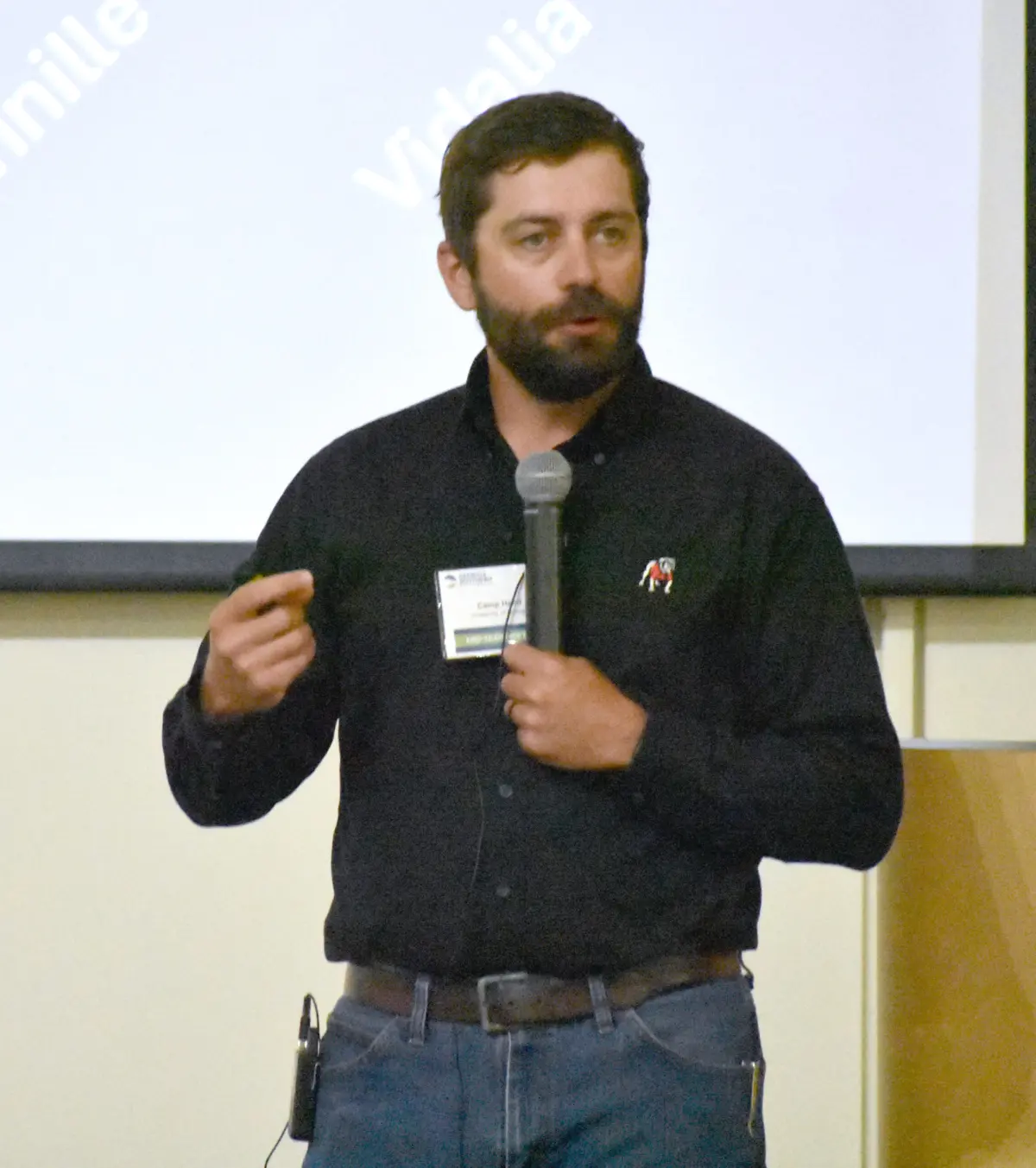
Leading the discussions was University of Georgia (UGA) Extension cotton agronomist Camp Hand, who delivered comprehensive updates on a myriad of evolving agronomic challenges. From erratic weather patterns and creeping drought conditions to the nuanced management of plant growth regulators (PGRs) and emerging pest pressures like the cotton jassid, producers were urged to adopt a hyper-vigilant approach.
With roughly half of Georgia’s total cotton acreage reliant solely on natural rainfall—classified as dryland farming—the stakes could not be higher. While irrigated fields boasting reliable water sources present a largely optimistic outlook, dryland operations in specific pockets of the state are experiencing severe moisture deficits. This report delves into the comprehensive insights shared at the Statesboro meeting, breaking down the meteorological pressures, agronomic best practices, economic considerations, and strategic outlooks defining the 2026 Georgia cotton harvest.
Detailed Chronology of the 2026 Season
To understand where Georgia’s cotton crop stands today, it is essential to trace the arc of the growing season from its initial planting phases through the scorching dog days of mid-summer.
Spring Planting and Early Vigor
The 2026 cotton season began with standard optimism as producers took advantage of favorable early-spring windows to get seeds into the ground. Soil temperatures and moisture levels across much of the coastal plain and central Georgia initially supported strong germination and early-season stand establishment. Extension specialists noted that early-planted cotton developed robust root systems, setting a solid foundation for the vegetative stages.
The Mid-Season Divergence
By late June and early July, however, the weather narrative began to fracture. While localized thunderstorms blessed certain areas—particularly pockets of southwest Georgia—with timely, crop-saving precipitation, large swaths of East Georgia experienced a sudden and prolonged dry spell. This meteorological divergence created a tale of two crops: lush, high-potential irrigated fields sitting just miles away from stunted, drought-stressed dryland acreage.
The Statesboro Conclave (July 29)
Recognizing the widening gap in crop performance and the mounting operational pressures faced by farmers, the Georgia Cotton Commission convened its mid-year meeting on July 29 in Statesboro. The gathering served as a centralized hub for troubleshooting. UGA Extension specialists unveiled mid-season scouting reports, offering real-time guidance on how to manage overly vigorous irrigated crops while desperately trying to preserve the viability of drought-stricken dryland fields.
The August Drought Reality Check
By mid-August, official data confirmed the field observations shared in Statesboro. The U.S. Drought Monitor release on August 13 painted a stark picture, officially marking abnormally dry to moderate drought conditions across substantial portions of South Georgia. For growers, this period shifted the operational focus entirely toward survival mitigation, precise input management, and vigilant pest scouting.
Supporting Context & Metrics: The Anatomy of Georgia Cotton
Georgia consistently ranks as one of the premier cotton-producing states in the United States, frequently trading the top-production spots with Texas. To fully appreciate the significance of the 2026 season’s challenges, one must examine the underlying structural metrics of the state’s cotton economy.
The Irrigated vs. Dryland Divide
A defining characteristic of Georgia agriculture is the dichotomy between irrigated and dryland farming. Roughly 50% of Georgia’s cotton acreage operates without access to supplemental irrigation. This means that half of the state’s crop is entirely at the mercy of the atmosphere.
The Irrigated Advantage: Fields equipped with central pivots or alternative irrigation infrastructure have largely maintained steady growth curves. However, this advantage introduces its own management complexities, such as the rapid escalation of vegetative growth requiring stringent plant growth regulator (PGR) intervention.
The Dryland Dilemma: Conversely, dryland acres rely strictly on timely rainfall events. When summer showers bypass these fields—as has frequently occurred in East Georgia during the 2026 season—plants undergo severe physiological stress, shedding squares and small bolls to conserve moisture.
Financial and Input Pressures
Farming in the mid-2020s remains a high-stakes, capital-intensive enterprise. Growers are navigating historically high input costs, encompassing everything from refined chemical formulations and fertilizers to diesel and machinery maintenance. In this economic climate, efficiency is the margin between profit and loss.
As Camp Hand emphasized during the Statesboro meeting, blanket applications of inputs are no longer financially viable. The industry has firmly shifted toward a precision mindset: every ounce of fertilizer, every gallon of growth regulator, and every insecticide application must be justified by field scouting and verified crop need.
Official Statements & Expert Insights
The insights shared by Camp Hand and other UGA Extension specialists at the mid-year meeting offer a masterclass in modern crop management. Their guidance addresses the immediate physical needs of the plant while keeping a strict eye on farm economics.
Balancing Fertility and Growth Regulator Management
Addressing fields that possess adequate water access and have successfully caught summer rains, Hand highlighted the delicate balance required between nutrition and hormonal regulation:
"Some of the things that we’re thinking about right now, particularly where we have good water and where we’re catching rain, is growth regulator management and fertility," Hand explained.
He pointed out a specific operational challenge regarding sidedressed fertilizer:
"Some of these fields that have been sidedressed, maybe a month ago, hadn’t had any rain. We may need to revisit some of those fields with a little bit of fertilizer, and that way when we catch a rain, it’ll cause that crop to jump a little bit."
This strategy requires precise timing. If fertilizer is applied to dry soil without a subsequent rain event, it remains locked out of the root zone, wasting valuable capital. Conversely, if rain arrives immediately following a targeted top-dress in an area with abundant subsoil moisture, the crop can leverage the nutrients for optimal fruit retention rather than runaway vegetative growth.
The "Need-Based" Scouting Mandate
With profit margins tight, Hand issued a stern warning against preventive or routine chemical applications that lack empirical justification from field scouting:
"The biggest thing is being out there monitoring the crop, giving it what it needs. If it doesn’t need pix [mepiquat chloride, a common plant growth regulator], we don’t need to spray that. If it doesn’t need to be treated for stink bugs, we don’t need to have that additional cost."
Stink bugs and emerging secondary pests like the cotton jassid require constant sweep-net monitoring. Over-treating increases input costs and risks flaring other pest populations, while under-treating can lead to catastrophic yield loss and severe quality degradation at the gin. Hand summarized the overarching philosophy for the remainder of the season:
"It’s different things like that. But the big needs right now are monitoring the growth of the crop, giving it what it needs and not overdoing things, right? We need to maintain a lot of this crop for what it is right now."
The East Georgia Moisture Crisis
Providing stark contrast to the managed optimism of well-watered fields, Hand underscored the severity of the meteorological deficit in the eastern sector of the state:
"Right now, we’re looking at a lot of really, really dry pockets. Down in southwest Georgia, it’s not quite as dry; we’re not as far behind," Hand noted. "Pero over here in East Georgia, I’ve seen some cotton that you would expect to see in West Texas. I mean, it’s really, really dry over here, and we need a rain pretty bad to get this crop back going."
Comparing Georgia dryland cotton to the famously arid conditions of West Texas illustrates the severity of the local drought pockets. In these areas, plants have struggled to maintain square retention, and immediate, soaking rainfall is required to prevent permanent yield reduction.
Future Outlook & Strategic Recommendations
As the 2026 season transitions from its vegetative and reproductive peaks toward defoliation and harvest preparation, Georgia cotton producers must remain adaptive. Based on recommendations from the Georgia Cotton Commission and UGA Extension, growers are encouraged to focus on several key strategic pillars moving forward:
Intensified Field Scouting: Producers should increase the frequency of scouting expeditions, paying close attention to square and boll retention rates, insect thresholds (particularly stink bugs and plant bugs), and the emergence of any localized disease pressures.
Dynamic PGR Applications: Rather than adhering to a rigid calendar schedule for mepiquat chloride applications, agronomists advise tailoring PGR rates to actual node-above-white-flower (NAWF) counts and prevailing weather forecasts. Fields experiencing drought stress should steer clear of aggressive PGR treatments, which can further check growth, while vigorous, rain-fed fields may require timely intervention to prevent lodging and canopy closure issues.
Targeted Nutritional Adjustments: For dryland fields that have missed out on seasonal rainfall, growers should monitor weather radar closely. If a reliable rain event is forecasted, late-season foliar feeding or targeted nitrogen adjustments can help jump-start stalled plants, provided the economic return justifies the pass across the field.
Harvest Preparation and Defoliation Planning: Looking ahead to the autumn harvest, early defoliation planning will be paramount. Managing the harvest window efficiently protects fiber quality—preventing weather-induced degradation from late-season tropical systems or heavy rain events.
Conclusion
The 2026 cotton season in Georgia continues to test the resilience, resourcefulness, and financial acumen of the state’s agricultural community. Through the collaborative efforts of organizations like the Georgia Cotton Commission and the research-driven guidance of the University of Georgia Extension, growers are equipped with the insights necessary to navigate these turbulent meteorological waters. Whether managing the explosive growth of well-watered fields or nursing parched dryland acres back to life, Georgia farmers remain steadfast in their mission to produce a high-quality, globally competitive cotton crop.




0 Comments