

Executive Overview
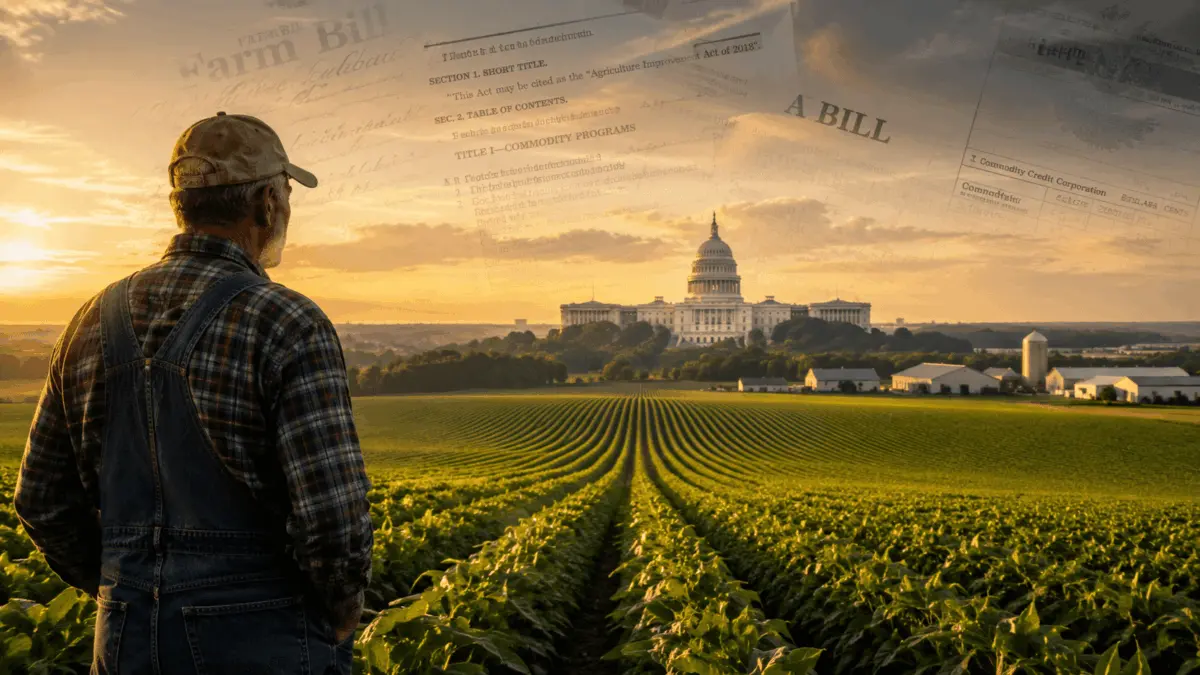
As the United States Congress adjourned for its late-summer recess, Capitol Hill left one of the nation’s most critical pieces of omnibus legislation dangling in legislative limbo: the much-anticipated Farm Bill 2.0. Despite high hopes among agricultural stakeholders, lawmakers departed Washington without finalizing the sweeping package, pushing any potential floor votes and reconciliation debates well into mid-September.
Billed as a direct successor to the historic agricultural investments established earlier this year under the umbrella of the One Big Beautiful Bill, Farm Bill 2.0 is designed to fortify the American agricultural safety net, protect vital rural industries—such as the domestic peanut sector—and insulate critical farming operations from the perennial threat of Washington government shutdowns. However, the path forward remains fraught with procedural hurdles.
To become law, the measure must still clear significant legislative bottlenecks: it requires eventual approval in a divided Senate upon lawmakers’ return, subsequent reconciliation and passage through the House of Representatives, and finally, the President’s signature. With countless commodities, nutrition assistance programs, and international trade initiatives hanging in the balance, the agricultural community finds itself locked in a tense waiting game, wondering whether Congress can bridge its partisan divides before current safety nets strain past their breaking points.
Detailed Chronology: The Road to the September Respite
The trajectory of Farm Bill 2.0 is best understood against the backdrop of an exceptionally turbulent legislative calendar. The seeds of this year’s agricultural policy battles were sown earlier in the year, when Congress managed to pass a package of landmark agricultural investments under the broad banner of the One Big Beautiful Bill. That initial legislative vehicle injected much-needed capital into various rural economies and established a baseline for modernizing several outdated federal farm programs.
Yet, as agricultural markets fluctuated and economic pressures mounted—driven by persistent supply chain shifts, variable input costs, and shifting global export demands—industry leaders and congressional champions recognized that more work was needed. This realization birthed the concept of Farm Bill 2.0: an auxiliary, fine-tuned legislative push meant to close loopholes, bolster safety nets, and address specific vulnerabilities that the initial package left untouched or only partially resolved.
Throughout late spring and early summer, agricultural committees in both chambers worked behind closed doors to draft provisions catering to specialized commodity sectors. Chief among these was the U.S. peanut industry, which heavily lobbied for structural enhancements to ensure market stability. By mid-summer, text for Farm Bill 2.0 had officially been released, sparking a flurry of analysis, industry reactions, and frantic negotiations among lobbying groups and congressional aides.
Despite these intensive negotiations, the legislative clock ultimately ran out. With appropriations battles looming and a scheduled district work period approaching, leadership in both the House and Senate opted to prioritize must-pass stopgap funding measures and recess departures over a grueling, multi-day floor fight on complex agricultural reform. Consequently, Farm Bill 2.0 was left parked on the legislative runway, with lawmakers packing their bags and setting their sights on a high-stakes legislative sprint scheduled to begin when they reconvene in mid-September.
Supporting Context & Metrics: Why Farm Bill 2.0 Matters to Rural America
To fully grasp why the delay of Farm Bill 2.0 has sent ripples of anxiety through the agricultural community, one must examine the specific mechanics and protections embedded within the proposed text. Unlike standard appropriations bills that fund government operations on an annual or quarterly basis, the Farm Bill is a sprawling, multi-year omnibus package that dictates everything from commodity price supports and crop insurance to international trade promotion and domestic nutrition programs.
Safeguarding the Peanut Industry and Commodity Loans
A cornerstone of the Farm Bill 2.0 draft is its dedicated focus on specialty and regional commodities, most notably the U.S. peanut industry. Under the proposed framework, lawmakers sought to guarantee the uninterrupted, long-term operation of the Market Assistance Loan (MAL) program. For peanut producers operating in regions across the Southeast and Southwest, the MAL program acts as a vital financial buffer, allowing farmers to store their harvested crops and secure government-backed loans when market prices dip below statutory levels.
Historically, these critical financial lifelines have been vulnerable to broader fiscal policy standoffs in Washington. When Congress fails to pass regular appropriations bills or reaches an impasse over the federal budget, non-essential government functions—and occasionally the administrative machinery running agricultural loan programs—face disruptions. Farm Bill 2.0 addresses this systemic risk head-on by explicitly clarifying program authority. Under the new provisions, funding and operational capacities for these core assistance mechanisms would remain active even during future lapses in federal government funding, effectively insulating farmers from the collateral damage of government shutdowns.
Bolstering the Domestic Safety Net
Beyond loan assistance, Farm Bill 2.0 introduces structural refinements to the broader agricultural safety net. Farming is an inherently unpredictable enterprise, subject to the whims of severe weather, shifting global trade pacts, and volatile fertilizer and fuel costs. The proposed legislation provides greater certainty for producers by updating reference prices and yield calculations, ensuring that federal safety-net triggers more accurately reflect modern production realities.
Driving Ag Export Markets and Nutrition Assistance
In an increasingly globalized economy, the health of American agriculture is inextricably linked to international trade. The U.S. peanut industry—alongside major grain, soybean, and livestock sectors—relies heavily on robust foreign export markets to absorb domestic surpluses. Farm Bill 2.0 reinforces federal support for agricultural export promotion programs, equipping trade associations with the resources needed to open new overseas markets, break down non-tariff trade barriers, and compete effectively against foreign rivals.
Simultaneously, the legislative package incorporates vital provisions for domestic nutrition and emergency food assistance programs. Historically, the coalition required to pass a Farm Bill relies on a delicate legislative marriage between rural agricultural producers and urban lawmakers championing nutrition programs like SNAP (Supplemental Nutrition Assistance Program) and emergency food banks. By maintaining and updating these safety nets, Farm Bill 2.0 ensures that vulnerable populations continue to receive nutritional support while preserving the broad bipartisan voting coalition necessary to move the bill across the finish line.
Official Statements and Industry Reactions
The abrupt pause in the legislative process has drawn swift, varied reactions from agricultural leaders, industry associations, and congressional stakeholders across the country. While many are frustrated by the delay, others view the extra weeks before the September return as a valuable window to iron out remaining policy wrinkles.
Agricultural advocacy groups representing southern crop producers have been vocal about the necessity of the provisions protecting the market assistance loan program. In statements released following the release of the Farm Bill 2.0 draft, leadership from major peanut and row-crop associations praised lawmakers for recognizing the existential threat posed by potential federal government shutdowns.
"Our producers cannot afford to be caught in the crossfire of Washington budget battles," noted one prominent industry representative during a regional agricultural briefing. "By ensuring that the market assistance loan program remains fully operational regardless of whether the federal government keeps its doors open, Farm Bill 2.0 provides an indispensable layer of security. It gives our farmers the confidence to plant, harvest, and market their crops without fearing that a sudden political impasse will freeze their financing."
Conversely, fiscal watchdogs and members of the congressional opposition have urged caution, pointing out that expanding programmatic authorities and creating funding carve-outs during an era of mounting national debt requires rigorous scrutiny. These differing viewpoints highlight the delicate balancing act facing committee leaders as they prepare to resume negotiations in September. While the agricultural lobby pushes for swift, unamended passage of the current draft, fiscal conservatives are expected to press for offsets and spending caps, setting the stage for intense partisan debates upon Congress’s return.
Future Outlook: The Long Road to the President’s Desk
As Washington prepares to reopen its doors in mid-September, the political math surrounding Farm Bill 2.0 remains complex and demanding. The legislative journey ahead is long, precarious, and subject to an unforgiving calendar.
When senators return to Capitol Hill, the primary order of business for the agricultural committees will be to bring Farm Bill 2.0 to the Senate floor for debate and amendment. Given the narrow majorities in both chambers and the competing legislative priorities—including must-pass defense authorizations and fiscal year 2027 appropriations bills—securing time on a crowded floor schedule will be no small feat.
If and when the Senate successfully passes its version of the bill, the legislative baton will be handed back to the House of Representatives. Should the House make any amendments or modifications to the Senate text—a highly likely scenario given the divergent regional priorities of House members—the two chambers will be forced to form a conference committee to iron out the differences.
Only after a unified conference report is drafted and approved by both the House and the Senate can the final package be transmitted to the President’s desk for enactment. Industry analysts note that this multi-step reconciliation process leaves ample room for delays, procedural stalling, and last-minute lobbying pressure.
For America’s farmers, ranchers, and agribusiness leaders, the message is clear: while Farm Bill 2.0 remains very much on the table, the finish line is still a long way off. As the autumn legislative season unfolds, the agricultural sector will be watching Washington with bated breath, hoping that lawmakers can set aside partisan friction to deliver the long-term certainty and stability that rural America desperately needs.

0 Comments