
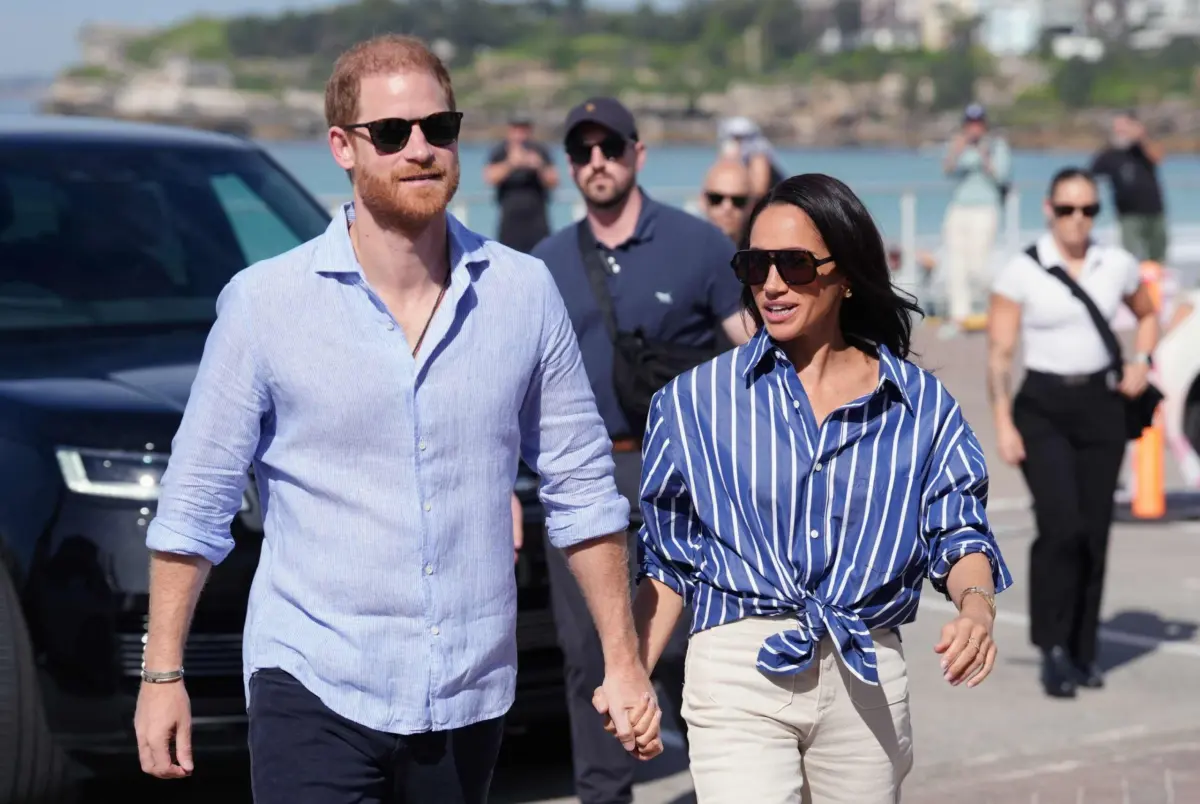

LONDON — Buckingham Palace has moved decisively to clarify the institutional standing of Prince Harry and Meghan Markle, issuing a formal directive to senior government officials, military leaders, and royal representatives across the United Kingdom. Distributed via the Lord Chamberlain—the most senior official within the British royal household—the correspondence explicitly reaffirms that the Duke and Duchess of Sussex remain non-working members of the royal family, with no alteration to the boundaries established when the couple stepped back from official duties in 2020.
The intervention, designed to preempt administrative ambiguity and institutional friction, underscores the enduring sensitivity surrounding the couple’s relationship with the sovereign, the British government, and the core apparatus of the state. While palace insiders stress that the communication is essentially a reaffirmation of long-standing policy, royal analysts note that its public distribution highlights deep-seated institutional anxieties regarding the potential emergence of alternative, semi-official power centers running parallel to the core working monarchy.
Executive Overview
The issuance of the directive coincides with the Duke and Duchess’s return to the United Kingdom, a development that invariably triggers intense media scrutiny, public debate, and logistical friction across government agencies. According to the text of the letter, Prince Harry and Meghan will continue to operate strictly outside the sphere of official royal engagements. Key stipulations outlined in the communication include:
- Continuation of Non-Working Status: The couple will not undertake official duties on behalf of the Crown, maintaining the separation finalized during the 2020 "Sandringham Summit."
- Restriction on Royal Titles and Courtesies: While retaining their ducal titles, the couple will continue the practice of refraining from using their "Royal Highness" styles in public or commercial contexts, as agreed upon during their initial transition.
- Private Philanthropy: Any charitable initiatives or public appearances pursued by the Duke and Duchess will be conducted strictly in a private capacity, distinct from the patronages and projects managed by the Sovereign and senior working royals.
- Separation of State Resources: The letter establishes firm procedural firewalls, directing state organizations, military branches, and civil service departments to route any inquiries regarding protocol, courtesies, or potential public expenditure directly through Buckingham Palace.
By circulating this memorandum down administrative channels—reaching government departments, the armed forces, and the King’s personal representatives, the Lord Lieutenants—the Crown has sought to eliminate any potential for administrative confusion at local, regional, and national levels.
Detailed Chronology: From the 2020 Departure to Present Directives
To fully understand the gravity of the Lord Chamberlain’s recent missive, it is essential to trace the institutional milestones and evolving protocols that have defined the relationship between the Sussexes and the British establishment over the past several years.
January 2020: The "Megxit" Announcement
The foundational framework governing Prince Harry and Meghan’s current status was established in early 2020, when the couple announced their intention to step back as senior members of the British royal family. Their goal was to carve out a progressive new role that would allow them to earn their own income and split their time between North America and the United Kingdom, while continuing to support the late Queen Elizabeth II.
March 2020: The Sandringham Agreement and Final Transition
Following emergency discussions convened by Queen Elizabeth II at Sandringham House, a definitive agreement was reached. The terms dictated that the couple would formally cease undertaking royal duties, relinquish their military appointments, and no longer formally represent the monarch. Crucially, it was agreed that they would stop using the styling "His/Her Royal Highness" (HRH), though they retained their titles as the Duke and Duchess of Sussex. The transition took effect on March 31, 2020, marking the beginning of their permanent relocation to North America.
April 2021: The Passing of Prince Philip
Prince Harry returned temporarily to the United Kingdom to attend the funeral of his grandfather, Prince Philip, the Duke of Edinburgh. The visit was marked by strict adherence to pandemic protocols and a quiet, subdued return to British soil, offering the first real-world test of how the family dynamic would function under the new non-working paradigm.
September 2022: The State Funeral of Queen Elizabeth II
Following the death of Queen Elizabeth II, Prince Harry and Meghan participated in the national mourning period alongside working members of the royal family. Despite their participation in public vigils and processions, their non-working status was maintained throughout the historic transition of the Crown to King Charles III, with protocol strictly separating them from working royals during major ceremonial events.
January 2023: The Publication of Spare
Tensions between the Sussexes and the wider royal institution reached a modern zenith with the publication of Prince Harry’s memoir, Spare, alongside a high-profile Netflix documentary series. The revelations contained within these projects widened the perceptual chasm between the couple and the palace, reinforcing the necessity for clear administrative boundaries regarding institutional affiliation.
April 2026: The Current Directive
The dispatch of the Lord Chamberlain’s letter during the couple’s return to the UK in April 2026 represents the most recent administrative effort by King Charles III to codify and clarify these boundaries, ensuring that government bodies and local officials are aligned in their treatment of the Duke and Duchess.
Supporting Context and Metrics: The Mechanics of the Monarchy
The friction surrounding the Duke and Duchess of Sussex is not merely a matter of family dynamics; it touches upon complex constitutional, financial, and logistical questions regarding how the British state interacts with private individuals who happen to hold royal titles.
The Problem of the "Parallel Court"
For constitutional scholars and palace aides, one of the central concerns has been the risk of bifurcation within the royal brand. When non-working family members undertake high-profile international tours, media projects, or independent philanthropic ventures, public perception can occasionally blur the lines between official state diplomacy and private initiative.
By instructing government departments and Lord Lieutenants that the couple’s work is strictly private, the palace aims to safeguard the monopoly of the working royal family as the sole diplomatic and ceremonial representatives of the United Kingdom.
The Security Impasse and RAVEC
Perhaps the most contentious issue intersecting the couple’s UK visits is the matter of personal security. When Prince Harry and Meghan stepped down from their official roles, their taxpayer-funded, round-the-clock police protection provided by the Metropolitan Police was withdrawn.
Prince Harry has since engaged in a protracted, multi-year legal battle against the Home Office to have his publicly funded security reinstated when visiting the United Kingdom, arguing that his status as a target for security threats—as well as a counselor of state and member of the royal family—necessitates state-level protection.
The authority responsible for these determinations is the Royal and VIP Executive Committee (RAVEC), an independent government-led committee comprising representatives from the Home Office, the Metropolitan Police, and the royal household.
- The Core Debate: RAVEC evaluates security on a case-by-case basis, factoring in threat assessments, official status, and the nature of the individual’s activities within the UK.
- The Palace’s Stance: The Lord Chamberlain’s letter explicitly reiterates that operational security decisions are matters strictly for the relevant police agencies and RAVEC, insulating Buckingham Palace from direct involvement in security litigation while establishing that public resources will not be deployed without official authorization.
Official Statements and Institutional Perspectives
The release of the Lord Chamberlain’s directive has prompted a measured response from political analysts, constitutional experts, and representatives of the parties involved.
The Royal Household’s Position
While Buckingham Palace has declined to comment extensively on the private motivations behind the memo, the text itself speaks volumes regarding the King’s desire for administrative clarity. The inclusion of the phrase—“To help avoid doubt or confusion, The King has directed that [this] information be shared”—signals a proactive leadership style from King Charles III. Rather than allowing gray areas to persist, the sovereign has chosen to standardize protocol across all branches of government and local administration.
+-----------------------------------------------------------------+
|               KEY DECREES OUTLINED IN THE MEMORANDUM            |
+-----------------------------------------------------------------+
| 1. Non-Working Status: Reaffirmed indefinitely.                 |
| 2. Use of Titles: Retained, but 'HRH' styling remains dormant.  |
| 3. Philanthropy: Conducted strictly in a private capacity.      |
| 4. Security & Protocol: Managed exclusively by RAVEC and state  |
|    agencies; inquiries routed through Buckingham Palace.         |
+-----------------------------------------------------------------+
Government and Civil Service Response
Senior officials within Whitehall have welcomed the guidance, noting that navigating the protocol for high-profile non-working royals presents unique challenges. Civil servants are frequently required to balance diplomatic courtesies with strict fiscal accountability, particularly concerning the expenditure of public funds. The directive provides clear operational guardrails, ensuring that any requests for state-backed courtesies or administrative support are funneled through the proper channels at Buckingham Palace rather than being negotiated ad hoc by individual ministries.
Future Outlook: Navigating the New Normal
As the reign of King Charles III continues to evolve, the framework governing the periphery of the royal family is becoming increasingly institutionalized. The decisive action taken by the Lord Chamberlain demonstrates a modernizing, risk-averse approach to royal governance—one that prioritizes clear boundaries, fiscal transparency, and constitutional separation.
For Prince Harry and Meghan, the directive solidifies their standing as independent actors operating outside the institutional machinery of the British state. While they retain their familial ties and ducal titles, their path forward is unambiguously detached from the responsibilities, privileges, and resources of the working monarchy.
Looking ahead, observers expect future interactions between the Sussexes and the United Kingdom to be managed under these strict procedural guidelines. As long as questions surrounding security, state courtesies, and public funding remain politically and legally sensitive, the palace’s proactive communication strategy will serve as the definitive playbook for government agencies and local authorities alike, ensuring that the lines of the modern British monarchy remain sharply and permanently drawn.

0 Comments