

Executive Overview
In an alarming escalation of in-flight disturbances that highlights the ongoing challenges of passenger misconduct, a routine transatlantic flight was forced into an emergency diversion last week following a violent outburst by a passenger. United Airlines Flight 19, traveling from Milan, Italy, to Newark, New Jersey, became the site of a chaotic physical confrontation when a traveler allegedly flew into a rage after being cut off from alcohol service by the flight crew.
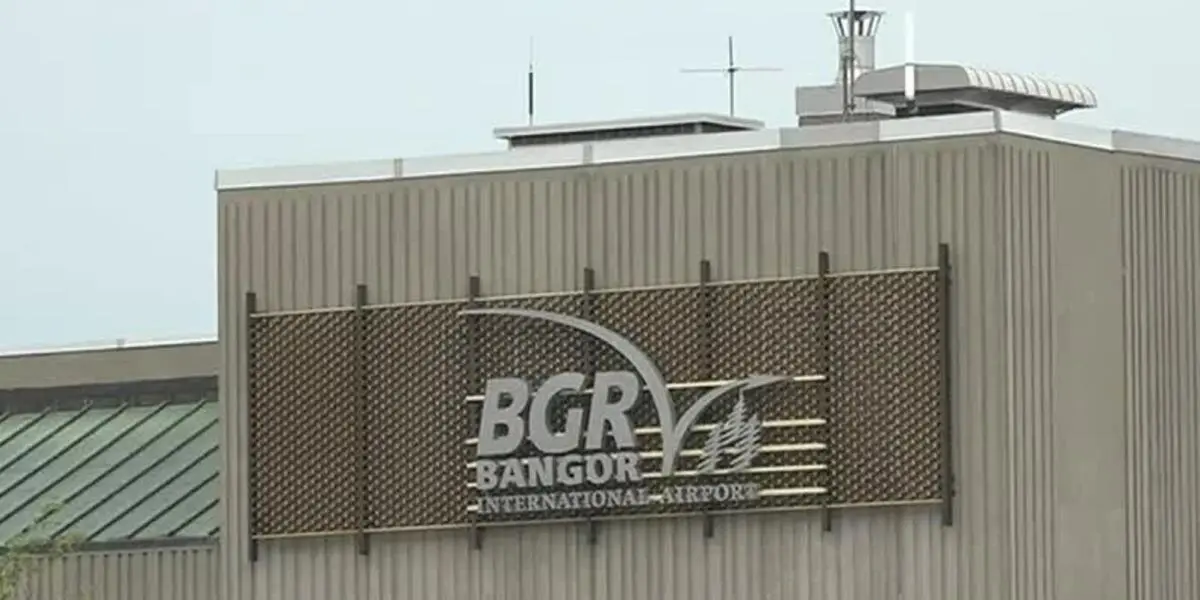
The suspect, identified in federal court documents as Kristina Kedysheva, a citizen of the Russian Federation, launched a multi-faceted assault on flight attendants that ultimately required the intervention of five crew members and fellow passengers to subdue. The severity of the onboard altercation forced the flight deck to make an unscheduled emergency landing at Bangor International Airport in Maine, where federal agents, air marshals, and local law enforcement were waiting on the tarmac.
Kedysheva made her initial appearance in federal court on Wednesday, facing serious federal charges, including interference with flight crew members and attendants, alongside violations related to criminal acts committed aboard aircraft in flight. Compounding her legal peril, the Department of Homeland Security (DHS) has confirmed that Immigration and Customs Enforcement (ICE) has lodged an administrative detainer against her.
This incident underscores the perilous intersection of aviation security, substance consumption at high altitudes, and the mounting physical risks faced by front-line airline personnel. As commercial aviation continues to grapple with elevated rates of disruptive passenger behavior in the post-pandemic era, this case serves as a stark reminder of the zero-tolerance policy enforced by federal authorities against those who endanger the safety of an aircraft.
Detailed Chronology: From Transatlantic Routine to Emergency Divergence
The Genesis of the Dispute
The sequence of events that transformed a standard nine-hour international journey into a federal criminal case began high above the Atlantic Ocean. United Airlines Flight 19 had departed cleanly from Milan Malpensa Airport, carrying hundreds of passengers toward Newark Liberty International Airport. According to federal court records and witness statements submitted to investigators, the flight proceeded normally for the initial hours of the journey.
However, tensions began to mount when Kedysheva requested continued alcohol service from the cabin crew. Flight attendants, observing signs of escalating intoxication and adhering to strict international aviation safety guidelines regarding alcohol consumption, exercised their professional judgment and refused to serve her additional drinks.
Rather than complying with the crew’s decision, Kedysheva’s demeanor rapidly deteriorated. Court documents detail that she became visibly agitated, verbally aggressive, and combative toward the staff members attempting to manage the cabin environment.
Escalation and Cabin Disruption
As the flight progressed, the situation moved from verbal non-compliance to overt disruption. When the aircraft encountered expected turbulence or approached a phase of flight requiring securing the cabin, the seatbelt sign was illuminated. According to testimony from an FBI special agent involved in the case, Kedysheva flatly refused to return to her assigned passenger seat.
Instead, she stood in the aisle and galley areas, pulling out her mobile device to aggressively film the flight attendants as they attempted to carry out their safety duties. Witnesses reported hearing shrill screaming emanating from the galley, creating an atmosphere of panic and disorientation among surrounding travelers. Fellow passengers noted that Kedysheva exhibited erratic behaviors consistent either with extreme intoxication, a acute mental health crisis, or a volatile combination of both.
The Physical Assault
The crisis reached a tipping point when the flight crew attempted to safely guide Kedysheva back to her seat and restore order in the cabin. Recognizing the immediate threat she posed to operational security, staff members moved to physically restrain her.
According to the criminal complaint, Kedysheva violently resisted the intervention. In a shocking display of aggression, she bit one of the flight attendants who was attempting to secure her. As additional crew members stepped in to assist, Kedysheva directed her attacks downward, kicking the same flight attendant forcefully in the stomach.
The physical impact and subsequent struggle resulted in a severe shoulder injury to the staff member, an injury that later required formal medical intervention upon landing. The chaos in the aisle prompted a collective response from the cabin; a coalition of five crew members and brave passengers ultimately converged on the area to pin the belligerent traveler down and secure her limbs before she could inflict further harm on the crew or fellow passengers.
Emergency Diversion and Law Enforcement Interception
Realizing that the safety of the flight had been severely compromised and that a crew member was injured, the flight deck made the critical decision to divert the aircraft. United Airlines Flight 19 altered its flight path away from its intended destination of Newark and headed north toward Bangor International Airport in Maine, a strategic diversion point for transatlantic flights experiencing mid-air emergencies.
Upon touching down safely in Bangor, the aircraft was met by a multi-agency law enforcement response. Agents from the Federal Bureau of Investigation (FBI), U.S. Air Marshals, and local municipal police officers boarded the aircraft. Kedysheva was immediately removed from the plane in restraints and taken into federal custody, while the injured flight attendant received prompt medical attention for their shoulder trauma.
Supporting Context & Metrics: The Crisis of In-Flight Air Rage
The Rising Tide of Disruptive Passengers
The incident involving Kristina Kedysheva is unfortunately not an isolated anomaly, but rather part of a troubling, multi-year surge in unruly passenger behavior that has plagued commercial aviation worldwide. Since the dramatic spike in disruptions observed during the COVID-19 pandemic—often fueled by mask mandates, political polarization, and increased alcohol consumption—airlines and federal regulatory bodies have struggled to return passenger behavior to pre-2020 baselines.
Federal Aviation Administration (FAA) data indicates that while the absolute peak numbers of unruly passenger reports seen in 2021 have slightly receded due to aggressive enforcement campaigns, the severity and violence of remaining incidents remain alarmingly high. Crew members report facing heightened hostility when enforcing basic federal aviation regulations, particularly those concerning seatbelts, electronic devices, and, crucially, the limitation of alcohol service.
Alcohol as a Catalyst for Aviation Incidents
The role of alcohol in aviation security incidents is a subject of ongoing scrutiny among industry stakeholders, labor unions, and regulatory agencies. Physiological studies demonstrate that the cabin pressure altitude of a commercial airliner—typically maintained between 6,000 and 8,000 feet—can accelerate the absorption of alcohol into the bloodstream, intensifying its intoxicating effects compared to sea-level consumption.
When passengers overindulge or demand service after being cut off, the results can be catastrophic for cabin morale and safety. Flight attendants are trained primarily as safety professionals—the equivalent of first responders in the sky—yet they frequently find themselves acting as de-escalation experts and physical security guards against intoxicated or unstable individuals. The Association of Flight Attendants (AFA) has repeatedly called for stricter airport-level screening of alcohol sales, standardized limits on drinks purchased prior to boarding, and the implementation of a federal "no-fly" list specifically for passengers convicted of unruly behavior, ensuring that individuals who assault crews cannot simply book another flight on a different carrier the following week.
The Bangor Diversion Hub
Bangor International Airport (BGR) plays a vital, unsung role in transatlantic aviation security. Featuring a massive runway capable of handling the largest wide-body commercial aircraft (such as the Boeing 777 and Airbus A350 operated on European routes) and equipped with robust federal customs and law enforcement infrastructure, Bangor serves as the primary diversion point for eastbound and westbound transatlantic flights experiencing mechanical failures, medical emergencies, or severe security threats.
When flights originating in European hubs like London, Paris, Frankfurt, or Milan encounter mid-air emergencies over the North Atlantic, Bangor is frequently the closest and most capable safe harbor. Local law enforcement agencies and federal partners stationed in Maine are well-versed in rapidly processing international security diversions, ensuring that disruptive individuals are swiftly neutralized and removed from the stream of commerce without endangering the broader aviation network.
Official Statements and Legal Framework
Department of Homeland Security and ICE Action
The gravity of Kedysheva’s actions prompted swift, multi-agency coordination at the federal level. In an official statement released following her court appearance, the Department of Homeland Security confirmed the severity of the charges and outlined the administrative measures taken regarding her immigration status.
"The Department of Homeland Security has lodged an ICE detainer for Kristina Kedysheva, a citizen of the Russian Federation, following her violent assault on two individuals aboard a commercial United Airlines flight," a DHS spokesperson stated.
An ICE detainer (Form I-247A) is an official request issued to local, state, or federal law enforcement agencies asking them to maintain custody of an individual temporarily—typically for up to 48 hours beyond their scheduled release time—to allow Immigration and Customs Enforcement to take custody of the individual for potential removal proceedings. Because Kedysheva is a foreign national accused of committing violent federal felonies on U.S. soil, her legal trajectory involves not only the criminal prosecution handled by the U.S. Attorney’s Office but also potential immigration enforcement actions once her criminal case concludes.
Federal Charges and Statutory Penalties
Kedysheva was formally charged with offenses that carry significant federal penalties designed to deter crimes committed within the jurisdiction of the special aircraft jurisdiction of the United States:
- Interference with Flight Crew Members and Attendants: Under Title 49 of the United States Code, Section 46504, assaulting, intimidating, or threatening a flight crew member or flight attendant so as to interfere with the performance of their duties—or boarding the aircraft with the intent to do so—is a federal felony. If the offense involves the use of a dangerous weapon or causes physical injury, the penalties escalate drastically.
- Application of Certain Criminal Laws to Acts on Aircraft: Federal statutes grant the United States extraterritorial and direct jurisdictional authority over crimes committed aboard aircraft operating in flight to or from the United States, regardless of where the incident technically occurred over international waters.
Legal experts note that federal prosecutors have increasingly utilized these statutes to secure maximum prison sentences, signaling a zero-tolerance approach to air rage. Defendants convicted of interfering with flight crews routinely face multi-year prison sentences, substantial financial restitution orders covering the cost of flight diversions—which can easily run into tens or hundreds of thousands of dollars in fuel, landing fees, and passenger compensation—and lifetime bans from commercial aviation carriers.
Future Outlook and Industry Implications
Legal Proceedings Ahead
As Kristina Kedysheva navigates the federal court system in Maine, her case will serve as a prominent test of the judicial system’s resolve in handling transnational aviation crimes. Her defense attorneys will likely explore various avenues, potentially evaluating the intersection of her behavior with mental health factors, substance abuse issues, or language barriers. However, the abundance of digital evidence—including mobile phone footage captured by Kedysheva herself, corroborated by multiple independent passenger accounts and the detailed medical records of the injured flight attendant—presents a formidable challenge for her defense.
Following the resolution of her federal criminal proceedings—whether through a negotiated plea agreement or a trial before a federal judge or jury—Kedysheva will face the execution of the ICE detainer. This likely means transfer to immigration custody and subsequent deportation proceedings back to the Russian Federation, followed by a permanent ban preventing her from ever legally re-entering the United States.
Broader Implications for Commercial Aviation
The United Flight 19 incident casts a long shadow over the broader aviation industry, prompting renewed calls for systemic reform:
- Enhanced Crew Training: Airlines are continuing to upgrade defensive tactics and verbal de-escalation training for cabin crews, ensuring that staff members are equipped to handle increasingly aggressive travelers before situations erupt into physical violence.
- Information Sharing: Industry groups are advocating for better real-time communication between gate agents, bar/restaurant vendors in international departure terminals, and flight crews to identify potentially intoxicated passengers before they ever step onto an aircraft.
- Deterrence Through Prosecution: Federal agencies have emphasized that every single instance of unruly passenger behavior is thoroughly investigated and prosecuted. By publicizing high-profile arrests, diversions, and subsequent federal prison sentences, authorities hope to restore a culture of compliance and mutual respect in the skies.
Ultimately, the chaotic Milan-to-Newark journey serves as a cautionary tale for international travelers. The cockpit door may be locked, but the cabin remains a shared, highly vulnerable community where personal accountability is not merely a courtesy—it is a strict legal and physical imperative.

0 Comments