

Executive Overview
In its highly anticipated monthly crop production report released this week, the United States Department of Agriculture (USDA) provided a comprehensive snapshot of the nation’s agricultural landscape, detailing the projected yields and harvest volumes for the 2026 growing season. Based on field conditions evaluated as of early August, the data reveals a fractured agricultural market characterized by notable contractions in specific sectors—most drastically in peanuts and cotton—alongside continued strong production numbers for primary row crops like corn and soybeans.
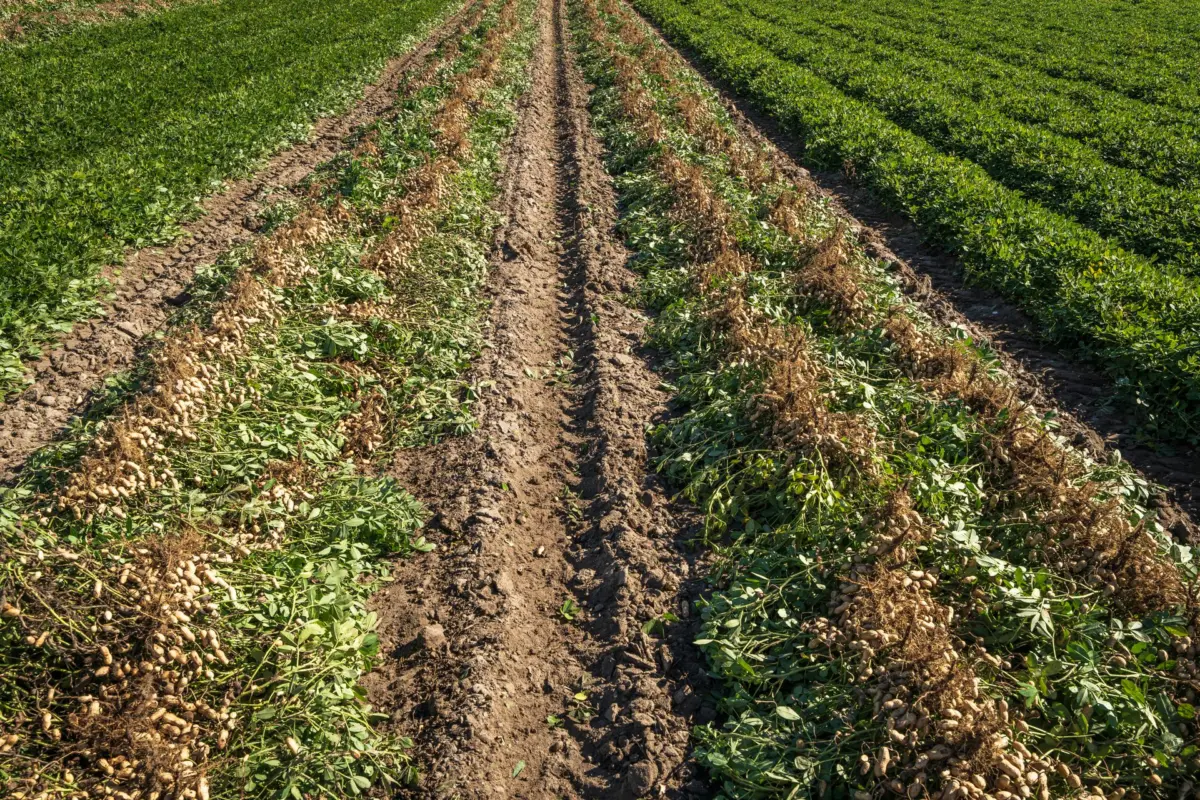
For U.S. peanut farmers, the figures paint a challenging picture. Market reports and federal data indicate an alarming 27 percent overall drop in peanut production potential, impacting both total planted acreage and expected per-acre yields. This severe reduction points toward a tighter domestic supply chain and potential shifts in market pricing moving into the latter half of the year.
Similarly, the all-cotton sector faces downward pressures, with forecasts projecting a two percent dip in total bales and a substantial reduction in average per-acre yields compared to the previous year. Conversely, staple feed and oilseed commodities demonstrate greater resilience. Despite minor yield adjustments due to shifting weather patterns, corn production is pacing toward the second-highest harvest on record at an estimated 16 billion bushels, while soybean production is projected to climb six percent to 4.52 billion bushels.
This report serves as a critical bellwether for agricultural economists, commodity traders, and producers alike, outlining the shifting vulnerabilities and strengths of American farming as producers navigate the economic and environmental headwinds of the 2026 production cycle.
Detailed Chronology: The Road to the August USDA Forecast
The pathway to the August USDA crop production report involves months of meticulous data collection, producer surveys, satellite imagery analysis, and on-the-ground meteorological assessments. Understanding how these figures materialize requires tracing the timeline of agricultural monitoring leading up to this week’s release:
Spring Planting Intentions and Initial Weather Shockwaves
The story of the 2026 harvest began months prior during the early spring planting window. As agricultural producers across the nation finalized their crop rotations, early projections indicated a cautious approach to acreage allocation. Driven by fluctuating input costs—including fertilizers, fuel, and specialized seed—farmers weighed the profitability of corn and soybeans against alternative specialty crops like peanuts and cotton.
Mid-Season Crop Development and Early August Assessments
As crops transitioned from the vegetative stage to pod-setting, grain-filling, and boll development, regional weather patterns exerted significant influence. The USDA’s National Agricultural Statistics Service (NASS) deployed extensive surveys to producers and agronomists across major growing regions, gathering subjective field data complemented by objective yield measurements.
By August 1st, a clear division in crop performance began to emerge. Regions heavily reliant on dryland farming experienced varied precipitation levels, directly impacting the development of taproot and pod systems in crops like peanuts and cotton. Meanwhile, primary corn and soybean belts benefited from generally favorable moisture levels during critical pollination windows, buffering them against localized dry spells.
The Official August Release
Culminating months of data gathering, the USDA published its official report this week. The release immediately captured the attention of agricultural markets, igniting discussions across commodity exchanges and farming cooperatives. While grain markets absorbed the news of a slightly smaller corn harvest relative to the record-breaking benchmarks of prior years, the spotlight quickly shifted to the dramatic declines reported within the peanut and cotton sectors, prompting immediate re-evaluations of supply and demand balances for the upcoming marketing year.
Supporting Context & Metrics: Breaking Down the Numbers
A granular examination of the USDA’s August figures reveals distinct trends across the four major commodity groups: corn, soybeans, cotton, and peanuts. Each sector tells a unique story of adaptation, weather impacts, and market positioning.
Corn: The Second-Highest Production on Record
Despite experiencing slight downward revisions compared to the prior year’s stellar output, the U.S. corn market remains in a position of formidable strength.
- Total Production Forecast: Grain production is projected to reach an impressive 16 billion bushels. While this represents a six percent decrease from the 2025 totals, it safely secures its place as the second-highest production volume in U.S. history.
- Yield Metrics: Based on current field conditions, the national average corn yield is forecast at 180 bushels per acre. However, this reflects a notable decline of 5.8 bushels per acre when compared against the final yields realized in the previous production cycle.
This yield contraction reflects the reality of weather variability across the Corn Belt, where timely rains were occasionally offset by mid-summer heat spikes. Nevertheless, absolute volume remains high, ensuring robust domestic supplies for feed, ethanol, and export markets.
Soybeans: Expanding Harvest Volumes Despite Minor Yield Tightening
Soybean producers are looking at a more expansive harvest landscape for beans this season, driven by favorable acreage allocation.
- Total Production Forecast: Soybean production for beans is forecast at 4.52 billion bushels, representing a solid six percent increase from the previous year.
- Yield Metrics: The average yield is projected to hit 52.7 bushels per acre. This is virtually flat, showing a slight decrease of just three-tenths of a bushel per acre compared to last year’s figures.
The modest reduction in per-acre yield is more than offset by the expansion in harvested acres, positioning the soybean sector for a strong economic performance as global demand for protein meal and vegetable oil remains steady.
Cotton: Reductions in Bales and Per-Acre Yields
The all-cotton sector continues to face persistent headwinds, continuing a trend of tighter domestic fiber supplies.
- Total Production Forecast: All cotton is forecast at 13.6 million 480-pound bales, marking a two percent decline from the previous year.
- Yield Metrics: The average harvested yield is forecast at 798 pounds per acre, representing a significant drop of 54 pounds per acre from last year’s levels.
These reductions highlight the susceptibility of cotton crops to regional weather anomalies, particularly in the southern and southwestern production zones where moisture management remains an ongoing challenge.
Peanuts: A Severe 27 Percent Contraction
Perhaps the most striking revelation within the federal report centers on U.S. peanut production, which is sounding alarms across the supply chain.
- Production and Acreage Impact: Overall peanut production is projected to plummet by 27 percent overall.
- Market Availability: This steep decline is not isolated to a single metric; it encompasses a reduction in total planted acreage coupled with a diminished per-acre yield outlook for the upcoming harvest.
Consequently, industry experts anticipate a significantly tighter market for peanuts in the coming year. Food manufacturers, peanut butter processors, and exporters will likely need to navigate reduced domestic inventories, which could exert upward pressure on prices and necessitate strategic sourcing adjustments.
Official Statements and Industry Perspectives
The release of the August crop report has generated significant dialogue among agricultural stakeholders, extension agents, and commodity analysts. Tyron Spearman, reporting for Southeast AgNet, highlighted the immediate implications of the data during his agricultural broadcast update:
"Overall peanuts, they say, are down 27 percent overall, and not only in planted acres, but in yield coming out this coming year, there will be fewer peanuts available to the market."
This sentiment resonates deeply within agricultural communities across the American Southeast, where peanut farming serves as a vital economic engine. Local agricultural extension specialists point out that while row crops like corn and soybeans maintain adequate cushion through sheer scale, specialty and rotational crops like peanuts and cotton are experiencing compounding pressures. Producers in these sectors have faced a difficult balancing act, attempting to manage escalating operational expenses against unpredictable weather windows that disproportionately affect sensitive taproot and boll-forming crops.
Industry associations have similarly emphasized the need for risk management strategies. With peanut supplies projected to tighten dramatically, growers are encouraged to closely monitor contracting opportunities, while processors and handlers evaluate alternative storage and supply protocols to mitigate potential market volatility.
Future Outlook: Navigating the 2026 Harvest and Beyond
As American agriculture moves past the pivotal August reporting benchmark, the focus shifts rapidly toward final field maturation, harvest execution, and market adaptation. The divergence in crop fortunes highlighted by the USDA report establishes a complex economic backdrop for the remainder of 2026.
Supply Chain and Market Adjustments
For grain and oilseed handlers, the abundance of corn and soybeans—despite minor per-acre yield dips—suggests that logistics, storage capacity, and transportation infrastructure will face heavy utilization as the harvest peaks in the autumn months. Elevator operators and export terminals must prepare for high-volume intake, even as global macroeconomic factors influence export competitiveness.
Conversely, the stark 27 percent contraction in peanut production demands immediate tactical adjustments. With fewer peanuts slated to enter the market, buyers and manufacturers must prepare for a tighter supply environment. Growers who managed to secure strong yields despite environmental hurdles may find themselves in a favorable marketing position, though overall industry anxiety regarding input costs versus output volume remains palpable.
Weather Vigilance and Final Crop Determinations
Agricultural meteorologists emphasize that the August report remains a forecast based on conditions evaluated at a specific point in time. The final chapters of the 2026 growing season will be written over the coming weeks as late-season weather events—such as tropical storm activities in the Southeast and early frost risks in the northern plains—play out.
Farmers, extension agents, and federal statisticians will continue to monitor field developments closely. Subsequent USDA reports in the autumn will refine these early estimates, ultimately delivering the definitive accounting of a harvest year defined by remarkable resilience in staple grains and profound supply tightening in key specialty crops.

0 Comments