

Executive Overview
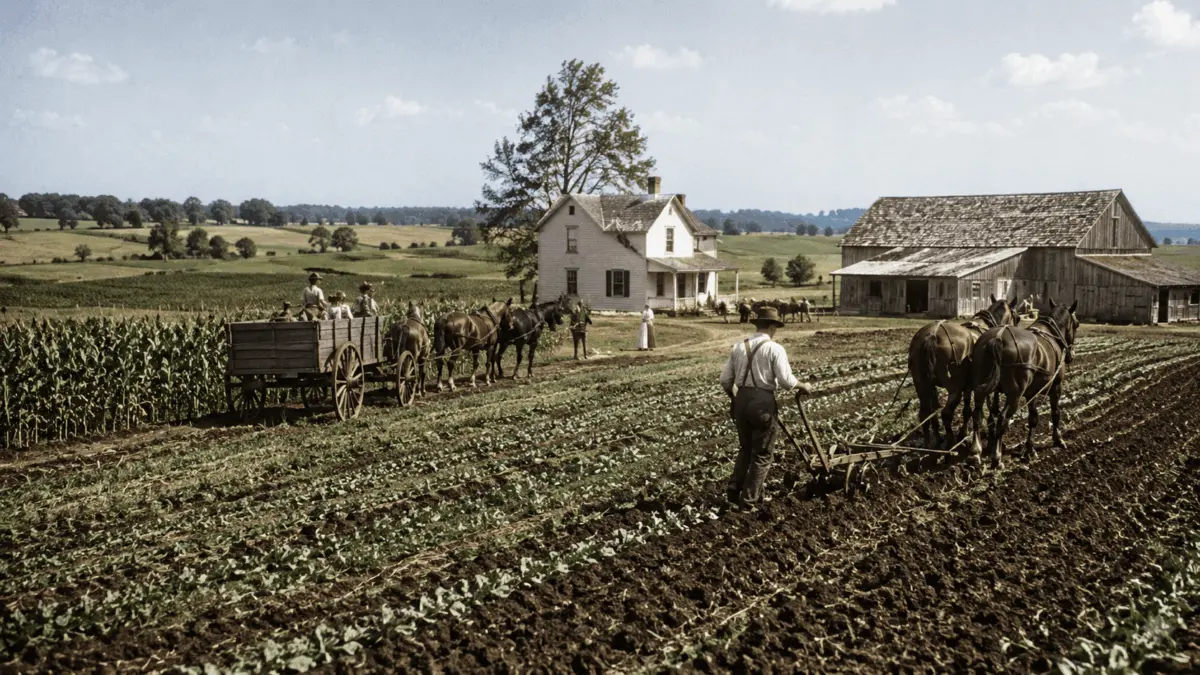
For generations, the conventional telling of the American story was one written through the ink of political decrees, battlefield dispatches, and the grand legislation of coastal capitals. In traditional historical texts, the nation’s epic was largely defined by presidential administrations, constitutional debates, and military campaigns. Yet, this traditional framework fundamentally overlooked the literal engine of the American republic: the dirt, sweat, and economic orchestration of the farm families who moved westward to carve a civilization out of the wilderness.
The narrative of American expansion was inextricably bound to the plow, the livestock trail, and the agrarian community. Recognizing this massive blind spot in academia, early 20th-century visionary Louis B. Schmidt emerged as a foundational pioneer. Associated with Iowa State College (now Iowa State University), Schmidt challenged the academic establishment beginning in the mid-1910s. He argued that the historical trajectory of the United States could not be accurately charted without placing agricultural development at the very center of the curriculum.
Schmidt’s advocacy laid the groundwork for an entirely new academic discipline. By transforming agriculture from a mere background detail into a rigorous field of historical and economic study, he ensured that the contributions of rural America were formally codified. Today, the study of agricultural history encompasses everything from technological evolution and land settlement patterns to rural sociology and public policy. This comprehensive narrative explores the rise of agricultural history, the pivotal role of Louis B. Schmidt, and why understanding the agrarian past remains vital for modern policymakers, economists, and researchers alike.
Detailed Chronology: The Evolution of Agricultural Historiography
To understand the magnitude of Schmidt’s intervention, one must examine the state of American higher education at the turn of the 20th century. History departments across the nation were overwhelmingly focused on political history, diplomatic relations, and institutional governance. The daily realities of rural life—crop yields, market fluctuations, infrastructural development, and the arduous labor of westward expansion—were frequently relegated to local folklore rather than serious historical inquiry.
The Turning Point: 1915 and the Call to Action
The pivotal shift began to take shape around 1915. During this period, Louis B. Schmidt began publicly urging his fellow historians to drastically reevaluate their approach to American development. He posited that the nation’s phenomenal economic growth, commercial expansion, and social structuring were deeply rooted in its agricultural foundations. Schmidt did not view farming as a peripheral economic sector; rather, he argued that agriculture was the primary catalyst that stimulated industrial growth, financed foreign trade, and populated the vast expanse of the American heartland.
Institutionalizing the Discipline (1915–1920s)
Moving beyond theoretical critique, Schmidt took direct action at Iowa State College. In the years surrounding the mid-to-late 1910s, he spearheaded the introduction of formal agricultural history courses. This was a radical pedagogical departure for the era. By embedding the study of farming, land policy, and rural economics directly into the academic framework, Schmidt helped establish Iowa State as an intellectual incubator for the discipline.
His coursework bridged the gap between the hard sciences of agronomy and the interpretive humanities of history and economics. Students were taught to examine how agricultural innovations—such as the mechanization of harvesting, improvements in crop genetics, and the expansion of the rail network—directly altered the social fabric of the United States.
Academic Expansion and Institutionalization (1930s–1950s)
Schmidt’s initial efforts catalyzed a nationwide movement. Throughout the interwar period and into the post-World War II era, the academic landscape began to shift dramatically. By the 1950s, the momentum generated by early pioneers culminated in the establishment of dedicated agricultural history curricula at dozens of colleges and universities across the United States.
These programs were integrated into diverse academic departments, including history, economics, agricultural economics, and rural sociology. The founding of specialized journals, professional organizations, and collaborative research initiatives further solidified agricultural history as a respected, multi-faceted discipline.
Supporting Context & Metrics: The Economic and Social Blueprint
The necessity of Schmidt’s academic crusade becomes starkly apparent when examining the quantitative and qualitative impact of agriculture on America’s formative years. During the 19th and early 20th centuries, the vast majority of the American population lived in rural areas or small towns directly dependent on agricultural commerce.
The Engine of Westward Expansion
As farm families moved westward—propelled by federal legislation such as the Homestead Act of 1862—they did not simply occupy land; they engineered an economic revolution. The settlement of the American Midwest and Great Plains required massive capital investments, innovative financial networks, and complex transportation systems.
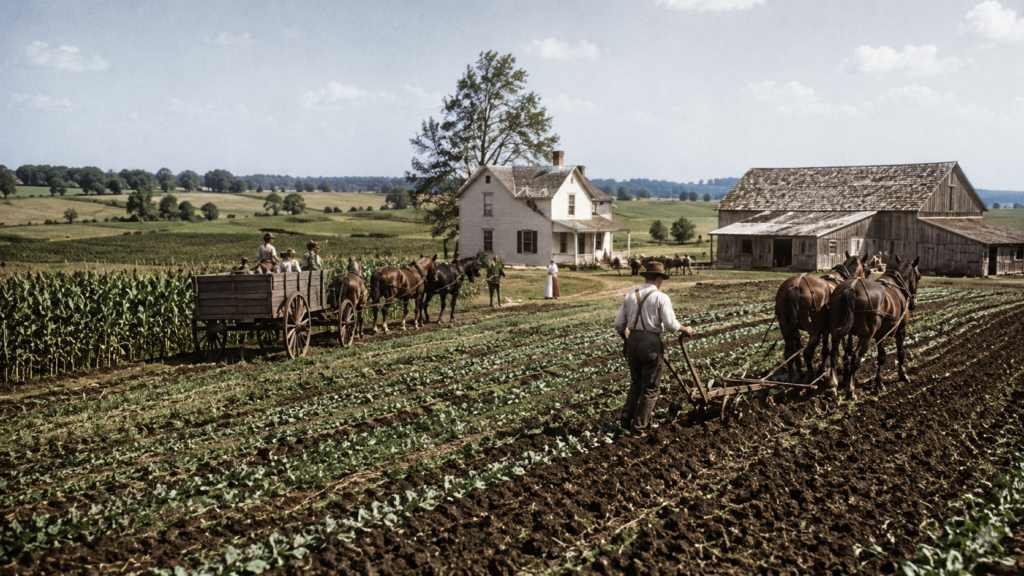
- Infrastructure Development: The pressure to move bulky agricultural commodities to eastern markets and European ports directly drove the rapid expansion of the canal systems, river steamboat fleets, and transcontinental railroads.
- Technological Innovation: The transition from subsistence farming to commercial agriculture spurred the Industrial Revolution. Innovations in steel plows, mechanical reapers, and threshing machines created a symbiotic relationship between heavy manufacturing and agricultural production.
- Global Trade Integration: American grain and cotton became dominant commodities on the global market, generating the foreign capital necessary to finance the nation’s burgeoning industrial infrastructure.
The Scope of Modern Agricultural History
What began as a localized push to study crop production and land settlement has blossomed into a comprehensive academic field. Modern agricultural history analyzes a vast array of interconnected subjects:
- Labor Dynamics: The shifting roles of family labor, immigrant workforces, tenant farming, sharecropping, and the devastating impacts of systemic inequalities within rural economies.
- Environmental Interaction: How agricultural practices influenced soil health, water resources, deforestation, and how farmers adapted to ecological crises such as the Dust Bowl.
- Government Policy: The evolution of federal intervention, from early land grants and the establishment of the USDA and Land-Grant university systems to 20th-century price supports, New Deal programs, and modern farm bills.
Official Statements and Academic Perspectives
The enduring legacy of Louis B. Schmidt’s work is frequently highlighted by contemporary historians, economists, and agricultural educators who recognize that the past provides an indispensable roadmap for modern challenges.
In historical reviews evaluating the trajectory of American historiography, scholars frequently note Schmidt’s prescience. As one historical evaluation underscores, Schmidt’s 1915 appeals served as a vital wake-up call to an insular academic community. He argued that omitting agriculture from historical analysis created a fundamental distortion of the American experience.
"To understand the rise of the United States as a global superpower, one must first understand the furrowed fields of the Midwest and the arduous logistics of getting harvest to market," scholars note when summarizing the core thesis of early agrarian historians. "Louis B. Schmidt recognized that the story of America’s economic might was written by the men and women who cleared the land, managed volatile markets, and built resilient rural communities against staggering odds."
Furthermore, modern agricultural economists and policy historians emphasize that the structural challenges facing contemporary farmers—such as supply chain vulnerabilities, climate adaptation, trade tariffs, and generational land transfer—are deeply historically conditioned. By studying the successes and failures of past agricultural policies, modern stakeholders are better equipped to navigate current economic turbulence.
Future Outlook: The Relevance of Agrarian History in the 21st Century
As agriculture enters a new era defined by precision farming, biotechnology, data analytics, and intense global competition, the work initiated by Louis B. Schmidt more than a century ago remains profoundly relevant.
Informing Modern Policy
For contemporary policymakers, agricultural history is not merely a nostalgic look backward; it is a critical diagnostic tool. Modern legislation governing crop insurance, rural broadband expansion, conservation incentives, and international trade agreements often builds upon precedents established during the New Deal and the post-war agricultural booms. Understanding how past administrations grappled with overproduction, debt crises, and environmental degradation allows current leaders to craft more resilient, forward-looking policies.
Preserving Rural Heritage for Future Generations
The imperative to preserve and teach the story of American agriculture extends far beyond university lecture halls. As the generational gap between the average citizen and the farm widens—with fewer Americans retaining direct ties to agricultural production—initiatives that highlight the history of farming help bridge a dangerous cultural divide. Preserving the historical record ensures that the public appreciates the immense complexity, innovation, and perseverance required to feed a nation.
Louis B. Schmidt helped pry open the doors of academic history to ensure that farm families were never treated as footnotes in the grand American narrative. More than a century after his pioneering efforts at Iowa State, his core message endures: the history of the United States cannot be fully comprehended without the story of American agriculture. As modern researchers continue to explore the intersections of technology, economics, and rural life, Schmidt’s legacy remains a guiding light—reminding us that the roots of America’s future are firmly planted in its agrarian past.
This retrospective on agricultural history is brought to you as part of the American Agriculture History series.

0 Comments