

By Julio Fuentes | Published by the Florida State Hispanic Chamber of Commerce
Executive Overview
Twenty-three years ago, the United States altered the course of modern medical history. Through the launch of the President’s Emergency Plan for AIDS Relief (PEPFAR), Washington forged an unprecedented path to combat the global HIV/AIDS epidemic. Widely recognized as one of the most successful and enduring global health initiatives ever conceived, PEPFAR has saved more than 26 million lives, stabilized fragile democracies, and fundamentally elevated America’s moral and diplomatic standing across the globe.
Today, however, this monumental legacy stands at a perilous crossroads. More than a billion dollars in critical funding—appropriated by a bipartisan Congress for PEPFAR and related global health programs—is at imminent risk of disappearing entirely without a single floor vote or legislative debate.
The crisis is not rooted in a lack of congressional authorization, nor is it a consequence of partisan gridlock over new spending. Rather, it is an administrative bottleneck. The Office of Management and Budget (OMB) has thus far failed to release funds that have already been legally designated for life-saving international health initiatives. If these funds are not officially obligated before midnight on September 30—the conclusion of the federal fiscal year—they will vanish through a bureaucratic mechanism known as a "pocket rescission." Money duly approved by the United States Congress will simply expire on paper, quietly evaporating from the federal ledger while human lives hang in the balance.
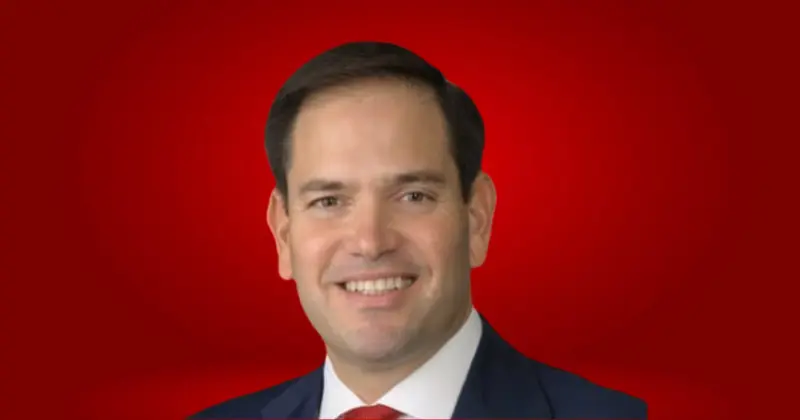
The individual uniquely positioned to halt this administrative crisis is Secretary of State Marco Rubio. Having spent fourteen years representing the state of Florida in the United States Senate—where he established a consistent, bipartisan record of supporting PEPFAR and international public health infrastructure—Rubio now oversees the remnants of the program from his post at Foggy Bottom.
This article examines the mechanisms behind the current budgetary standoff, evaluates the devastating real-world human costs of inaction—particularly for diaspora communities in Florida and nations like Haiti—and outlines the urgent imperative for executive intervention before the fiscal deadline closes.
Detailed Chronology: The Anatomy of a Budgetary Crisis
To understand how over a billion dollars in appropriated health funding could simply vanish, one must trace the complex lifecycle of federal appropriations, executive branch implementation, and administrative oversight.
The Legislative Authorization
Months—and in some cases, years—prior to the current fiscal standoff, the United States Congress engaged in the rigorous, multi-committee process of drafting, debating, and passing appropriations bills. These measures underwent meticulous scrutiny by both the House and Senate Committees on Appropriations before receiving overwhelming bipartisan majorities and being signed into law. Under the U.S. Constitution, Congress holds the "power of the purse," meaning the executive branch is constitutionally obligated to execute the spending bills passed by lawmakers and signed by the president.
The Administrative Stalling
Despite this constitutional mandate, appropriated funds do not automatically flow from the U.S. Treasury to foreign assistance implementers, multilateral organizations, or on-the-ground healthcare providers. The funds must first pass through the administrative machinery of the executive branch, specifically coordinated through the Office of Management and Budget (OMB) and the Department of State. In recent months, critical allocations earmarked for PEPFAR and associated global health programs have stalled within this administrative pipeline. As weeks turned into months, the release of these funds slowed to a trickle, prompting mounting alarm among global health advocates, humanitarian organizations, and lawmakers.
The September 30 Deadline and "Pocket Rescissions"
Federal funding operates on a strictly regulated calendar governed by the federal fiscal year, which runs from October 1 through September 30. When Congress appropriates multi-year or single-year funds, agencies are legally required to "obligate" those funds—meaning they must legally bind the government to a contract, grant, or cooperative agreement—before the expiration date of the appropriation.
If funds remain unobligated by midnight on September 30, they expire. When this expiration occurs due to administrative inaction or intentional bureaucratic stalling rather than an explicit congressional vote to rescind funds, it is colloquially and procedurally referred to as a "pocket rescission." In effect, executive branch inertia can override legislative intent, permanently defunding vital programs without accountability or transparency.
Precedents for Executive Intervention
Fortunately, history demonstrates that this trajectory is not inevitable. Earlier this year, a nearly identical crisis threatened $600 million intended for Gavi, the Vaccine Alliance. Much like the current PEPFAR allocation, those funds had been duly appropriated by Congress, withheld by administrative agencies, and faced an imminent expiration date.
When a coalition of bipartisan senators sounded the alarm, they urged Secretary of State Marco Rubio to intervene directly with the administration. Recognizing the urgency and the legal reality of the congressional mandate, Rubio exercised his executive authority, directing the State Department to cut through the bureaucratic red tape and disburse the $600 million to Gavi just in time. That decisive action preserved critical immunization pipelines and demonstrated that executive leadership remains fully capable of correcting administrative impasses when the political will is present.
Supporting Context & Metrics: The Extraordinary Return on Investment
Few government initiatives in the history of United States foreign policy can point to empirical outcomes as measurable, enduring, and transformative as PEPFAR.
The Human Toll of Investment
Since its inception in 2003 under the administration of President George W. Bush, the United States has invested more than $100 billion into PEPFAR. That investment has yielded staggering dividends:
- Over 26 Million Lives Saved: Epidemiological studies confirm that PEPFAR-supported interventions have directly averted tens of millions of deaths across sub-Saharan Africa, the Caribbean, and other heavily impacted regions.
- Millions of Children Protected: Millions of healthy babies have been born HIV-free to mothers living with HIV, virtually eliminating mother-to-child transmission in numerous partner nations.
- Stabilizing Healthcare Workforces: PEPFAR has trained hundreds of thousands of healthcare workers—doctors, nurses, laboratory technicians, and community outreach coordinators—building localized medical infrastructure that serves as the backbone for broader pandemic preparedness.
The Geopolitical Dividend
Beyond its undeniable moral imperative, PEPFAR has served as one of America’s most effective instruments of soft power. In regions where strategic competition with rival global powers is fierce, PEPFAR’s tangible delivery of lifesaving medicine has fostered deep, enduring goodwill toward the United States among foreign populations and governments alike. To allow bureaucratic inertia to undermine this historic asset is not merely a domestic policy failure; it is a profound unravelling of American strategic influence.
Real-World Consequences of Funding Cuts
The dangers of withholding these funds are not theoretical. Earlier this summer, global health researchers and field epidemiologists released alarming data indicating that even preliminary reductions and delays in PEPFAR disbursements have begun to fracture healthcare delivery systems. Clinics in resource-limited settings have reported critical shortages of antiretroviral therapies (ART), diagnostic testing kits, and safe-sex prophylactics.
When HIV treatment is interrupted, viral loads rebound, drug resistance develops, and transmission rates rise. The institutional progress achieved over two decades of tireless work is fragile; disrupting the financial pipeline risks reversing years of public health gains in a matter of months.
Localized Impact: The Florida-Haiti Connection
While global health initiatives are frequently discussed in abstract terms of international diplomacy and macroeconomic aid, the consequences of the current funding freeze hit remarkably close to home—particularly for the state of Florida.
The Crisis in Haiti
Among the nations most severely impacted by recent disruptions to PEPFAR and related health funding is Haiti. Plagued by persistent political instability, gang violence, economic collapse, and institutional dysfunction, Haiti’s public healthcare system relies heavily on international aid to maintain basic operations. For thousands of HIV-positive Haitians, PEPFAR-backed clinics represent the absolute difference between life and death.
The Human Pipeline to Florida
For Floridians, the plight of Haiti is not a distant overseas concern; it is a matter of immediate familial and community bonds. Roughly half of all Haitian immigrants residing in the United States live in the state of Florida, concentrated heavily within the vibrant urban and suburban communities of Miami-Dade, Broward, and Palm Beach counties.
In these communities, the debate over federal appropriations translates into deeply personal human terms. Families living in South Florida regularly support, communicate with, and worry about aging parents, siblings, and children remaining in Haiti who depend entirely on uninterrupted access to lifesaving medication. When Washington bureaucrats delay health funding, the shockwaves are felt directly in South Florida living rooms, churches, and community centers.
Official Statements and Stakeholder Perspectives
As the September 30 deadline approaches, a broad coalition of business leaders, humanitarian organizations, and policy experts have raised their voices in unified concern.
The Business and Economic Viewpoint
Business leaders emphasize that economic stability and global health are inextricably linked. Unchecked disease outbreaks devastate local labor forces, suppress consumer markets, and create the kind of macroeconomic instability that deters international trade and investment.
Speaking on behalf of the commercial community, business advocates have stressed that maintaining strong international health partnerships is a fundamental component of robust global commerce. The Florida State Hispanic Chamber of Commerce, under the leadership of President and CEO Julio Fuentes, has consistently advocated for policies that protect vulnerable populations both domestically and abroad, emphasizing that fiscal stewardship must never come at the expense of human survival.
Congressional Intent vs. Administrative Stalling
Constitutional scholars and legislative aides alike have expressed deep frustration regarding the role of the Office of Management and Budget in this standoff. By utilizing procedural delays to effectively institute pocket rescissions, the executive branch bypasses the constitutional authority of Congress.
Lawmakers from both sides of the aisle have long maintained that once an appropriation is enacted into law, the executive branch has a fiduciary and legal responsibility to disburse those funds transparently and expeditiously. Permitting administrative agencies to unilaterally cancel congressionally approved programs sets a dangerous precedent for future governance.
Future Outlook: A Call to Action for Secretary Rubio
As the calendar turns toward the final weeks of September, the window for effective intervention is closing rapidly. The bureaucratic machinery in Washington is notoriously sluggish, and reversing a pocket rescission at the eleventh hour requires decisive, unambiguous leadership from the top.
An Appeal to Proven Leadership
The path forward is clear. This is not a request for new legislative authorizations or additional taxpayer spending. It is a straightforward appeal to release funds that the United States Congress has already approved—monies dedicated to a program that Secretary Marco Rubio championed throughout his distinguished fourteen-year career in the United States Senate representing the state of Florida.
Secretary Rubio has already proven that he possesses the institutional insight and administrative authority to resolve these standoffs. His decisive intervention this summer to rescue the $600 million allocation for Gavi demonstrated a commendable commitment to safeguarding American global health commitments and honoring congressional intent.
The Stakes on October 1
If the billion-plus dollars currently languishing in bureaucratic limbo are not fully obligated by October 1, they will be lost permanently. They will vanish through a Washington procedural maneuver that ignores the will of Congress, damages America’s standing as a reliable global partner, and—most tragically—places thousands of vulnerable lives at catastrophic risk.
The choice before Secretary Rubio and the administration is stark: allow bureaucratic inertia to silently dismantle one of the greatest humanitarian achievements in modern history, or exercise executive leadership to release the funds, honor the law, and save countless lives. For the millions of patients worldwide relying on PEPFAR—and for the Florida families whose loved ones hang in the balance—the time for decisive action is right now.
Julio Fuentes is the President and CEO of the Florida State Hispanic Chamber of Commerce.

0 Comments