

Executive Overview
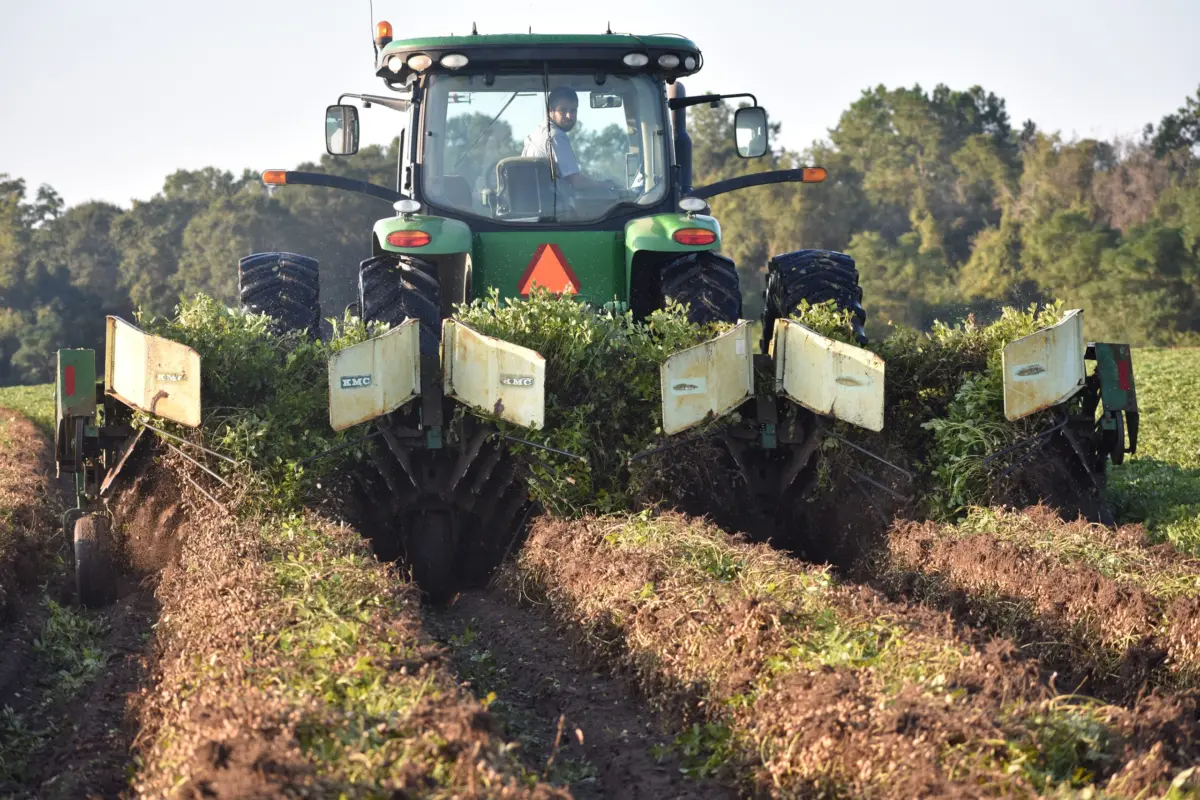
Across the sun-drenched agrarian landscapes of the American Southeast, the rhythmic roar of specialized digging equipment echoes through the countryside. It is peak peanut harvest season, a period of intense labor, high-stakes logistics, and nervous anticipation for growers. Tractors pulling multi-row diggers slice cleanly through the soil, unearthing the peanut vines, inverting them to dry under the late-summer sun, and setting off a chain reaction that moves millions of tons of produce from fields to local buying points.
Yet, beneath the surface of this bustling seasonal activity lies a profound market paradox. Despite a significant, deliberate contraction in planting acreage by American farmers—driven by disappointing early contract offers—farm-gate prices remain stubbornly locked at approximately $500 per ton. Standard economic theory dictates that a drastic reduction in supply should trigger an upward trajectory in commodity valuation. However, the modern agricultural market is rarely so straightforward.
A colossal carry-forward supply of 1.6 million tons from the previous year’s harvest has effectively neutralized the supply-reduction strategy. Total available peanut supplies for the current marketing year hover around 4.23 million tons, creating an over-supplied buffer that continues to suppress prices. For producers grappling with rising input costs, unpredictable weather patterns, and shifting global trade dynamics, the current season is a masterclass in market frustration.
This comprehensive report examines the mechanics of the ongoing peanut harvest, analyzes the macroeconomic factors keeping prices anchored at $500 per ton, breaks down USDA data regarding acreage reductions and carryover inventories, and evaluates what the future holds for the nation’s peanut producers.
Detailed Chronology: From Field to Buying Point
The journey of a peanut from the subterranean pod to the commercial marketplace is a carefully timed, highly regulated logistical ballet. As the harvest season gains momentum, farmers operate on razor-thin margins of weather and timing.
The Digging Phase
The harvest officially begins with digging and inverting. Farmers must monitor soil maturity meticulously, analyzing pod mesocarp color to determine the precise window of peak maturity. If dug too early, the crop suffers from low yields and poor quality; if harvested too late, fragile pegs snap, leaving valuable pods trapped in the soil.
Once the optimal window is identified, specialized digger-shakers slice the taproot just below the soil line, lift the plant, shake the dirt from the pods, and invert it into a neat windrow. The plants remain in these windrows for several days, allowing field drying to reduce moisture content before combine harvesters strip the pods from the vines.
Transport and Delivery
Following combining, the raw peanuts are loaded into trailers and hauled immediately to local buying points. Speed is of the essence, particularly when humidity and late-season rainfall threaten to degrade quality or encourage the growth of Aspergillus molds, which can produce dangerous aflatoxins.
Upon arrival at the buying point, each load undergoes rigorous inspection. Technicians draw representative samples to test for foreign material, damaged kernels, and, most importantly, moisture content. Moisture levels must fall within strict safety thresholds before the crop can be safely stored or processed.
Grading and Valuation
Once moisture and quality standards are verified, the peanuts are officially graded. This federally supervised grading process determines the exact financial payout the farmer will receive. Because early contracts offered by shellers earlier in the season failed to reflect the true cost of production, many growers opted to roll the dice on the open market, making the daily grade results at local buying points more critical than ever to their bottom lines.
Supporting Context & Metrics: The Economics of Supply, Demand, and Carryover
To understand why farmgate prices are lingering near $500 per ton despite aggressive acreage cuts, one must dive deep into the agricultural data provided by the United States Department of Agriculture (USDA) and industry analysts.
The Anatomy of an Acreage Cut
Faced with uninspiring forward contracts late last winter and spring, producers across the peanut belt made calculated business decisions to scale back their operations. According to USDA estimates, total planted acreage for the crop year experienced a sharp downturn, contracting by roughly 27.6%.
Translating planted acres to harvested acres, the USDA projected a reduction of 28.8% in total harvested acreage. In any standard commodity market—whether corn, soybeans, or wheat—a nearly 30% slash in harvested area would trigger a dramatic supply crunch, driving up prices to ration the remaining commodity.

The Heavy Shadow of Carryover Stock
However, the peanut market is uniquely insulated by historical inventory. The primary culprit keeping prices pinned near the $500 threshold is a massive carry-forward inventory of approximately 1,600,000 tons from the previous year’s harvest.
When this lingering surplus is added to the newly harvested crop, the total available supply swells to an imposing 4,234,000 tons. This cushion of supply completely offsets the domestic acreage reduction. Shellers and manufacturers are well-stocked, mitigating any immediate panic or competitive bidding wars that would normally drive up farmgate prices.
| Market Metric | Estimated Volume / Change | Economic Impact |
|---|---|---|
| Planted Acreage Reduction | Down 27.6% | Attempt by farmers to force higher commodity prices through supply restriction. |
| Harvested Acreage Reduction | Down 28.8% | Reflects abandoned acres or shifts to alternative crops due to low early contract offers. |
| Previous Year Carryover | 1,600,000 tons | Massive buffer stock that neutralizes the impact of the current year’s acreage cuts. |
| Total Available Supply | ~4,234,000 tons | Keeps total market availability high, preventing upward price movement. |
| Standard Farm-Gate Price | ~$500 per ton | Stagnant pricing level experienced by most dryland and average growers. |
| Irrigated Premium Price | Up to $5.50 (at select points) | Higher valuations achieved primarily by intensive, high-input irrigated operations. |
The Irrigated Advantage
While the baseline price sits around $500 per ton, nuance exists within the market. At specific buying points equipped to handle high-volume, premium-grade commodities, select lots—predominantly grown under intensive irrigation systems—are fetching up to $5.50 (referring to localized pricing metrics or shelled premiums depending on regional contracting terms). These irrigated crops generally exhibit superior kernel size, lower damage rates, and higher sound mature kernel (SMK) counts, allowing elite producers to command a modest premium over dryland counterparts.
Official Statements and Industry Perspectives
Agricultural economists and industry veterans emphasize that the current market reality highlights the delicate balance between domestic production adjustments and global market inventories.
Agricultural reporting and market analyses from regional networks like Southeast AgNet underscore the psychological and financial toll this dynamic takes on farming communities. Industry commentators note that while growers executed textbook supply management by pulling back on acreage, they were ultimately undercut by macroeconomic storage overhangs.
"The farmer cut back, and logically you would think that would push the price up," market observers point out. "Yet, total supply remains almost as robust as ever because of the heavy 1.6 million ton shadow hanging over us from last year."
Farm bureaus and grower associations are currently urging producers to focus heavily on quality management at the buying point. In a market where volume-driven price spikes are unavailable due to high carryover, maximizing the grade percentage of every trailer load is the most viable path to protecting farm profitability.
Future Outlook: Navigating the Road Ahead
As the 2024–2026 harvest progresses at a feverish pace, the horizon presents both challenges and potential stabilization points for the U.S. peanut sector.
Domestic Demand Dynamics
While supply metrics have dominated the conversation, the demand side of the equation remains a vital variable. Domestic consumption of peanut butter, snack nuts, and confectionary products has historically demonstrated remarkable resilience, acting as a steady economic anchor. However, broader inflationary pressures on consumer spending mean that processors are closely monitoring retail sales velocity. If consumer demand remains robust, it will gradually chip away at the 4.23 million ton total supply pool, potentially clearing the path for healthier inventory balances heading into future planting cycles.
Export Markets and Global Competition
Beyond domestic consumption, the health of the U.S. peanut industry relies heavily on export corridors. Competing global producers, particularly in parts of South America and Asia, continue to monitor world pricing structures. A stagnant domestic price near $500 per ton could influence international trade competitiveness, making U.S. peanuts more attractive to overseas buyers looking for high quality at stable prices—provided ocean freight and logistics costs cooperate.
Strategic Adjustments for Growers
Looking ahead to upcoming planning seasons, agricultural extension agents advise producers to engage in rigorous financial modeling. Relying solely on acreage reductions to force market corrections has proven unpredictable when historical carryovers are factored into the equation. Growers will increasingly need to weigh input costs—such as fertilizers, diesel, and crop protection chemicals—against forward-contracting opportunities that offer guaranteed margins, even if those margins remain tighter than desired.
For now, however, the immediate focus remains in the dusty fields of the Southeast. Day in and day out, the harvest rolls forward: digging, shaking, combining, and hauling. As millions of tons of peanuts make their way to local buying points to be graded and weighed, farmers continue to do what they do best—bring in the crop, trusting that persistence, careful management, and shifting market demand will eventually realign the economics of America’s favorite legume.

0 Comments