

Executive Overview
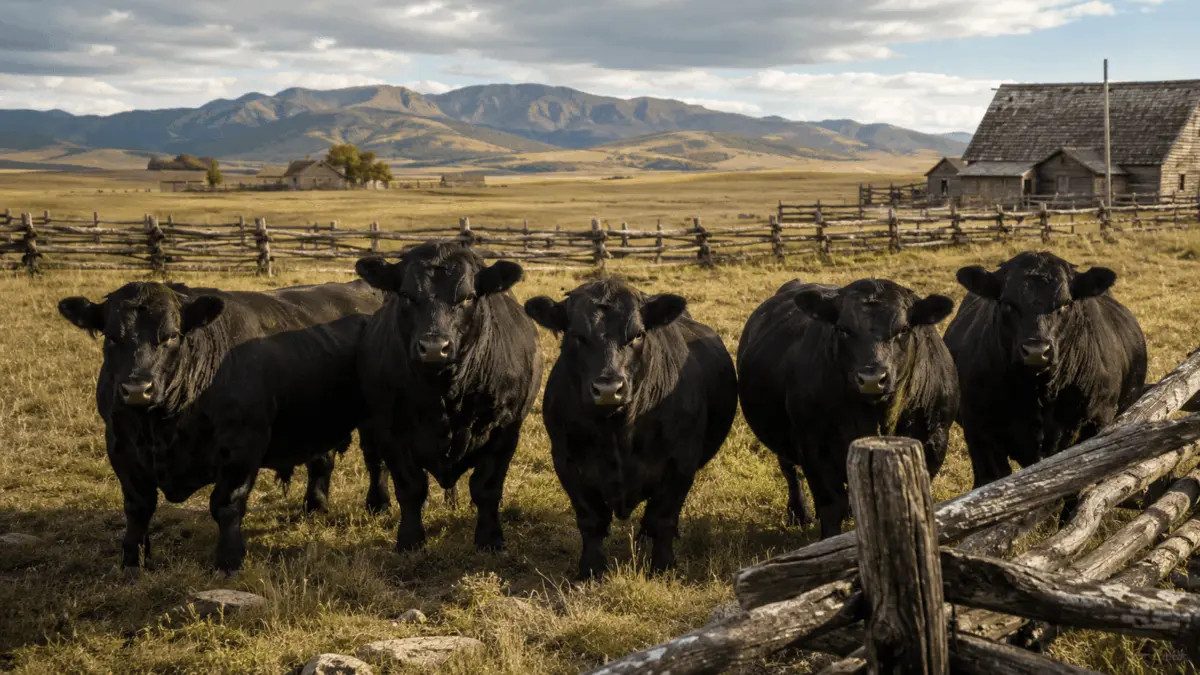
The landscape of modern American agriculture is inextricably linked to a series of bold, visionary gambles taken in the post-Civil War era. Among the most transformative of these agricultural milestones occurred in 1873, when a Scottish-born entrepreneur named George Grant imported four purebred Angus bulls from his homeland directly to the windswept plains of Victoria, Kansas. At a time when the American beef industry was dominated by longhorn cattle sporting sweeping, formidable horns and native stock adapted to the open range, Grant’s sleek, coal-black, hornless arrivals were viewed less as livestock and more as biological curiosities.
To the traditional cattlemen of the late 19th century, a cow without horns was not just unusual—it was unnatural. Mocked by local livestock buyers and initially dismissed as "freaks" of nature, these early Aberdeen-Angus pioneers faced an uphill battle for acceptance in the bustling stockyards of the Midwest. Yet, biology and pragmatism soon overrode skepticism.
The offspring produced by Grant’s imported bulls quickly demonstrated extraordinary resilience against the brutal Great Plains winters, maintained superior body condition when forage was scarce, and outperformed native and traditional European breeds in spring weight metrics. Though George Grant passed away prematurely just five years after his historic import, his foundational gamble planted the seeds for an agricultural revolution. Today, the Angus breed stands as the undisputed titan of the American beef industry, renowned for its unmatched carcass quality, marbling, and adaptability. This deep-dive historical examination explores the journey of George Grant, the rocky introduction of the polled black cattle, and the lasting legacy of a 19th-century vision that reshaped the global beef market.
Detailed Chronology: From Scottish Highlands to the Kansas Prairie
To understand the magnitude of George Grant’s contribution to American agriculture, one must trace the timeline of events that brought Scottish livestock genetics into the heart of the American frontier.
The Genesis of a Vision (Pre-1873)
Before becoming a pioneer of the American cattle industry, George Grant was a successful Scottish merchant based in London with extensive financial interests. A man of worldly ambition, Grant envisioned a utopian settlement in the heart of Kansas. In the early 1870s, he purchased nearly 70,000 acres of land along the Kansas Pacific Railroad in Ellis County, near the present-day town of Victoria. Grant’s original intent was to establish a colony for wealthy British emigrants, complete with grand estates and refined agricultural operations.
However, Grant’s vision quickly pivoted toward practical, large-scale livestock production. Having witnessed the exceptional qualities of the black, polled (hornless) cattle native to the Aberdeenshire and Forfarshire regions of Scotland, Grant realized that these hardy animals might hold the secret to conquering the notoriously harsh climate of the American Great Plains.
The Historic Arrival (1873)
In the spring of 1873, Grant executed his daring plan. He acquired four purebred Angus bulls in Scotland—carefully selected for their robust constitution and breed characteristics—and arranged for their arduous transatlantic voyage by steamship, followed by a grueling rail journey westward to Victoria, Kansas.
When the bulls stepped off the railcars, they presented an entirely alien sight to local stockmen. In an era when the American beef supply was synonymous with the Texas Longhorn—an animal defined by its razor-sharp, meter-long horns and rangy, lean frame—Grant’s bulls were blocky, low-set, deep-bodied, and entirely smooth-headed.
The Kansas Livestock Expo and Public Skepticism (Mid-1870s)
Seeking to promote his new breed and educate American cattlemen on their merits, Grant exhibited two of his prized Angus bulls at the Kansas Livestock Exposition in Kansas City. Rather than sparking immediate admiration, the animals became objects of amusement and doubt.
Traditional buyers, steeped in generations of livestock lore, maintained that horns were a necessary biological tool for cattle defense and herd management. The absence of horns led many to question the genetic purity, vitality, and commercial viability of the cattle. Critics openly labeled the polled black beasts as freaks, questioning whether they could survive the blistering summers and freezing blizzards of the Midwest without the defenses customary to range cattle.
The Turning Point and Grant’s Untimely Passing (1878)
Despite the initial public cold shoulder, Grant placed his bulls out with native cows, initiating crossbreeding experiments. The results were immediate and undeniable. The resulting half-blood calves displayed superior vigor, thriftiness, and growth rates compared to standard regional stock.
Tragically, George Grant did not live long enough to witness the widespread commercial triumph of his crusade. Worn down by the immense financial and physical demands of managing his vast Kansas enterprise, Grant died in 1878 at the age of 56. His sudden death left his estate in flux, but his four foundational bulls—and the crossbred progeny they sired—remained firmly rooted in Kansas soil, quietly continuing to prove their worth on the open range.
Supporting Context & Metrics: The Biological and Economic Advantage
The rapid ascent of Angus cattle from regional curiosities to the gold standard of beef production was driven by empirical data and undeniable economic advantages. As 19th-century cattlemen began recording the performance metrics of Angus crosses, the breed’s biological traits proved indispensable on the frontier.
The Advantage of Being "Polled"
The natural absence of horns—known as the polled trait—was initially viewed with suspicion, but it quickly became one of the breed’s most celebrated economic assets. In crowded feedlot conditions and during rail transport, horned cattle frequently inflicted painful and costly injuries upon one another, leading to bruised carcasses, reduced hide value, and higher mortality rates.
Angus cattle eliminated the need for dehorning—a bloody, labor-intensive, and stressful management practice that often set back animal growth. Furthermore, the polled gene is a dominant genetic trait; when an Angus bull is crossed with horned cows, nearly 100% of the resulting offspring are naturally hornless, instantly pacifying the herd and reducing injury-related economic losses for producers.
Winter Hardiness on the Great Plains
The climate of the Great Plains in the 1870s and 1880s was notoriously unforgiving. Winters brought howling blizzards, sub-zero temperatures, and deep snowpack that buried sparse native grasses. Traditional cattle breeds struggled severely, often suffering from high winter kill rates and severe emaciation.
Grant’s Angus crosses, however, demonstrated extraordinary physiological adaptations:
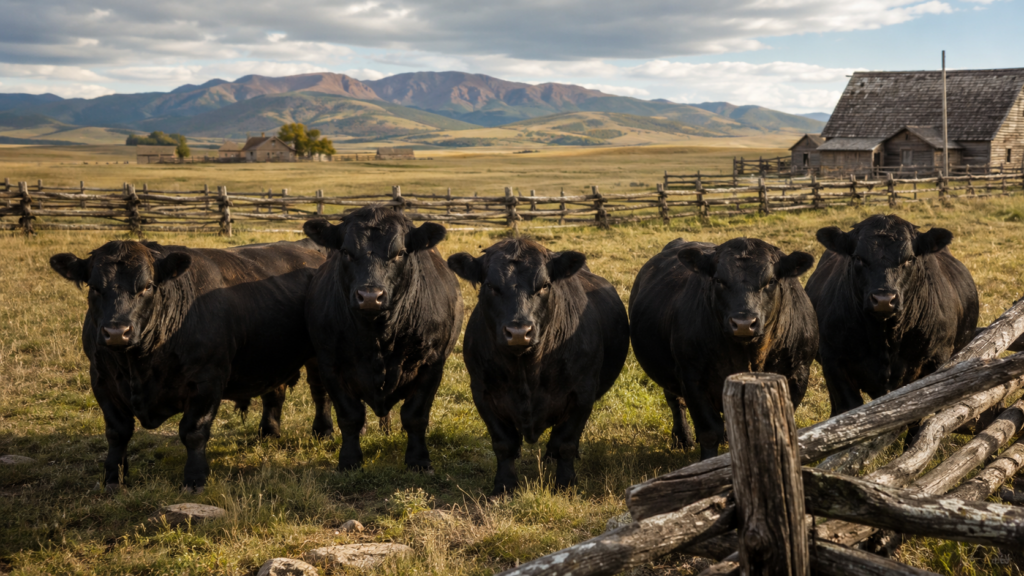
- Dense Hair Coats: The thick, tight black hides of Angus cattle provided exceptional insulation against freezing winds and snow.
- Flesh Retention: Angus cattle exhibited a superior ability to convert dormant, low-quality winter forage into body heat and energy, entering the harsh winter months in prime condition and exiting the spring with minimal weight loss compared to competing breeds.
- Foraging Instincts: Their deep-bodied, compact conformation allowed them to travel efficiently through deep snow and rustle for sustenance when other breeds simply huddled and withered.
Carcass Quality and the Marbling Revolution
While hardiness ensured their survival on the range, carcass quality ultimately secured the Angus breed’s dominance in the marketplace. As commercial meatpacking plants expanded in Kansas City and Chicago, packers quickly realized that Angus-sired cattle yielded a higher dressing percentage and significantly superior meat quality.
Comparative Performance Metrics (Late 19th-Century Field Observations)
---------------------------------------------------------------------
Metric                  Standard Range Cattle      Early Angus Crosses
---------------------------------------------------------------------
Winter Weight Retention Moderate to Poor         High / Exceptional
Dehorning Requirement   Required (Labor-Intensive) None (Naturally Polled)
Carcass Dressing Yield  Baseline                   +4% to +7% Superior
Feedlot Efficiency      Standard Conversion        Accelerated Growth
---------------------------------------------------------------------
The breed’s genetic predisposition toward intramuscular fat—commonly known as marbling—resulted in beef that was exceptionally tender, juicy, and flavorful. This biological trait laid the structural groundwork for modern grading systems and consumer preferences centered on premium beef dining experiences.
Perspectives from the Agricultural Community
To fully appreciate the legacy of George Grant’s 1873 importation, it is valuable to examine how historians, agricultural economists, and modern livestock authorities evaluate his impact on the North American protein supply chain.
Dr. Arlo Henderson, a noted agrarian historian specializing in 19th-century livestock migrations, emphasizes the sheer audacity of Grant’s endeavor.
"George Grant was operating completely outside the agricultural consensus of his day," Dr. Henderson notes. "In 1873, the American livestock industry was fixated on quantity and hardiness of a very specific, rugged type—the Longhorn. To bring delicate, high-maintenance purebreds from the misty hills of Scotland and drop them onto the unforgiving Kansas prairie was viewed by his contemporaries as pure folly. Yet, Grant possessed the foresight to recognize that the future of American beef lay not in wild survivalism, but in efficient conversion of feed to high-grade protein. His gamble changed the biological makeup of the American continent."
Modern cattle producers also acknowledge the foundational debt owed to those first four bulls. Sarah Jenkins, a fifth-generation Kansas cattle rancher and member of the National Cattlemen’s Association, points out that the operational efficiency enjoyed by modern ranchers traces directly back to Grant’s import.
"When we look at the profit margins in modern beef production, uniformity, disposition, and grading percentages are everything," Jenkins explains. "The fact that our herds are naturally polled, uniform in color, and capable of grading Prime or Choice with remarkable consistency goes back to the genetic baseline established in Ellis County 150 years ago. Those early ‘freaks’ of nature proved that adaptation doesn’t mean sacrificing quality."
Future Outlook: The Enduring Legacy of Angus Genetics
As the American beef industry navigates the challenges of the 21st century—ranging from shifting consumer demands for sustainability and traceability to the economic pressures of input costs—the foundational principles established by George Grant remain deeply relevant.
Genetic Selection and Precision Agriculture
Today, the Angus breed is no longer an exotic newcomer but the undisputed bedrock of American beef production, accounting for the vast majority of commercial beef cattle in the United States. Modern breed associations utilize advanced genomic testing, expected progeny differences (EPDs), and artificial intelligence to track traits such as feed efficiency, methane emission reduction, and disease resistance.
However, the core attributes that made Grant’s original bulls successful—hardiness, structural soundness, and superior carcass traits—remain the primary selection criteria for modern seedstock producers.
The Global Marketplace
The influence of George Grant’s 1873 import has extended far beyond the borders of Kansas. American Angus genetics are now exported worldwide, prized by cattlemen in South America, Australia, Asia, and Europe seeking to upgrade their domestic herds. The iconic "Certified Angus Beef" brand, established in the late 20th century, has become a global benchmark for culinary excellence, transforming a once-mocked Scottish curiosity into a multi-billion-dollar international consumer powerhouse.
Conclusion: A Monument to Practical Innovation
George Grant’s story stands as one of the most compelling chapters in the annals of American agriculture. It serves as an enduring reminder that paradigm-shifting innovations are rarely embraced overnight. When the first hornless black bulls walked off the railcars in Victoria, Kansas, they were met with laughter and skepticism. Yet, through the quiet, undeniable metrics of survival, growth, and superior beef quality, they won over a skeptical industry.
As Mark Oppold reflects in the American Agriculture History Minute, Grant’s legacy illustrates a timeless agricultural truth: true progress often arrives looking unfamiliar, but it endures when its practical benefits are put to the test. The black giants of the plains secured their place in history not through marketing or hype, but through the sheer power of superior biology—a legacy that continues to feed millions across the globe today.

0 Comments