

By Elliott Harrell
Published: September 1, 2026
Executive Overview
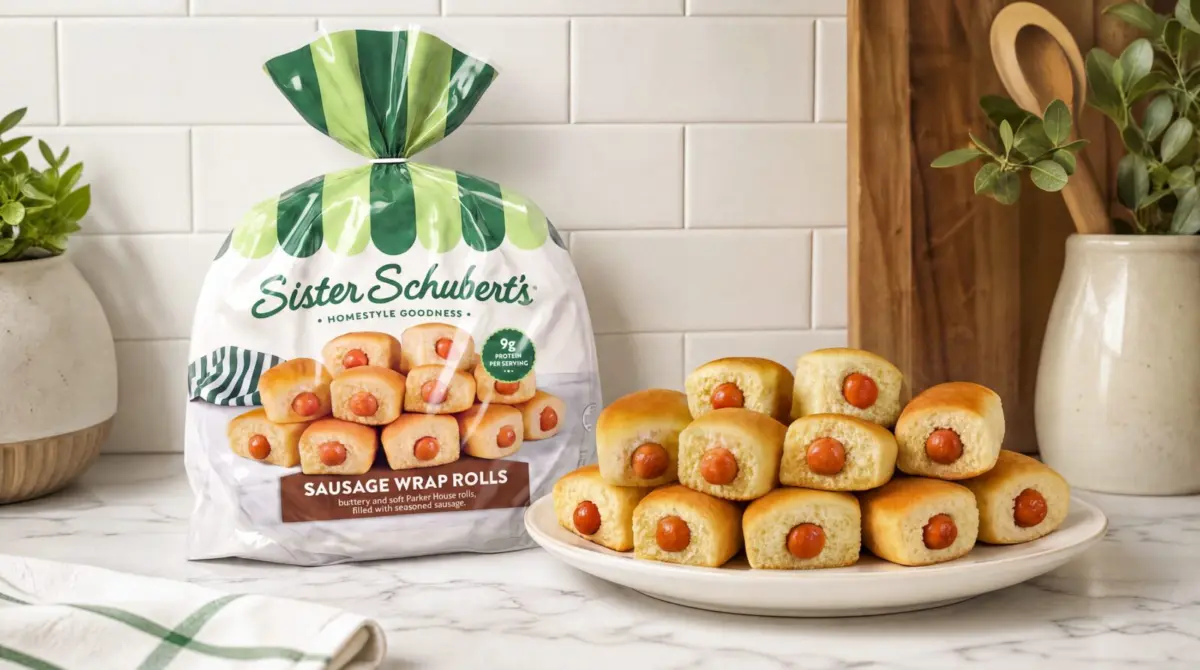
For legions of devoted food lovers across the American South, the freezer aisle will never be quite the same—though this time, the emotional shift is one of pure jubilation. After five agonizing years of absence, discontinued product lamentations, and desperate web searches for DIY copycat recipes, Sister Schubert’s Sausage Wrap Rolls have officially returned to grocery store shelves.
The announcement, first rippling across social media in late summer 2026, was met with an immediate, thunderous wave of consumer relief. For families who viewed these savory, golden-brown yeast rolls as non-negotiable centerpieces for autumn tailgates, festive potlucks, and Christmas morning breakfast spreads, the reinstatement feels nothing short of a culinary restoration.
The journey back to the freezer section has been a textbook study in the power of brand loyalty. When Alabama-based baked goods manufacturer Sister Schubert’s quietly phased out the beloved product in November 2021—attempting to pivot toward alternative items like sausage pinwheels—they inadvertently triggered a multi-year consumer advocacy campaign. Fans refused to let the classic go quietly into the night. Now, just in time for the heavy-hitting holiday eating season of 2026, the company has officially surrendered to public demand.
This comprehensive report examines the chronology of the disappearance, the cultural footprint of the brand, the economics of comfort food manufacturing, and the rollout strategy that will soon place these golden-brown wraps back into kitchens nationwide.
Detailed Chronology: From Pantry Staple to Phantom Product
To understand the magnitude of the 2026 comeback, one must retrace the timeline of how a simple frozen pastry became a Southern institution, only to vanish abruptly during a turbulent era in the food supply chain.
1989–2021: The Golden Era of the Original Wrap
The Sister Schubert’s phenomenon has always been rooted in deeply personal, home-kitchen authenticity. Patricia Barnes—affectionately known to millions simply as "Sister Schubert"—began commercializing her grandmother’s revered yeast roll recipe in 1989 out of her home in Troy, Alabama. What started as a local culinary operation quickly scaled into a regional powerhouse. By the early 2000s, after partnering with the Marzetti Company, the brand was churning out millions of rolls daily from its Luverne, Alabama bakery.
While the brand’s original pans of round yeast rolls became holiday staples across the United States, the sausage-centric variant carved out a fiercely loyal niche. Combining savory breakfast sausage encased in pillowy, slightly sweet, buttery yeast dough, the sausage wrap rolls were engineered for convenience without sacrificing home-baked taste. For decades, they were the undisputed kings of the freezer aisle for working parents, football-season hosts, and holiday traditionalists.
November 2021: The Discontinuation and Backlash
The shockwaves hit in late 2021 when Sister Schubert’s announced it was streamlining its portfolio. Citing declining sales and shifting consumer preferences, the company pulled the plug on the sausage wrap rolls. In their stead, corporate leadership introduced sausage pinwheels—a spiral-cut alternative designed to modernize the line.
The pivot backfired. While the pinwheels were functionally similar, they lacked the exact structural integrity, dough-to-meat ratio, and nostalgic aesthetic of the original wrap rolls.
Consumer resistance was immediate and sustained. Across Reddit threads, Facebook groups, and Instagram comment sections, displaced fans voiced their dismay. For many, the loss was personal. Jean Clare Dickerson of Hot Springs, Arkansas, encapsulates the sentiment shared by thousands: "I always kept some in the freezer just in case, as a true Southerner does," she reflects, noting that she had served the sausage rolls on Christmas mornings for over twenty-five years before they were stripped from stores. "They were a lifesaver."
2021–2026: The Five-Year Desert
During the half-decade hiatus, the secondary market for comfort food nostalgia thrived. Dedicated home cooks experimented with crescent roll dough and links of Jimmy Dean sausage, trying in vain to reverse-engineer the precise flavor profile of the commercial product. Online petitions circulated quietly, while customer service inboxes at Marzetti headquarters were routinely flooded with inquiries demanding to know the fate of the original rolls.
August–September 2026: The Triumphant Return
The dam finally broke in late summer 2026. In an Instagram post that instantly captured media attention, Sister Schubert’s dropped the formal announcement: "You asked, we listened."
The response was overwhelming. Within hours, the post racked up over 12,000 likes, accompanied by hundreds of impassioned comments. Reactions ranged from religious exclamations ("All is right with the world, Christmas morning especially!") to playfully stern warnings ("Sister, never do that to us again."). The five-year drought was officially over.
Supporting Context & Metrics: The Scale of Southern Comfort
To appreciate why a single frozen bread product could generate such intense consumer fervor, one must look at the intersection of regional food culture and modern manufacturing economics.
The Anatomy of Regional Food Loyalty
Food sociology demonstrates that regional comfort foods often function as emotional anchors. In the American South, hospitality is deeply intertwined with carbohydrate-heavy, communal dishes served during transitional seasons—namely, the shift from sweltering summer heat to crisp autumn football tailgates, culminating in the high-stress, high-reward marathon of Thanksgiving and Christmas cooking.
Sister Schubert’s struck gold decades ago by identifying a specific consumer paradox: modern families wanted the comforting, scratch-made flavor profile of a grandmother’s Sunday dinner, but they rarely had the four to six hours required to proof yeast, knead dough, and assemble complicated appetizers from scratch. The sausage wrap roll bridged this gap perfectly.
Manufacturing and Production Scale
Behind the folksy marketing lies a massive industrial apparatus. Patricia Barnes’s original vision scaled exponentially following the 2000 acquisition by the T. Marzetti Company (a subsidiary of Lancaster Colony Corporation).
- Daily Output: By the mid-2010s, the primary production facility in Luverne, Alabama, was reportedly manufacturing an astonishing nine million rolls per day.
- Workforce and Economic Impact: The brand remains a cornerstone of rural Alabama’s economy, employing hundreds of workers across its processing, quality control, and distribution networks.
- The Pivot Economics: The decision to pull the sausage wrap rolls in 2021 was likely driven by pandemic-era supply chain bottlenecks, labor constraints, and rising ingredient costs (particularly flour, butter, and pork). Streamlining SKUs (Stock Keeping Units) is a common corporate strategy to protect profit margins during inflationary periods. However, as supply chains stabilized and consumer nostalgia peaked, the economic argument for reinstating the high-margin product outweighed the cost of keeping it retired.
Official Statements and Consumer Reactions
The corporate messaging surrounding the re-launch has leaned heavily into humility and customer appreciation, acknowledging that the consumer base ultimately drove the boardroom decision.
The Voice of the Brand
While Patricia Barnes stepped back from daily operational control years ago, her founding philosophy continues to dictate the company’s public relations posture. Throughout her career, Barnes maintained a singular, folksy mission statement regarding her baked goods:
"I was put on this earth to bake bread," Barnes noted in a 2016 retrospective interview. "Any home. Anywhere. I want my rolls to bring people together. And doesn’t our world need a whole lot more of that?"
The brand’s 2026 comeback campaign echoes this sentimental ethos. Rather than framing the return as a routine corporate product launch, Sister Schubert’s positioned it as a reconciliation—a gift to a loyal consumer base that refused to forget.
Public Sentiment Analysis
Social media listening metrics from the week of the announcement revealed a rare uniformity of positive sentiment. While product re-launches often draw cynicism regarding shrinkflation or recipe alterations (e.g., consumers complaining that "it doesn’t taste like it used to"), the immediate wave of consumer reviews for the revived sausage wraps has been uniformly ecstatic.
Key themes emerging from consumer commentary include:
- Generational Continuity: Grandparents eager to introduce the breakfast tradition to grandchildren who were born after the 2021 discontinuation.
- Tailgate Readiness: College football fans praising the timing, as the return coincides precisely with the kickoff of the 2026 NCAA season.
- Holiday Preparedness: Planners securing freezer space months in advance of Thanksgiving and Christmas.
Future Outlook: Distribution Roadmap and What’s Next
While the announcement has sent shockwaves of excitement through the culinary community, securing a box requires a bit of strategic grocery shopping, at least initially.
Phased Rollout Strategy
Marzetti and Sister Schubert’s are deploying a staggered distribution model to manage inventory and meet hyper-localized demand:
- Phase 1 (Immediate – Early September 2026): The rolls have initially touched down exclusively within the freezer sections of Publix supermarkets across the Southeast. For shoppers in states like Florida, Georgia, Alabama, Tennessee, and the Carolinas, the hunt is already yielding results.
- Phase 2 (Late September – October 2026): Distribution will rapidly expand nationwide, hitting the shelves of major national retailers including Walmart, Kroger, and Food Lion.
- Phase 3 (Q4 2026 and Beyond): Full supply chain integration just in time for the peak holiday shopping season, ensuring that freezer aisles remain stocked through December.
Will Other Discontinued Items Return?
The overwhelming success of the sausage wrap roll re-launch has naturally sparked speculation among food enthusiasts regarding other legacy products that have quietly vanished over the years. While corporate representatives have not yet committed to reviving other archival items, the clear takeaway from the 2026 campaign is that consumer advocacy matters. If a fanbase makes enough noise—and the economic metrics align—even a five-year corporate hiatus can be brought to a sudden, triumphant end.
For now, shoppers across the American South—and soon, across the country—can return to their local freezer aisles with a renewed sense of hope. Sister Schubert’s sausage wrap rolls are back, proving that when it comes to comfort food, some traditions are simply too heavy to keep down.

0 Comments