Eight years ago, a historic blue wave crashed across the American political landscape, sweeping dozens of moderate Democrats into the U.S. House of Representatives and cementing their status as the vanguard of the resistance against the first Trump administration. This demographic of 42 political newcomers—disproportionately hailing from competitive or traditionally conservative-leaning districts—managed to reclaim the majority for their party in 2018. They did so by projecting an image of nonpartisan competence, professional pragmatism, and moderate moderation designed to soothe suburban anxieties and independent voters.
However, the political lifecycle of these 42 lawmakers offers a masterclass in the ephemeral nature of American politics. As the national electorate shifted, so too did the expectations of the Democratic base. The compromises and moderate voting records that once allowed these candidates to capture swing seats quickly morphed into liabilities within a progressively energized party. Today, the fate of the 2018 class stands as a stark indicator of how rapidly political utility can expire.
Of the original 42, only 14 remain in the House of Representatives, and that number is slated to shrink further with departures scheduled for January. While a select few successfully leveraged their profiles to ascend to higher office—claiming governorships and Senate seats—many others fell victim to primary challenges from an increasingly progressive base or were swept away by surging Republican counter-offensives. As both parties eye the fiercely contested battlegrounds of the 2026 midterms, the legacy of the 2018 class serves as both a roadmap and a warning for the future of congressional politics.
Detailed Chronology: From Resistance Vanguard to Political Realities
The 2018 Blue Wave and the Strategy of Moderation
The midterms of 2018 represented a seismic shift in Washington. Pushed by an intense backlash against the executive branch, the Democratic Congressional Campaign Committee (DCCC), then directed by Dan Sena, executed a deliberate candidate-recruitment strategy. Rather than leaning into progressive orthodoxy, the party targeted military veterans, national security professionals, former intelligence officers, and healthcare workers.
These recruits were handpicked to "look, feel, and sound like a different kind of Democrat." They campaigned heavily on healthcare access, institutional stability, and bipartisan oversight, assuring voters in suburban and rural districts that they would serve as pragmatic "adults in the room." This tactical positioning yielded an enormous payoff, delivering the largest influx of first-year House Democrats in decades—a cohort notable for its youth, professional diversity, and ability to flip red turf.
The Primary Backlash and the Ideological Shift
As the political climate evolved over the subsequent years, the intrinsic demands of the Democratic electorate underwent a fundamental transformation. According to political strategists, the voter mindset shifted dramatically from desiring institutional buffers to demanding confrontational advocacy.
This ideological divergence became glaringly apparent when members of the 2018 class attempted to climb the political ladder.
Angie Craig (Minnesota): Having successfully flipped a Republican-held suburban district in the Minneapolis-St. Paul area and defending it through multiple cycles, Craig attempted to secure the Democratic nomination for the U.S. Senate seat vacated by Tina Smith. However, her instinct for legislative moderation backfired. During the primary, Lieutenant Governor Peggy Flanagan ran a relentless campaign attacking Craig for her financial ties to corporate donors and her legislative support for stricter border security measures. Craig suffered a decisive defeat, illustrating how a voting record tailored for a swing district can alienate a statewide progressive primary base.
Haley Stevens (Michigan): A prominent face of the 2018 freshman class who successfully defended her seat through subsequent redistricting battles, Stevens encountered a similar roadblock in her pursuit of higher office. She fell short in her bid for the Michigan U.S. Senate nomination, losing to progressive candidate Abdul El-Sayed.
Ideological Friction and Leadership Clashes
For others, maintaining a foot in both worlds—representing a conservative constituency while toeing a national party line—proved untenable.
Jared Golden (Maine): Representing a heavily conservative, rural district in Maine, Golden regularly navigated treacherous political waters by combining progressive economic views with cultural conservatism. Facing an increasingly hostile left flank within his own state apparatus and anticipating a brutal primary challenge, Golden opted against seeking reelection. His complex relationship with party leadership was further underscored when he broke ranks to join Republicans on a procedural vote, triggering fury among his caucus colleagues who were forced to navigate a difficult conservative resolution on election integrity.
Supporting Context & Metrics: The Shrinking Ranks
The statistical reality of the 2018 Democratic freshman class underscores the volatility of modern congressional majorities.
The Initial Surge: 42 Democrats successfully flipped Republican-held seats in the 2018 midterms, catapulting the party back into the majority.
Erosion of Numbers: Following the subsequent 2020 and 2022 cycles—the latter of which saw Republicans retake control of the House under the Biden administration—the ranks of the original 2018 flippers dwindled rapidly.
Current Status: Heading into the final stretch of the current legislative calendar, only 14 members of the original class remain in the House. That number is guaranteed to decrease further as figures like Craig, Stevens, and Golden depart at the conclusion of their current terms.
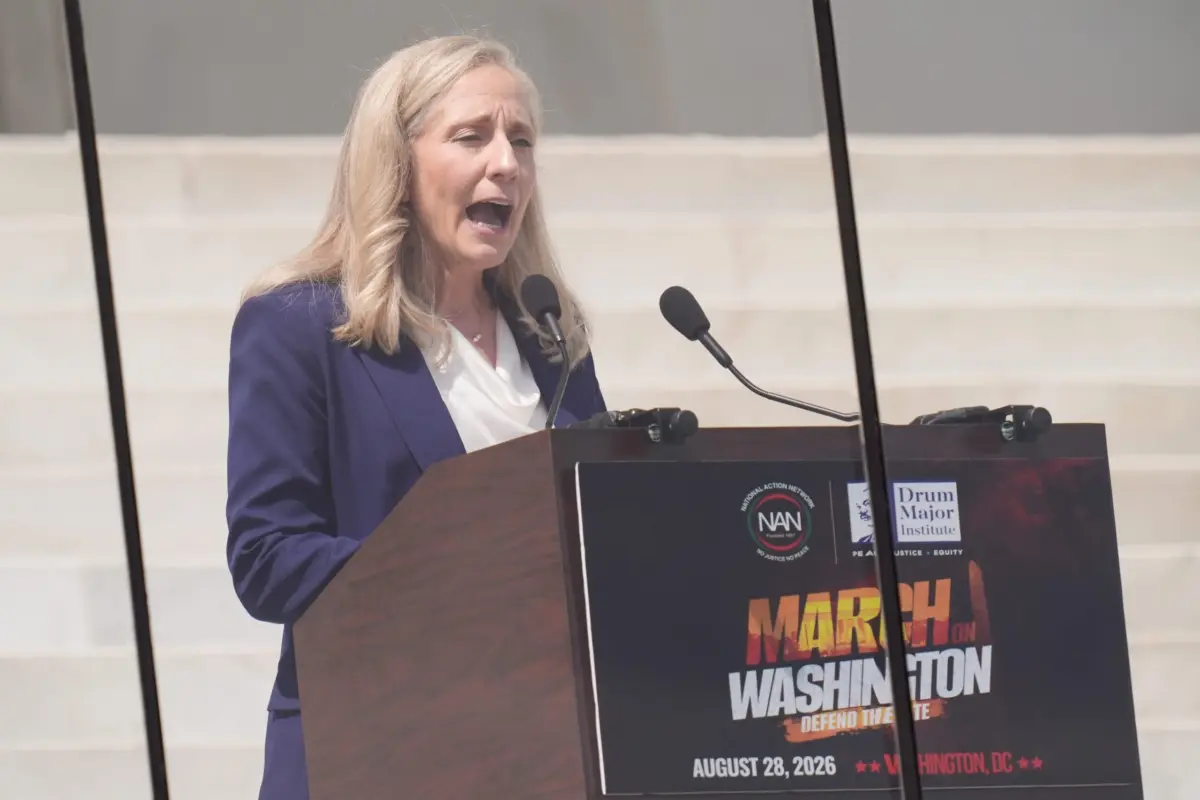
The Upward Trajectory: Despite the attrition in the House, several members of the 2018 cohort successfully transitioned to executive and upper-chamber legislative roles. Notable successes include Mikie Sherrill (New Jersey) and Abigail Spanberger (Virginia), who secured gubernatorial victories, alongside Andy Kim (New Jersey) and Elissa Slotkin (Michigan), who transitioned to the United States Senate in 2024. Speculation continues to swirl regarding Slotkin’s potential national ambitions, including a possible presidential run in 2028.
Official Statements and Strategic Analyses
The tension between regional pragmatism and national ideological purity has drawn extensive commentary from party architects and political observers alike.
Reflecting on the shifting demands of the electorate, former DCCC Executive Director Dan Sena encapsulated the changing dynamic of party expectations:
"In 2018, the Democratic base wanted an adult in the room. In 2026, they want a fighter in the ring."
This shift in voter temperament has left moderate incumbents walking an increasingly narrow tightrope. Supporters of primary challengers argue that the party must look forward rather than attempting to appease districts that no longer align with contemporary political momentum. For instance, reflecting on the primary defeat of veteran lawmakers, local organizers like Justin Ropella in Minnesota noted:
"That was a tough seat to flip, and she did it, and that is commendable, and that has been to everyone’s advantage in Minnesota since then. But I think she has failed to meet the moment time and time again since then, and she is stuck in a moderate environment when the world is progressing past her."
Conversely, establishment strategists warn that writing off the moderate playbook risks forfeiting the very districts required to construct a durable legislative majority. The ability of governors like Spanberger and Sherrill to win statewide elections by hyper-focusing on cost-of-living concerns suggests that pragmatic economic messaging remains a viable blueprint, provided candidates can successfully bridge the gap between local economic anxieties and national party identity.
Future Outlook: The 2026 Midterms and Beyond
As the political establishment prepares for the 2026 midterm elections, the ghost of 2018 looms large over both parties’ strategic war rooms. The structural battlefield of the upcoming House elections bears a striking resemblance to the dynamics of eight years ago, playing out in competitive suburban and exurban districts that lean conservative on paper but have shown deep frustration with national political turbulence.
The core dilemma for the Democratic Party remains unresolved: How to recruit and sustain candidates capable of winning in Republican-leaning territory without triggering a self-defeating ideological civil war during primary season. As Donald Trump’s evolving political coalition continues to reconfigure the electoral map, the lessons imparted by the rise and fall of the 2018 class will heavily dictate candidate selection, fundraising priorities, and legislative strategy.
For the remaining 14 members of that historic freshman wave, and for the new generation of challengers stepping into the fray, the message is unequivocal: political survival requires an acute synchronization with the ever-shifting mood of the electorate. In an era where the political tide recedes as fast as it advances, yesterday’s hero of the resistance can swiftly become tomorrow’s relic of a bygone political moment.




0 Comments