

ATLANTA, Ga. — A routine law enforcement response to illegal street racing and stunt driving in DeKalb County escalated into a catastrophic accident early Monday morning, leaving a 19-year-old passenger dead and raising urgent questions about high-speed police pursuits in populated urban areas.
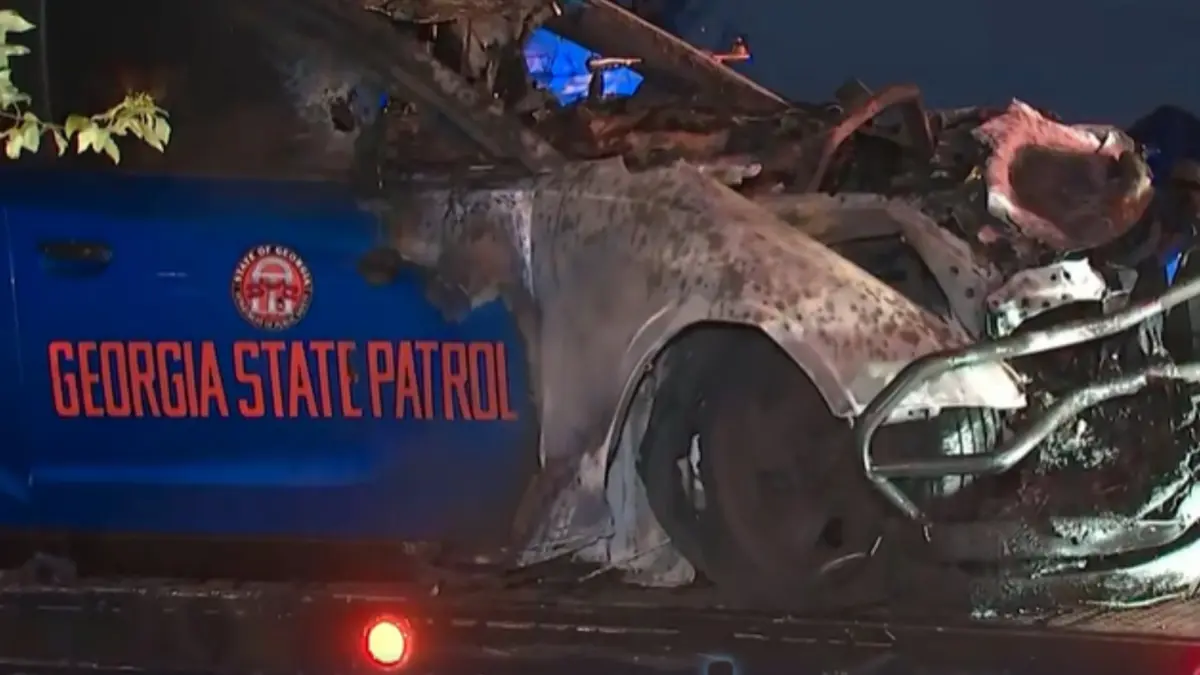
According to the Georgia State Patrol (GSP), a state trooper responding to coordinated street takeover activity collided with a GMC pickup truck at a major intersection in Tucker, Georgia. The resulting high-impact crash engulfed both the patrol vehicle and the truck in flames, claiming the life of 19-year-old Anthony Angeles, who was riding as a passenger in the truck.
The incident has triggered a multi-faceted internal investigation, thrusting the ongoing crisis of illegal street racing and the protocols governing police pursuits back into the public spotlight. As state officials grapple with the tragedy, the broader community is left mourning a young life cut short amid the chaotic backdrop of illicit roadway exhibitions.
Executive Overview
The fatal collision occurred shortly before sunrise on Monday, stemming from an operation designed to crack down on mobile street racing rings that have increasingly plagued metro Atlanta municipalities. Troopers had tracked a group of vehicles engaging in coordinated stunt driving across multiple locations through the night.
When law enforcement converged on a staging area near Kilman Drive and Bibb Boulevard, several vehicles fled the scene. The subsequent pursuit of a white Chrysler 300—whose driver brazenly maneuvered over a curb to elude authorities—set off a chain reaction of events that culminated at the intersection of Mountain Industrial Boulevard and Hugh Howell Road. There, a pursuing state trooper’s cruiser slammed into a GMC pickup truck.
Crucially, GSP investigators confirmed that the GMC pickup involved in the collision had been observed participating in the illegal stunt driving activities mere minutes prior to the crash.
The collision was severe enough to ignite both vehicles instantly. Demonstrating rapid response under extreme pressure, the trooper and the K-9 unit inside the patrol vehicle managed to escape through a window. The trooper immediately turned his focus to rescuing the occupants of the burning truck, pulling them from the wreckage before emergency medical services arrived.
Despite these heroic rescue efforts, passenger Anthony Angeles succumbed to his injuries after being transported to a nearby hospital. The 20-year-old driver of the pickup sustained non-life-threatening injuries.
In the wake of the tragedy, the Georgia State Patrol has placed the involved trooper on administrative leave pending a full investigation. The agency has pledged absolute transparency, initiating both a comprehensive factual inquiry into the crash mechanics and an independent administrative review by its Office of Professional Standards to determine whether departmental policies were strictly followed.
Detailed Chronology: From Street Takeover to Fatal Impact
To understand the sequence of events that led to the fatal crash on Monday morning, investigators have pieced together a timeline stretching across the overnight hours into the pre-dawn commute.
Phase 1: The Nightlong Mobilization
The incident began as a response to reports of unlawful street racing and exhibition driving that spanned multiple jurisdictions across the northeastern sector of metro Atlanta. According to GSP briefings, a network of vehicles was actively moving between various commercial parking lots and intersections, blocking traffic, performing "donuts," and burning rubber in defiance of local ordinances.
Phase 2: The Convergence in Tucker
At approximately the same hour, state troopers monitoring intelligence regarding the roaming convoy converged on the area of Kilman Drive and Bibb Boulevard in Tucker, Georgia. The objective was to disperse the crowd, interdict participating vehicles, and deter further disruptions to public safety.
Upon the arrival of law enforcement units, the gathered crowd and participating cars scattered in multiple directions. Among them was a white Chrysler 300. In an aggressive maneuver to evade capture, the driver of the Chrysler jumped a concrete curb, prompting troopers to initiate an active vehicular pursuit.
Phase 3: The Intersection Collision
As the pursuit unfolded through the dark, pre-dawn streets, a state trooper’s vehicle traveled through the intersection of Mountain Industrial Boulevard and Hugh Howell Road—a major commercial and industrial corridor in DeKalb County.
Simultaneously, a GMC pickup truck entered the path of the cruiser. GSP statements later confirmed that this specific pickup had been identified by law enforcement personnel just minutes earlier as an active participant in the night’s stunt driving exhibitions. The resulting collision was devastating, disabling both vehicles and rupturing fuel systems that immediately sparked intense fires.
Phase 4: Rescue and Medical Response
Trapped inside the burning cruiser, the trooper acted quickly. Accompanied by a departmental K-9, the officer managed to breach a vehicle window and escape the inferno. Without hesitation, the trooper rushed to the wreckage of the GMC pickup to assist the trapped occupants.
Emergency medical services, along with DeKalb County fire and rescue units, arrived shortly thereafter to battle the blaze and treat the injured. Anthony Angeles and the 20-year-old driver were rushed to a regional trauma center. Despite advanced medical intervention, Angeles was pronounced dead. The driver was admitted for treatment of injuries deemed non-life-threatening.
Supporting Context & Metrics: The Crisis of Street Racing in Georgia
The tragedy in Tucker does not occur in a vacuum; it is part of a broader, escalating battle between law enforcement and illegal street racing networks across Georgia and major metropolitan areas nationwide.
The Evolution of Street Takeovers
Over the past five years, illicit street racing has evolved from informal, late-night drag races on desolate stretches of highway into highly organized, social media-driven "takeovers." These events typically involve dozens—sometimes hundreds—of vehicles blocking major intersections, bridges, and highways to create impromptu arenas for drifting, burnouts, and dangerous exhibition driving.
Participants frequently use encrypted messaging apps and real-time social media broadcasts to coordinate flash-mob style gatherings, allowing them to evade law enforcement response times or overwhelm initial police units.
The Danger Equation
As GSP noted in its public addresses, these exhibitions introduce extreme volatility into urban environments. The deliberate blocking of public roads endangers everyone:
- Participants: Risk high-speed collisions, vehicle fires, and crowd surges.
- Bystanders and Spectators: Frequently gather dangerously close to drifting vehicles, resulting in numerous pedestrian strike injuries nationwide.
- Other Motorists: Unsuspecting drivers navigating pre-dawn roads find themselves trapped by blocked intersections or facing erratic vehicles fleeing the scene.
- Law Enforcement Officers: Troopers and local police officers forced to navigate high-speed pursuits through unfamiliar or chaotic urban landscapes face severe occupational hazards, as evidenced by Monday’s fatal collision.
Legislative Crackdowns
Recognizing the escalating threat, the Georgia General Assembly and local municipalities have enacted increasingly stringent laws targeting street racing. Legislation passed in recent years has increased mandatory minimum fines, authorized the seizure and impoundment of vehicles used in street racing, enhanced driver’s license suspensions, and established severe criminal penalties for organizers and repeat offenders.
Despite these legislative efforts, law enforcement agencies continue to struggle with the delicate balance between aggressively interdicting illegal takeovers and mitigating the inherent dangers of high-speed police chases in densely populated areas.
Official Statements and Accountability
The Georgia State Patrol has adopted an unusually transparent posture in the immediate aftermath of the crash, releasing comprehensive statements acknowledging the gravity of the situation and outlining the procedural steps being taken.
The Georgia State Patrol Statement
In an official release, the agency expressed profound sorrow while firmly committing to a thorough, unvarnished investigation:
"We know there will be questions about how this happened, and we share the responsibility of making sure those questions are answered. Illegal stunt driving and the deliberate blocking of public roads can put everyone in danger, including participants, other drivers, law enforcement officers and people who simply happen to be nearby. In this case, a young man lost his life. We owe it to his family, our troopers and the public to understand exactly what happened. We will allow these investigations to establish the facts and will share additional information as we are able. The Georgia State Patrol is committed to the transparency and accountability the people of Georgia expect and deserve."
The agency also extended its direct condolences to the loved ones of Anthony Angeles:
"The loss of a young life is tragic, and we recognize the impact this has on his family, friends and everyone involved."
Internal Investigation and Administrative Review
In accordance with standard protocol following critical incidents involving agency personnel, the trooper involved in the collision has been placed on administrative leave. The response is subject to a dual-track review process:
- Factual & Technical Investigation: Conducted by specialized GSP reconstruction teams to determine the exact vehicle speeds, traffic signal statuses, point of impact, and physical dynamics of the crash.
- Administrative Review: Overseen by the GSP Office of Professional Standards. This review will evaluate whether the pursuing troopers adhered to established agency policies, pursuit guidelines, and risk-assessment protocols when deciding to initiate and continue the chase.
Depending on the findings of these reviews, the case file may be turned over to local district attorney’s offices for independent prosecutorial evaluation.
Future Outlook: Policy Implications and Community Impact
As the investigation into Monday morning’s crash unfolds, the incident is expected to catalyze intense policy debates across Georgia regarding the management of street racing and the ethics of police pursuits.
Re-evaluating Pursuit Protocols
Civil liberties advocates, legal experts, and law enforcement administrators will likely scrutinize the decision to pursue vehicles over misdemeanor stunt-driving infractions. Many modern police departments have adopted restrictive pursuit policies, prohibiting high-speed chases for non-violent property crimes or traffic infractions unless there is an immediate, articulable threat of violent felony offenses.
The GSP Office of Professional Standards will be tasked with determining whether the pursuit of the white Chrysler 300 met the agency’s threshold for justified risk, and whether the subsequent positioning of units factored appropriately into the tragic outcome involving the GMC pickup.
Community Grief and Demands for Justice
For the family and friends of Anthony Angeles, a 19-year-old life cut short has left an irreplaceable void. Vigils and community memorials are anticipated in the coming days as loved ones grapple with the abruptness of his passing.
At the same time, community leaders in DeKalb County are renewing calls for comprehensive solutions to the street racing epidemic. Law enforcement agencies are under pressure to deploy passive deterrence strategies—such as automated license plate readers, strategic road design modifications, and intelligence-led policing—that can disrupt street takeovers before they require high-speed tactical interventions.
Conclusion
The fatal collision on Mountain Industrial Boulevard stands as a grim reminder of the high stakes surrounding illegal street racing and the perilous nature of modern policing. As the Georgia State Patrol navigates the dual responsibilities of holding its personnel accountable and addressing the broader plague of roadway takeovers, the overarching legacy of this tragedy will depend on the lessons learned, the transparency maintained, and the preventative measures enacted to ensure no other families suffer such a devastating loss.
This is a developing story. Atlanta News First will continue to provide updates as further details emerge from state investigators, official autopsies, and administrative hearings.

0 Comments